Sahel Security Crisis SITREP: AES realignment, Mali airstrikes with banned submunitions evidence, and deepening humanitarian strain
Time window: Last 7 days · Audience: General analyst · Type: Situation report · DTG: 2026-06-09 09:37Z · Overall confidence: MEDIUM
BLUF
Security and humanitarian conditions across Mali, Burkina Faso, and Niger are deteriorating as the Alliance of Sahel States (AES) distances itself from ECOWAS and Western partners while jihadist actors maintain pressure. Evidence of Russian-made cluster submunitions in Tadjmart after Malian Armed Forces (FAMa) airstrikes and severe aid underfunding almost certainly elevate civilian risk and constrain U.S. and partner options.
Executive summary
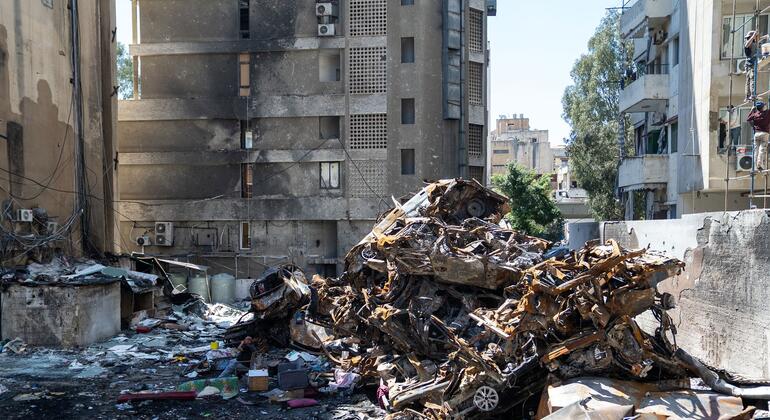
Open sources indicate a worsening conflict environment across the AES members, Mali, Burkina Faso, and Niger, marked by sustained jihadist activity and state countermeasures, including FAMa air operations on 17 May 2026 and corroborated evidence of unexploded Russian-made ShOAB-0.5 submunitions in Tadjmart, northern Mali. AES governments have moved away from ECOWAS and Western military cooperation since 2023-2024, restricting U.S./French access and reshaping the security architecture. Concurrently, the Sahel’s humanitarian emergency is intensifying: OCHA reports roughly 24 million people in need and nearly 12,900 schools closed due to insecurity, while last year’s response was funded at about 29% of requirements. Burkina Faso remains under states of emergency in the Sahel and East regions amid persistent terrorist plotting and high fatalities. The operating environment for U.S. personnel is severely constrained, with “Do Not Travel” advisories and movement restrictions in both Mali and Burkina Faso.
Key judgments
- It is very likely banned cluster submunitions were employed in northern Mali around 17-18 May 2026, creating elevated civilian risk and potential CCM non-compliance exposure for Bamako. Reported: Bellingcat geolocated unexploded Russian-made ShOAB-0.5 bomblets in Tadjmart, northern Mali (and published video evidence), and FAMa announced airstrikes in the area on 17 May 2026; the Azawad Liberation Front condemned cluster munition use on 18 May; Mali is a CCM State Party; Russia’s Africa Corps is supporting Malian operations. Assessment: The presence of unexploded ShOAB-0.5 and temporal proximity to FAMa strikes make it likely submunitions were employed, though direct attribution to a specific actor remains unconfirmed. (Confidence: medium)
- The threat to U.S. and foreign nationals in Mali is almost certainly high and persistent, driven by terrorist activity, high kidnapping risk, violent crime, and unrest, forcing U.S. mission movement restrictions to Bamako only. Reported: U.S. advisories cite terrorism, kidnapping, violent crime, and protests that can turn violent; U.S. personnel are barred from travel outside Bamako; overall “Do Not Travel” guidance applies to Mali. (Confidence: high)
- AES realignment since 2023, originating as a mutual defense pact, formalizing as a confederation, announcing withdrawal from ECOWAS, and cutting Western military ties, very likely reduces Western security cooperation and access in Mali, Burkina Faso, and Niger in the near term. Reported: AES membership (Mali, Niger, Burkina Faso); formation as mutual defense pact (16 Sep 2023) and establishment (6 Jul 2024); withdrawal from ECOWAS announced (28 Jan 2024) and rejection of an ECOWAS timetable extension; AES cut military relations with Western powers in 2024; Niger revoked the U.S. military agreement (Mar 2024) and earlier demanded French troop withdrawal (Jul 2023). (Confidence: medium)
- JNIM and allied Tuareg rebel groups are very likely sustaining a high operational tempo in Mali and contributing to regional insecurity, with spillover risk to littoral West Africa likely to persist. Reported: Coordinated attacks across Mali and an increasingly open alliance (Apr 2023); mass-casualty JNIM operations at Bamba and on the Niger River (7 Sep 2023); a major JNIM assault at Djibo, Burkina Faso (26 Nov 2023); U.S. advisories identify JNIM as the main terrorist threat to Côte d’Ivoire, note past cross-border incursions from Burkina Faso, and cite AQIM small-scale attacks; the Ivoirian Armed Forces formed the Northern Operational Zone (ZON) in response. (Confidence: medium)
- The Sahel’s humanitarian emergency is almost certainly worsening: at least 24 million people need assistance and nearly 12,900 schools are closed due to insecurity, while last year’s funding reportedly reached roughly 29% of requirements, likely driving further displacement and social fragility. Reported: OCHA/UN statements on 24 million in need and ~12,900 school closures (over 2.3 million children out of class); UN reporting that Sahel funding is at a decade low (~29% of needs last year). (Confidence: high)
- Security conditions in Burkina Faso’s Sahel and East regions almost certainly remain severe, with ongoing terrorist plotting and high conflict fatalities, reflected in states of emergency and U.S. mission movement restrictions. Reported: A state of emergency across the Sahel and East regions; terrorist organizations continue to plan and conduct activities; at least 20,000 killed since the insurgency began; U.S. employees prohibited from travel outside Ouagadougou. (Confidence: medium)
Outlook & scenarios
Escalation in northern Mali with continued FAMa air operations and further submunition incidents, 60%
FAMa sustains air operations in northern Mali, with additional evidence of submunitions emerging near recent strike sites. Africa Corps support persists, and domestic/armed-group condemnations intensify. Civilian casualty risk rises, and Mali faces growing scrutiny over CCM obligations, potentially constraining external security cooperation. (Anchored by evidence of ShOAB-0.5 in Tadjmart, FAMa strikes on 17 May 2026, FLA condemnation, Mali’s CCM status, and Africa Corps support.)
AES consolidation and reduced Western access reshape regional counterterrorism, 50%
AES (Mali, Burkina Faso, Niger) continues distancing from ECOWAS and Western partners, maintaining withdrawals and broken defense arrangements. U.S./French access declines further, while AES relies more on non‑Western support. Coordination gaps enable jihadist groups (e.g., JNIM) to retain or expand operational tempo, including cross‑border pressure toward littoral states.
Humanitarian spiral amid persistent underfunding and insecurity, 70%
Aid funding remains near decade‑low levels as insecurity closes more schools and disrupts services. The population in need stays at or above 24 million with growing displacement and long‑term impacts on social cohesion and recruitment risks for armed groups. Localized protests over living conditions are likely to recur.
Wildcard: International censure over alleged cluster munition use triggers policy and aid conditionality, 20%
If additional corroborated incidents involving cluster submunitions surface, international censure could escalate, raising risks of sanctions/conditionality that restrict military cooperation and complicate humanitarian access planning for Mali.
Recommendations
- Prioritize collection to verify munition employment in northern Mali: task GEOINT and OSINT to exploit Tadjmart and nearby strike sites for ShOAB‑0.5 signatures, blast patterns, and air platform activity logs; catalogue unexploded ordnance and correlate with 17 May 2026 FAMa strike locations.
- Map and monitor Russia’s Africa Corps footprint supporting Malian operations, units, basing, enablers, and advisory roles, to anticipate tactics and civilian‑harm risk, and to inform U.S. policy engagement. (694b1d70.)
- Adjust U.S. mission risk posture in Mali and Burkina Faso in line with persistent terrorism, kidnapping, and violent crime threats; maintain strict movement controls and update contingency/medical evacuation plans given limited medical services.
- Strengthen early warning for spillover to littoral states: fuse border activity reporting with partner feeds from Côte d’Ivoire’s Northern Operational Zone (ZON) and national CT centers (e.g., CROAT) to track JNIM cross‑border patterns and AQIM activity.
- Engage interagency and donors on Sahel funding gaps: highlight OCHA’s 24 million in need and ~12,900 school closures to drive targeted allocations for education‑in‑emergencies and protection corridors, prioritizing high‑risk communes.
- Plan for constrained Western access to AES countries: develop alternative collection networks and liaison pathways with non‑ECOWAS neighbors and multilateral mechanisms to offset access losses after Niger’s revocation of the U.S. agreement and AES’s broader break with Western partners.
- Intensify threat messaging to U.S. persons and implementing partners on kidnapping and protest flashpoints in Mali and Burkina Faso; require route‑risk vetting and kidnap‑prevention SOPs for field movements.
Confidence & uncertainty
Overall confidence is medium. Many core elements rely on high‑reliability official and multilateral sources (U.S. Department of State travel advisories; UN/OCHA data) and a detailed Bellingcat geolocation for Tadjmart, supporting strong judgments on threat environment and humanitarian need. However, attribution of cluster munition use beyond presence remains uncertain (single‑threaded open‑source attribution with contextual but indirect indicators), and several strategic‑trend judgments depend on Wikipedia/major media summaries, adequate for directionality but weaker for precision. Key uncertainties include: the specific actor employing submunitions in northern Mali; the durability and operational depth of the JNIM, Tuareg alignment; AES cohesion and the exact trajectory of ECOWAS, AES negotiations; and the persistence of severe funding shortfalls.