TLP:CLEAR · Disclosure is not limited.
Sahel Security Deteriorates Amid Escalating Violence and Institutional Fragmentation
Time window: Last 7 days · Audience: General analyst · Type: Situation report · DTG: 2026-07-02 12:30Z · Overall confidence: MEDIUM
BLUF
Recent attacks on Niamey International Airport on 18 June 2026 killed 13 people and signal a dangerous escalation in Islamic State Sahel Province's capabilities. Over 4 million people remain displaced across the Sahel, including 2.1 million in Burkina Faso alone, with terrorism-related deaths having increased nearly tenfold since 2019. Despite pledges to transition to civilian rule, the Alliance of Sahel States continues to institutionalise its security coordination while cementing its separation from ECOWAS.
Executive summary
The Sahel region remains in acute crisis as jihadist networks expand their operations and state security forces struggle to contain violence. Recent evidence confirms Islamic State Sahel Province conducted a significant attack targeting Niger's international airport infrastructure, while displacement figures exceed 4 million people across Mali, Burkina Faso, and Niger. Despite pledging to end military rule, the Alliance of Sahel States states have solidified their institutional coordination through meetings in Ouagadougou and Bamako during late June 2026 while maintaining Russian security partnerships that complicate international engagement.
Change from previous assessment
The Alliance of Sahel States has cemented its institutional structure beyond the prior assessment through confirmed high-level meetings in Ouagadougou and Bamako during late June 2026. Confidence in the Malian security environment remains high, though displacement figures have grown slightly from the prior assessment to exceed 4 million confirmed displaced persons. The June 18 Niamey airport attack represents a new development requiring increased attention to IS-Sahel's expanding capabilities. Confidence in Russian security cooperation remains high, with no change from prior assessment.
Key judgments
- Mali, Niger, and Burkina Faso remain extreme-risk operating environments where armed conflict between government forces and armed groups is widespread, the risk of terrorist violence against civilians and infrastructure is very high, medical services remain limited especially in rural areas, and Western military personnel face severe travel restrictions. (Confidence: high · REPORTED)
- I&W: New UKMTO advisories reporting attacks on vessels transiting waters near Benin border (0-14 days)
- I&W: FCDO updates travel advisories for additional Nigerian states to 'all but essential travel only' (1-3 months)
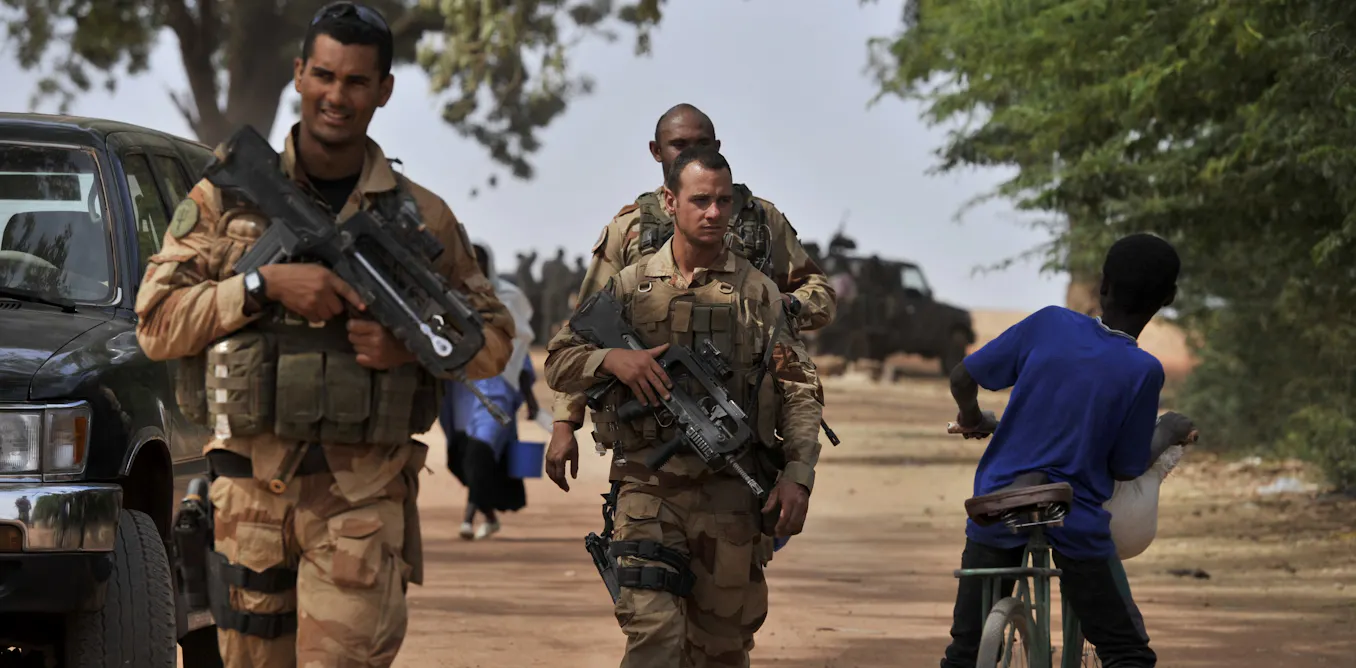
- Russian security forces, principally through the Africa Corps paramilitary group, remain very likely embedded in Malian Armed Forces operations against jihadist groups, maintaining a direct operational role since replacing Wagner in early 2022. (Confidence: high · REPORTED)
- I&W: Additional reports of Russian military aircraft movements between Mali and Russian bases (0-14 days)
- I&W: Malian Armed Forces announces joint operations with Russia following jihadist attacks (1-3 months)
- The June 18, 2026, attack on Niamey International Airport, in which Islamic State Sahel Province killed 13 people, was very likely the most significant coordinated assault by IS-Sahel on Nigerien infrastructure in over two years and marks a concerning escalation in their capability to target capital-city infrastructure. (Confidence: medium · ASSESSED)
- I&W: IS-Sahel claims responsibility for any additional attacks within Niger's capital region (0-14 days)
- I&W: Nigerien government declares state of emergency or imposes additional curfews in Niamey (1-3 months)
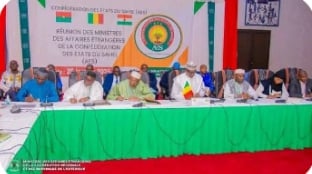
- The Alliance of Sahel States has very likely cemented its institutional framework following its formal withdrawal from ECOWAS on January 29, 2025, with recent meetings in Ouagadougou from June 23-25 and Bamako on June 20 confirming coordinated diplomatic, security, and political pathways despite pledged transitions to civilian rule. (Confidence: high · REPORTED)
- I&W: AES leaders jointly announce new security initiative targeting specific jihadist groups (0-14 days)
- I&W: ECOWAS Chiefs of Defence Staff confirm direct communication channels with AES counterpart (1-3 months)
- Burkina Faso has very likely become the epicentre of global terrorism activity, accounting for approximately one-fifth of worldwide terrorism-related deaths in 2025 with 2.1 million internally displaced persons, reflecting an acceleration of violence since French military withdrawal in 2023. (Confidence: medium · ASSESSED)
- I&W: Additional credible reports of mass civilian executions by jihadist groups in central Burkina Faso (0-14 days)
- I&W: Burkina Faso military officials publicly request direct Russian support for specific territory (1-3 months)
- Humanitarian conditions across the Sahel region have very likely deteriorated significantly since 2024, with the United Nations reporting 4 million displaced people and an estimated 55 million facing acute food insecurity across West and Central Africa during the June-August 2026 lean season. (Confidence: high · REPORTED)
- I&W: UN issues emergency appeals for additional humanitarian funding specific to Sahel region (0-14 days)
- I&W: World Food Programme publicly declares famine threshold exceeded in three Sahelian regions (1-3 months)
Outlook & scenarios
AES Institutionalisation (40%)
The Alliance of Sahel States successfully develops its joint military force (FU AES) into a functional security architecture, formalising arms procurement, intelligence sharing, and border controls while negotiating security agreements with Russia and other state partners. ECOWAS attempts counter-balancing by deploying its 1,650-person counter-terrorism unit by early 2027, yet AES cohesion deepens amid shared security interests and reduced Western engagement.
Jihadi Expansion Southward (30%)
Jihadist groups, particularly Jama'at Nusrat al-Islam wal-Muslimin, expand operations into coastal states of Benin, Togo, and Côte d'Ivoire following successful attacks in northern regions. With AES states focused on internal security, coastal governments struggle to contain infiltration routes, leading to increased attacks on transport infrastructure and foreign personnel by late 2026.
Russian Influence Expansion (20%)
Russia capitalises on Western withdrawal by deepening security partnerships with AES states, providing advanced equipment and military advisors while positioning itself as a mediator with Islamist groups. By 2027, Russia has established permanent military facilities in Niger and Mali, gaining strategic leverage over regional security policy and energy resources.
Stalemated Violence (10%)
Security conditions deteriorate across the entire region as multiple actors employ violent tactics without achieving decisive advantage. AES states maintain tenuous control of urban centres while rural territories experience governance vacuum, leading to increased banditry and criminal activity alongside jihadism. Displacement figures top 6 million by end of 2026 with humanitarian access further constrained.
Recommendations
- Prioritise enhanced OSINT monitoring of JNIM and IS-Sahel communication channels for indicators of potential attacks on Western facilities in coastal states
- Support ECOWAS efforts to develop alternative transportation corridors avoiding high-risk northern regions of Burkina Faso and Niger
- Conduct vulnerability assessments of humanitarian infrastructure in central Mali and northern Burkina Faso where displacement figures have grown most rapidly
- Analyse the implications of AES states maintaining dual security relationships with both Russian forces and local paramilitary networks
Confidence & uncertainty
The assessment maintains medium confidence due to strong corroboration on displacement figures, AES diplomatic activity, and security partnerships from official government and multilateral sources. However, confidence remains constrained because of contradictory reporting about casualty figures between think tank analyses and conflicting claims about the scale of Russian military operations. Low-confidence claims about specific jihadist capabilities and internal military coordination limit high-confidence assessments on tactical threats while single-source reporting on human rights allegations prevents higher confidence assessments there.
Intelligence gaps
- [EEI 1.1 · PARTIAL] Number, location, and scale of attacks (IEDs, ambushes, complex attacks) per week against towns, military bases, police posts, or convoys, with casualty and equipment-loss counts. Recommended collection: ground/HUMINT
- [EEI 1.2 · UNCOVERED] Observed movement and size of armed columns (vehicle counts, heavy weapons present) along approach routes to population centers or borders documented by imagery, local reporting, or border guards. Recommended collection: imagery/SATCOM
- [EEI 1.3 · UNCOVERED] Reports of occupation, administration, or imposition of checkpoints/taxes by armed groups in named towns, villages, markets, or on specified road segments. Recommended collection: OSINT (local media/social)
- [EEI 2.1 · UNCOVERED] Internal security force movements: redeployment of army units, garrison withdrawals, or mass troop movements toward/away from capitals and regional command posts. Recommended collection: imagery/SATCOM
- [EEI 2.2 · UNCOVERED] Detentions, public dismissals, resignations, or public statements by senior military, police, or government officials indicating factional splits (named individuals, ranks, units). Recommended collection: diplomatic/OSINT
- [EEI 3.1 · UNCOVERED] Interdictions or seizures at borders/markets of weapons, ammunition, fuel, or contraband (type/quantity, seizure location, alleged origin/destination). Recommended collection: border/customs
- [EEI 3.2 · UNCOVERED] Recorded movements of known smuggling routes and convoy volumes: counts of commercial/privately registered vehicles and informal river crossings on specific cross-border corridors. Recommended collection: ground/HUMINT
- [EEI 3.3 · UNCOVERED] Monitored financial flows linked to illicit trade: large cash movements, changes in declared gold exports at named mines/ports, or arrests of money couriers with amounts and origins. Recommended collection: financial/forensics
- [EEI 3.4 · UNCOVERED] Observed changes at border security posts: closures, reductions in personnel, destroyed checkpoints, or documented agreements allowing free movement at named crossings. Recommended collection: imagery/OSINT
Cited sources
[1] U.S. Department of State · Mali Travel Advisory (A) · sha256:0bd28ce550a9 [2] OECD Publishing · Military coups, jihadism and insecurity in the Central Sahel.. (B) · sha256:388af20cd4ac [3] Bellingcat · Banned Russian Submunitions Found After Mali's Military Announces Airstrikes - bellingcat (A) · sha256:6788d3465fd7 [4] theconversation.com · The Sahel region is less secure than ever: foreign forces just add to the cycle of violence (C) · sha256:c0d54fba0f4f [5] africansecurityanalysis.org · Escalating Jihadist Violence and Political Fragmentation in the Sahel (C) · sha256:3b65fdefc49f [6] modernghana.com · AES Confederation Convenes in Ouagadougou to Chart Common Front on Security, ECOWAS Relations and Global Diplomacy (B) · sha256:922d313c04fd [7] Wikipedia · Alliance of Sahel States (A) · sha256:2294aee36297 [8] warontherocks.com · Western Withdrawal, Jihadist Expansion: How the Sahel Became Ground Zero for Global Terrorism (C) · sha256:d0f9a5aa5313 [9] The Soufan Center · IntelBrief: The Sahel Continues to Struggle with a Surge of Jihadist Terrorism (B) · sha256:ce311cf058bc [10] The Guardian · Sahel-based jihadists are extending their reach. Can a fractured region push back? (A) · sha256:1e02ba332231 [11] amaniafrica-et.org · Third Annual Joint Consultative Meeting between the AU PSC and ECOWAS MSC (A) · sha256:947e6f5ae1c8 [12] U.S. Department of State · Cameroon Travel Advisory | Travel.State.gov (A) · sha256:535e774d74d2
Source content hashes were computed at collection time; the cited text is preserved unmodified for the life of this product.
TLP:CLEAR