TLP:CLEAR · Disclosure is not limited.
Sahel Security: Mali Contestation and Persistent Nigerian Violence
Time window: Last 7 days · Audience: General analyst · Type: Situation report · DTG: 2026-08-21 06:10Z · Overall confidence: MEDIUM
BLUF
Violence involving JNIM and the Azawad Liberation Front in Mali, alongside ISWAP attacks and continuing killings in Nigeria, is likely to remain a destabilising threat over the next 1-3 months. Military responses are likely to continue, but the available reporting does not establish a single region-wide jihadist campaign or durable state control in northern Mali.
Executive summary
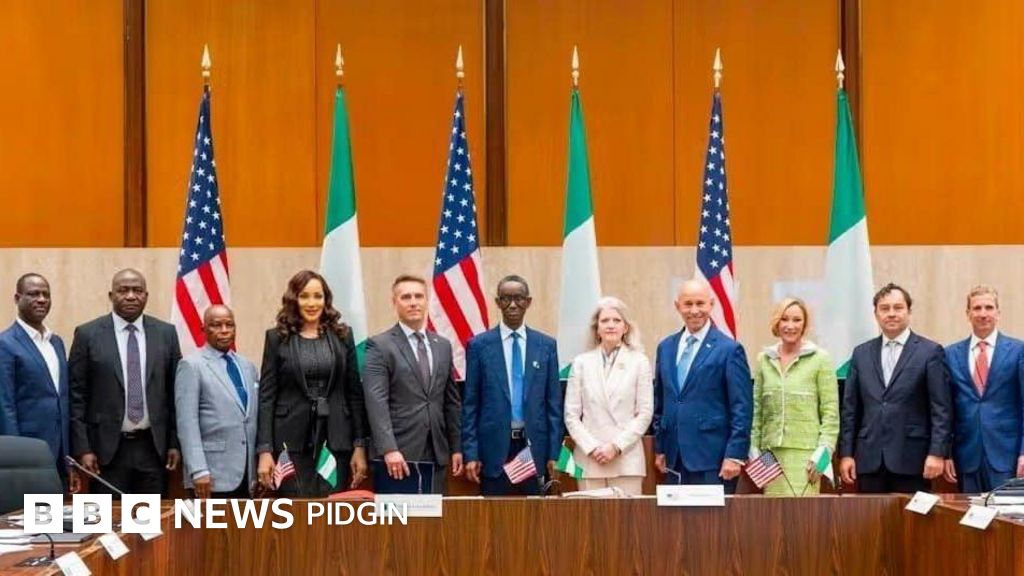
Reporting available from 14 to 21 August 2026 points to a fragmented security picture rather than a verified region-wide jihadist surge. In Mali, the Azawad Liberation Front and Jama'at Nusrat al-Islam wal-Muslimin are reported to have mounted coordinated attacks on 25 April, followed by further coordinated attacks on 4 July. Malian troops and Russia's Africa Corps reportedly withdrew from Kidal, Aguelhok and Tessalit, while the Malian government and Africa Corps described the attacks as a thwarted coup attempt. In Nigeria, US and Nigerian officials met in Washington on 14 August and a US-Nigeria operation reportedly killed Abu-Bilal Al-Manuki in the Lake Chad Basin, yet killings continue in Plateau, Benue and Kaduna States and ISWAP has been linked to attacks in Borno State and north-eastern Nigeria. Competing accounts of the Mali events and mixed attribution in Nigeria limit confidence in a single trend line.
Key judgments
- JNIM and the Azawad Liberation Front are likely to continue challenging Malian government and Russia's Africa Corps control in northern Mali over the next 1-3 months. The April and July coordinated attacks, the reported withdrawal from Kidal, Aguelhok and Tessalit, and the longer-running struggle with armed groups indicate persistent operational pressure. Confidence is medium because several high-confidence major-media claims support the pattern, but the reporting does not establish a current attack rate. (Confidence: medium · ASSESSED)
- I&W: Confirm: JNIM or the Azawad Liberation Front is reported to conduct another coordinated attack against two or more sites in Mali. (0-14 days)
- I&W: Break: Malian troops and Russia's Africa Corps re-establish and hold positions in Kidal, Aguelhok and Tessalit without a reported attack. (1-3 months)
- The extent of any FLA-JNIM territorial breakthrough in Kidal Region is likely to remain disputed, and confidence in claims of durable FLA control is low. Reporting that the FLA controlled Kidal and that Malian troops and Russia's Africa Corps withdrew conflicts with the account that the attacks were a thwarted coup attempt; the reported killing of Defence Minister Sadio Camara adds a further contested element to the April narrative. The assessment rests on internally conflicting, mainly major-media reporting. (Confidence: low · ASSESSED)
- I&W: Confirm: The FLA continues to claim control of Kidal while the Malian government and Russia's Africa Corps continue to describe the April attacks as a thwarted coup attempt. (0-14 days)
- I&W: Break: The Malian government or Russia's Africa Corps reports uninterrupted control of Kidal, Aguelhok and Tessalit and no further withdrawal. (1-3 months)
- US-Nigeria security cooperation is likely to continue, but is unlikely to end violence in the Lake Chad Basin, Borno State, Plateau State, Benue State and Kaduna State over the next 1-3 months. The Washington working-group meeting, the US-Nigeria operation that reportedly killed Abu-Bilal Al-Manuki, prior US airstrikes and Nigerian government efforts indicate sustained official response, while continuing killings and earlier ISWAP attacks show that operational pressure has not removed the threat. Confidence is medium because the cooperation and attacks are reported by major media, but the outcome of the latest operation is not independently corroborated in the supplied record. (Confidence: medium · ASSESSED)
- I&W: Confirm: US and Nigerian officials announce another joint operation, airstrike or security coordination activity involving the Lake Chad Basin or Borno State. (1-3 months)
- I&W: Break: No further killings are reported in Plateau, Benue or Kaduna States and no further ISWAP attack is reported in Borno State or north-eastern Nigeria. (1-3 months)
- It is unlikely that the available reporting supports treating recent violence across Mali and Nigeria as one region-wide jihadist campaign. Mali reporting identifies JNIM and the Azawad Liberation Front, Nigeria reporting identifies ISWAP in some incidents, and other killings in Plateau, Benue and Kaduna States are attributed to unknown attackers. Confidence is medium because the distinction appears across several reports, but attribution remains incomplete. (Confidence: medium · ASSESSED)
- I&W: Confirm: New incidents continue to assign responsibility separately to JNIM, the Azawad Liberation Front, ISWAP or unknown attackers. (0-3 months)
- I&W: Break: Reporting links coordinated attacks in Mali and Nigeria to a common command structure or identifies a shared operational plan. (1-3 months)
Outlook & scenarios
Dispersed violence continues (55%)
JNIM and the Azawad Liberation Front conduct further attacks in Mali while ISWAP and unknown attackers continue violence in Nigeria. Malian troops and Russia's Africa Corps retain some positions but do not restore uncontested control across Kidal Region. US-Nigeria security cooperation continues without ending attacks in the Lake Chad Basin or Nigeria's affected states.
Malian authorities consolidate (25%)
The Malian government and Russia's Africa Corps use the thwarted-coup narrative to consolidate their response, return to or hold Kidal, Aguelhok and Tessalit, and restrict further FLA-JNIM operations. This scenario requires the withdrawal reported after the April attacks to be reversed or followed by sustained state control.
Counterterrorism pressure constrains Nigerian attacks (25%)
The US-Nigeria working group, the operation against Abu-Bilal Al-Manuki, prior US airstrikes and Nigerian prosecutions constrain ISWAP activity in Borno State and the Lake Chad Basin. Violence by unknown attackers in Plateau, Benue and Kaduna States persists, leaving Nigeria's wider security problem unresolved.
Leadership disruption triggers retaliation (10%)
A low-probability, high-impact wildcard is rapid retaliation or fragmentation after the reported killing of Sadio Camara in Mali and Abu-Bilal Al-Manuki in the Lake Chad Basin. The result would be a short-term increase in attacks against Malian or Nigerian security targets, even if one armed-group leader has been removed.
Recommendations
- Maintain separate analytic tracks for JNIM, the Azawad Liberation Front, ISWAP and unknown attackers. Do not aggregate incidents in Mali and Nigeria into a single jihadist trend until responsibility and operational links are corroborated.
- Prioritise collection over the next 14 days on Kidal, Aguelhok and Tessalit. Compare Malian government and Russia's Africa Corps statements with FLA and JNIM claims, and track evidence of re-entry, withdrawal or sustained control.
- Track US-Nigeria security coordination after the 14 August Washington meeting. Record any new operation or airstrike in the Lake Chad Basin and Borno State, then assess whether attacks continue in Plateau, Benue and Kaduna States.
- Treat the reported deaths of Sadio Camara and Abu-Bilal Al-Manuki as leadership-disruption events. Monitor subsequent attack locations, target selection and claims of responsibility for signs of retaliation or organisational fragmentation.
- Do not use the 33 VIIRS thermal detections in West Africa as evidence of jihadist strikes. The detections record heat rather than cause, so they require corroboration from incident reporting before inclusion in the security trend.
Confidence & uncertainty
Overall confidence is medium. The supplied record contains several high-confidence major-media claims covering coordinated attacks, withdrawals, continuing killings and US-Nigeria engagement, with some official-government and multilateral reporting for associated security issues. Confidence is reduced by conflicting accounts of control, attribution and the outcome of the April Mali attacks, while several Nigerian incidents are attributed only to unknown attackers or rest on single-source reporting.
Cited sources
[1] Al Jazeera · US missionary kidnapped in Niger released after nine months in captivity (A) · sha256:0b18b11dcb7e [2] Wikipedia · 2026 Mali offensives (B) · sha256:6dcaf0b6ff15 [3] BBC News Pidgin · US Nigeria meeting: Country of particular concern tag remain as NSA Ribadu visit Washington - BBC News Pidgin (A) · sha256:616ffe4017b6 [4] Wikipedia · Timeline of the Islamic State (2026) (B) · sha256:48902e38c1d2
Source content hashes were computed at collection time; the cited text is preserved unmodified for the life of this product.
Red cell review: CONCUR WITH COMMENT
TLP:CLEAR