TLP:CLEAR · Disclosure is not limited.
Sahel security: Mali ‘Do Not Travel’, AES hardens break with ECOWAS, Morocco foils IS‑Sahel cell
Time window: Last 7 days · Audience: General analyst · Type: Situation report · DTG: 2026-07-08 04:12Z · Overall confidence: MEDIUM
BLUF
Mali remains an extreme‑risk operating environment for Westerners, while the Alliance of Sahel States is very likely to continue distancing itself from ECOWAS and Western security frameworks. Morocco’s arrest of an Islamic State Sahel‑loyal cell highlights transnational facilitation beyond the central Sahel.
Executive summary
In the reporting window, official advisories reiterate a no‑travel posture for Mali, citing high kidnapping and terrorism risks, violent crime, periodic unrest, and limited medical care. Mali, Niger and Burkina Faso, grouped as the Alliance of Sahel States, have already severed key defence ties with France and announced withdrawal from ECOWAS, signalling continued divergence. Morocco reported foiling plots by a cell loyal to Islamic State’s Sahel affiliate, seizing explosives precursors and a modified vehicle, which points to facilitation and intent outside the core conflict zone. NASA detected 11 thermal anomalies in Mali, but satellite heat signatures alone cannot confirm fighting. Adjacent Mauritania maintains movement restrictions and is assessed by the United States as a high‑risk environment in parts of the country.
Change from previous assessment
This update retains the assessment that Mali remains an extreme‑risk environment and that the Alliance of Sahel States is distancing from Western and ECOWAS frameworks. New in this window: NASA detected 11 thermal anomalies in Mali that are not attributable without corroboration, and Morocco reported dismantling an Islamic State Sahel‑loyal cell with explosives precursors and a modified vehicle. We do not have new claims in this cycle to corroborate or refute earlier reporting of escalated insurgent operations inside Mali’s north and centre, so we withhold additional assessment on insurgent momentum pending further evidence.
Key judgments
- Mali is almost certainly an extreme‑risk operating environment for U.S. citizens and other Westerners, with a high kidnapping threat, persistent terrorist risk, routine violent crime, periodic unrest, ongoing armed conflict, restricted official movement to Bamako, and limited medical services. (Confidence: high · REPORTED)
- I&W: U.S. Embassy Bamako or State Department maintains or tightens the prohibition on official travel outside Bamako. (0-14 days)
- I&W: Official advisories relax to permit limited official travel outside Bamako with enhanced security. (1-3 months)
- The Alliance of Sahel States, comprising Mali, Niger and Burkina Faso, is very likely to continue distancing itself from Western security partnerships and ECOWAS in the near term, given Mali’s 2022 termination of defence accords with France, Burkina Faso’s January 2023 termination, the 28 January 2024 ECOWAS withdrawal announcement, broader 2024 cuts to Western military relations, and rejection of an ECOWAS timetable extension. (Confidence: medium · ASSESSED)
- I&W: Public AES communiqué formalises deeper joint defence arrangements and dismisses ECOWAS reintegration proposals. (1-3 months)
- I&W: AES leadership announces formal talks with ECOWAS on sequencing re‑engagement or accepts a revised withdrawal timetable. (1-3 months)
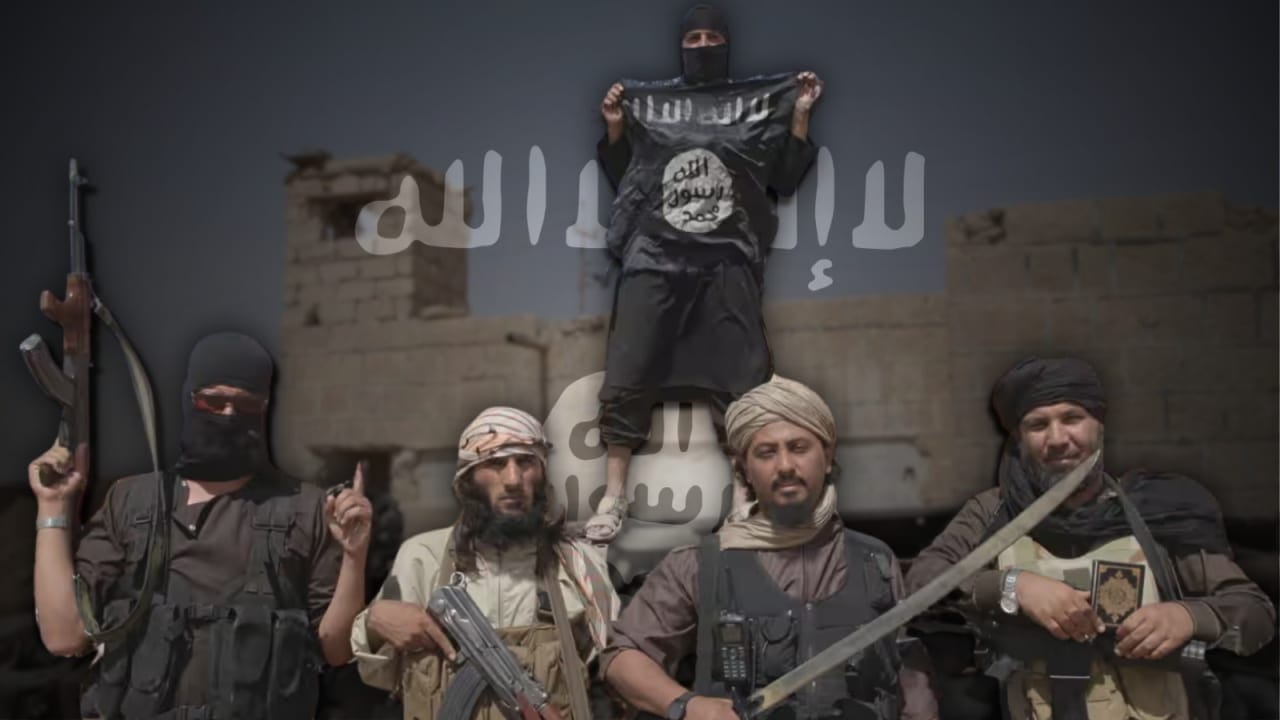
- Islamic State Sahel‑linked facilitation very likely extends into North Africa, as Morocco reported on 6 July arrests of 10 suspects loyal to the Sahel affiliate and the seizure of explosives precursors, a modified vehicle, and other materials consistent with planned attacks. (Confidence: medium · ASSESSED)
- I&W: Moroccan court filings or official briefings disclose communications or material transfers between Moroccan detainees and IS Sahel operatives in Mali, Niger or Burkina Faso. (1-3 months)
- I&W: Moroccan authorities recast the network as domestically inspired without operational links to IS Sahel. (1-3 months)
- The threat of mass‑casualty militant attacks in Niger’s border regions is likely to persist, given demonstrated capabilities in 2019-2021 to conduct base assaults and multi‑village attacks in Tillabéri and Tahoua with death tolls ranging from dozens to over 100. (Confidence: medium · ASSESSED)
- I&W: New reported attack in Tillabéri or Tahoua causing 20+ fatalities or an assault on a Nigerien military post. (1-3 months)
- I&W: Sustained 3‑month period without reported large‑scale attacks in Tillabéri and Tahoua. (3-6 months)
- Recent NASA satellite detections of 11 thermal anomalies in Mali are almost certainly insufficient to attribute to fighting without independent corroboration, since thermal signatures record heat, not cause. (Confidence: high · REPORTED)
- I&W: Geolocated imagery or reliable ground reporting links specific detections to combat events at the same time and place. (0-14 days)
- I&W: Subsequent reporting identifies the anomalies as agricultural burns, industrial fires, or wildfires unrelated to conflict. (0-14 days)
- Mauritania’s western‑Sahel security environment remains elevated in parts of the country, with government‑designated no‑movement areas, frequent violent crime outside central Nouakchott, daylight‑only official travel outside the capital, and a U.S. advisory to reconsider travel due to terrorism and crime. (Confidence: high · REPORTED)
- I&W: Mauritanian authorities expand or contract designated no‑movement zones. (1-3 months)
- I&W: U.S. Embassy Nouakchott adjusts restrictions on official travel outside the capital, including night‑time movements. (1-3 months)
Outlook & scenarios
AES consolidates its strategic pivot away from ECOWAS and Western defence ties (60%)
Mali, Niger and Burkina Faso deepen coordination within the Alliance of Sahel States after prior terminations of French defence accords and their joint ECOWAS withdrawal announcement, marginalising Western military access and complicating regional diplomacy.
IS‑Sahel facilitation nodes north of the Sahara drive attempted plots (50%)
Following Morocco’s 6 July arrests of an IS‑Sahel loyal cell and seizures of explosives precursors and a modified vehicle, additional disruption operations reveal logistics and recruitment linkages between the Sahel theatre and North Africa, elevating cross‑regional CT priorities.
Status quo persists: Mali remains a no‑travel environment with high kidnap and terrorism risks (80%)
Official restrictions keep U.S. personnel confined to Bamako amid high kidnapping and terrorism risk, violent crime, periodic unrest and limited medical care, sustaining an operating posture reliant on strict movement control and medevac planning.
Partial re‑engagement: AES explores limited accommodation with ECOWAS (20%)
Pressure from border economies and security operations prompts exploratory AES, ECOWAS talks on procedures and timelines, tempering but not reversing the bloc’s strategic autonomy drive.
Recommendations
- Maintain a do‑not‑travel posture for Mali and confine any essential official movement to Bamako with layered kidnap mitigation, given the high kidnapping and terrorism risk, violent crime, unrest, and limited medical care.
- Pre‑position medevac options and remote support for Mali operations, accounting for limited in‑country emergency care and restricted overland movement.
- Task liaison elements to engage Morocco’s BCIJ for declassified leads on IS‑Sahel linkages, prioritising communications, finance and travel patterns connecting Morocco with Mali, Niger and Burkina Faso.
- Prioritise OSINT collection on AES communiqués and ECOWAS statements for indicators of further bloc consolidation or openings for dialogue; prepare options papers for engagement sequencing if talks emerge.
- Use NASA FIRMS thermal detections in Mali strictly as tips. Require time‑and‑place corroboration from geolocated imagery or reliable ground reporting before treating any detection as conflict‑related.
- For Mauritania transits, adhere to daylight‑only movements outside Nouakchott, avoid areas designated off‑limits by authorities, and concentrate activity in central Nouakchott neighbourhoods with established security footprints.
Confidence & uncertainty
Overall confidence is medium. Several judgments rest on multiple, mutually reinforcing official advisories and multilateral or major‑media reporting, including Mali’s do‑not‑travel posture and Mauritania’s movement restrictions. The assessment of AES distancing is grounded in multiple reported actions across 2022-2024 but relies on non‑official compilations for some elements and extrapolates near‑term intent, which lowers confidence. The inference about IS‑Sahel facilitation into Morocco builds on Moroccan arrests and seizures but lacks independent corroboration of command‑and‑control links. Reporting on historic attack patterns in Niger is credible but stale, which constrains confidence in forward risk characterisation.
Alternative analysis (red cell)
Several forward‑looking judgments in the brief depend mainly on policy announcements or isolated incidents rather than contemporaneous, multi‑source operational evidence. It is defensible to interpret AES withdrawals and a Morocco arrest operation as potentially tactical or isolated rather than definitive evidence of durable regional trends; determining persistence of capabilities or distancing requires current cooperation records, communications/financial traces, and recent incident trends. Absent that corroboration, stronger predictive language overstates what the ledger supports.
Intelligence gaps
- [EEI 1.2 · PARTIAL] Observed movement and size of armed columns (vehicle counts, heavy weapons present) along approach routes to population centers or borders documented by imagery, local reporting, or border guards. Recommended collection: imagery/SATCOM
- [EEI 1.3 · PARTIAL] Reports of occupation, administration, or imposition of checkpoints/taxes by armed groups in named towns, villages, markets, or on specified road segments. Recommended collection: OSINT (local media/social)
- [EEI 1.4 · UNCOVERED] Seizure or acquisition of heavy weapons or air-defense systems (mortars >81mm, artillery, armored vehicles, MANPADS) attributed to specific groups as evidenced by photos, captured weapons inventories, or weapons interdictions. Recommended collection: forensics/field reporting
- [EEI 2.1 · UNCOVERED] Internal security force movements: redeployment of army units, garrison withdrawals, or mass troop movements toward/away from capitals and regional command posts. Recommended collection: imagery/SATCOM
- [EEI 2.2 · PARTIAL] Detentions, public dismissals, resignations, or public statements by senior military, police, or government officials indicating factional splits (named individuals, ranks, units). Recommended collection: diplomatic/OSINT
- [EEI 2.3 · PARTIAL] Changes in foreign military footprints or security agreements: arrival/departure of foreign troops, opening/closure of foreign bases, visible presence of private military contractors (identified personnel/vehicles). Recommended collection: OSINT/imagery
- [EEI 2.4 · UNCOVERED] Targeted external support actions: sanctions, suspension of aid, delivery of weapons or logistics from foreign state or non-state actors (documented shipments, bank transfers, public announcements). Recommended collection: financial/diplomatic
- [EEI 3.2 · UNCOVERED] Recorded movements of known smuggling routes and convoy volumes: counts of commercial/privately registered vehicles and informal river crossings on specific cross-border corridors. Recommended collection: ground/HUMINT
- [EEI 3.3 · UNCOVERED] Monitored financial flows linked to illicit trade: large cash movements, changes in declared gold exports at named mines/ports, or arrests of money couriers with amounts and origins. Recommended collection: financial/forensics
- [EEI 3.4 · PARTIAL] Observed changes at border security posts: closures, reductions in personnel, destroyed checkpoints, or documented agreements allowing free movement at named crossings. Recommended collection: imagery/OSINT
Cited sources
[1] U.S. Department of State · Mali Travel Advisory | Travel.State.gov (A) · sha256:f88171157722 [2] Wikipedia · Alliance of Sahel States (A) · sha256:54f03dd824e0 [3] Jerusalem Post · Morocco prevents attacks by cell loyal to Islamic State in Sahel (B) · sha256:3ae67882be2b [4] Wikipedia · Islamist insurgency in Niger (B) · sha256:ab22fcc124ab [5] NASA · NASA FIRMS thermal detections — Mali (2d) (A) · sha256:5091a5c412f4 [6] U.S. Department of State · Mauritania Travel Advisory (A) · sha256:4f3319574e1a
Source content hashes were computed at collection time; the cited text is preserved unmodified for the life of this product.
Red cell review: PARTIAL DISSENT
TLP:CLEAR