TLP:CLEAR · Disclosure is not limited.
Sahel Security: Mali Drone Strikes and Northern Control Claims
Time window: Last 7 days · Audience: General analyst · Type: Situation report · DTG: 2026-11-06 04:05Z · Overall confidence: LOW
BLUF
Reports of civilian deaths in Malian military drone strikes at Amasrakad and Zouera support continued concern about civilian harm, but the claims do not establish the current strike tempo. A separate September report described coordinated FLA and JNIM attacks and seizures of territory in northern Mali; the available evidence does not establish whether that control persisted.
Executive summary
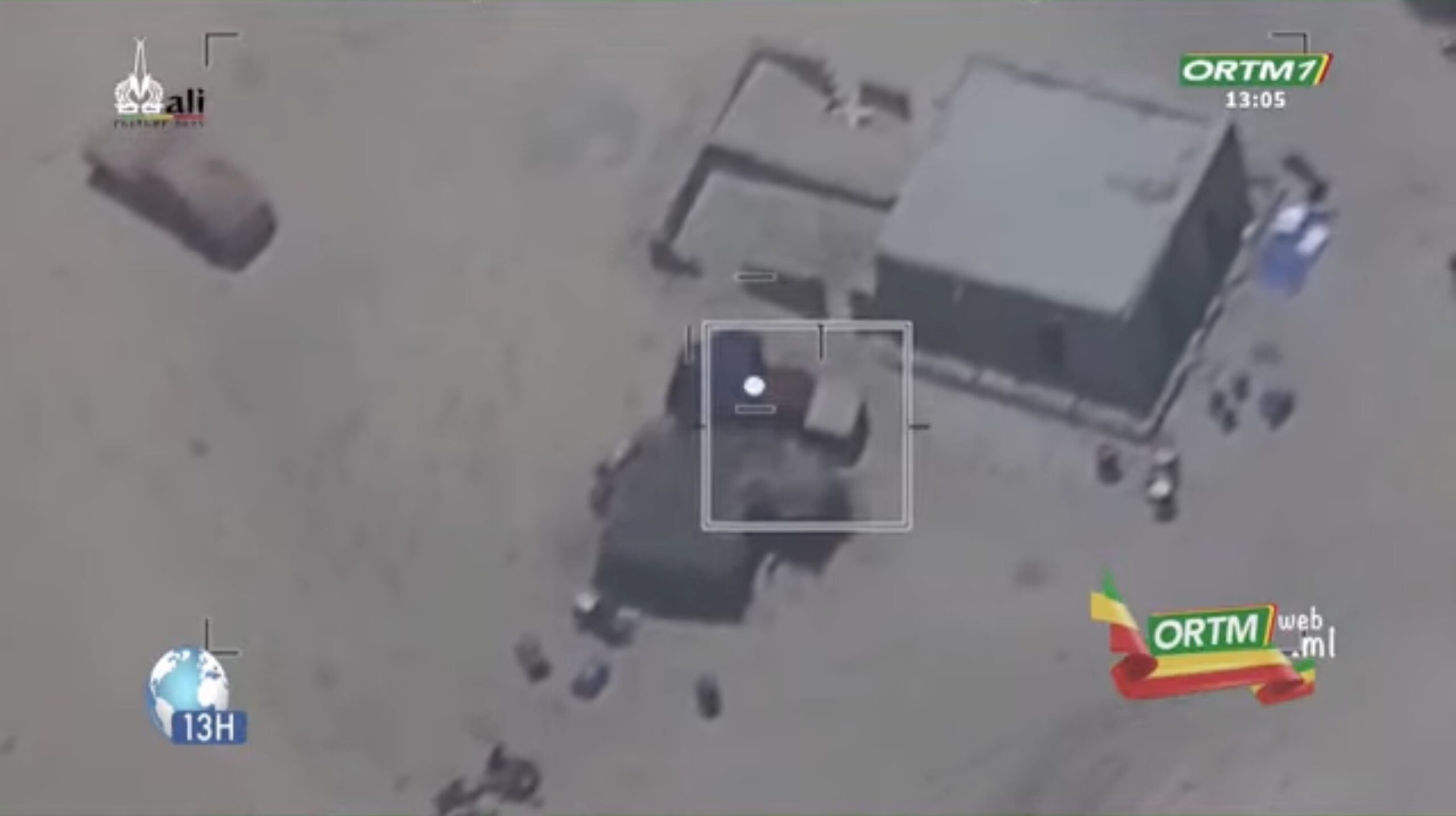
The reporting is mainly retrospective, with details on Malian strikes in Amasrakad in 2024 and Zouera in July 2025, alongside a September 2026 account of FLA and JNIM attacks in northern Mali. At Zouera, FAMa described a strike on a terrorist supply vehicle, while MSF reported four people killed and five injured. The claims do not resolve the target or the victims’ status. No supplied event is dated within the 30 October to 6 November 2026 briefing window, so this material provides limited evidence of current conditions.
Change from previous assessment
No material change to the core assessment of civilian-harm risk from Malian drone operations. This brief adds the reported Zouera casualty tally and geolocation details, and a separate report of FLA-JNIM seizures in northern Mali, but the underlying strike incidents are from 2024 and 2025 and the northern Mali account does not establish current control. No supplied event is dated from 30 October to 6 November 2026.
Key judgments
- Malian military drone operations likely carry a civilian-harm risk, based on reported civilian deaths in the March 2024 Amasrakad strikes and reported deaths and injuries at Zouera in July 2025. Amnesty International findings and eyewitness testimony support the Amasrakad reporting; MSF reported the Zouera casualties, while Bellingcat geolocated the strike site. These historical incidents do not establish the frequency or effects of Malian strikes in 2026. (Confidence: medium · ASSESSED)
- I&W: Confirm: independent medical or witness reporting documents civilian deaths in a geolocated FAMa drone strike during the next 1-3 months. (1-3 months)
- I&W: Break: an independent review of documented FAMa drone strikes during the next 1-3 months verifies the targets and finds no civilian casualties. (1-3 months)
- The Zouera strike’s target and casualty account remains disputed. FAMa presented the 8 July 2025 strike as an operation against a terrorist supply vehicle; MSF reported four people killed, including three young girls, and five injured. The claims establish the competing accounts, but do not resolve the target or the victims’ status. (Confidence: low · REPORTED)
- I&W: Confirm or resolve the dispute: an independent field investigation identifies the struck vehicle, its occupants and the status of those killed or injured. (0-3 months)
- I&W: Break the unresolved-account judgment: independently verified imagery or field records establish the target and corroborate or disprove MSF’s casualty tally. (0-3 months)
- A September 2026 report indicates that the Azawad Liberation Front and JNIM carried out coordinated attacks against the Malian military and Russia’s Africa Corps and seized parts of northern Mali. This rests on a single report and does not establish which localities were seized or whether FLA or JNIM retained control. (Confidence: low · REPORTED)
- I&W: Confirm continuing joint activity or control: independent reporting names northern Mali localities where FLA and JNIM conduct joint operations or retain control. (0-3 months)
- I&W: Break the continuing-control interpretation: credible reporting identifies localities previously reported seized and documents Malian forces regaining them. (0-3 months)
Outlook & scenarios
Continued concern over civilian harm from Malian drone operations (45%)
There is a roughly even chance that, over the next six months, further reporting on FAMa drone operations will raise civilian-harm concerns. The Amasrakad and Zouera accounts support this concern, but the supplied claims do not establish the current strike tempo.
Independent evidence clarifies the Zouera strike (40%)
Independent field reporting or imagery clarifies the Zouera target and casualty account within six months. That evidence could corroborate MSF’s reported tally, the FAMa target description, or both in part; the current claims leave the dispute unresolved.
Further FLA-JNIM gains in northern Mali (15%)
Further coordinated FLA and JNIM operations result in additional territorial losses for the Malian military in northern Mali. This is an unlikely but high-impact outcome: the available reporting describes earlier coordination and seizures, but does not establish present control or a continuing operational pattern.
Recommendations
- In the next reporting cycle, treat Amasrakad and Zouera as historical evidence of civilian-harm risk, not as measures of FAMa’s 2026 strike rate.
- Keep the FAMa target description and MSF casualty reporting separate in assessments of Zouera until independent evidence identifies the target and victims.
- Seek independent geolocation, medical reporting and witness accounts for any new FAMa drone strike, recording the strike date, location, reported target, casualties and source basis.
- Track reporting that names specific northern Mali localities and distinguishes FLA, JNIM, Malian military and Africa Corps activity or control.
Confidence & uncertainty
Overall confidence is low because the claim set is sparse and largely draws on one September 2026 joint Bellingcat and Jeune Afrique investigation. Some incident details have separate support from Amnesty International, eyewitness testimony or MSF, but the Zouera target and casualty accounts remain unresolved, and the northern Mali seizure claim rests on a single report. The supplied claims contain no event dated within the briefing window.
Intelligence gaps
- [EEI 1.2 · UNCOVERED] Observed movement and size of armed columns (vehicle counts, heavy weapons present) along approach routes to population centers or borders documented by imagery, local reporting, or border guards. Recommended collection: imagery/SATCOM
- [EEI 1.3 · PARTIAL] Reports of occupation, administration, or imposition of checkpoints/taxes by armed groups in named towns, villages, markets, or on specified road segments. Recommended collection: OSINT (local media/social)
- [EEI 1.4 · UNCOVERED] Seizure or acquisition of heavy weapons or air-defense systems (mortars >81mm, artillery, armored vehicles, MANPADS) attributed to specific groups as evidenced by photos, captured weapons inventories, or weapons interdictions. Recommended collection: forensics/field reporting
- [EEI 2.1 · UNCOVERED] Internal security force movements: redeployment of army units, garrison withdrawals, or mass troop movements toward/away from capitals and regional command posts. Recommended collection: imagery/SATCOM
- [EEI 2.2 · UNCOVERED] Detentions, public dismissals, resignations, or public statements by senior military, police, or government officials indicating factional splits (named individuals, ranks, units). Recommended collection: diplomatic/OSINT
- [EEI 2.3 · UNCOVERED] Changes in foreign military footprints or security agreements: arrival/departure of foreign troops, opening/closure of foreign bases, visible presence of private military contractors (identified personnel/vehicles). Recommended collection: OSINT/imagery
- [EEI 2.4 · PARTIAL] Targeted external support actions: sanctions, suspension of aid, delivery of weapons or logistics from foreign state or non-state actors (documented shipments, bank transfers, public announcements). Recommended collection: financial/diplomatic
- [EEI 3.1 · UNCOVERED] Interdictions or seizures at borders/markets of weapons, ammunition, fuel, or contraband (type/quantity, seizure location, alleged origin/destination). Recommended collection: border/customs
- [EEI 3.2 · UNCOVERED] Recorded movements of known smuggling routes and convoy volumes: counts of commercial/privately registered vehicles and informal river crossings on specific cross-border corridors. Recommended collection: ground/HUMINT
- [EEI 3.3 · UNCOVERED] Monitored financial flows linked to illicit trade: large cash movements, changes in declared gold exports at named mines/ports, or arrests of money couriers with amounts and origins. Recommended collection: financial/forensics
- [EEI 3.4 · UNCOVERED] Observed changes at border security posts: closures, reductions in personnel, destroyed checkpoints, or documented agreements allowing free movement at named crossings. Recommended collection: imagery/OSINT
Red cell review: CONCUR
TLP:CLEAR