TLP:CLEAR · Disclosure is not limited.
Sahel Security: New Diplomatic Engagement, No Evidence of a Fresh Military Response
Time window: Last 1 day · Audience: General analyst · Type: Situation report · DTG: 2026-10-09 15:04Z · Overall confidence: MEDIUM
BLUF
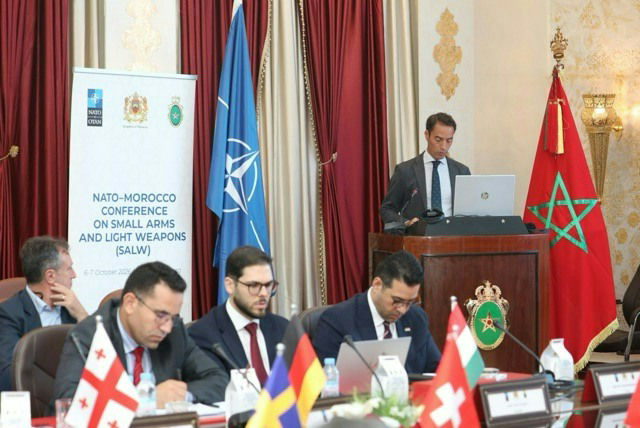
NATO Special Representative Javier Colomina’s 6 and 7 October visit to Rabat included discussion of Sahel security, but the supplied reporting does not establish a fresh rise in attacks or a new military response in Mali, Burkina Faso or Niger. The new information is diplomatic, not operational.
Executive summary
NATO reported that Colomina met Moroccan officials and took part in the first regional conference on small arms and light weapons held with partner countries under NATO’s southern neighbourhood action plan. The discussions included terrorism and maritime security in the Sahel. The available reporting contains no incident-level account, comparable attack data or deployment details for Mali, Burkina Faso or Niger, so it does not update the prior assessment of attack tempo or military activity.
Change from previous assessment
Since the 8 October brief, the assessment adds Colomina’s 6 and 7 October Rabat visit, the NATO-Morocco small-arms conference and discussion of Sahel security. This increases confidence that Sahel issues featured in diplomatic engagement, but does not establish a rise in attacks or a new military response. The supplied reporting does not update the prior judgments on Mali, Burkina Faso, Niger, Russian military partners or the vessel Patria.
Key judgments
- NATO’s engagement in Rabat on 6 and 7 October was diplomatic: Javier Colomina met Moroccan foreign ministry, interior ministry and royal armed forces officials, and attended a regional small-arms conference. The reported agenda included Sahel security, terrorism and maritime security, but no operational commitment in the Sahel was announced. Confidence is medium because NATO is a direct source for its own visit, but the account is not independently corroborated. (Confidence: medium · REPORTED)
- I&W: Confirm continued diplomatic engagement if NATO or Morocco publishes a follow-up naming a working group, timetable or small-arms programme; break this assessment if an official statement documents an operational commitment in Mali, Burkina Faso or Niger. (1-3 months)
- It is unlikely that the supplied reporting establishes a fresh rise in attacks or a new military response in Mali, Burkina Faso or Niger. The only current Sahel-specific material records discussion of regional security during Colomina’s Rabat visit, not attack incidents, casualty figures or deployments. Confidence is low because this is a narrow reporting set and contains no comparable incident series. (Confidence: low · ASSESSED)
- I&W: Confirm the absence of evidence for a new rise if a comparable 30-day incident series for Mali, Burkina Faso and Niger shows no increase against the preceding 30 days; break this judgment if a multi-source incident series shows an increase in attack frequency or deaths. (1-3 months)
- I&W: Break the assessment of no reported new military response if official statements or independently corroborated reporting identify a new deployment or operation by the armed forces of Mali, Burkina Faso or Niger. (0-14 days)
Outlook & scenarios
Diplomatic engagement continues without an operational shift (55%)
NATO and Morocco are likely to continue discussion-level cooperation after Colomina’s visit, consistent with his stated expectation that cooperation will strengthen. The available reporting does not indicate that this engagement will produce a military response in the Sahel.
Small-arms discussions produce a defined follow-up (30%)
NATO and Morocco are likely to set out a follow-up process for the small-arms work discussed at the conference. A formal programme or timetable would make the engagement more concrete, but would not by itself demonstrate a change in attack tempo or military activity in Mali, Burkina Faso or Niger.
Low-probability, high-impact expansion into a Sahel operational mechanism (5%)
It is unlikely on the current evidence that NATO and Morocco will establish a formal operational mechanism explicitly covering Sahel security. If announced, such a mechanism would mark a substantial change from the diplomatic engagement reported so far.
Recommendations
- Track NATO and Moroccan follow-up statements for named programmes, implementation dates or operational commitments, and distinguish those from general statements of intent.
- For Mali, Burkina Faso and Niger, build a dated incident and deployment record using comparable reporting over successive 30-day periods before assessing whether attack tempo or military activity has changed.
- Do not treat discussion of Sahel security at the Rabat conference as evidence of a new NATO or Moroccan military response in the Sahel.
Confidence & uncertainty
Overall confidence is medium because NATO is a direct, high-reliability source for the visit and its stated agenda, but the diplomatic account is not independently corroborated. The principal uncertainty is the absence of current, comparable incident and deployment reporting for Mali, Burkina Faso and Niger; confidence in any judgment about changes in attack tempo or military response is therefore low.
Intelligence gaps
- [EEI 1.1 · UNCOVERED] Recent jihadist attack incidents in the last 72 hours: exact locations (GPS or nearest town), date/time, target type (market, military base, convoy, village, border post), weapon systems used, and reported casualty counts. Recommended collection: open source/social_media
- [EEI 1.2 · UNCOVERED] Observed jihadist force movements and posture within 100 km of major towns or critical infrastructure: convoy sightings, checkpoints established/removed, concentrations of fighters, and annotated route preparations. Recommended collection: aerial ISR/imagery
- [EEI 1.3 · UNCOVERED] Host-nation and partner military defensive measures near population centers and key infrastructure: troop redeployments, new checkpoints/curfews, roadblocks, air sortie launches, and activation of rapid reaction units (locations and unit IDs if available). Recommended collection: military liaison/satellite
- [EEI 1.4 · UNCOVERED] Humanitarian indicators of imminent threat to civilians: sudden internal displacement flows or mass movements within 72 hours, shelter/IDP site openings, and major road closures affecting civilian evacuation routes. Recommended collection: humanitarian/NGO
- [EEI 2.1 · UNCOVERED] Reports or imagery confirming weapons and materiel holdings: number and types of heavy weapons observed or seized (mortars, artillery, technicals, IED caches, MANPADS), locations of caches, and recent rearmament deliveries. Recommended collection: imagery/HUMINT
- [EEI 2.2 · UNCOVERED] Active recruitment and propaganda indicators: new recruitment messages/accounts, numbers of claimed/new recruits by region, youth/ethnic group targeting, and physical recruitment events or forced conscriptions. Recommended collection: social_media/HUMINT
- [EEI 2.3 · UNCOVERED] Cross-border operational indicators: seizures or sightings of convoys crossing borders, capture/abandonment of border posts, patterns of fighters moving between neighboring countries, and use of transnational smuggling routes. Recommended collection: border_patrol/satellite
- [EEI 2.4 · UNCOVERED] Financing and logistics flows that sustain operations: recent seizures of cash/drugs/minerals, transactions or remittances linked to identified networks, and commercial transport companies or ports repeatedly used for shipments to insurgent-held areas. Recommended collection: financial/customs
- [EEI 3.1 · UNCOVERED] Force posture and sustainment: foreign and host-nation troop deployments (unit types, strength estimates, bases used), changes in airbase activity (sortie rates, aircraft types, times), and frequency of logistics convoys or resupply flights. Recommended collection: diplomatic/military_reporting/satellite
- [EEI 3.2 · UNCOVERED] Combat effectiveness indicators from recent engagements: verified casualty and equipment loss counts for state forces and jihadist units, territory regained or lost after operations, and number of operations meeting objectives versus failures. Recommended collection: open source/military_reports
- [EEI 3.3 · UNCOVERED] Critical sustainment vulnerabilities: reported ammunition/fuel shortages, road/bridge interdictions affecting supply lines, strikes on logistics hubs, and closure rates of key supply routes. Recommended collection: logistics/imagery
- [EEI 3.4 · UNCOVERED] Political and legal decisions influencing operations: government decrees (states of emergency, mobilization orders), approved cross-border operations or foreign troop agreements, and public statements altering rules of engagement. Recommended collection: diplomatic/government
Cited sources
[1] NATO · Visite au Maroc du représentant spécial du secrétaire général pour le voisinage méridional (A) · sha256:dd1a1a68b31f
Source content hashes were computed at collection time; the cited text is preserved unmodified for the life of this product.
Red cell review: CONCUR
TLP:CLEAR