TLP:CLEAR · Disclosure is not limited.
Sahel Security Situation: Algeria-Niger Deployment and Mali Defence Contacts
Time window: Last 7 days · Audience: General analyst · Type: Situation report · DTG: 2026-10-28 04:08Z · Overall confidence: MEDIUM
BLUF
Algeria is likely to proceed with sending ANP units to Niger after parliamentary approval, but the force size, start date and mission remain unclear. Russia-Mali defence talks on 27 October show continued official engagement, not a documented operational shift.
Executive summary
Both chambers of Algeria’s parliament approved sending ANP units to Niger on 25 October. The Council of the Nation’s reported tally was 148 votes in favour out of 148 voters. This follows a 21 October military cooperation protocol signed in Algiers by ANP chief of staff Saïd Chanegriha and Nigerien defence minister Salifou Mody; its terms have not been made public. On 27 October, Russian Deputy Defence Minister Vasily Osmakov met Malian Minister-Delegate Omar Diarra in Moscow to discuss defence cooperation. Separate reporting describes JNIM attacks on Malian forces and fuel convoys in September, but provides no evidence of a new attack during this reporting period. Cadre Harmonisé’s estimate of 9.1 million people facing acute food insecurity in Burkina Faso, Chad, Mali, Mauritania and Niger covers the June to August 2026 lean season, not current October conditions.
Change from previous assessment
Since the prior brief on 27 October, this assessment adds the reported Council of the Nation vote tally and the 27 October Moscow meeting between Vasily Osmakov and Omar Diarra. It also incorporates reporting on the 21 October Chanegriha-Mody military cooperation protocol. These details strengthen the picture of Algeria-Niger and Russia-Mali defence contacts, but do not confirm ANP arrival, define the Niger mission or establish an operational shift in Mali. The claims available for this run do not resolve the prior brief’s outstanding attribution and casualty uncertainties.
Key judgments
- Algeria is likely to proceed with sending ANP units to northern Niger. Both parliamentary chambers approved the deployment on 25 October, and Algeria and Niger signed a military cooperation protocol four days earlier. Sonatrach subsidiary SIPEX operates the Kafra oil field with Niger’s Sonidep about 85 km from the Algerian border, but the available reporting does not establish the field as the deployment’s mission. The force size, start date and mandate remain unclear. (Confidence: medium · ASSESSED)
- I&W: An Algerian or Nigerien official announcement gives a deployment date, force size or mission mandate, confirming implementation is moving forward. (0-14 days)
- I&W: No official deployment notice or independently reported arrival of ANP personnel appears within three months, weakening the assessment that deployment will proceed soon. (1-3 months)
- Russian-Malian defence dialogue continued in Moscow on 27 October. Russian Deputy Defence Minister Vasily Osmakov and Malian Minister-Delegate Omar Diarra discussed bilateral defence cooperation and prospects for further interaction; the report does not identify a specific agreement, delivery or operation. (Confidence: medium · REPORTED)
- I&W: A Russian or Malian ministry announcement names a new defence agreement, equipment delivery or joint operation, confirming substantive follow-through. (0-30 days)
- I&W: No follow-up meeting or specific defence commitment is reported after the Moscow talks, weakening the case that the meeting produced operational change. (1-3 months)
- JNIM demonstrated an ability to inflict heavy losses on Malian and Russia Africa Corps personnel and attack escorted fuel convoys in September. This supports a continuing risk to Malian military positions and supply routes, but the available reporting does not establish renewed JNIM attacks during 21 to 28 October. (Confidence: low · ASSESSED)
- I&W: Independent reporting or a JNIM claim identifies a new attack on a Malian military position or an escorted fuel convoy travelling from Senegal towards Bamako. (0-30 days)
- I&W: Reporting documents fuel convoys reaching Bamako without attack and no new strikes on Malian military positions, weakening the near-term assessment of renewed disruption. (1-3 months)
- Resource scarcity is likely to add to local conflict pressure in the Sahel, but the evidence does not establish the level of pressure in October 2026. Reported resource-scarcity-linked incidents rose by more than 114 percent between 2019 and 2023, while the estimate of 9.1 million people facing acute food insecurity in five Sahel countries applies to the June to August 2026 lean season. (Confidence: low · ASSESSED)
- I&W: A new Cadre Harmonisé assessment reports acute food insecurity in Burkina Faso, Chad, Mali, Mauritania or Niger beyond the June to August period, confirming continued humanitarian pressure. (1-3 months)
- I&W: Credible reporting documents new disputes over land, water or livestock, or attacks on water networks, supporting the assessment that resource competition is adding to local insecurity. (0-3 months)
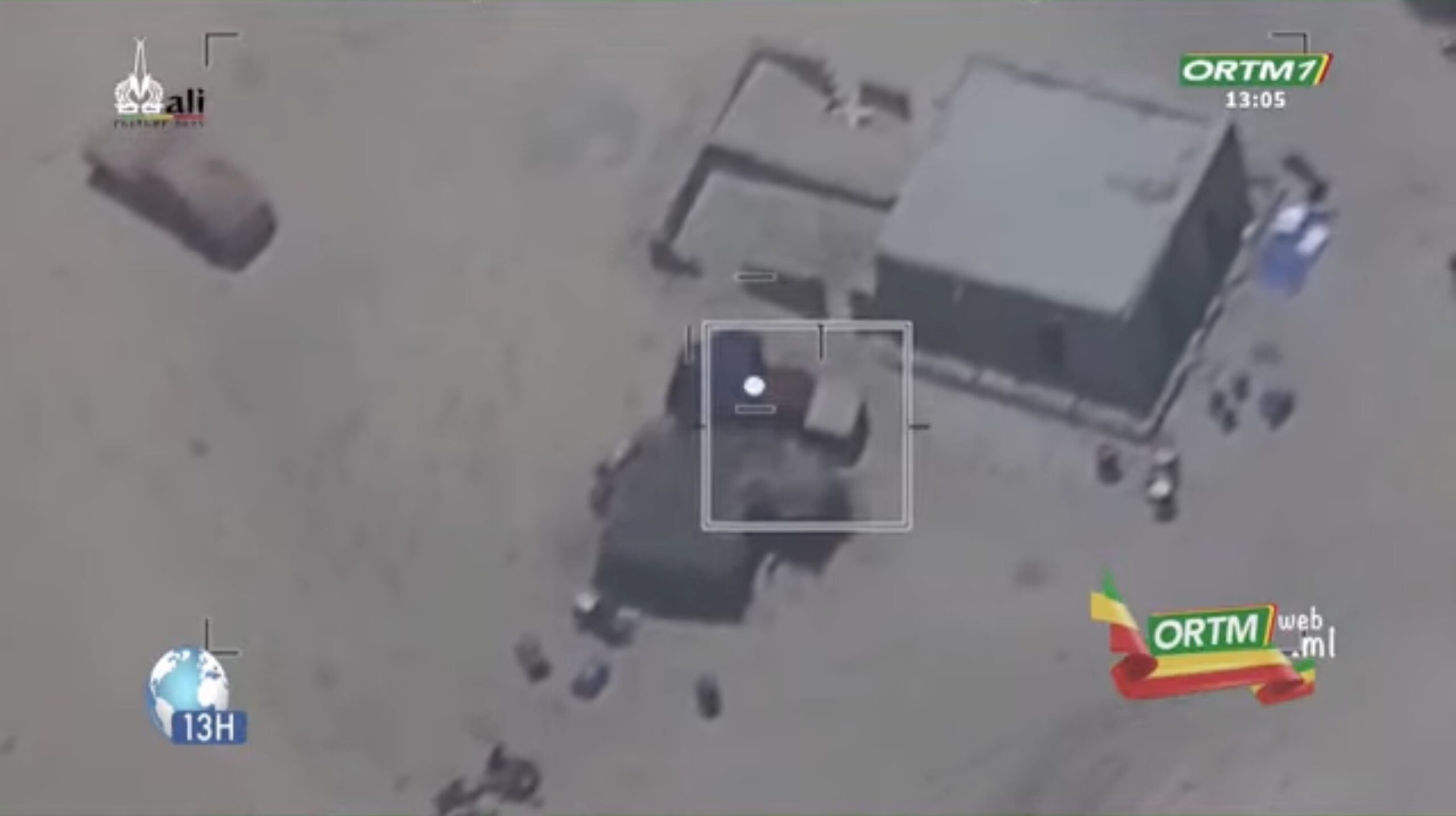
- It is unlikely the available reporting resolves the civilian impact of Malian military drone strikes in Zouera and Amasrakad. FAMa presented its 8 July 2025 Zouera strike as a successful attack on a terrorist supply vehicle, while Médecins Sans Frontières reported four deaths, including three young girls, and five injured. For Amasrakad, Amnesty International reported at least 13 civilian deaths across the strikes, while a witness account attributed 13 deaths to the second strike alone. (Confidence: low · ASSESSED)
- I&W: A published independent review reconciles the casualty figures for the Zouera or Amasrakad strikes, reducing uncertainty about civilian harm. (1-3 months)
- I&W: New geolocated imagery or an independently documented casualty list corroborates one account of either strike, strengthening that account relative to the competing reporting. (1-3 months)
Outlook & scenarios
Algerian deployment proceeds with details clarified (55%)
Algeria implements the parliamentary-approved deployment to northern Niger and provides more detail on its timing, size or mandate. The 21 October cooperation protocol provides a bilateral framework, while the Russia-Mali meeting remains a separate diplomatic track.
Approval is not followed by a prompt deployment (30%)
Algeria and Niger maintain defence contacts, but no publicly confirmed ANP arrival or defined mission follows within the next three months. The deployment decision remains distinct from operational implementation.
JNIM renews attacks on Malian forces and fuel routes (15%)
As a low-probability, high-impact outcome, JNIM repeats the September pattern of striking Malian military positions and escorted fuel convoys travelling towards Bamako. Such attacks would increase pressure on Malian force protection and supply movements.
Recommendations
- For the next 14 days, track Algerian and Nigerien official statements and independent reporting for ANP arrival, unit size, deployment locations and mission terms. Keep parliamentary authorisation separate from evidence of deployment.
- Monitor Russian and Malian defence ministry readouts after the Osmakov-Diarra meeting for a named agreement, equipment delivery or joint operation. Do not infer an Africa Corps drawdown from the meeting alone.
- Track independent reporting on JNIM attacks against Malian military positions and fuel convoys on the Senegal-Bamako route. Record whether reports confirm an attack, identify the source of attribution and document any convoy disruption.
- Treat the 9.1 million acute food insecurity figure as a June to August seasonal estimate. Seek a later Cadre Harmonisé or country-level assessment before using it as an October baseline.
- Keep the Zouera and Amasrakad drone-strike accounts explicitly contested in reporting. Do not present either the military targeting account or disputed casualty totals as independently verified.
Confidence & uncertainty
Overall confidence is medium. The Algerian parliamentary approval and the Russian-Malian meeting are reported by identifiable media sources, but the deployment’s operational details are not established and the Moscow meeting is reported through a Russian official account. Reporting on JNIM attacks and resource pressures is largely single-source or historical, and the Malian drone-strike accounts contain unresolved differences over civilian casualties.
Intelligence gaps
- [EEI 1.2 · PARTIAL] Observed movement and size of armed columns (vehicle counts, heavy weapons present) along approach routes to population centers or borders documented by imagery, local reporting, or border guards. Recommended collection: imagery/SATCOM
- [EEI 1.3 · UNCOVERED] Reports of occupation, administration, or imposition of checkpoints/taxes by armed groups in named towns, villages, markets, or on specified road segments. Recommended collection: OSINT (local media/social)
- [EEI 1.4 · UNCOVERED] Seizure or acquisition of heavy weapons or air-defense systems (mortars >81mm, artillery, armored vehicles, MANPADS) attributed to specific groups as evidenced by photos, captured weapons inventories, or weapons interdictions. Recommended collection: forensics/field reporting
- [EEI 2.1 · PARTIAL] Internal security force movements: redeployment of army units, garrison withdrawals, or mass troop movements toward/away from capitals and regional command posts. Recommended collection: imagery/SATCOM
- [EEI 2.2 · UNCOVERED] Detentions, public dismissals, resignations, or public statements by senior military, police, or government officials indicating factional splits (named individuals, ranks, units). Recommended collection: diplomatic/OSINT
- [EEI 2.3 · PARTIAL] Changes in foreign military footprints or security agreements: arrival/departure of foreign troops, opening/closure of foreign bases, visible presence of private military contractors (identified personnel/vehicles). Recommended collection: OSINT/imagery
- [EEI 2.4 · PARTIAL] Targeted external support actions: sanctions, suspension of aid, delivery of weapons or logistics from foreign state or non-state actors (documented shipments, bank transfers, public announcements). Recommended collection: financial/diplomatic
- [EEI 3.1 · UNCOVERED] Interdictions or seizures at borders/markets of weapons, ammunition, fuel, or contraband (type/quantity, seizure location, alleged origin/destination). Recommended collection: border/customs
- [EEI 3.2 · UNCOVERED] Recorded movements of known smuggling routes and convoy volumes: counts of commercial/privately registered vehicles and informal river crossings on specific cross-border corridors. Recommended collection: ground/HUMINT
- [EEI 3.3 · UNCOVERED] Monitored financial flows linked to illicit trade: large cash movements, changes in declared gold exports at named mines/ports, or arrests of money couriers with amounts and origins. Recommended collection: financial/forensics
- [EEI 3.4 · UNCOVERED] Observed changes at border security posts: closures, reductions in personnel, destroyed checkpoints, or documented agreements allowing free movement at named crossings. Recommended collection: imagery/OSINT
Red cell review: CONCUR WITH COMMENT
TLP:CLEAR