TLP:CLEAR · Disclosure is not limited.
Sahel Security Situation Report: 26 October to 2 November 2026
Time window: Last 7 days · Audience: General analyst · Type: Situation report · DTG: 2026-11-02 04:06Z · Overall confidence: MEDIUM
BLUF
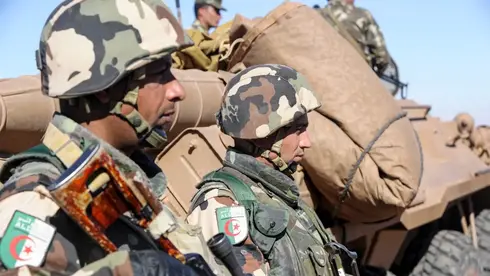
The clearest new security development is an Algerian military convoy reaching Arlit, Niger, on 30 October, following an October military cooperation protocol and earlier transfers of air assets. The reporting does not establish the convoy’s mission; NASA’s 1,060 thermal detections in Burkina Faso also do not establish armed activity.
Executive summary
Algeria’s convoy to Arlit followed a military cooperation protocol signed on 21 October and reported transfers of aircraft and helicopters to Niger in August. The account’s description of the convoy as Algeria’s first ground troop deployment abroad since 1973 remains unsettled because the reporting does not clarify whether personnel were involved in the August transfers. NASA FIRMS recorded 1,060 thermal detections in Burkina Faso over two days as of 1 November, including 38 high-confidence detections, but the sensor data do not identify their cause. Russia hosted its third Africa summit in Moscow, while reporting on Mali presents a mixed picture: Russian forces helped the government retake Kidal, but insecurity reportedly worsened and Africa Corps suffered losses. The supplied claims do not establish a dated new attack in the Sahel states during this reporting week.
Change from previous assessment
Initial assessment updated from the prior brief. The NASA FIRMS feed now reports 1,060 detections over two days as of 1 November, compared with 340 detections over the two days before 31 October in the prior brief. The rolling time windows overlap but differ, so this is not evidence of a rise in armed activity. New to the assessment are the Algerian convoy reaching Arlit on 30 October, the related Niger-Algeria cooperation reporting, and the Russia-Africa summit coverage. The prior caution that the supplied material does not establish a verified change in Sahel battlefield activity is retained.
Key judgments
- NASA FIRMS recorded 1,060 VIIRS thermal detections in Burkina Faso over the two days before 1 November, including 38 high-confidence detections. The data establish heat signatures, not armed activity or its cause. (Confidence: medium · REPORTED)
- I&W: Breaks the interpretation that the detections alone do not establish armed activity: independently geolocated imagery or reporting identifies specific detections as strike or shelling sites. (0-14 days)
- I&W: Confirms the limits of the sensor record: mapped detections are attributed to identified wildfires or industrial fires rather than armed activity. (0-14 days)
- Algeria is likely deepening its security role in Niger, but the available reporting does not establish the Arlit convoy’s mission or whether it marks a sustained ground deployment. The convoy followed a military cooperation protocol and reported transfers of air assets; the claim that it was Algeria’s first foreign ground deployment since 1973 remains uncertain. (Confidence: medium · ASSESSED)
- I&W: Confirms an expanded role: Algeria or Niger publicly specifies a continuing mission for the convoy or announces further ground deployments. (0-14 days)
- I&W: Breaks the assessment of a sustained expansion: official statements identify the Arlit convoy as a temporary visit or a limited, non-operational deployment, with no subsequent ground presence reported. (1-3 months)
- The supplied reporting does not establish a new jihadist or separatist attack in Mali, Burkina Faso or Niger between 26 October and 2 November. The specific attack accounts provided are dated to July or late September, or are undated; one low-confidence social-media item alleges attacks on Mali’s junta by Al Qaeda and a secessionist group but gives no date. (Confidence: low · ASSESSED)
- I&W: Breaks this judgement: a dated, independently corroborated account places an attack in Mali, Burkina Faso or Niger during 26 October to 2 November. (0-14 days)
- I&W: Confirms the reporting gap: a review of dated incident records covering all three countries finds no verified attack during the reporting period. (0-14 days)
- Pressure on the Malian military and Africa Corps around northern supply routes is likely to remain a risk, despite the reported recovery of Kidal. This is a low-confidence inference: reporting describes worsening insecurity and Africa Corps losses, while a separate account of a JNIM and Azawad Liberation Front offensive near Anéfis is dated to July and a reported ambush killing at least 50 Malian soldiers is undated. (Confidence: low · ASSESSED)
- I&W: Confirms continuing pressure: a dated, independently corroborated attack targets Malian military or Africa Corps forces near Anéfis or the Gao-Kidal supply routes. (0-14 days)
- I&W: Breaks the near-term pressure assessment: independently verified reporting shows regular movement on the Gao-Kidal routes and no attacks on those routes during the next three months. (1-3 months)
Outlook & scenarios
Algeria extends security cooperation with Niger (45%)
There is a roughly even chance that Algeria and Niger give practical follow-through to the 21 October protocol, with further visible military cooperation or a continuing Algerian presence near Arlit. Public clarification of the convoy’s mission would distinguish a sustained deployment from a limited movement.
The Arlit convoy remains a limited deployment (40%)
The convoy proves temporary, and Algeria’s reported support remains focused on the earlier transfer of aircraft and helicopters rather than a continuing ground presence. The available reporting does not establish a continuing mission at Arlit.
Northern Mali remains contested (35%)
Pressure on Malian forces and Africa Corps around Anéfis and the Gao-Kidal routes persists, without establishing a major change in territorial control. This scenario is consistent with reports of worsening insecurity, but the available attack accounts are partly dated or undated.
Wildcard: renewed coordinated offensive in northern Mali (10%)
A renewed JNIM and Azawad Liberation Front offensive against Malian forces and Africa Corps threatens the Gao-Kidal supply routes. This is a low-probability, high-impact scenario based on the reported July offensive, not evidence of a current operation.
Recommendations
- Treat NASA FIRMS detections as thermal alerts, not evidence of attacks. Require dated incident reporting or geolocated imagery before classifying detections in Burkina Faso as conflict-related.
- Prioritise verification of the Arlit convoy’s composition, mission and duration. Seek official Algerian or Nigerien statements and distinguish ground personnel from the aircraft and helicopters reported in August.
- Maintain a dated incident chronology for Mali, Burkina Faso and Niger. Do not use undated social-media claims to assess current attack tempo until their time, location and attribution are independently verified.
- Track the Gao-Kidal routes and activity near Anéfis separately from broader claims of Russian or Africa Corps influence. Record territorial control, convoy movement and reported losses as distinct measures.
Confidence & uncertainty
The NASA FIRMS count is supported by official sensor reporting, while the Algerian convoy and cooperation chronology rests chiefly on one media account and the interpretation of the August transfers remains unresolved. Reporting on Mali is mixed, with a major-media account describing worsening insecurity and Africa Corps losses alongside lower-confidence or undated accounts of specific attacks. These source gaps and differences support medium overall confidence.
Alternative analysis (red cell)
The supplied evidence more firmly supports a historical pattern of insecurity than a current estimate of sustained pressure on northern supply routes. The July Anéfis offensive and the undated ambush may no longer describe conditions after the reported recovery of Kidal, while claim b6d8f237-c4ff-45d8-a48d-9ae5c0ef1213 is broad and partially offset by the reported Russian gains in 2e81a6c9-23c8-436d-a75f-65e9570ee691. On this record, continuing route pressure is plausible but not sufficiently established as the most likely near-term assessment.
Intelligence gaps
- [EEI 1.2 · PARTIAL] Observed movement and size of armed columns (vehicle counts, heavy weapons present) along approach routes to population centers or borders documented by imagery, local reporting, or border guards. Recommended collection: imagery/SATCOM
- [EEI 1.3 · UNCOVERED] Reports of occupation, administration, or imposition of checkpoints/taxes by armed groups in named towns, villages, markets, or on specified road segments. Recommended collection: OSINT (local media/social)
- [EEI 2.2 · UNCOVERED] Detentions, public dismissals, resignations, or public statements by senior military, police, or government officials indicating factional splits (named individuals, ranks, units). Recommended collection: diplomatic/OSINT
- [EEI 3.1 · UNCOVERED] Interdictions or seizures at borders/markets of weapons, ammunition, fuel, or contraband (type/quantity, seizure location, alleged origin/destination). Recommended collection: border/customs
- [EEI 3.2 · UNCOVERED] Recorded movements of known smuggling routes and convoy volumes: counts of commercial/privately registered vehicles and informal river crossings on specific cross-border corridors. Recommended collection: ground/HUMINT
- [EEI 3.3 · UNCOVERED] Monitored financial flows linked to illicit trade: large cash movements, changes in declared gold exports at named mines/ports, or arrests of money couriers with amounts and origins. Recommended collection: financial/forensics
- [EEI 3.4 · UNCOVERED] Observed changes at border security posts: closures, reductions in personnel, destroyed checkpoints, or documented agreements allowing free movement at named crossings. Recommended collection: imagery/OSINT
Red cell review: PARTIAL DISSENT
TLP:CLEAR