TLP:CLEAR · Disclosure is not limited.
Sahel Security Situation Report: Kidal, Border Clashes and Regional Strains
Time window: Last 7 days · Audience: General analyst · Type: Situation report · DTG: 2026-10-18 04:05Z · Overall confidence: MEDIUM
BLUF
Malian forces backed by Russia's Africa Corps re-entered Kidal on 6 October, while reports of JNIM-ISSP clashes near Tessit and Oudalan remain weakly corroborated and do not establish casualty totals or wider spread. Immediate watchpoints are the security presence in Kidal, the outcome of AES-ECOWAS consultations scheduled in Dakar, and enforcement of Burkina Faso's 9 October flour-export suspension.
Executive summary
Reporting says Malian forces and Russia's Africa Corps returned to Kidal after the Azawad Liberation Front withdrew. Separate reports describe renewed JNIM-ISSP fighting around Tessit in eastern Mali and Oudalan province in northern Burkina Faso, but the timing, reported casualties and claims of continued fighting are not independently established. Burkina Faso has suspended flour exports nationwide, and AES officials prepared for consultations with ECOWAS in Dakar; the supplied record does not confirm the talks' outcome. Historical food-security figures identify the Burkina Faso-Mali-Niger tri-border zone as a hotspot. NASA FIRMS recorded thermal detections in Burkina Faso, but those measurements do not identify the cause of the heat.
Change from previous assessment
Since the prior brief dated 17 October, the assessment of JNIM-ISSP rivalry is unchanged: reports of renewed clashes and casualty totals remain insufficiently verified. This brief adds reporting on the 6 October return of Malian forces and Russia's Africa Corps to Kidal, Burkina Faso's flour-export suspension and AES-ECOWAS consultation preparations. It does not raise confidence in the claimed casualty totals or establish a wider operational link between the Kidal and Tessit events.
Key judgments
- Malian forces backed by Russia's Africa Corps re-entered Kidal on 6 October after the Azawad Liberation Front withdrew; a major-media report also describes the city as retaken. The reported withdrawal occurred without a major ground battle, and the reporting does not establish how durable government-aligned control is. (Confidence: medium · REPORTED)
- I&W: Confirm: independently geolocated reporting shows Malian forces or government officials maintaining a presence in Kidal. (0-14 days)
- I&W: Break: independently verified reporting shows Azawad Liberation Front forces re-entering Kidal or displacing government-aligned forces. (0-14 days)
- Renewed JNIM-ISSP clashes around Tessit in eastern Mali and Oudalan province in northern Burkina Faso likely occurred, but the reported toll of about 60 fighters killed, including about 50 JNIM members, and claims that fighting continued on 11 and 12 October remain unverified. The episode-level reporting is thin, and the supplied record does not establish a direct operational link between these clashes and the FLA withdrawal from Kidal. (Confidence: low · REPORTED)
- I&W: Confirm: independent geolocated reporting or imagery documents armed engagements or casualty recovery at Tessit or in Oudalan province. (0-14 days)
- I&W: Break: conflict monitors correct the account or establish that the reported 9 October engagements refer to a different year. (0-14 days)
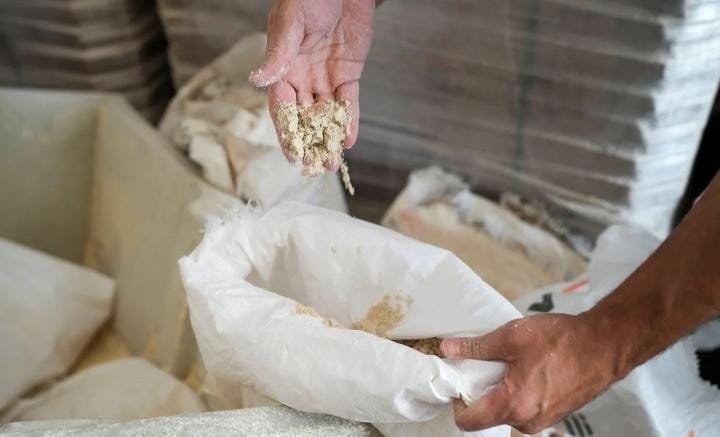
- Burkina Faso suspended exports of millet, maize and sorghum flour and their derivatives nationwide from 9 October. The government says the measure is intended to protect domestic supply amid reported flour outflows and price pressure; the available reporting does not show whether the suspension has improved market availability. (Confidence: medium · REPORTED)
- I&W: Confirm: Burkina Faso publishes enforcement records showing flour export permits withheld or flour shipments seized at its borders. (0-14 days)
- I&W: Break: an official notice rescinds the suspension, or market reporting documents continued flour exports under the measure. (0-14 days)
- AES officials met in Ouagadougou on 16 October to prepare common positions for consultations with ECOWAS scheduled for 17 and 18 October in Dakar. The stated aim is to negotiate new institutional and legal arrangements, but the supplied reporting does not confirm that the consultations concluded or produced an agreement. (Confidence: medium · REPORTED)
- I&W: Confirm: AES or ECOWAS releases a communiqué or minutes confirming the Dakar consultations and specifying agreed institutional or legal steps. (0-14 days)
- I&W: Break: an official AES or ECOWAS statement confirms the consultations were postponed or did not take place. (0-14 days)
- The available humanitarian evidence documents acute food insecurity as a vulnerability in the Burkina Faso-Mali-Niger tri-border zone, but it does not measure conditions there in October 2026. The Cadre Harmonisé estimated that 47.4 million people across 15 countries faced high acute food insecurity by mid-2025, while separate reporting identified the tri-border zone as a hotspot. (Confidence: medium · REPORTED)
- I&W: Confirm: a new Cadre Harmonisé assessment or local market reporting identifies acute food insecurity in the Burkina Faso-Mali-Niger tri-border zone. (1-3 months)
- I&W: Break: a new assessment reports a sustained reduction in acute food insecurity in the tri-border hotspot. (1-3 months)
- NASA FIRMS recorded 102 thermal detections in Burkina Faso in the two days before 17 October, only two of them high-confidence detections. These data record heat, not its cause, and do not by themselves establish attacks, shelling or other conflict activity. (Confidence: high · ASSESSED)
- I&W: Confirm: independent imagery or incident reporting identifies the cause of a specific thermal detection as a strike or other conflict event. (0-14 days)
- I&W: Break: independent imagery identifies a specific detection as a non-conflict fire, such as a wildfire or industrial fire. (0-14 days)
Outlook & scenarios
Localised and intermittent clashes (55%)
JNIM-ISSP fighting is likely to remain episodic around Tessit and Oudalan, while Malian forces and Russia's Africa Corps maintain a presence in Kidal. Casualty estimates remain contested, and evidence does not establish an operational connection between the Kidal withdrawal and the clashes.
Clashes spread across border areas (25%)
If JNIM-ISSP engagements extend beyond Tessit and Oudalan, armed groups' ability to sustain cross-border combat would expose the limits of AES territorial control. Independent reporting of new locations, deployments or casualties would distinguish this scenario from isolated clashes.
Political and market pressures become more prominent (15%)
AES-ECOWAS consultations produce a defined process for new institutional or legal arrangements, while Burkina Faso enforces its flour-export suspension. Market data then show whether the measure improves domestic availability or leaves reported price and supply pressures unresolved.
Wildcard: renewed FLA offensive against Kidal (5%)
There is a very unlikely but high-impact risk of the FLA attempting to retake Kidal while JNIM-ISSP clashes continue elsewhere. Such a development would increase pressure on Malian forces and Russia's Africa Corps; the supplied reporting provides no evidence of coordination between the FLA and either jihadist group in these episodes.
Recommendations
- Maintain an event log for Tessit and Oudalan that records the reported event date, publication date, location, source type, actor attribution and casualty estimate separately. Seek independent geolocation or local confirmation before treating casualty figures or continued fighting as established.
- Track security and administrative presence in Kidal, including verified FLA activity and reporting on Malian forces and Russia's Africa Corps. Do not infer durable control from the reported re-entry alone.
- Treat the Dakar consultations as scheduled, not completed, until AES or ECOWAS issues a communiqué or other verifiable account. Record any agreed legal or institutional steps separately from stated negotiating aims.
- Check Burkina Faso's flour-export enforcement against market availability and price reporting. Keep the government's stated rationale distinct from evidence of the policy's actual effects.
- Do not code NASA FIRMS thermal detections as conflict incidents without incident-specific geolocation and corroboration. Preserve the distinction between the total of 102 detections and the two recorded as high-confidence.
- Use the mid-2025 food-security figures as historical context, not as an estimate of October 2026 conditions. Seek newer assessments or market reporting for the tri-border zone before making current humanitarian judgements.
Confidence & uncertainty
Overall confidence is medium because the Kidal return is supported by both major-media and think-tank reporting, and NASA FIRMS provides direct official data on thermal detections. Confidence is lower for the JNIM-ISSP episode: casualty estimates and claims of continued fighting lack independent confirmation, and the record does not establish a direct link to events in Kidal. The flour-export and AES-ECOWAS accounts rely mainly on local-media reporting, while the humanitarian figures are not current to October 2026.
Intelligence gaps
- [EEI 1.1 · PARTIAL] Number, location, and scale of attacks (IEDs, ambushes, complex attacks) per week against towns, military bases, police posts, or convoys, with casualty and equipment-loss counts. Recommended collection: ground/HUMINT
- [EEI 1.2 · PARTIAL] Observed movement and size of armed columns (vehicle counts, heavy weapons present) along approach routes to population centers or borders documented by imagery, local reporting, or border guards. Recommended collection: imagery/SATCOM
- [EEI 1.3 · PARTIAL] Reports of occupation, administration, or imposition of checkpoints/taxes by armed groups in named towns, villages, markets, or on specified road segments. Recommended collection: OSINT (local media/social)
- [EEI 1.4 · UNCOVERED] Seizure or acquisition of heavy weapons or air-defense systems (mortars >81mm, artillery, armored vehicles, MANPADS) attributed to specific groups as evidenced by photos, captured weapons inventories, or weapons interdictions. Recommended collection: forensics/field reporting
- [EEI 2.1 · PARTIAL] Internal security force movements: redeployment of army units, garrison withdrawals, or mass troop movements toward/away from capitals and regional command posts. Recommended collection: imagery/SATCOM
- [EEI 2.2 · UNCOVERED] Detentions, public dismissals, resignations, or public statements by senior military, police, or government officials indicating factional splits (named individuals, ranks, units). Recommended collection: diplomatic/OSINT
- [EEI 2.3 · PARTIAL] Changes in foreign military footprints or security agreements: arrival/departure of foreign troops, opening/closure of foreign bases, visible presence of private military contractors (identified personnel/vehicles). Recommended collection: OSINT/imagery
- [EEI 2.4 · PARTIAL] Targeted external support actions: sanctions, suspension of aid, delivery of weapons or logistics from foreign state or non-state actors (documented shipments, bank transfers, public announcements). Recommended collection: financial/diplomatic
- [EEI 3.1 · UNCOVERED] Interdictions or seizures at borders/markets of weapons, ammunition, fuel, or contraband (type/quantity, seizure location, alleged origin/destination). Recommended collection: border/customs
- [EEI 3.2 · UNCOVERED] Recorded movements of known smuggling routes and convoy volumes: counts of commercial/privately registered vehicles and informal river crossings on specific cross-border corridors. Recommended collection: ground/HUMINT
- [EEI 3.4 · UNCOVERED] Observed changes at border security posts: closures, reductions in personnel, destroyed checkpoints, or documented agreements allowing free movement at named crossings. Recommended collection: imagery/OSINT
Red cell review: CONCUR
TLP:CLEAR