TLP:CLEAR · Disclosure is not limited.
Sahel Security Situation Report: Kidal Reporting and Mali Thermal Detections
Time window: Last 7 days · Audience: General analyst · Type: Situation report · DTG: 2026-10-15 04:06Z · Overall confidence: LOW
BLUF
Reporting says Mali’s Armed Forces, supported by Russia’s Africa Corps, re-entered Kidal on 6 or 7 October, but conflicting, low-quality accounts do not establish durable control. NASA FIRMS recorded 26 thermal detections in Mali over the two days before 14 October, including three high-confidence detections; the data do not identify their cause.
Executive summary
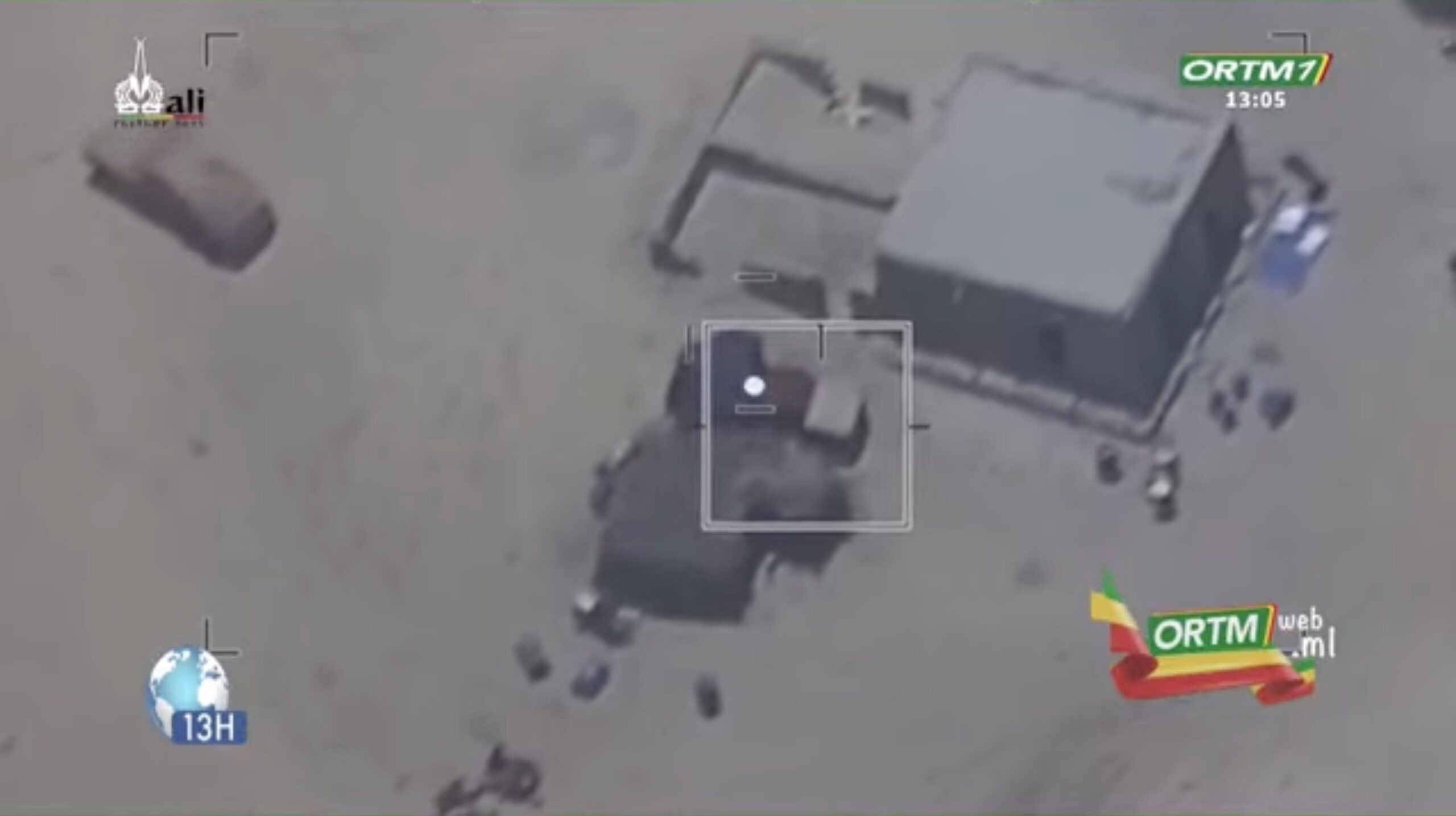
The main update is reporting that Mali’s Armed Forces and Africa Corps re-entered Kidal, although the reported date differs and accounts conflict over whether FLA and JNIM captured the city or Malian forces withdrew for political reasons. NASA FIRMS’ latest snapshot records more detections than the previous brief, but the two snapshots cover different periods and cannot establish an increase in attacks. Social-media claims about high casualties at Dioura remain unverified. Reporting on civilian casualties from Malian military drone strikes concerns incidents in 2024 and 2025, not a current-week pattern.
Change from previous assessment
The assessment now includes reports that Mali’s Armed Forces and Africa Corps re-entered Kidal on 6 or 7 October. This changes the reporting picture from no supplied account of a current-week control change, but does not establish durable control; confidence remains low because the date and circumstances are disputed and the reporting is weakly sourced. The NASA snapshot now records 26 detections, including three high-confidence detections, compared with six detections in the prior brief’s 13 October snapshot. The observation windows differ, so this does not establish an increase in conflict activity. The Dioura casualty claims remain unverified, and the historical drone-strike reporting still does not establish a current-week pattern.
Key judgments
- Mali’s Armed Forces, supported by Russia’s Africa Corps, reportedly re-entered Kidal on 6 or 7 October, but the supplied reporting does not establish durable government control or how Kidal was lost in April. The reported dates differ, and accounts conflict over whether FLA and JNIM captured the city or Malian forces withdrew for political reasons. Confidence is low because the accounts come from a blog and an unknown-source relay, with no independent confirmation of control. (Confidence: low · REPORTED)
- I&W: Confirm: independently geolocated imagery or separate local reporting shows Mali’s Armed Forces and Africa Corps personnel present at identifiable sites in Kidal. (0-14 days)
- I&W: Break: dated imagery or independent local reporting shows FLA or JNIM controlling Kidal’s municipal centre, or confirms that Mali’s Armed Forces and Africa Corps have left the city. (0-14 days)
- NASA FIRMS recorded 26 active fire or thermal detections in Mali over the two days before 14 October, including three high-confidence detections within the stated bounding box from 13.87,-4.79 to 18.87,0.21. The detections establish heat signatures, not strikes or other conflict activity. Confidence is medium because NASA is a reliable source for the measurements, but the feed is a single source and does not identify their cause. (Confidence: medium · REPORTED)
- I&W: Confirm a conflict-related interpretation only if independent imagery or incident reporting matches individual high-confidence detection coordinates to a reported strike or shelling. (0-14 days)
- I&W: Break a conflict-related interpretation if imagery or reliable local reporting identifies the heat signatures at those coordinates as wildfires or industrial fires, with no matching attack report. (0-14 days)
- Social-media reporting alleges that JNIM killed at least five Russian personnel and more than 100 Malian soldiers at Dioura, but neither toll is independently established in the supplied record. The claims appear to rely on the same reporting stream. Confidence is low because the casualty figures are uncorroborated social-media claims. (Confidence: low · REPORTED)
- I&W: Confirm the reported tolls if a named casualty accounting for Malian soldiers and Russian personnel is published and independently corroborated by local reporting. (0-1 month)
- I&W: Break the reported tolls if an official or independently corroborated accounting gives materially lower figures or establishes that the claims refer to a different incident. (0-1 month)
- Past reporting supports allegations of civilian deaths in Malian military drone strikes at Amasrakad in March 2024 and Zouera in July 2025, but it does not establish a current-week pattern. Amnesty International reported at least 13 civilians killed, including seven children, at Amasrakad; MSF reported four people killed, including three young girls, and five injured at Zouera. FAMa presented the Zouera strike as targeting a terrorist supply vehicle. Confidence is low because the incidents are historical and the accounts differ on the character of the Zouera strike. (Confidence: low · ASSESSED)
- I&W: Confirm an ongoing pattern if an independently verified report identifies a new Malian military drone strike and civilian casualties at a named location. (1-3 months)
- I&W: Weaken the historical casualty allegations if an independent investigation or medical records establish that the reported victims at Amasrakad or Zouera were not civilians, or that the reported deaths occurred elsewhere. (1-3 months)
- JNIM had adopted low-cost, weaponised commercial drones in the Sahel by late 2023, but the supplied evidence does not establish JNIM drone use during this reporting period. Confidence is medium: the claim comes from an academic source, but it is not independently corroborated here and provides no current operational detail. (Confidence: medium · REPORTED)
- I&W: Confirm continued JNIM use if independently geolocated imagery or a credible report identifies a weaponised commercial drone operated by JNIM in the Sahel. (1-3 months)
- I&W: Break the claim if independent technical analysis establishes that the cited drone activity was not operated by JNIM or involved an unweaponised platform. (1-3 months)
Outlook & scenarios
Malian forces consolidate their presence in Kidal (40%)
There is a roughly even chance that Mali’s Armed Forces and Africa Corps sustain a presence in Kidal through the next 1-3 months and establish firmer control. Independent confirmation of their continued presence would strengthen this scenario; the current reporting alone does not establish consolidation.
Control of Kidal remains disputed (45%)
There is a roughly even chance that control of Kidal remains unresolved over the next 1-3 months, with reports of government presence and FLA or JNIM activity continuing to conflict. The uncertainty over Kidal’s April loss and the absence of independent confirmation of the October re-entry support this scenario.
A coordinated offensive across Mali (10%)
There is an unlikely chance that jihadist armed groups launch a coordinated offensive across Mali, resembling the reported 25 April attacks on positions around Bamako, Mopti, Sévaré and Kidal. This is a low-probability, high-impact wildcard; the supplied evidence does not indicate that such an offensive is imminent.
Recommendations
- Keep Kidal marked as a reported, not independently verified, change in military presence. Seek dated, geolocated imagery and separate local reporting before revising control assessments.
- Treat NASA FIRMS detections as heat observations rather than attack counts. Compare individual detection coordinates with independently verified incident reporting before assigning a military cause.
- Do not present the Dioura casualty figures as confirmed. Seek separate casualty accounting for Malian soldiers and Russian personnel, and distinguish the two groups in any reporting.
- Track new, independently verified reporting on JNIM drone use. Keep the late-2023 adoption claim as capability context, not evidence of use during this reporting period.
Confidence & uncertainty
Overall confidence is low because the current Kidal reporting comes from a blog and an unknown-source relay, gives conflicting dates and does not independently verify control. NASA FIRMS provides reliable official data on thermal detections, but not their cause. The Dioura casualty claims rely on social media, while the civilian-casualty reporting concerns older incidents with contested characterisation. The supplied record contains little independently corroborated reporting on current operations.
Alternative analysis (red cell)
The Dioura record supports two unverified casualty allegations, but it does not establish that they came from a single reporting stream. Claims 4a4509d4-9e6d-4928-8995-d755e61ba255 and b9080294-ad55-4e9b-ae51-770374b70b67 have null origin-cluster fields and differ materially in the reported victims and totals. The safer reading is that the figures should be assessed separately pending source-chain reconstruction, rather than treated as a common-stream claim.
Intelligence gaps
- [EEI 1.1 · PARTIAL] Number, location, and scale of attacks (IEDs, ambushes, complex attacks) per week against towns, military bases, police posts, or convoys, with casualty and equipment-loss counts. Recommended collection: ground/HUMINT
- [EEI 1.2 · PARTIAL] Observed movement and size of armed columns (vehicle counts, heavy weapons present) along approach routes to population centers or borders documented by imagery, local reporting, or border guards. Recommended collection: imagery/SATCOM
- [EEI 1.3 · PARTIAL] Reports of occupation, administration, or imposition of checkpoints/taxes by armed groups in named towns, villages, markets, or on specified road segments. Recommended collection: OSINT (local media/social)
- [EEI 1.4 · PARTIAL] Seizure or acquisition of heavy weapons or air-defense systems (mortars >81mm, artillery, armored vehicles, MANPADS) attributed to specific groups as evidenced by photos, captured weapons inventories, or weapons interdictions. Recommended collection: forensics/field reporting
- [EEI 2.1 · PARTIAL] Internal security force movements: redeployment of army units, garrison withdrawals, or mass troop movements toward/away from capitals and regional command posts. Recommended collection: imagery/SATCOM
- [EEI 2.2 · PARTIAL] Detentions, public dismissals, resignations, or public statements by senior military, police, or government officials indicating factional splits (named individuals, ranks, units). Recommended collection: diplomatic/OSINT
- [EEI 3.1 · UNCOVERED] Interdictions or seizures at borders/markets of weapons, ammunition, fuel, or contraband (type/quantity, seizure location, alleged origin/destination). Recommended collection: border/customs
- [EEI 3.2 · UNCOVERED] Recorded movements of known smuggling routes and convoy volumes: counts of commercial/privately registered vehicles and informal river crossings on specific cross-border corridors. Recommended collection: ground/HUMINT
- [EEI 3.3 · PARTIAL] Monitored financial flows linked to illicit trade: large cash movements, changes in declared gold exports at named mines/ports, or arrests of money couriers with amounts and origins. Recommended collection: financial/forensics
- [EEI 3.4 · UNCOVERED] Observed changes at border security posts: closures, reductions in personnel, destroyed checkpoints, or documented agreements allowing free movement at named crossings. Recommended collection: imagery/OSINT
Cited sources
[1] yourdemocracy.net · expanding resource sovereignty.... (E) · sha256:cc2701ec8310 [2] t.me · • Fwd from @📝Not Just Kidal📝What marked October in Mali?On October 7, the Mali Armed Forces, with support from the Africa Corps, retook Kidal, abandoned for political reasons in April of this year.T… (F) · sha256:28306566dc84 [3] NASA FIRMS · NASA FIRMS thermal detections — Mali (2d) (A) · sha256:2fb98b7f5800 [4] saladinaldronni.bsky.social · Ah, I forgot to add the context on BlueSky - it's about the battle of Dioura from a month ago, where JNIM killed at least 5 Russian and over (E) · sha256:30e14eeaa311 [5] Bellingcat · “A Recurring Pattern”: Civilians Paying the Price in Mali’s Drone Campaign - bellingcat (A) · 16 September 2026 · sha256:240eaaf5fb84 [6] Danish Institute for International Studies (DIIS) · Jihadism in the Sahel - Sign in - DIIS (B) · sha256:ab6ea6babe0f
Source content hashes were computed at collection time; the cited text is preserved unmodified for the life of this product.
Red cell review: PARTIAL DISSENT
TLP:CLEAR