TLP:CLEAR · Disclosure is not limited.
Sahel Security Situation Report: Mali, Burkina Faso and Niger
Time window: Last 7 days · Audience: General analyst · Type: Situation report · DTG: 2026-11-20 05:22Z · Overall confidence: LOW
BLUF
Reporting points to continued security pressure in Mali and Burkina Faso, while the outcome of Niger’s August 2026 mutiny remains contested. The supplied evidence does not establish a broad change in territorial control; analysts should prioritise verifying developments in Niger and tracking fuel access to Bamako and civilian harm from Malian drone strikes.
Executive summary
The supplied reporting describes several distinct pressures rather than a single regional shift. In Mali, JNIM and the Front de libération de l'Azawad (FLA) are reported to have seized parts of the north in 2026, while a year-long JNIM fuel blockade around Bamako is described alongside a low-confidence account that roughly 1,000 fuel trucks reached the capital by July with Africa Corps and Turkish drone escorts. Bellingcat and Jeune Afrique report recurring Malian military drone strikes in civilian areas; reporting on casualties at Amasrakad conflicts over the scope of the death toll. In Burkina Faso, Human Rights Watch reported at least 27 civilians killed in Yatenga province in September, and a reported October clash between JNIM and ISSP killed over 200 fighters. The UN Human Rights Office is scheduled to close its Burkina Faso office by 30 November. Accounts of Niger’s August mutiny conflict over whether it was suppressed or amounted to a successful coup. The UN recorded 2,640 conflict-related civilian deaths in the Central Sahel between January and March 2026.
Change from previous assessment
The prior brief centred on the reported 18 November release of 24 Malian soldiers near Kidal and the uncorroborated allegation that Defence Minister General Sadio Camara had been killed. This update broadens the assessment to include northern Mali territorial pressure, fuel access to Bamako, civilian harm from Malian drone operations, Burkina Faso violence and the contested account of Niger’s August mutiny. No supplied claim confirms or overturns the prior report of the In-Tebezas release or the Camara allegation, so those judgments are not reassessed here.
Key judgments
- Niger’s August 2026 episode was likely a suppressed mutiny rather than a successful change of government, but the outcome remains unresolved. One account describes a military faction staging a coup; other reporting describes hundreds of soldiers attacking Diori Hamani International Airport, Air Base 101 and the presidential palace district in Niamey, followed by reports that loyalist forces killed or arrested mutineers. Niger’s accusation that France was involved and Russia’s claim that it helped end the uprising are competing, unverified accounts. The low-confidence reporting does not establish who controlled the state institutions after the episode. (Confidence: low · ASSESSED)
- I&W: Confirm: reporting within 0-30 days identifies detained or killed mutineers and continued loyalist control of Air Base 101. Break: verified reporting identifies a replacement authority controlling key state institutions in Niamey. (0-30 days)
- I&W: Confirm: Nigerien state announcements continue to identify the existing junta leadership, with no rival authority announced. Break: an official announcement or independently verified report confirms a transfer of national leadership. (0-30 days)
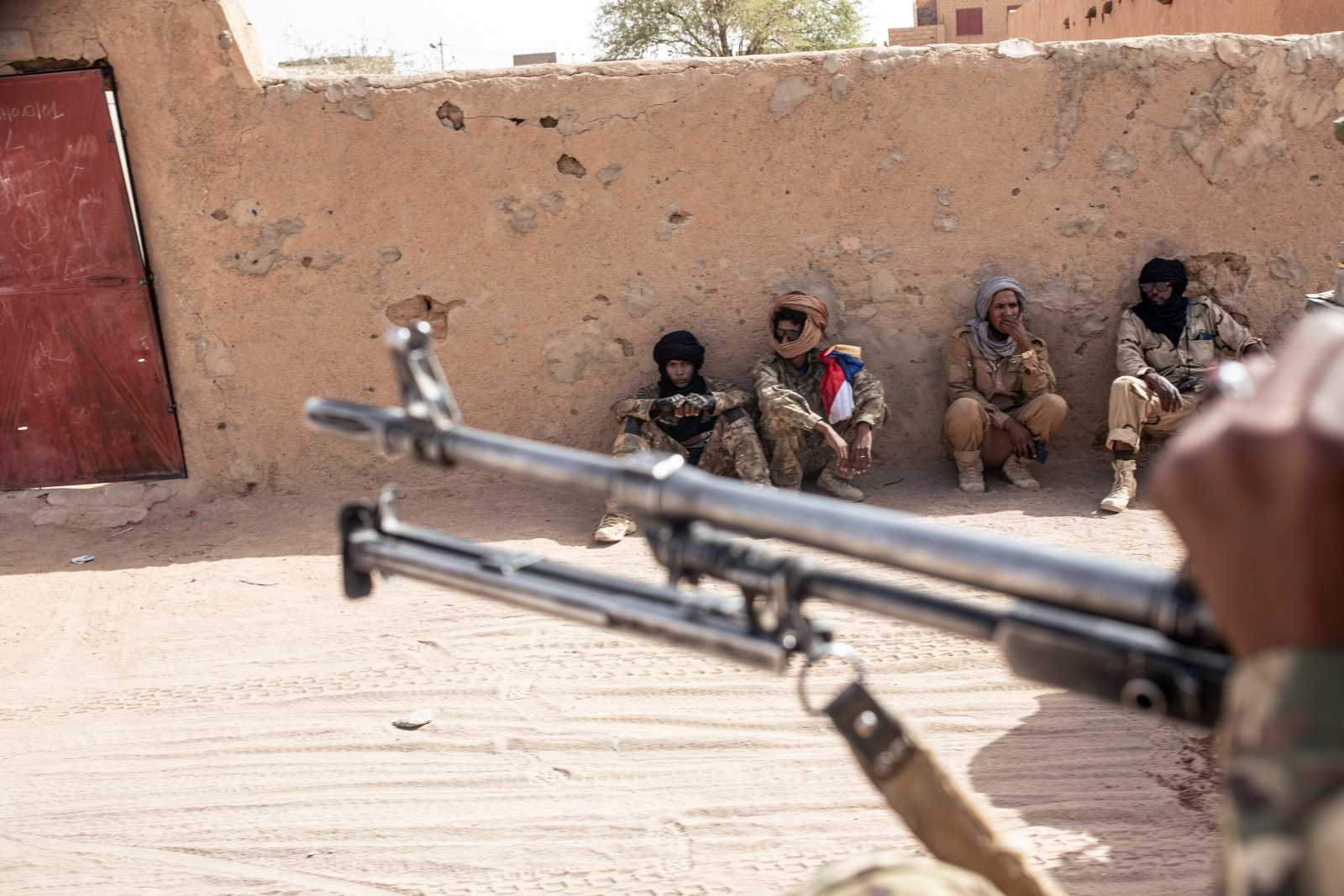
- Mali is likely to remain under simultaneous territorial and supply pressure. Reporting says FLA and JNIM seized parts of northern Mali in 2026, and a photo caption published on 13 November places FLA fighters in Kidal. JNIM is also reported to have maintained a year-long fuel blockade affecting Bamako and other southern cities. A separate, low-confidence account says roughly 1,000 fuel trucks reached Bamako by July with Africa Corps and Turkish drone escorts, so the evidence does not support describing the blockade as impermeable or establishing that FAMa has restored broad control in the north. (Confidence: low · ASSESSED)
- I&W: Confirm: new reporting or geolocated imagery shows FLA or JNIM presence, or continued control, in Kidal or other northern locations. Break: verified reporting shows sustained FAMa return and administration in areas previously reported seized. (0-30 days)
- I&W: Confirm: route-level reporting records JNIM attacks, fuel-delivery interruptions to Bamako, or continued escorted convoys. Break: reporting records regular fuel deliveries to Bamako without reported attacks or supply interruptions for a month. (0-30 days)
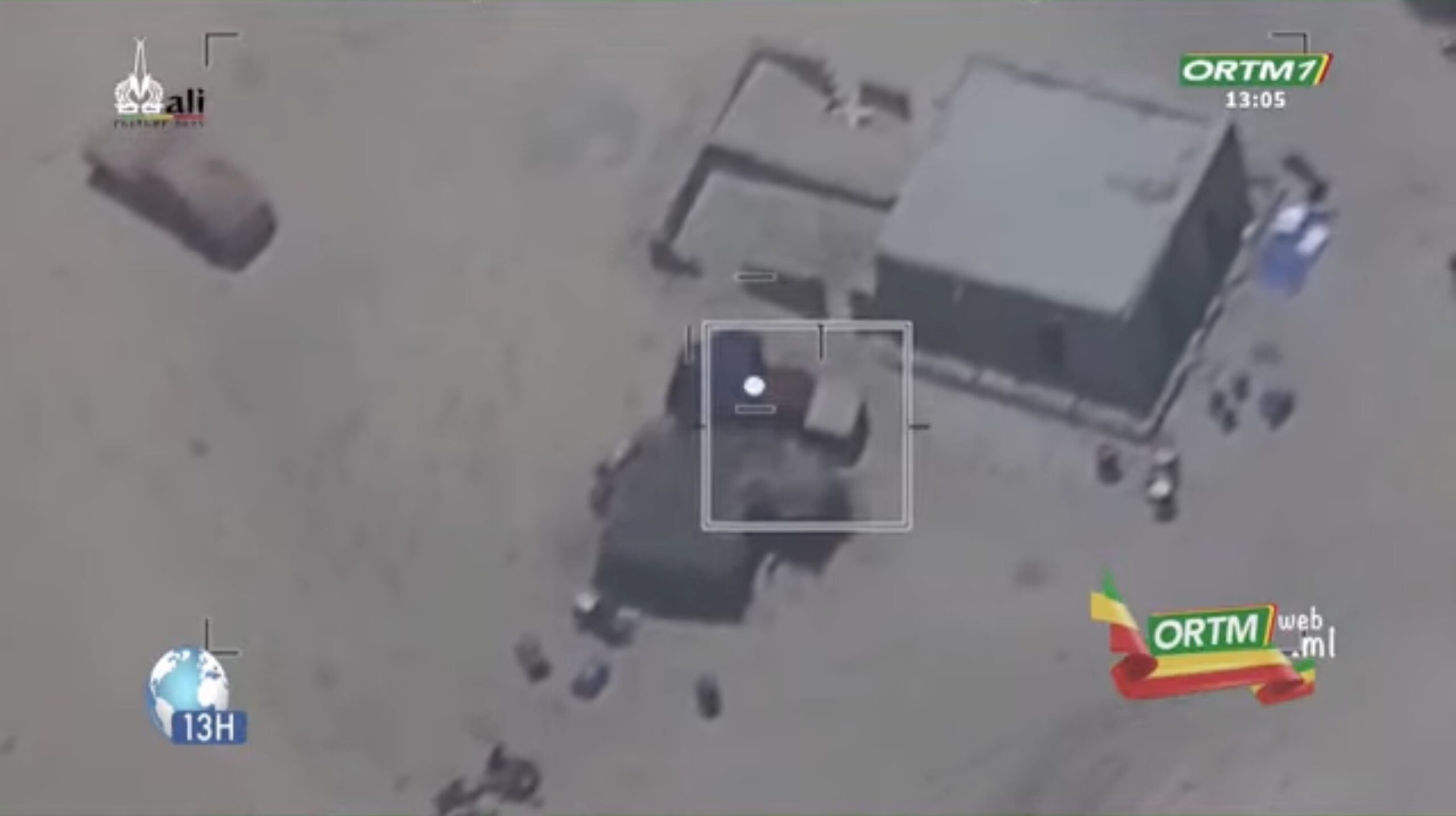
- Reporting supports a recurring civilian-harm concern from Malian military drone operations, but the casualty scope at Amasrakad and the cluster-munition allegation remain unsettled. Bellingcat and Jeune Afrique describe strikes in civilian areas and report civilian deaths. Amnesty International and Jeune Afrique reporting attributes 13 deaths to the Amasrakad strikes, but the supplied accounts differ on whether that figure covers both strikes or the second strike alone. The investigation also presents evidence suggesting Russian-made cluster munitions were used in Mali; the supplied reporting does not independently settle that attribution. (Confidence: low · REPORTED)
- I&W: Confirm: new geolocated footage or witness and health-centre reporting documents civilian casualties from a Malian military drone strike in a populated area. Break: a detailed independent review of new strikes finds no civilian casualties and verifies the locations and targets. (1-3 months)
- I&W: Confirm or break: further forensic reporting either identifies Russian-made cluster-munition remnants at a strike site in Mali or rules out that identification. (1-3 months)
- Burkina Faso is likely to face continued civilian exposure amid both JNIM attacks on civilians and lethal competition between JNIM and ISSP. Human Rights Watch reported at least 27 civilians killed in two September attacks in Yatenga province; a separate report says an October clash in northern Burkina Faso killed over 200 fighters. The clash toll remains attributed reporting rather than independently corroborated in the supplied claims. The UN Human Rights Office is scheduled to close its Burkina Faso office by 30 November. (Confidence: low · ASSESSED)
- I&W: Confirm: reporting within 0-30 days documents another JNIM attack causing civilian casualties in Yatenga province. Break: credible field reporting documents a sustained cessation of JNIM attacks on civilians in the province. (0-30 days)
- I&W: Confirm: new reporting documents another armed clash between JNIM and ISSP in northern Burkina Faso. Break: credible reporting documents a sustained halt to clashes between the two groups. (1-3 months)
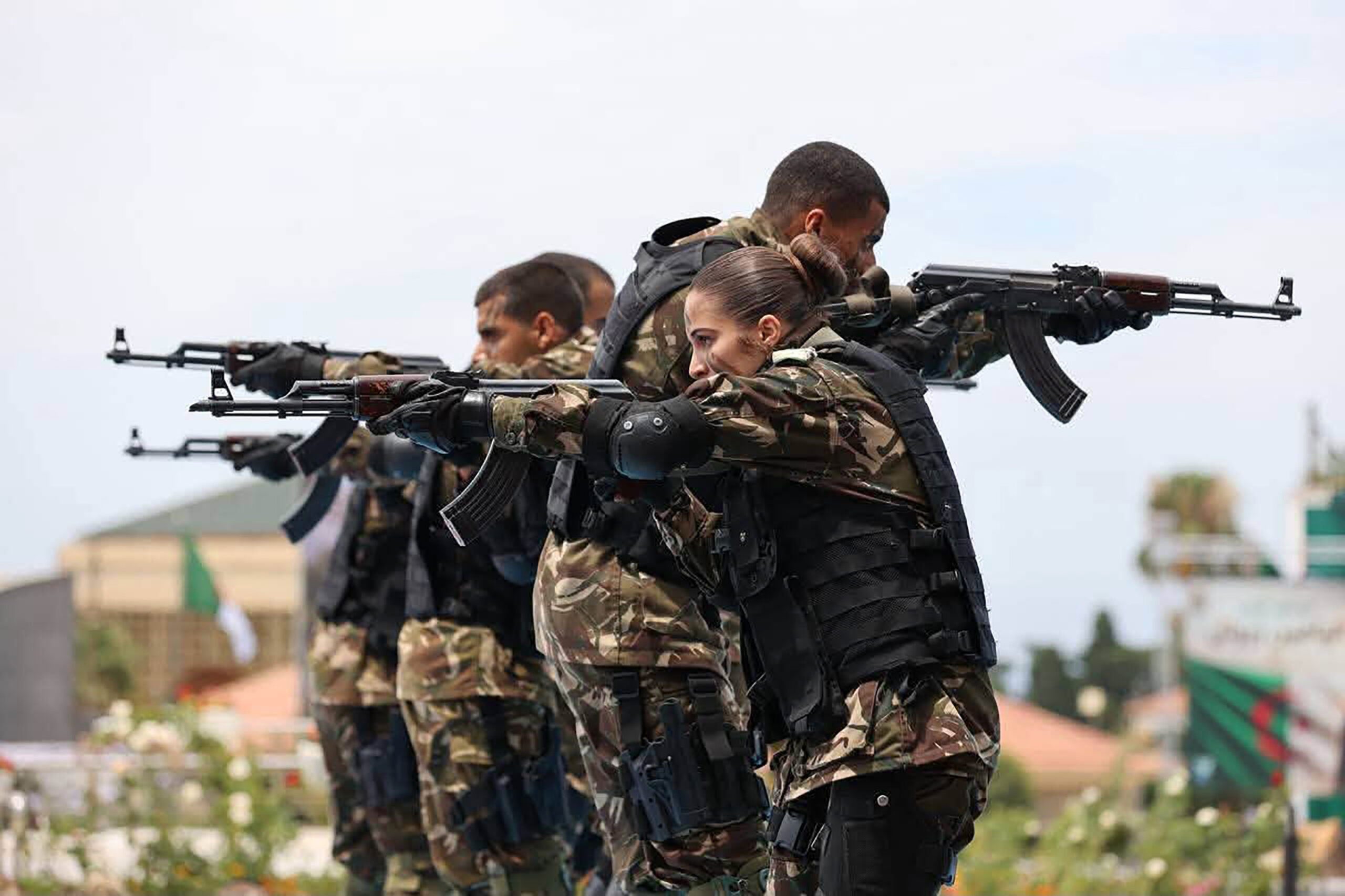
- A broader Algerian cross-border operation is unlikely in the next 1-3 months, but it is a low-confidence, high-impact risk to monitor. A single think-tank account reports that four Algerian Su-30MKA fighters, an Il-78 tanker and an Il-76 transport landed in Niamey within 48 hours of the August mutiny. The same reporting says Algeria amended its constitution to permit military operations beyond its borders when vital interests are threatened. These claims do not establish Algerian intent or plans for further operations. (Confidence: low · ASSESSED)
- I&W: Confirm: independently corroborated reporting records another Algerian combat-aircraft deployment to Niger or an Algerian military operation beyond its borders. Break: Algerian authorities publicly rule out such operations and no deployments are reported during the horizon. (1-3 months)
- I&W: Confirm: Algerian officials publicly invoke threatened vital interests in connection with a specific security situation in a neighbouring state. Break: official statements limit the constitutional provision to domestic purposes and reject external operations. (1-3 months)
Outlook & scenarios
Continued fragmented pressure (60%)
This is the most likely near-term course. JNIM continues to threaten fuel access to Bamako, while FLA and JNIM retain a foothold in parts of northern Mali. In Burkina Faso, civilian attacks and clashes between JNIM and ISSP continue. Some escorted deliveries to Bamako proceed, but the supplied reporting does not indicate a broad restoration of state control in northern Mali.
Limited containment without a regional reversal (30%)
A less likely course is that FAMa and its reported partners sustain escorted fuel deliveries and limit further territorial losses, while Niger’s existing authorities remain in place. This would amount to local containment, not evidence that insurgent pressure or civilian exposure has ended.
Algerian cross-border action (10%)
Algerian military action beyond its borders is unlikely in the next 1-3 months, but would be high impact. The reported deployment of Algerian aircraft to Niamey during the August crisis and the reported constitutional amendment provide grounds to monitor for renewed deployments or an explicit official justification, not evidence of a planned operation.
Recommendations
- Maintain a separate Niger incident log that distinguishes the reported attacks on Diori Hamani International Airport, Air Base 101 and the presidential palace district from claims about who held power afterwards. Do not treat Niger’s accusation against France or Russia’s claim of involvement as verified attribution.
- Track weekly reporting on fuel-truck arrivals to Bamako, route-level JNIM attacks, and any Africa Corps or Turkish drone escorts. Record whether reported deliveries continue before characterising the blockade as effective or broken.
- For Malian drone strikes, keep military target claims separate from geolocated evidence, witness accounts and reported civilian deaths. Resolve the Amasrakad casualty-count discrepancy and seek corroboration for the cluster-munition allegation before using either in aggregate assessments.
- Track the scheduled closure of the UN Human Rights Office in Burkina Faso by 30 November and preserve reporting on civilian attacks in Yatenga and clashes between JNIM and ISSP in northern Burkina Faso.
- Monitor for independently corroborated Algerian aircraft deployments to Niger and public statements invoking threatened vital interests. Treat the August deployment and constitutional amendment as reporting to verify, not proof of further intervention.
Confidence & uncertainty
Overall confidence is low because key judgments rely on a limited set of reports, often with single-source elements rather than multiple independent, contemporaneous corroboration. The accounts of Niger’s August mutiny conflict over its outcome. The Bamako fuel-truck estimate is low confidence, the Amasrakad casualty scope is disputed, and the reported Algerian deployment rests on a single think-tank account. Several claims concern events months before this reporting window. Lede-only claims were not used as sole support for any key judgment.
Alternative analysis (red cell)
The supplied evidence does not establish that Niger’s episode was probably a suppressed mutiny; it leaves the successful-coup account in claim f139e8b1-32f9-4754-a61c-70953c5b083b unresolved against lower-grade suppression reporting. Mali’s evidence demonstrates serious reported territorial and supply pressure, but the blockade breach in claim f1c34dbf-5f63-4e7d-9747-8506956ccb43 means its future trajectory remains indeterminate rather than clearly persistent. In Algeria’s case, claims 9a3fdd11-f009-492e-bea5-7658c1c7b042 and 5a29a4f6-08da-4312-a6de-b473d6c7113f indicate capability or legal latitude, not evidence sufficient to estimate that broader intervention is unlikely.
Intelligence gaps
- [EEI 1.1 · PARTIAL] Number, location, and scale of attacks (IEDs, ambushes, complex attacks) per week against towns, military bases, police posts, or convoys, with casualty and equipment-loss counts. Recommended collection: ground/HUMINT
- [EEI 1.2 · PARTIAL] Observed movement and size of armed columns (vehicle counts, heavy weapons present) along approach routes to population centers or borders documented by imagery, local reporting, or border guards. Recommended collection: imagery/SATCOM
- [EEI 1.3 · PARTIAL] Reports of occupation, administration, or imposition of checkpoints/taxes by armed groups in named towns, villages, markets, or on specified road segments. Recommended collection: OSINT (local media/social)
- [EEI 1.4 · PARTIAL] Seizure or acquisition of heavy weapons or air-defense systems (mortars >81mm, artillery, armored vehicles, MANPADS) attributed to specific groups as evidenced by photos, captured weapons inventories, or weapons interdictions. Recommended collection: forensics/field reporting
- [EEI 2.1 · UNCOVERED] Internal security force movements: redeployment of army units, garrison withdrawals, or mass troop movements toward/away from capitals and regional command posts. Recommended collection: imagery/SATCOM
- [EEI 2.2 · PARTIAL] Detentions, public dismissals, resignations, or public statements by senior military, police, or government officials indicating factional splits (named individuals, ranks, units). Recommended collection: diplomatic/OSINT
- [EEI 3.1 · UNCOVERED] Interdictions or seizures at borders/markets of weapons, ammunition, fuel, or contraband (type/quantity, seizure location, alleged origin/destination). Recommended collection: border/customs
- [EEI 3.2 · PARTIAL] Recorded movements of known smuggling routes and convoy volumes: counts of commercial/privately registered vehicles and informal river crossings on specific cross-border corridors. Recommended collection: ground/HUMINT
- [EEI 3.3 · UNCOVERED] Monitored financial flows linked to illicit trade: large cash movements, changes in declared gold exports at named mines/ports, or arrests of money couriers with amounts and origins. Recommended collection: financial/forensics
- [EEI 3.4 · UNCOVERED] Observed changes at border security posts: closures, reductions in personnel, destroyed checkpoints, or documented agreements allowing free movement at named crossings. Recommended collection: imagery/OSINT
Red cell review: PARTIAL DISSENT
TLP:CLEAR