TLP:CLEAR · Disclosure is not limited.
Sahel Security Situation: Thin Evidence of New Shifts
Time window: Last 7 days · Audience: General analyst · Type: Situation report · DTG: 2026-11-16 04:08Z · Overall confidence: LOW
BLUF
Reporting for 9 to 16 November 2026 does not establish a new shift in security control across Mali, Burkina Faso or Niger. JNIM continues to disrupt Mali’s transport routes, but reported fuel deliveries show the blockade of Bamako has been breached, not eliminated; an account of at least 37 deaths near Téra has conflicting dates and should not be treated as a new 2026 attack.
Executive summary
The reporting available this week is thin on new, independently corroborated operational developments. A D+C account describes JNIM disruption of Mali’s transport routes and a year-long de facto fuel blockade affecting Bamako and other southern cities. The same reporting says roughly 1,000 fuel trucks had reached Bamako by July 2026, with Africa Corps escorts and increasing use of Turkish drones. A report published on 13 November attributes at least 37 deaths to an ambush near Téra, but detailed claims date the attack to 12 November 2025 while a summary dates it to 13 November 2026; the report also says there was no official toll. Other claims concern an August 2026 mutiny at Base 101 in Niamey and the return of Malian troops to Kidal in October. Neither establishes a new operational change during this reporting period.
Change from previous assessment
Compared with the 15 November 2026 brief, this assessment adds reporting on the Base 101 mutiny in Niamey, the return of Malian troops to Kidal and the reported scale and partial breaching of the fuel blockade affecting Bamako. The Téra account is treated as more likely to describe a November 2025 attack than a new event in November 2026, pending resolution of the date conflict. This packet does not provide fresh corroboration on the prior brief’s JNIM-ISSP clashes, AES operational follow-through or displacement of miners into Mali, so those assessments are not updated here.
Key judgments
- The Téra report most likely concerns a 12 November 2025 ambush, not a new attack in November 2026. The detailed account places villagers travelling to the weekly fair among the victims and reports at least 37 deaths, including 11 members of a local self-defence group; a separate summary gives a November 2026 date. The account relies on local sources and reports no official toll, so the date and casualty count remain unverified. (Confidence: low · ASSESSED)
- I&W: A Nigerien official notice or independent local report resolves the incident date as 12 November 2025, supporting the assessment that it is historical. (0-14 days)
- I&W: Independent reporting documents a distinct ambush near Téra in November 2026, with separate location or victim details, breaking the assessment that the reports refer to one historical event. (0-14 days)
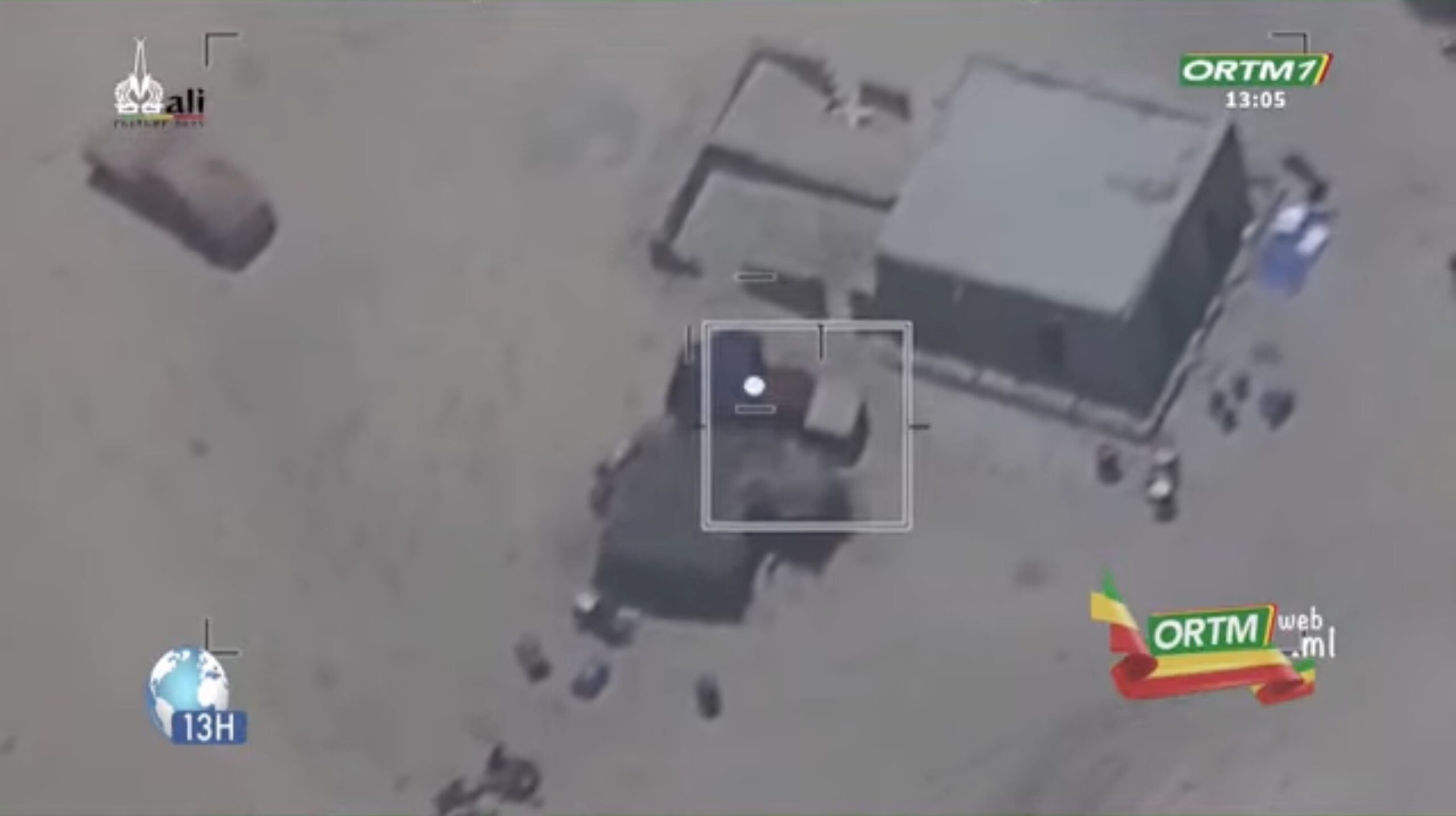
- JNIM is likely to continue disrupting Mali’s supply routes, while the evidence indicates that the fuel blockade of Bamako is porous rather than complete. Reporting describes a de facto blockade affecting Bamako and other southern Malian cities, but also says roughly 1,000 fuel trucks had reached Bamako by July 2026, partly with Africa Corps escorts and increasingly with Turkish drones. The convoy figure is dated and the assessment rests on limited reporting, so it does not establish current delivery levels. (Confidence: medium · ASSESSED)
- I&W: Dated transport or fuel-distributor reporting records repeated JNIM-related route interruptions or escorted fuel convoys on routes into Bamako, supporting continued disruption with partial passage. (0-14 days)
- I&W: Malian fuel distributors document several consecutive weeks of unescorted deliveries into Bamako alongside no reported route interruptions, weakening the assessment of continuing disruption. (1-3 months)
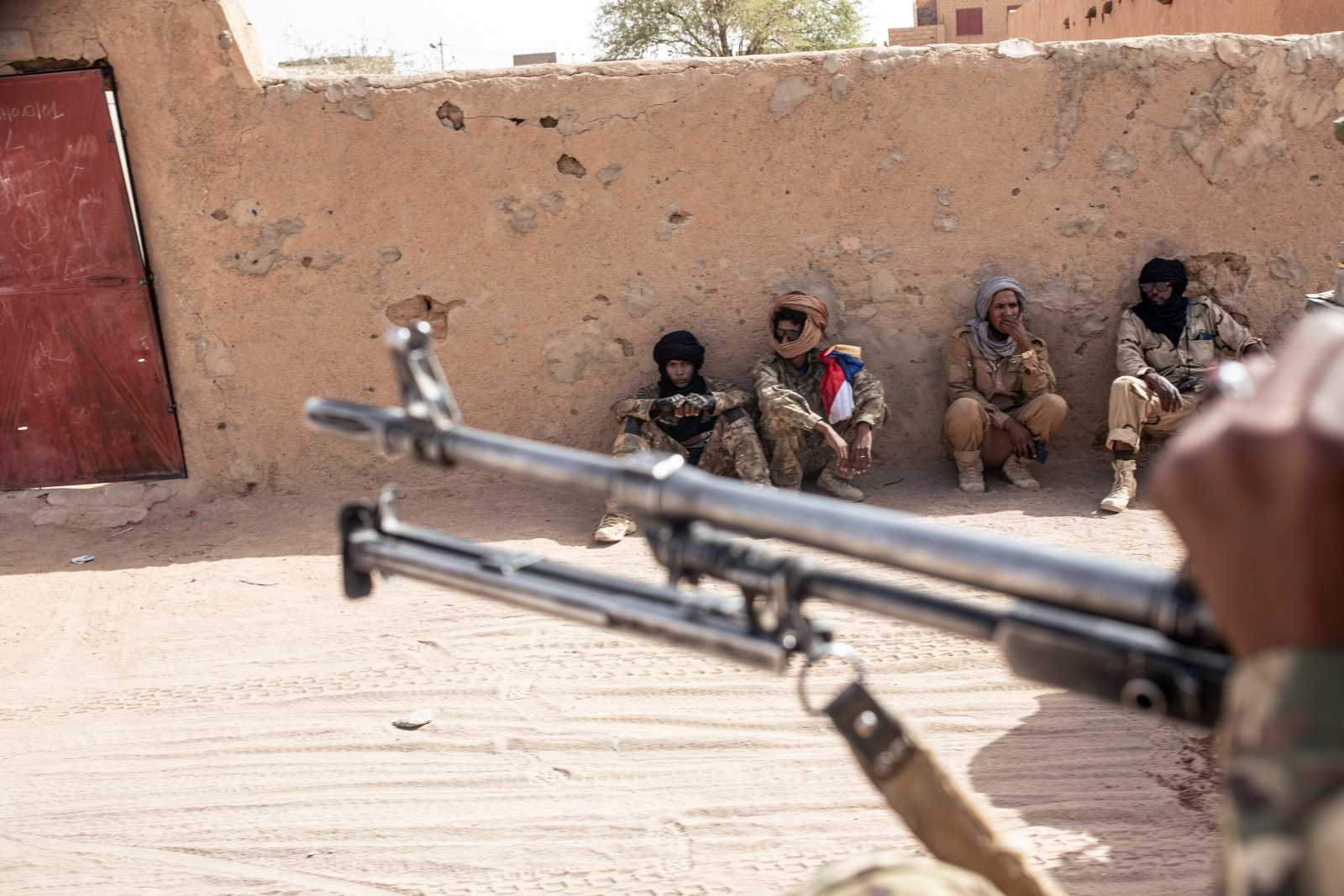
- The late-August incident at Base 101 in Niamey was more likely an attempted mutiny than a successful coup, but the outcome is unresolved. The Nigerien Ministry of Defense described mutinous soldiers entrenched at Base 101, and reporting described overnight shots and explosions near the airport; other accounts refer both to a coup and to a failed attempt. Russia claimed it helped end the uprising, while reporting also describes subsequent army purges and civilian arrests. The accounts are not clearly independently corroborated, and an expert assessment warned that army divisions could advantage jihadist groups. (Confidence: low · ASSESSED)
- I&W: A Nigerien ministry statement or credible independent report links further arrests, purges or proceedings directly to the Base 101 mutiny, supporting the assessment that the incident remained an attempted challenge. (0-14 days)
- I&W: Independent reporting establishes that a military faction displaced the junta or took control of government sites in Niamey, breaking the assessment that the incident was an unsuccessful mutiny. (0-14 days)
- Malian troop presence in Kidal does not establish durable state control across northern Mali. Reporting says Malian troops returned to Kidal in October after separatist forces withdrew, while separate reporting says the Front de libération de l’Azawad and JNIM seized parts of northern Mali in 2026. The accounts refer to different developments and provide no sustained evidence of control beyond Kidal; confidence is low because the reporting is not a current, independently corroborated account of territorial control. (Confidence: low · ASSESSED)
- I&W: Independent, dated reporting confirms FLA or JNIM control of northern Mali locations outside Kidal, supporting the assessment that Malian control remains geographically limited. (1-3 months)
- I&W: Repeated independent reporting verifies Malian armed forces deployments and administration across northern Mali, with no reported FLA or JNIM presence, weakening the assessment. (1-3 months)
Outlook & scenarios
Continued uneven pressure on Mali’s supply routes (55%)
Over the next 1-3 months, JNIM is likely to keep disrupting transport routes while some fuel convoys continue to reach Bamako. This is the most likely path given reporting of both a de facto blockade and substantial truck arrivals by July 2026.
Worsening fuel disruption in southern Mali (25%)
If JNIM-related route interruptions increase and convoy arrivals fall, fuel access in Bamako and other southern Malian cities is likely to worsen. Current reporting does not establish that this deterioration has begun.
Malian presence holds in Kidal without broad northern control (10%)
Malian troops are likely to remain present in Kidal, while evidence of control elsewhere in northern Mali remains limited. A sustained FLA withdrawal and verified Malian deployments beyond Kidal would weaken this scenario.
Renewed military challenge in Niger, low-probability high-impact wildcard (10%)
A renewed split within Niger’s military would threaten the junta’s control and is likely to give jihadist groups an advantage, according to an expert assessment in the reporting. The available claims do not establish that the August mutiny is continuing.
Recommendations
- Keep the Téra ambush separate from the 2026 incident chronology until its date is resolved. Do not treat the November 2026 summary as independent confirmation of a new attack or a confirmed casualty count.
- Track dated fuel-convoy arrivals into Bamako alongside route interruptions and escort status. Distinguish a complete blockade from a disruptive but breached one.
- Before describing the August incident in Niamey as a coup, seek independent confirmation of the Base 101 soldiers’ status, the Nigerien authorities’ response and any subsequent change in command.
- Treat the October return of Malian troops to Kidal as evidence of presence in that town, not proof of control across northern Mali. Seek sustained, independent reporting before updating the territorial-control assessment.
Confidence & uncertainty
Overall confidence is low because the reporting does not provide strong independent corroboration for the main security developments. The Téra casualty account relies on local sources, lacks an official toll and has a one-year date conflict, including a summary read only in brief. The fuel convoy figure is dated to July 2026, and accounts of the Niger mutiny and control in northern Mali do not resolve key questions about outcome or extent.
Alternative analysis (red cell)
The Téra evidence does not establish that the 2025 account is more likely than the conflicting 2026 dating; the incident year should remain unresolved pending source-level verification. In Niger, the reporting confirms a serious military confrontation but leaves open whether it was a failed mutiny or a more consequential coup attempt, with official terminology and Russian claims insufficient to determine the outcome. These ambiguities weaken the brief's directional judgments even where its low confidence appropriately signals uncertainty.
Intelligence gaps
- [EEI 1.1 · PARTIAL] Number, location, and scale of attacks (IEDs, ambushes, complex attacks) per week against towns, military bases, police posts, or convoys, with casualty and equipment-loss counts. Recommended collection: ground/HUMINT
- [EEI 1.2 · UNCOVERED] Observed movement and size of armed columns (vehicle counts, heavy weapons present) along approach routes to population centers or borders documented by imagery, local reporting, or border guards. Recommended collection: imagery/SATCOM
- [EEI 1.3 · PARTIAL] Reports of occupation, administration, or imposition of checkpoints/taxes by armed groups in named towns, villages, markets, or on specified road segments. Recommended collection: OSINT (local media/social)
- [EEI 1.4 · UNCOVERED] Seizure or acquisition of heavy weapons or air-defense systems (mortars >81mm, artillery, armored vehicles, MANPADS) attributed to specific groups as evidenced by photos, captured weapons inventories, or weapons interdictions. Recommended collection: forensics/field reporting
- [EEI 2.1 · PARTIAL] Internal security force movements: redeployment of army units, garrison withdrawals, or mass troop movements toward/away from capitals and regional command posts. Recommended collection: imagery/SATCOM
- [EEI 2.4 · PARTIAL] Targeted external support actions: sanctions, suspension of aid, delivery of weapons or logistics from foreign state or non-state actors (documented shipments, bank transfers, public announcements). Recommended collection: financial/diplomatic
- [EEI 3.1 · PARTIAL] Interdictions or seizures at borders/markets of weapons, ammunition, fuel, or contraband (type/quantity, seizure location, alleged origin/destination). Recommended collection: border/customs
- [EEI 3.2 · PARTIAL] Recorded movements of known smuggling routes and convoy volumes: counts of commercial/privately registered vehicles and informal river crossings on specific cross-border corridors. Recommended collection: ground/HUMINT
- [EEI 3.3 · UNCOVERED] Monitored financial flows linked to illicit trade: large cash movements, changes in declared gold exports at named mines/ports, or arrests of money couriers with amounts and origins. Recommended collection: financial/forensics
- [EEI 3.4 · UNCOVERED] Observed changes at border security posts: closures, reductions in personnel, destroyed checkpoints, or documented agreements allowing free movement at named crossings. Recommended collection: imagery/OSINT
Red cell review: PARTIAL DISSENT
TLP:CLEAR