TLP:CLEAR · Disclosure is not limited.
Sahel SitRep: JNIM-claimed Niamey attack, Mali submunition reports, and Côte d’Ivoire’s counterterror posture
Time window: Last 7 days · Audience: General analyst · Type: Situation report · DTG: 2026-06-23 06:16Z · Overall confidence: MEDIUM
BLUF
A deadly assault on Niamey’s main airport, claimed by JNIM, shows capability to hit a strategic node in Niger’s capital amid heavy security sweeps. Reports of unexploded Russian-made cluster submunitions in northern Mali after Malian air operations, plus Côte d’Ivoire’s hardened posture against JNIM and AQIM, point to a volatile tri-border threat picture over the next 1-3 months.
Executive summary
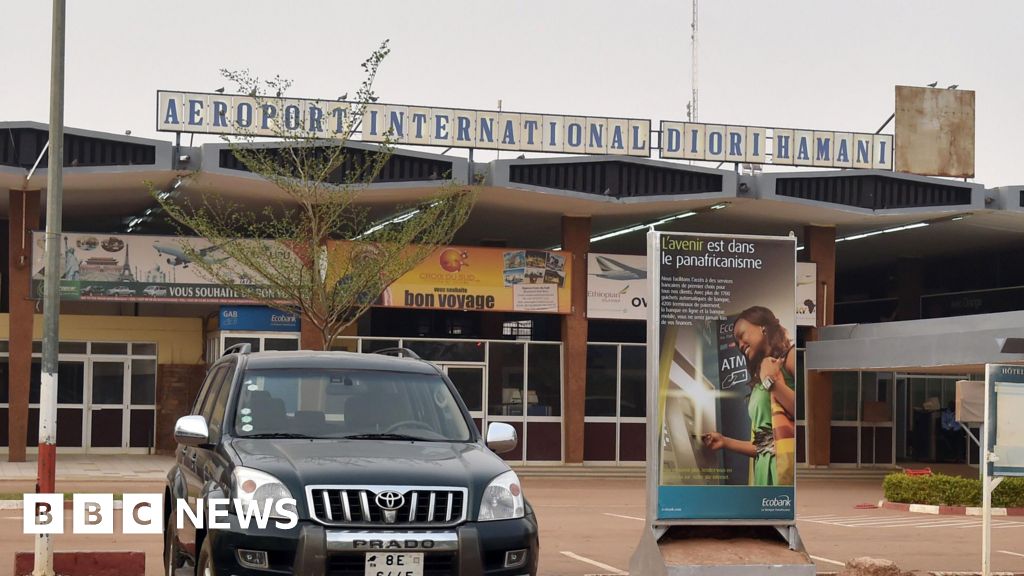
Gunmen attacked Niamey’s main airport, killing 11 soldiers and two civilians, with 22 assailants killed in the exchange of fire. Jama’at Nusrat al-Islam wal-Muslimin claimed responsibility. Authorities locked down the airport vicinity, launched a manhunt, arrested 20 suspects, and seized a cache including RPG‑7 launchers, AK‑47s and explosives, while armed residents joined the search. The airport hosts a Nigerien air force base and the headquarters of the Niger‑Burkina Faso‑Mali joint force. Niger’s military government has been in power three years and ordered French soldiers to leave, as the country has struggled to contain deadly jihadi violence. In Mali, unexploded Russian‑made cluster bomblets were found and geolocated in Tadjmart after the Malian Armed Forces announced airstrikes, raising treaty‑compliance concerns given Mali’s status under the Convention on Cluster Munitions. In Côte d’Ivoire, Washington advises against travel to the northern border region due to risks from JNIM, which, along with AQIM, has conducted attacks in the north in past years. Abidjan has formed the Northern Operational Zone and established the Counterterrorism Operational Intelligence Center, and reports no recent incidents of violent extremism though risk persists along the northern border.
Key judgments
- Likely that Jama’at Nusrat al‑Islam wal‑Muslimin was responsible for the lethal attack on Niamey’s main airport, demonstrating capability to strike a strategic military‑aviation hub in the capital. Competing official attribution to armed mercenaries keeps this at likely rather than very likely. (Confidence: medium · ASSESSED)
- I&W: A JNIM communique releases unreleased operational details that match items seized or timelines reported by Nigerien authorities. (0-14 days)
- I&W: Forensic reporting by Niger’s defence ministry attributes the operation to non‑JNIM mercenary networks with detainee statements and recovered materiel published. (0-14 days)
- Very likely that Nigerien security forces will sustain large‑scale sweeps and detentions in Niamey over the next two weeks, with a risk of ad hoc vigilante violence by residents amid ongoing manhunts. (Confidence: medium · ASSESSED)
- I&W: Official statements announce further arrests linked to the airport attack and additional arms seizures in Niamey. (0-14 days)
- I&W: Authorities lift cordons around the airport and publicly declare the manhunt concluded. (0-14 days)
- Likely that the cross‑border militant threat to northern Côte d’Ivoire will remain elevated over the next one to three months despite no recent incidents, as Abidjan sustains the CROAT and the Northern Operational Zone to counter JNIM and AQIM. (Confidence: medium · ASSESSED)
- I&W: Ivoirian authorities report disruption or arrest of cross‑border cells in departments abutting Burkina Faso. (1-3 months)
- I&W: A downgrade of the U.S. travel advisory for the northern border region. (1-3 months)
- Roughly even chance that cluster munitions were used in northern Mali in May, given reports of unexploded Russian‑made bomblets geolocated in Tadjmart after Malian air operations; if employed by Malian forces, this would breach Mali’s obligations under the Convention on Cluster Munitions. (Confidence: medium · ASSESSED)
- I&W: Additional field documentation of ShOAB‑0.5 submunitions at or near recent strike locations in northern Mali. (0-3 months)
- I&W: Independent verification attributing the bomblets to a non‑state actor or official clarification with credible munitions accounting that Malian forces did not employ them. (1-3 months)
- Likely that the departure of French forces from Niger and the junta’s tenure have reduced immediate external rapid‑response options for Niamey, increasing pressure on Nigerien forces to secure critical sites such as the capital’s airport. (Confidence: low · ASSESSED)
- I&W: Niger requests new bilateral assistance or training from non‑French partners to secure Niamey’s air hub. (1-3 months)
- I&W: Announcement of renewed operational basing or joint rapid‑response arrangements with France. (1-3 months)
Outlook & scenarios
JNIM pursues an urban campaign in Niger (35%)
Following the airport assault, JNIM executes or directs at least one additional high‑impact operation in Niamey targeting security installations or officials. Authorities extend lockdowns and sweeps, and further arms caches are recovered. The campaign strains Nigerien forces tasked with guarding the air hub and government precincts.
Security sweeps degrade the attacking network (40%)
Niger’s arrests disrupt plotting linked to the airport attack. No major incident occurs in the capital in the next month. Arms recoveries and interrogation yields drive follow‑on raids in the capital’s outskirts while remaining cells revert to lower‑signature activity outside Niamey.
Cross‑border flare‑up into northern Côte d’Ivoire (25%)
A JNIM element infiltrates from Burkina Faso and attempts an attack in northern Côte d’Ivoire. Abidjan activates the Northern Operational Zone and CROAT for interdiction operations along the frontier. The U.S. advisory against travel to the border region remains in place amid renewed patrols.
Mali cluster‑munition controversy triggers backlash (15%)
Further documentation of Russian‑made submunitions at strike sites in northern Mali leads to international scrutiny. If tied to state use, Bamako faces legal and diplomatic pressure under the Convention on Cluster Munitions, complicating air operations against armed groups.
Recommendations
- Prioritise collection on JNIM facilitators in Niamey: map detainee links from the 20 arrests, weapons provenance from the seized RPG‑7s and explosives, and any logistics nodes tied to the airport attack.
- Task OSINT monitoring of JNIM and AQIM channels for communiques that include unreleased operational detail about the Niamey assault; flag matches to authorities’ seizure lists and timelines for attribution confidence.
- Engage with Ivoirian counterparts on CROAT and Northern Operational Zone information‑sharing: cross‑border watchlists, routes from Burkina Faso used in prior JNIM incursions, and deconfliction protocols for any cross‑border pursuits.
- Establish an evidence‑preservation line for Mali: archive geolocated imagery of submunitions in Tadjmart and any future finds, and maintain a legal brief on Mali’s Convention on Cluster Munitions obligations to inform policy options if state use is substantiated.
- Advise U.S. personnel and partners in Niamey to avoid the airport vicinity outside essential movements until security cordons ease; incorporate the risk of spontaneous mob action into movement planning during ongoing manhunts.
- Fuse geospatial fire‑detection feeds with known incident locations to cue wide‑area surveillance in the Niger, Burkina Faso, Mali corridor, while accounting for non‑conflict fire activity to reduce false positives.
Confidence & uncertainty
Overall confidence is medium. The Niamey attack is corroborated across multiple reports with consistent casualty breakdowns, arrests, and seizures, and JNIM has issued a claim of responsibility, though an official statement blaming armed mercenaries introduces attribution uncertainty. Côte d’Ivoire threat assessments and posture are drawn from official U.S. and Ivoirian sources that align, but the forecast of near‑term risk is inferential. In Mali, credible OSINT and field reporting indicate unexploded submunitions, yet responsibility for use remains unproven. These factors support solid situational facts with some unresolved questions on actor attribution and future intent.
Alternative analysis (red cell)
The available reporting supports multiple plausible interpretations rather than the single most likely ones advanced in the key judgments. For the Niamey airport attack, public insurgent claims and official denials coexist without independent forensic or intelligence corroboration, making attribution indeterminate. Similarly, while security forces and communities have reacted, the scale and duration of projected sweeps, vigilante violence, and use of cluster munitions are plausible but not conclusively supported by the current evidence.
Cited sources
[1] newser.com · 35 Dead in Attack on African Country's Main Airport (B) · sha256:b4f0ff677f9c [2] bbc.com · Niger airport attack: Thirty-five die in attack on Niamey airport (A) · sha256:8d0032921923 [3] Los Angeles Times · Gunmen kill 11 soldiers, 2 civilians at Niger airport, officials say - Los Angeles Times (A) · sha256:5aec6620ae3f [4] U.S. Department of State · Cote d'Ivoire Travel Advisory (A) · sha256:d92eb303ef23 [5] bellingcat.com · Banned Russian Submunitions Found After Mali's Military Announces Airstrikes - bellingcat (A) · sha256:6788d3465fd7
Source content hashes were computed at collection time; the cited text is preserved unmodified for the life of this product.
Red cell review: PARTIAL DISSENT
TLP:CLEAR