TLP:CLEAR · Disclosure is not limited.
Sahel SITREP: JNIM pressure on Côte d’Ivoire, contested airstrikes in Mali, and persistent violence in the Lake Chad basin
Time window: Last 7 days · Audience: General analyst · Type: Situation report · DTG: 2026-06-17 06:15Z · Overall confidence: MEDIUM
BLUF
Militant violence across the Sahel borderlands remains acute: JNIM activity threatens northern Côte d’Ivoire, Malian air operations face credible cluster-munition allegations, and armed groups in Nigeria and Cameroon sustain high kidnapping and IED risks. Civilian protection concerns, including attacks on education and child welfare, are rising.
Executive summary
Reporting this week points to a dangerous inflexion across Sahel theatres. In Côte d’Ivoire, authorities identify JNIM as the primary terrorist threat, with past cross-border raids from Burkina Faso and official travel warnings covering the northern border region. In Mali, OSINT indicates Russian-made submunitions present in the wake of Malian Air Force strikes amid support from Russia’s Africa Corps, raising legal and humanitarian concerns. In Nigeria’s Zamfara state, gunmen killed farmers and abducted dozens as the state rejects talks with armed gangs; in the northeast, U.S., Nigerian operations against Islamic State in West Africa report large militant fatalities while local leaders allege civilian deaths. In Cameroon’s Far North, Northwest and Southwest, terrorist violence, IEDs and kidnapping risks remain high against a backdrop of limited policing and medical capacity. Multilateral reporting highlights a sharp rise in grave violations against children and attacks on education, and calls for urgent, unimpeded humanitarian access.
Key judgments
- It is very likely that jihadist pressure along Côte d’Ivoire’s northern border will persist over the next 1-3 months, led by JNIM elements crossing from Burkina Faso, with AQIM-linked activity still present; official advisories already warn against travel in this area and flag an ongoing terrorist threat. (Confidence: high · ASSESSED)
- I&W: Official reports of a new cross-border JNIM raid or IED attack in a northern Ivoirian department adjacent to Burkina Faso. (0-14 days)
- I&W: Downgrading of U.S. travel restrictions for northern Côte d’Ivoire or a 30-day period without reported militant activity in the northern border zone. (1-3 months)
- It is likely that Côte d’Ivoire’s Northern Operational Zone and the Counterterrorism Operational Intelligence Center will strengthen response coordination but will not fully prevent further JNIM infiltration in the short term. (Confidence: medium · ASSESSED)
- I&W: Security communiqués noting engagements or arrests of JNIM elements inside the Northern Operational Zone despite ongoing deployments. (1-3 months)
- I&W: A sustained quarter without cross-border incidents and public claims of dismantled JNIM facilitation networks in the border districts. (3-6 months)
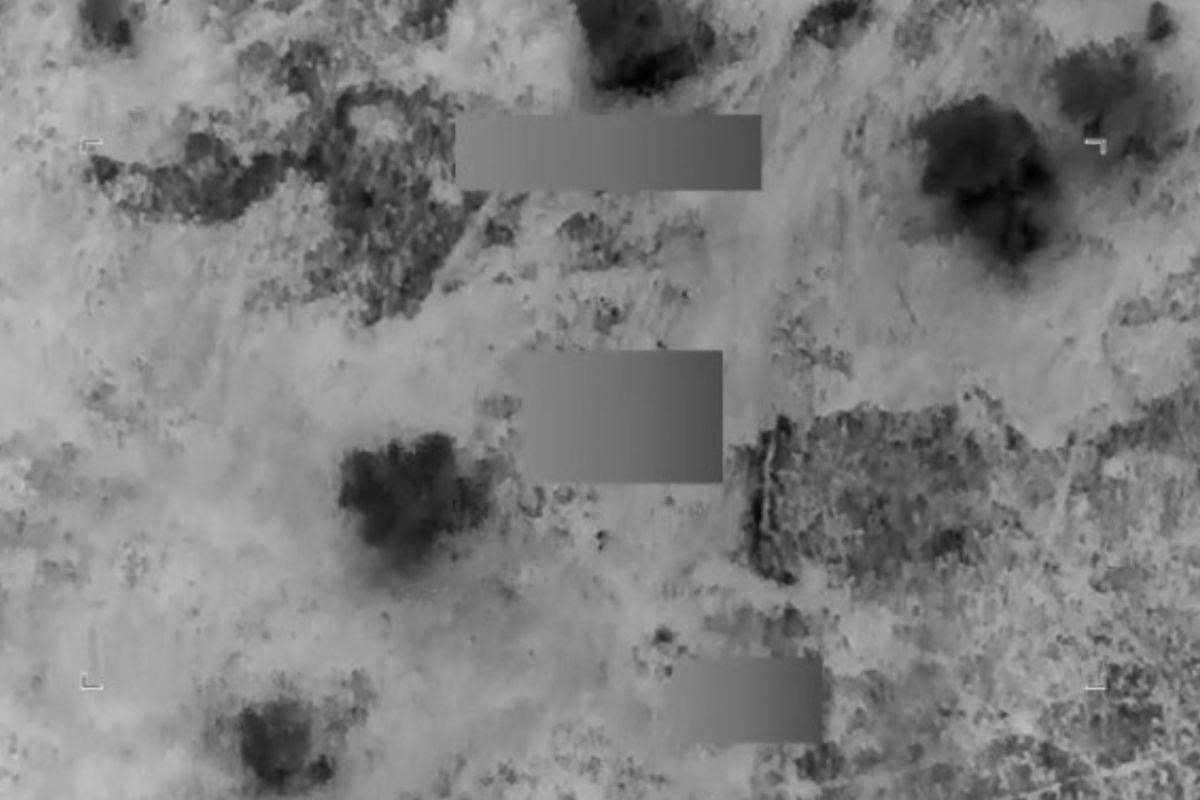
- It is likely that Russian-made submunitions were used in northern Mali during recent Malian Air Force strikes, a pattern consistent with reported Russian Africa Corps support and at odds with Mali’s obligations under the Convention on Cluster Munitions. (Confidence: medium · ASSESSED)
- I&W: Additional geolocated imagery or clearance reports identifying ShOAB-0.5 duds near May strike areas in northern Mali. (0-14 days)
- I&W: Independent technical assessment attributing the duds to legacy contamination unrelated to the May 17 strikes. (1-3 months)
- It is likely that armed gang violence in Zamfara state, Nigeria, will continue at pace in the next 1-3 months, given this week’s killings in Goron Namaye and the abduction of 39 people in Magamin Diddi, combined with the state government’s stated refusal to negotiate. (Confidence: high · ASSESSED)
- I&W: Another mass-casualty farm attack or group abduction in Maradun or a neighbouring LGA. (0-14 days)
- I&W: Announcement of a negotiated amnesty or protection initiative by Zamfara authorities with a month-long drop in reported incidents. (1-3 months)
- There is a roughly even chance that joint U.S., Nigerian operations against Islamic State in West Africa in Borno caused civilian casualties near Metele, despite official statements reporting over 200 militants killed and no friendly casualties. (Confidence: low · ASSESSED)
- I&W: AFRICOM issues a civilian harm assessment acknowledging non-combatant deaths associated with operations near Metele. (1-3 months)
- I&W: Independent NGO investigation finds no civilian fatalities at the reported locations. (1-3 months)
- It is very likely that kidnapping and IED risk will persist in Cameroon’s Far North and conflict-affected Northwest and Southwest regions, compounded by limited policing capacity and constrained medical support. (Confidence: high · ASSESSED)
- I&W: Reported IED incidents or mass kidnappings in the Far North or ambushes in the Northwest or Southwest corridors. (0-14 days)
- I&W: Publicly reported dismantling of key militant or separatist kidnapping cells followed by a measurable incident decline. (1-3 months)
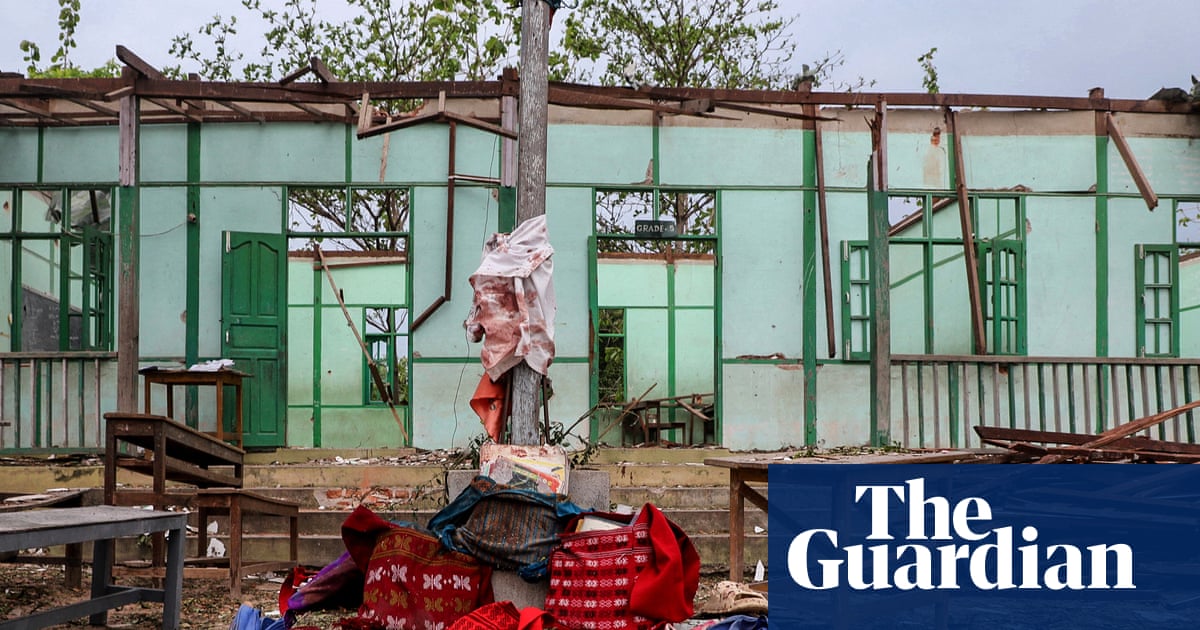
- Grave violations against children and attacks on education are very likely to continue rising across conflict-affected parts of Africa, reinforcing urgent needs for unimpeded humanitarian access and WASH services highlighted by AU and UN officials. (Confidence: medium · ASSESSED)
- I&W: Further AU or UN reporting of increased school attacks or mass abductions in West and Central Africa. (1-3 months)
- I&W: Documented improvements in humanitarian access for WASH and child protection programmes in conflict zones. (1-3 months)
Outlook & scenarios
Border raids into northern Côte d’Ivoire continue at low-to-moderate tempo (60%)
JNIM sustains cross-border incursions from Burkina Faso into northern Côte d’Ivoire, with occasional small-scale attacks and intimidation. The government’s Northern Operational Zone and CROAT enable quicker reactions but do not seal the frontier. U.S. advisories on the northern border region remain stringent, and the overall terrorist threat persists.
Malian air campaign draws international scrutiny over alleged cluster-munition use (50%)
Additional geolocated finds of Russian-made submunitions emerge around recent strike locations in northern Mali, prompting legal and diplomatic pressure citing Mali’s status under the Convention on Cluster Munitions. Russian Africa Corps support remains in focus, and humanitarian clearance requirements increase.
Zamfara hard-line holds as armed gangs sustain killings and abductions (55%)
After the Goron Namaye killings and Magamin Diddi abductions, Zamfara’s refusal to negotiate correlates with further attacks on farmers and travellers. Federal messaging continues to promise improved security, but local violence stays elevated without a substantive dialogue track.
Lake Chad basin insecurity endures as Cameroon faces kidnappings and IEDs (50%)
Cameroon’s Far North experiences sporadic terrorist kidnappings and IED incidents, while the Northwest and Southwest continue to face abductions by non-state armed groups. Limited policing resources and constrained medical services prolong community vulnerability and complicate incident response.
Recommendations
- Prioritise collection on cross-border facilitation routes into northern Côte d’Ivoire and maintain a live map of JNIM and AQIM-linked incidents to support risk warnings aligned with official advisories.
- Task imagery and OSINT teams to catalogue and geolocate submunition duds reported in northern Mali and correlate with known strike timelines; prepare brief legal notes on Mali’s CCM obligations for policy customers.
- Stand up incident alerting for Zamfara and adjacent LGAs tracking mass attacks on farmers and abductions; monitor shifts in state policy, including any signals of negotiation or amnesty offers.
- Request and track any civilian harm assessments or after-action statements from AFRICOM regarding operations in Borno; cross-reference with local testimony and third-party investigations from the Metele area.
- Maintain a consolidated feed for Cameroon’s Far North, Northwest and Southwest capturing IED events, kidnappings and protest activity; update travel-risk products to reflect kidnapping hotspots and limited emergency response capacity.
- Integrate AU and UN child-protection and education-attack datasets into regional risk modelling, and flag areas where humanitarian WASH access is impeded to inform engagement on access corridors.
Confidence & uncertainty
Overall confidence is medium. Several judgments rest on multiple, high-reliability official and multilateral sources regarding threat profiles and advisories in Côte d’Ivoire and Cameroon. The assessment of submunition use in Mali relies on credible OSINT with geolocation but lacks official confirmation, lowering confidence. Reporting on U.S., Nigerian operations includes an official account alongside a single-source allegation of civilian deaths, creating uncertainty on civilian harm. Incident reporting in Zamfara is recent and consistent, supporting higher confidence there.
Alternative analysis (red cell)
Several judgments rely on organizational existence, single-source OSINT, or isolated incident reports to forecast near-term persistence or to attribute actions; these inferences exceed what the current claims substantiate. Alternative readings—such as ZON/CROAT potentially reducing infiltration if resourced, or bomblet origin being unresolved without forensic evidence—are defensible. Collecting the forensic, trend, and corroborative reporting listed above would materially reduce uncertainty and could support different analytic conclusions.
Cited sources
[1] U.S. Department of State · Cote d'Ivoire Travel Advisory (A) · sha256:d92eb303ef23 [2] bellingcat.com · Banned Russian Submunitions Found After Mali's Military Announces Airstrikes - bellingcat (A) · sha256:6788d3465fd7 [3] Los Angeles Times · Gunmen kill at least 17 people in Nigeria - Los Angeles Times (A) · sha256:86587cc09b65 [4] newsweek.com · US kills more than "200 terrorists" in Nigeria operations (B) · sha256:f42c4d3a16dd [5] U.S. Department of State · Cameroon Travel Advisory | Travel.State.gov (A) · sha256:535e774d74d2 [6] Office of the Special Representative of the Secretary-General for Children and Armed Conflict · Joint Statement of the AU Special Envoy on Children Affected by Armed Conflict and the UN Under-Secretary-General, Special Representative of the Secretary-General for Children and Armed Conflict on the Day of the African Child | Office of the Special Representative of the Secretary-General for Children and Armed Conflict (A) · sha256:0d1643c86ab8 [7] The Guardian · Violent attacks on schools, pupils and staff around the world up by 40%, says study (A) · sha256:33e1875fc139
Source content hashes were computed at collection time; the cited text is preserved unmodified for the life of this product.
Red cell review: PARTIAL DISSENT
TLP:CLEAR