TLP:CLEAR · Disclosure is not limited.
Sahel Situation Report: Mass Returns from Guinea
Time window: Last 7 days · Audience: General analyst · Type: Situation report · DTG: 2026-11-08 04:07Z · Overall confidence: LOW
BLUF
The main new development is Mali's report that about 160,000 people have arrived after being expelled from Guinea, with roughly 100,000 in Bamako and nearly 60,000 in Kourémalé. The scale and six reported deaths warrant close monitoring, but the figures and humanitarian impact are not independently corroborated.
Executive summary
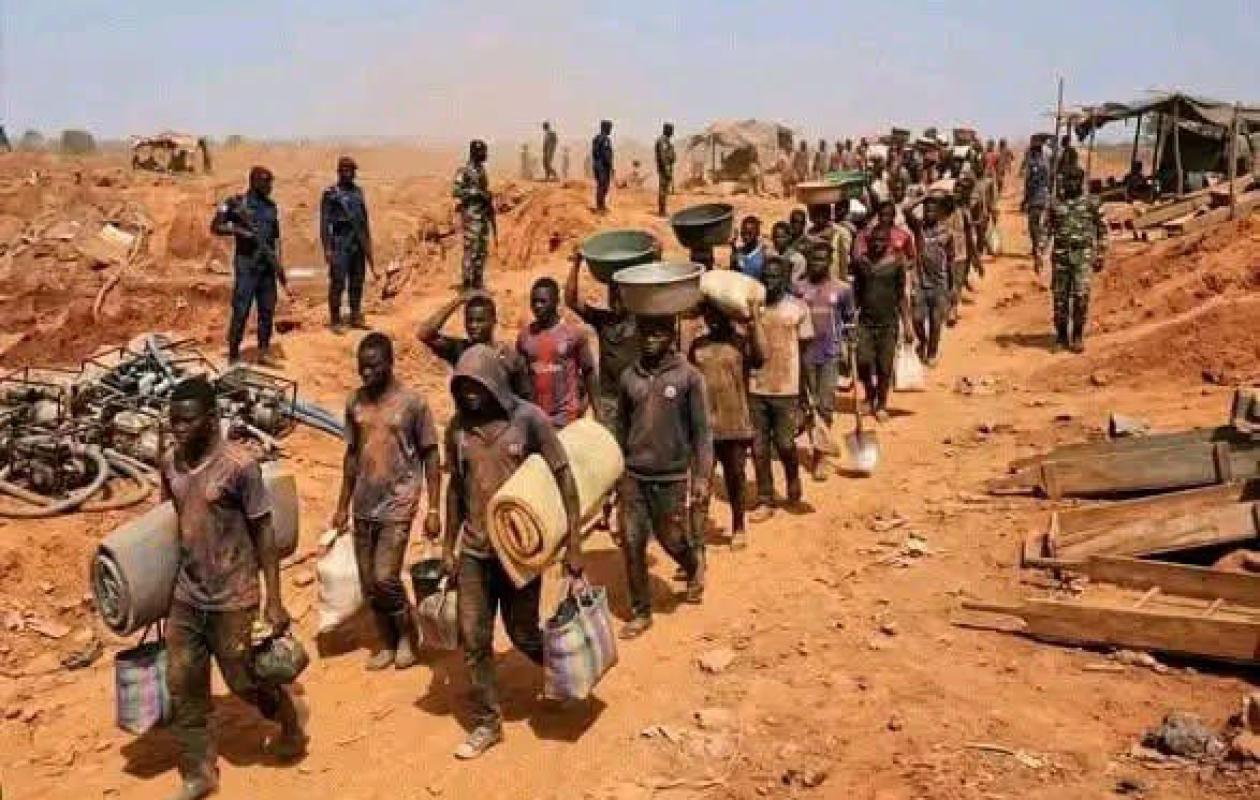
Reporting published on 8 November says Guinea's enforcement operation against illegal artisanal gold mining was followed by mass expulsions to Mali. Mali's authorities reported about 160,000 arrivals and six deaths in Kourémalé; Burkina Faso's Health Ministry reported that an initial convoy of 48 buses carrying about 3,400 Burkinabè arrived in Bobo-Dioulasso on 6 November. The available reporting does not independently verify the totals or establish the extent of pressure on services. This update centres on cross-border returns and humanitarian response, rather than new evidence about insurgent activity.
Change from previous assessment
Since the 7 November brief, the principal update is reporting of mass expulsions from Guinea into Mali and organised returns of Burkinabè nationals. This moves cross-border displacement and humanitarian response to the foreground of this situation report. It does not change the prior assessment that JNIM's claimed Burkina Faso losses remain unverified or that available reporting does not establish current FLA or JNIM territorial control in northern Mali; the new claims do not add corroboration on those questions. Earlier assessments of Malian drone-strike harm and Senegal-Niger engagement are not reassessed here.
Key judgments
- Malian authorities reported that about 160,000 people had arrived from Guinea following operations against illegal gold mining. CECOGEC placed about 100,000 people in the District of Bamako and nearly 60,000 in Kourémalé as of 7 November, and reported six deaths in Kourémalé. Mali's Health Ministry said most of the expelled people were from Burkina Faso, with nationals of Côte d'Ivoire, Senegal, Togo and Benin also represented. Guinea had banned illegal artisanal mining in parts of the Siguiri region and deployed security forces; the report also describes several thousand arrests of foreigners. These are official figures carried in a Seneweb republication of AFP reporting, with no independent count provided. (Confidence: low · REPORTED)
- I&W: CECOGEC publishes a revised total near or above 160,000 and provides an updated split for Bamako and Kourémalé, confirming the reported scale; a revised total materially below 160,000 would weaken it. (0-14 days)
- I&W: Malian authorities publish a further tally of deaths in Kourémalé, confirming continuing reported harm; a correction withdrawing the six-death figure would weaken the reported casualty account. (0-14 days)
- The reported concentration of people in Bamako and Kourémalé is likely to put immediate pressure on Mali's reception and assistance capacity. Mali's Health Ministry called the situation a humanitarian emergency and priced a response plan at nearly 228 million FCFA, but the reporting provides no independent assessment of needs, funding or service access. This inference rests on the same reporting chain as the arrival figures. (Confidence: low · ASSESSED)
- I&W: Mali's Health Ministry or CECOGEC reports unmet shelter, water, health or food needs in Bamako or Kourémalé, or increases the nearly 228 million FCFA response plan, confirming pressure; a funded plan accompanied by reports of no acute service gaps would weaken it. (0-30 days)
- Burkinabè return movements are being organised through bus convoys. Burkina Faso's Health Ministry reported that 48 buses carrying about 3,400 people forced to leave Guinea arrived in Bobo-Dioulasso on 6 November, and that five convoys using 199 buses were operating on the Ouagadougou-Bamako axis to return other Burkinabè nationals. The details come from one reporting chain and are not independently verified. (Confidence: low · REPORTED)
- I&W: Burkina Faso's Health Ministry reports further arrivals in Bobo-Dioulasso or continued bus movements on the Ouagadougou-Bamako axis, confirming ongoing returns; an official notice that the operation has ended with no further arrivals would weaken it. (0-30 days)
Outlook & scenarios
Continued managed returns (60%)
It is likely that Guinea's enforcement operation continues to produce return movements over the coming weeks, while Mali and Burkina Faso manage arrivals through their reported coordination and transport arrangements. Updated registration may change the current totals, but the supplied reporting does not establish how quickly movements will end.
Reception needs outpace the planned response (30%)
It is unlikely that the reported response plan will be sufficient if the large concentrations in Bamako and Kourémalé persist and site-level reporting identifies unmet basic needs. The current reporting does not establish whether the plan is funded or whether services are already under strain.
Further expulsions disrupt cross-border movement (10%)
A very unlikely, high-impact outcome is that further arrests or expulsions in Guinea trigger another large movement of people and disrupt returns through Kourémalé or the Ouagadougou-Bamako corridor. The supplied reporting does not establish that such disruption is under way.
Recommendations
- Treat the reported total of about 160,000 as provisional. Compare the next CECOGEC and Mali Health Ministry tallies, including their dates, definitions and location breakdowns, before using the figure for planning.
- Prioritise updates on reception conditions in Bamako and Kourémalé. Track reported access to shelter, water, health care and food, and compare documented needs with the nearly 228 million FCFA response plan.
- Seek confirmation from Burkina Faso's Health Ministry of the 48-bus arrival in Bobo-Dioulasso and the status, direction and destinations of the five convoys on the Ouagadougou-Bamako axis.
- Keep this displacement reporting separate from assessments of JNIM or FLA activity. Do not infer a change in insurgent capability or territorial control from returnee figures alone.
Confidence & uncertainty
Overall confidence is low because the main arrival figures, deaths and response-plan estimate come from one AFP report republished by Seneweb and attributed to Malian authorities or CECOGEC. The Burkina Faso convoy details are in the same reporting chain. No independent count or operational assessment is provided, leaving the number of people expelled, their current locations and their needs uncertain.
Alternative analysis (red cell)
The reported figures in a04c2283-4abc-4ff0-9bed-44b8bbad3967 and b1e828af-a135-49fd-886c-40a7dad0de26 may indicate a large movement, but they do not establish that Mali's reception systems are already under immediate pressure. Claim 7d24ab98-daf9-4d70-9a61-8b95185d3856 shows an official emergency designation and proposed budget, which could reflect planned precautionary action rather than measured service overload; the evidence therefore supports reported concern, not a demonstrated operational impact.
Intelligence gaps
- [EEI 1.1 · PARTIAL] Number, location, and scale of attacks (IEDs, ambushes, complex attacks) per week against towns, military bases, police posts, or convoys, with casualty and equipment-loss counts. Recommended collection: ground/HUMINT
- [EEI 1.2 · PARTIAL] Observed movement and size of armed columns (vehicle counts, heavy weapons present) along approach routes to population centers or borders documented by imagery, local reporting, or border guards. Recommended collection: imagery/SATCOM
- [EEI 1.3 · PARTIAL] Reports of occupation, administration, or imposition of checkpoints/taxes by armed groups in named towns, villages, markets, or on specified road segments. Recommended collection: OSINT (local media/social)
- [EEI 1.4 · PARTIAL] Seizure or acquisition of heavy weapons or air-defense systems (mortars >81mm, artillery, armored vehicles, MANPADS) attributed to specific groups as evidenced by photos, captured weapons inventories, or weapons interdictions. Recommended collection: forensics/field reporting
- [EEI 2.1 · PARTIAL] Internal security force movements: redeployment of army units, garrison withdrawals, or mass troop movements toward/away from capitals and regional command posts. Recommended collection: imagery/SATCOM
- [EEI 2.2 · UNCOVERED] Detentions, public dismissals, resignations, or public statements by senior military, police, or government officials indicating factional splits (named individuals, ranks, units). Recommended collection: diplomatic/OSINT
- [EEI 2.3 · PARTIAL] Changes in foreign military footprints or security agreements: arrival/departure of foreign troops, opening/closure of foreign bases, visible presence of private military contractors (identified personnel/vehicles). Recommended collection: OSINT/imagery
- [EEI 2.4 · PARTIAL] Targeted external support actions: sanctions, suspension of aid, delivery of weapons or logistics from foreign state or non-state actors (documented shipments, bank transfers, public announcements). Recommended collection: financial/diplomatic
- [EEI 3.1 · UNCOVERED] Interdictions or seizures at borders/markets of weapons, ammunition, fuel, or contraband (type/quantity, seizure location, alleged origin/destination). Recommended collection: border/customs
- [EEI 3.2 · UNCOVERED] Recorded movements of known smuggling routes and convoy volumes: counts of commercial/privately registered vehicles and informal river crossings on specific cross-border corridors. Recommended collection: ground/HUMINT
- [EEI 3.3 · UNCOVERED] Monitored financial flows linked to illicit trade: large cash movements, changes in declared gold exports at named mines/ports, or arrests of money couriers with amounts and origins. Recommended collection: financial/forensics
- [EEI 3.4 · UNCOVERED] Observed changes at border security posts: closures, reductions in personnel, destroyed checkpoints, or documented agreements allowing free movement at named crossings. Recommended collection: imagery/OSINT
Red cell review: PARTIAL DISSENT
TLP:CLEAR