TLP:CLEAR · Disclosure is not limited.
Sahel watch: adaptive extremist threat, prevention efforts in northeast Nigeria, and insecurity on the Chad border
Time window: Last 1 day · Audience: General analyst · Type: Situation report · DTG: 2026-06-30 08:10Z · Overall confidence: HIGH
BLUF
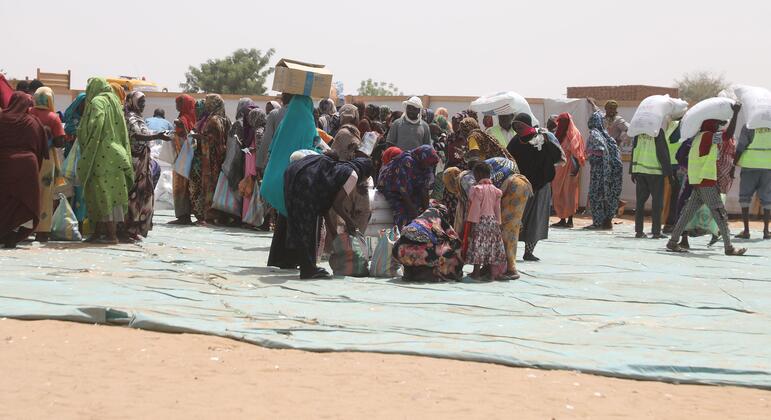
UN counterterrorism officials assess that Al Qaeda and ISIL affiliates remain adaptive and resilient, while prevention-focused programming continues in northeast Nigeria. Insecurity on the Sudan, Chad frontier is disrupting humanitarian operations despite Khartoum keeping the Adre crossing open through 30 September, sustaining regional risk.
Executive summary
This cycle provides no new, corroborated West Africa attack reporting, but UN leaders judge terrorist networks, including Al Qaeda and ISIL affiliates, to be adaptive and resilient, and prevention efforts in northeast Nigeria remain in focus. At the Sahel’s eastern flank, humanitarian partners report suspending operations due to worsening security near the Chadian border, with armed clashes ongoing, even as Sudan keeps the Adre crossing open through 30 September and the UN welcomes the extension. Drone attacks around El Obeid, Sudan, have continued into a third week and injured students on 27 June, illustrating persistent aerial threats in the wider Sahel corridor.
Change from previous assessment
Since the 29 June brief, there has been no new, sourced reporting on Côte d’Ivoire’s northern security posture, Malian air operations or Burkina Faso’s external alignments. This update shifts focus to UN counterterrorism assessments, prevention activity in northeast Nigeria, and insecurity affecting aid flows along the Sudan and Chad frontier. Confidence on regional access constraints has increased with additional multilateral corroboration, while judgments tied to West Africa attack trends are maintained at assessed and medium confidence due to a lack of new incident data in this window.
Key judgments
- Jihadist and affiliated violent extremist networks are likely to remain adaptive and resilient in and around West Africa, sustaining a persistent threat environment that is prompting prevention and counterterrorism activity, including in northeast Nigeria. (Confidence: medium · ASSESSED)
- I&W: Nigerian authorities or UN agencies publicly report an uptick in extremist attacks or disrupted plots in northeast Nigeria. (0-14 days)
- I&W: Announcement of expanded Nigerian security operations or emergency measures targeting extremist networks in northeast Nigeria. (1-3 months)
- Insecurity along the Sudan and Chad frontier is very likely disrupting aid operations, with partners suspending activities and clashes ongoing, even as Sudan keeps the Adre crossing open through 30 September. (Confidence: high · REPORTED)
- I&W: Additional NGO or UN sitreps cite new aid suspensions or access denials along the Chadian border corridor. (0-14 days)
- I&W: Regular aid convoy movements via Adre are publicly reported by the UN, paired with partners resuming previously suspended operations. (1-3 months)
- Drone attacks around El Obeid, Sudan, have likely extended into a third consecutive week, including a 27 June strike that injured at least eight students near a girls’ school, signalling a persistent aerial threat on the Sahel’s eastern flank. (Confidence: medium · REPORTED)
- I&W: Verified reports by UN or humanitarian partners of additional drone strikes in or near El Obeid. (0-14 days)
- I&W: Sudanese authorities announce and sustain a local ceasefire or air threat mitigation in El Obeid with no drone incidents reported. (1-3 months)
- Prevention-focused programming that engages youth in northeast Nigeria is likely to remain a priority line of effort against extremist recruitment. (Confidence: medium · ASSESSED)
- I&W: UNOCT or partners announce new funding or expanded youth engagement initiatives in northeast Nigeria. (1-3 months)
- I&W: Public notices of programme suspension or budget cuts affecting youth prevention work in northeast Nigeria. (1-3 months)
Outlook & scenarios
Steady-state extremist threat with prevention-first emphasis in northeast Nigeria (50%)
UN officials continue to characterise Al Qaeda and ISIL affiliates as adaptive and resilient, while prevention and engagement programming in northeast Nigeria persists. Attack tempo in West Africa does not markedly change in this window, but security services maintain a heightened posture and community-level initiatives remain active.
Frontier deterioration hampers relief via Adre and heightens regional strain (30%)
Armed clashes along the Sudan, Chad frontier intensify, prompting more partners to suspend operations and constraining cross-border aid flows despite the stated availability of the Adre crossing through 30 September. Humanitarian access complications raise pressure on border communities and stretch regional crisis response.
Corridor stabilisation enables partial resumption of suspended aid operations (20%)
Security conditions along the Chadian border modestly improve and routine convoy movements via Adre are reported. Humanitarian partners gradually lift some suspensions, easing immediate access constraints, though overall regional threat levels remain elevated.
Recommendations
- Prioritise collection on northeast Nigeria for open-source and partner reporting of extremist incidents or disrupted plots, and track any announcements of expanded security operations in the area.
- Maintain a standing watch on UN and NGO situation reports for the Adre crossing and the wider Chadian border corridor, logging new access denials, convoy movements, and programme suspensions or resumptions.
- Engage with UNOCT and implementing partners to obtain performance metrics for youth-focused prevention programming in northeast Nigeria, and identify funding or delivery gaps that could be addressed rapidly.
- Task analytic monitoring of drone-attack reporting in and around El Obeid to assess whether aerial threat tactics migrate westward along the Sahel corridor toward Chad and neighbouring areas.
Confidence & uncertainty
Overall confidence is high because the most consequential reporting on insecurity and access along the Sudan, Chad frontier is corroborated across multiple reliable multilateral sources, and UN statements on the adaptability of Al Qaeda, ISIL and affiliates are authoritative. That said, the absence of fresh, West Africa-specific attack reporting in this run means parts of the outlook rest on assessed inferences about persistence of risk in northeast Nigeria, which drives medium confidence on those judgments.
Alternative analysis (red cell)
The evidence base is dominated by high-level UN statements and isolated incident reports without multi-source, on-the-ground corroboration. It is therefore plausible these items reflect policy posture and singular incidents rather than demonstrable, sustained extremist resilience, broad disruption of aid flows, a persistent drone campaign, or confirmed programmatic prioritization in northeast Nigeria. Additional field-level incident, funding, and operational reporting are required to support the brief’s current judgments at their stated confidence levels.
Intelligence gaps
- [EEI 1.1 · UNCOVERED] Recent jihadist attack incidents in the last 72 hours: exact locations (GPS or nearest town), date/time, target type (market, military base, convoy, village, border post), weapon systems used, and reported casualty counts. Recommended collection: open source/social_media
- [EEI 1.2 · UNCOVERED] Observed jihadist force movements and posture within 100 km of major towns or critical infrastructure: convoy sightings, checkpoints established/removed, concentrations of fighters, and annotated route preparations. Recommended collection: aerial ISR/imagery
- [EEI 1.3 · UNCOVERED] Host-nation and partner military defensive measures near population centers and key infrastructure: troop redeployments, new checkpoints/curfews, roadblocks, air sortie launches, and activation of rapid reaction units (locations and unit IDs if available). Recommended collection: military liaison/satellite
- [EEI 1.4 · UNCOVERED] Humanitarian indicators of imminent threat to civilians: sudden internal displacement flows or mass movements within 72 hours, shelter/IDP site openings, and major road closures affecting civilian evacuation routes. Recommended collection: humanitarian/NGO
- [EEI 2.1 · UNCOVERED] Reports or imagery confirming weapons and materiel holdings: number and types of heavy weapons observed or seized (mortars, artillery, technicals, IED caches, MANPADS), locations of caches, and recent rearmament deliveries. Recommended collection: imagery/HUMINT
- [EEI 2.2 · UNCOVERED] Active recruitment and propaganda indicators: new recruitment messages/accounts, numbers of claimed/new recruits by region, youth/ethnic group targeting, and physical recruitment events or forced conscriptions. Recommended collection: social_media/HUMINT
- [EEI 2.3 · UNCOVERED] Cross-border operational indicators: seizures or sightings of convoys crossing borders, capture/abandonment of border posts, patterns of fighters moving between neighboring countries, and use of transnational smuggling routes. Recommended collection: border_patrol/satellite
- [EEI 2.4 · UNCOVERED] Financing and logistics flows that sustain operations: recent seizures of cash/drugs/minerals, transactions or remittances linked to identified networks, and commercial transport companies or ports repeatedly used for shipments to insurgent-held areas. Recommended collection: financial/customs
- [EEI 3.1 · UNCOVERED] Force posture and sustainment: foreign and host-nation troop deployments (unit types, strength estimates, bases used), changes in airbase activity (sortie rates, aircraft types, times), and frequency of logistics convoys or resupply flights. Recommended collection: diplomatic/military_reporting/satellite
- [EEI 3.2 · UNCOVERED] Combat effectiveness indicators from recent engagements: verified casualty and equipment loss counts for state forces and jihadist units, territory regained or lost after operations, and number of operations meeting objectives versus failures. Recommended collection: open source/military_reports
- [EEI 3.3 · UNCOVERED] Critical sustainment vulnerabilities: reported ammunition/fuel shortages, road/bridge interdictions affecting supply lines, strikes on logistics hubs, and closure rates of key supply routes. Recommended collection: logistics/imagery
- [EEI 3.4 · UNCOVERED] Political and legal decisions influencing operations: government decrees (states of emergency, mobilization orders), approved cross-border operations or foreign troop agreements, and public statements altering rules of engagement. Recommended collection: diplomatic/government
Cited sources
[1] United Nations · International cooperation critical as terrorism threat evolves (A) · sha256:60edb8481b98 [2] United Nations · Sudan: UN welcomes extension of vital aid corridor amid rising insecurity (A) · sha256:4b36ea49b6fb
Source content hashes were computed at collection time; the cited text is preserved unmodified for the life of this product.
Red cell review: PARTIAL DISSENT
TLP:CLEAR