TLP:CLEAR · Disclosure is not limited.
Scarborough Shoal: PRC platform persists, Beijing rejects Manila’s protests, US monitoring continues
Time window: Last 7 days · Audience: General analyst · Type: Situation report · DTG: 2026-06-13 10:15Z · Overall confidence: MEDIUM
BLUF
A PRC-linked floating platform inside Scarborough Shoal’s lagoon is almost certainly present and framed as ‘scientific’, while Beijing rejects Manila’s objections and asserts sovereignty. This likely signals a push to normalise a semi-permanent presence that will sustain friction at the shoal as US monitoring continues.
Executive summary
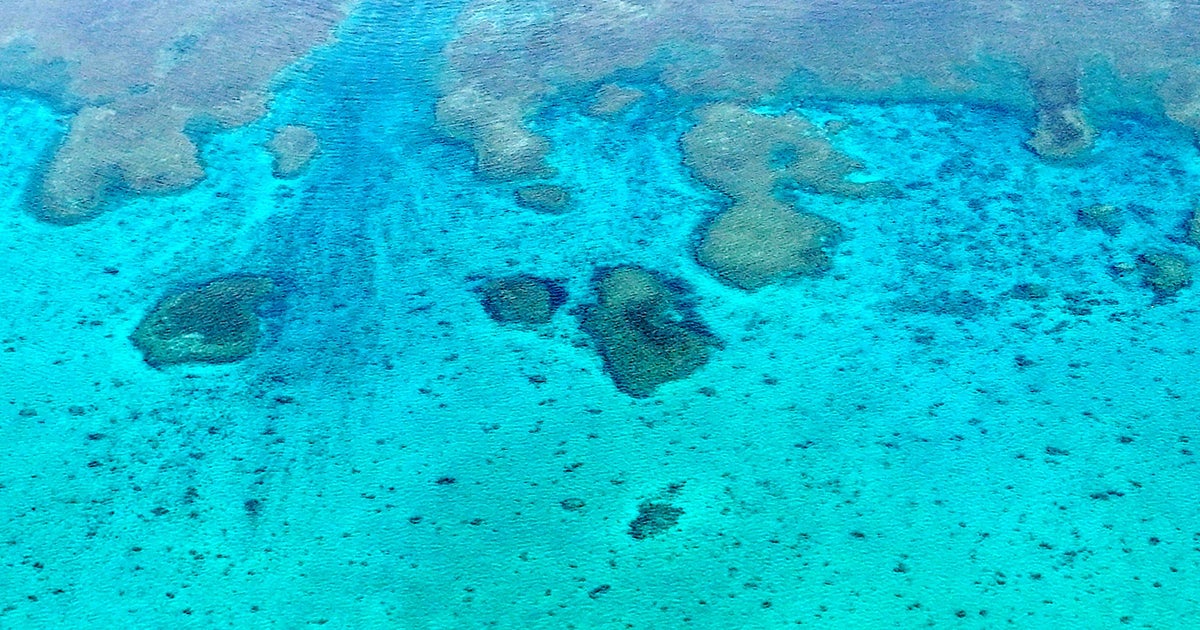
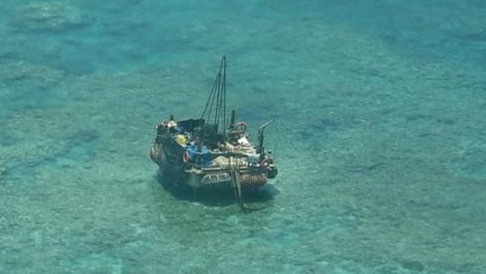
Philippine authorities reported and photographed a roughly 6-by-6-metre floating platform inside Scarborough Shoal’s lagoon, which Chinese authorities describe as a ‘scientific structure’. Beijing has rejected Philippine objections and reiterated claims of indisputable sovereignty over the shoal, while signalling a right to conduct research there. US intelligence agencies are closely monitoring activity. Experts and military officials in the Philippines compare the move to the early stages of Mischief Reef’s transformation, warning of a longer-term plan to consolidate presence under a conservation or research label. Since 2015, the United States and partners have maintained freedom of navigation operations in the South China Sea, providing continuity of outside naval presence.
Change from previous assessment
Compared with the prior brief, this update adds specific detail on the platform’s size and carrying capacity, renewed PRC rejection of Manila’s objections, and explicit expert comparisons to Mischief Reef. The judgment that Beijing is likely normalising a semi‑permanent presence is strengthened, while confidence in near‑term US military escalation remains limited, consistent with reporting focused on monitoring rather than force posturing.
Key judgments
- China very likely installed and is maintaining a roughly 6-by-6‑metre floating platform inside Scarborough Shoal’s lagoon, presenting it as a scientific structure, and has rejected Philippine objections while asserting sovereignty. (Confidence: high · REPORTED)
- I&W: New aerial surveillance released by the Philippine National Task Force for the West Philippine Sea again shows the platform inside the lagoon. (0-14 days)
- I&W: Imagery or official Philippine reporting shows the platform removed with no replacement activity. (0-14 days)
- Beijing is likely laying the groundwork for a more permanent presence at Scarborough Shoal under a research or conservation label, echoing the Mischief Reef playbook and complicating any Philippine effort to reassert access. (Confidence: medium · ASSESSED)
- I&W: PRC authorities announce a ‘national nature reserve’ or similar protected status for Scarborough Shoal. (1-3 months)
- I&W: Third‑party imagery shows augmentation of the platform with additional modules, sensors, or heavier moorings. (0-3 months)
- US agencies are very likely to continue close monitoring and routine presence operations in the South China Sea rather than escalate militarily at Scarborough in the near term. (Confidence: medium · ASSESSED)
- I&W: US authorities publicise an ISR patrol or a freedom of navigation transit in the South China Sea within the coming weeks. (0-1 month)
- I&W: Credible reporting of a US ‘show of force’ specifically tasked to Scarborough Shoal surfaces. (0-1 month)
- Competing legal and historical narratives are likely to persist without altering on‑water control at Scarborough in the near term. (Confidence: low · ASSESSED)
- I&W: Beijing reiterates ‘indisputable sovereignty’ language and ignores references to the 2016 arbitral findings in official statements. (0-1 month)
- I&W: A joint PRC, Philippine statement signals willingness to discuss the 2016 arbitration in relation to Scarborough Shoal. (1-3 months)
- Japan, Philippines security alignment is likely to deepen in the next few months and could modestly improve Manila’s maritime capacity, but it is unlikely to shift the balance at Scarborough quickly. (Confidence: medium · ASSESSED)
- I&W: Tokyo and Manila announce a firm timeline for Abukuma‑class frigate transfer or initial deployments and training under the Reciprocal Access Agreement. (1-3 months)
- I&W: Political or legal delays stall implementation of the Reciprocal Access Agreement. (1-3 months)
Outlook & scenarios
Platform consolidation under ‘science’ cover (60%)
Beijing keeps the platform in Scarborough Shoal’s lagoon and gradually augments it, framing activities as scientific research or conservation while reiterating sovereignty and dismissing Manila’s protests. Experts’ Mischief Reef comparisons materialise in slow‑burn fashion, with US monitoring but no direct intervention.
Holding pattern with managed friction (50%)
The platform remains but sees little visible expansion. Manila continues to protest and publicise imagery while the US sustains monitoring and routine naval presence elsewhere in the South China Sea. Tensions stay elevated but contained to coast‑guard and diplomatic channels.
Allied visibility and capacity build (35%)
Tokyo and Manila use the new Reciprocal Access Agreement to step up training and announcements on potential frigate transfers. This raises political costs for further PRC moves but yields only incremental near‑term gains for Philippine maritime capacity at the shoal.
Unexpected PRC pullback (10%)
Beijing removes the platform without replacement and tones down statements, aiming to reduce international scrutiny. Friction eases temporarily but core sovereignty positions remain unchanged.
Recommendations
- Maintain a daily collection rhythm on Scarborough Shoal: request Philippine National Task Force for the West Philippine Sea updates and archive imagery to track any change in the platform’s footprint and moorings.
- Build an indicator matrix for ‘permanent presence’ signals: watch for a PRC ‘national nature reserve’ announcement, new modules or sensors on the platform, and repeated official language asserting the right to conduct scientific research.
- Exploit maritime AIS for tripwire detection in the shoal’s approaches: set up alerts using the 11.00-15.00 N, 112.00-116.00 E bounding box and archive vessel tracks to corroborate congestion or blockade‑style patterns.
- Synchronise public messaging to counter the ‘scientific structure’ narrative by highlighting the Mischief Reef precedent and expert concerns, using clear, sourced visuals and timelines.
- Sustain situational awareness of US presence operations: track announced freedom of navigation transits and ISR patrols to anticipate PRC counter‑messaging cycles.
- Leverage Japan, Philippines mechanisms for signalling: plan analysis of timelines for Abukuma‑class transfer discussions and Reciprocal Access Agreement activities to assess potential effects on maritime deterrence around Luzon’s western approaches.
Confidence & uncertainty
Overall confidence is medium. The core facts about the platform’s presence, Beijing’s rejection of Philippine objections, PRC sovereignty claims, and US monitoring are supported by high‑reliability reporting and official statements. Assessments about Beijing’s intent to normalise a permanent presence rest on expert commentary and pattern analysis with fewer corroborating datapoints, lowering confidence. Legal‑historical judgments draw in part on lower‑confidence sources and do not directly translate to operational control, adding uncertainty.
Alternative analysis (red cell)
Reported disclosures and official statements substantiate that a platform was observed and that China asserts research and sovereignty claims, but the available reporting is declaratory and lacks independent technical corroboration or clear logistics showing permanence or militarization. A sober alternative estimate is that Scarborough currently hosts a small, contested structure framed as scientific, and whether it becomes a durable element of Chinese control depends on observable follow‑on activity (material shipments, construction expansion, sustained rotations) that the record does not yet demonstrate.
Intelligence gaps
- [EEI 1.1 · UNCOVERED] Number, class, and position (time-stamped) of Chinese Coast Guard (CCG), People’s Armed Forces Maritime Militia (PAFMM), and other PRC paramilitary/auxiliary vessels inside Philippine-claimed EEZ or within 12 nautical miles of Philippine-occupied features (e.g., Scarborough Shoal, Second Thomas/Ayungin Shoal, and other named features). Recommended collection: maritime/AIS
- [EEI 1.2 · UNCOVERED] Observed maneuvers or posture indicating hostile action: vessel-to-vessel blocking/contact, use of water cannons, boarding attempts, formation maneuvers to interdict Philippine vessels, or sustained stationing near Philippine resupply/relief routes. Recommended collection: imagery/satellite
- [EEI 1.3 · UNCOVERED] Incidents of Philippine vessels (coast guard, navy, supply boats, civilian fishing vessels) being ordered to alter course, detained, chased, or physically impeded — with time, location, involved units, and damage/injuries if any. Recommended collection: open-source/official statements
- [EEI 1.4 · UNCOVERED] Abrupt changes to vessel identification behavior: AIS transponder deactivations, spoofing, or mismatches between flagged identity and observed equipment/markings among PRC maritime law-enforcement or militia vessels operating near Philippine claims. Recommended collection: maritime/AIS
- [EEI 2.1 · UNCOVERED] Issued directives, patrol orders, or internal guidance from PRC Central Military Commission, PLAN, CCG, or provincial maritime authorities that specify objectives, geographic limits, patrol tempos, or escalation thresholds for operations near Philippine-claimed features. Recommended collection: signals/communications
- [EEI 2.2 · UNCOVERED] Public declarations, maritime notices, or newly published 'maritime safety' or exclusion zones, with effective dates and coordinates, issued by Chinese authorities that could be used to justify interdiction or exclusion of Philippine activity. Recommended collection: open-source/official statements
- [EEI 2.3 · UNCOVERED] Evidence of mobilization orders, tasking lists, or logistics planning for Maritime Militia units (vessel requisitions, local fisheries bureau instructions, fuel/resupply manifests) indicating intent to employ militia alongside CCG/PLAN assets. Recommended collection: HUMINT/defense
- [EEI 3.1 · UNCOVERED] Deployment and movement of Philippine Coast Guard and Navy vessels (class, location, on-station times) and scheduled or unscheduled escort/resupply missions to occupied features. Recommended collection: military/AIS
- [EEI 3.2 · UNCOVERED] Air component activity: number and frequency of Philippine air patrol sorties, maritime domain awareness flights, and air-to-surface or maritime strike assets placed on alert or redeployed toward contested areas. Recommended collection: imagery/satellite
- [EEI 3.3 · UNCOVERED] Requests for diplomatic, intelligence, or military assistance from allies (e.g., U.S., Australia, Japan) including notifications of planned joint patrols, port calls, or freedom of navigation operations with dates and participating units. Recommended collection: open-source/official statements
- [EEI 3.4 · UNCOVERED] Changes to Philippine rules of engagement, emergency law measures, mobilization orders, or civil advisories (evacuations, fishing bans) that alter civilian or military behavior in contested maritime zones. Recommended collection: open-source/official statements
Cited sources
[1] CBS News · U.S. monitoring Chinese activity in South China Sea around disputed shoal (A) · sha256:9aad39299c5a [2] rappler.com · What does China plan to do in Bajo de Masinloc? (B) · sha256:6d14db8e8dde [3] Wikipedia · Territorial disputes in the South China Sea (F) · sha256:1d5bd5a3150d [4] newsweek.com · Why "pacifist" Japan has China worried (B) · sha256:a42c246a3962
Source content hashes were computed at collection time; the cited text is preserved unmodified for the life of this product.
Red cell review: PARTIAL DISSENT
TLP:CLEAR