TLP:CLEAR · Disclosure is not limited.
South China Sea: Airspace Incident and Joint Patrol
Time window: Last 7 days · Audience: General analyst · Type: Situation report · DTG: 2026-08-22 10:07Z · Overall confidence: MEDIUM
BLUF
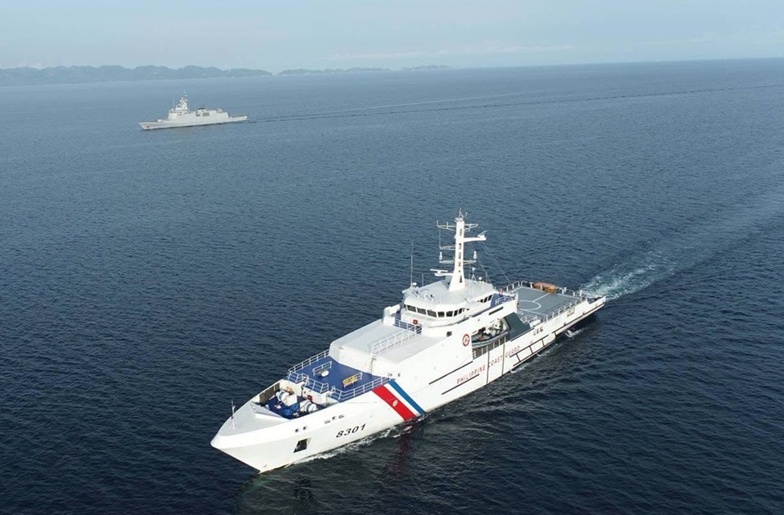
Reporting states that the Chinese military monitored and warned three Philippine aircraft over Huangyan Island on 21 August 2026, followed by a Philippine-organised joint patrol involving external countries on 22 August. A further coercive China-Philippines encounter is likely over the next 0-14 days, while an armed exchange is unlikely.
Executive summary
The latest reporting indicates renewed China-Philippines grey-zone activity around Huangyan Island and the wider South China Sea. On 21 August, three Philippine small aircraft, including a C-208 and PA-31T, reportedly entered the airspace over Huangyan Island and received monitoring and warnings from the Chinese military. On 22 August, the Philippines reportedly organised a joint patrol involving external countries. The supplied material does not report weapons discharge, casualties, or damage in the latest episode. Philippine maritime coordination with external partners is expanding, but claims about future naval capacity and drone support rely partly on low-confidence social-media or think-tank reporting.
Change from previous assessment
Since the 21 August prior brief, the assessment has shifted from forecasting a further China-Philippines coast guard encounter to assessing that a new reported airspace incident has already occurred on 21 August, followed by a Philippine-organised joint patrol on 22 August. Confidence in continued coercive contact has risen from low to medium because the current reporting provides a recent direct incident, while confidence that an armed clash is imminent remains low. No assessment of a deployed Chinese drone network is added because the current material does not independently confirm such deployment.
Key judgments
- China is likely to sustain military and maritime law-enforcement pressure on Philippine activity around Huangyan Island and elsewhere in the South China Sea over the next 0-14 days. Reporting states that on 21 August 2026 the Chinese military monitored and warned three Philippine small aircraft, including a C-208 and PA-31T, after they entered the airspace over Huangyan Island. The Philippines then organised a joint patrol involving external countries on 22 August. This is an assessed inference from recent major-media reporting and a longer, partly think-tank-based record of Chinese coercive activity against Philippine government vessels and fisherfolk since 2012. The current sequence is not independently corroborated in the supplied material, so confidence is medium. (Confidence: medium · ASSESSED)
- I&W: Confirm: The Chinese military or Chinese Coast Guard issues a new warning, interception, or obstruction involving a named Philippine aircraft or vessel at Huangyan Island, Second Thomas Shoal, or another South China Sea feature. (0-14 days)
- I&W: Break: No official or major-media report records Chinese military or Chinese Coast Guard action against a named Philippine aircraft or vessel during the 14-day period after the reported joint patrol. (0-14 days)
- A coercive China-Philippines maritime or air encounter is likely over the next 1-3 months, whereas an armed exchange is unlikely. The 21 August warning, the 2023 obstruction of the Philippine Coast Guard vessel BRP Malabrigo near Second Thomas Shoal, and reporting that Chinese incursions inside the Philippine exclusive economic zone have been the norm since 2012 support continued non-kinetic pressure. This is an assessed judgement. The supplied material contains no current report of weapons discharge, casualties, or damage, and the historical pattern is partly based on think-tank reporting. Confidence is medium. (Confidence: medium · ASSESSED)
- I&W: Confirm: Chinese and Philippine authorities report another warning, obstruction, or interception involving a named aircraft or vessel without reporting weapons discharge, deaths, or serious damage. (0-14 days)
- I&W: Break: Official or major-media reporting records firing, ramming that causes casualties, or a fatality involving Chinese and Philippine forces. (0-14 days)
- The Philippines is likely to continue visible maritime coordination with external partners over the next 1-3 months. Reporting states that the Philippines organised a joint patrol involving external countries on 22 August, while the United States and the Philippines had conducted five bilateral maritime cooperation activities by June 2026. Australia and the Philippines also held a defence ministers' meeting on 7 August, and Australia announced AU$10 million in drone technology and operator training for the Philippine Coast Guard on 21 July. This is an assessed judgement rather than proof of a sustained coalition. The joint-patrol account is single-source, and the drone-support claim is low confidence. Confidence is medium. (Confidence: medium · ASSESSED)
- I&W: Confirm: The Philippines or a named partner announces another South China Sea joint patrol, bilateral maritime cooperation activity, or delivery or training activity linked to the Australian drone-support package. (1-3 months)
- I&W: Break: The Philippines or a partner government describes the 22 August patrol as a one-off and announces no follow-on patrol or maritime cooperation activity during the period. (1-3 months)
- Philippine maritime patrol capacity is likely to strengthen gradually over the next 1-3 months, but the future BRP Rajah Humabon is unlikely to be operationally available on the basis of the supplied reporting alone. The future vessel is reported as the third of six 2,400-ton Rajah Sulayman-class offshore patrol vessels being built by HD Hyundai, while two sister ships are reportedly already in Philippine service. Separate reporting describes the Philippine Navy as strengthening its capabilities with South Korean-built frigates, offshore patrol vessels, combat systems, and logistics support. This judgement rests mainly on medium-confidence social-media reporting and lacks a delivery or assignment date, so confidence is low. (Confidence: low · ASSESSED)
- I&W: Confirm: The Philippine Navy officially announces that BRP Rajah Humabon or another Rajah Sulayman-class offshore patrol vessel has entered service or been assigned to the West Philippine Sea. (1-3 months)
- I&W: Break: A Philippine defence authority announces that the Rajah Sulayman-class procurement programme has been cancelled or suspended. (1-3 months)
Outlook & scenarios
Managed grey-zone continuation (60%)
Chinese military or Chinese Coast Guard warnings and patrols continue around Huangyan Island and Philippine aircraft or vessels, while Manila conducts additional partner patrols. No weapons discharge or casualties are reported.
Sharper coercive encounter (28%)
A Chinese Coast Guard vessel obstructs or intercepts a Philippine vessel near Second Thomas Shoal or another named feature, or the Chinese military issues repeated warnings to Philippine aircraft. The encounter ends without an armed exchange but generates competing public accounts.
Temporary pause (20%)
The 22 August patrol remains a discrete event. No new publicly reported encounter involving Chinese and Philippine forces follows during the next 1-3 months, although existing claims and maritime coordination remain in place.
Armed incident (5%)
Very unlikely but high impact: a warning or obstruction escalates into firing, ramming, or an incident causing casualties involving Chinese and Philippine forces around Huangyan Island or another contested feature.
Recommendations
- Within 24 hours, verify the 21 August report against Philippine government statements, Chinese military releases, and independent maritime or aviation tracking. Record whether the C-208, PA-31T, and third aircraft entered the reported airspace and whether a warning was issued.
- Maintain a 0-14 day incident log covering Huangyan Island, Second Thomas Shoal, and other named features. Record the platform involved, reported distance, warning language, obstruction or interception, damage, casualties, and any weapons discharge.
- Identify the participants, vessels, aircraft, and operating area of the 22 August joint patrol. Keep this event separate from the five US-Philippines maritime cooperation activities and from Australian support until official reporting confirms the links.
- For the 1-3 month outlook, track official confirmation of BRP Rajah Humabon's delivery, entry into service, or assignment. Do not treat the reported construction programme or social-media descriptions of Philippine naval modernisation as evidence of operational availability.
- Raise the reporting priority immediately if an official source confirms firing, ramming with casualties, serious damage, or a fatality involving Chinese and Philippine forces.
Confidence & uncertainty
Overall confidence is medium. Direct major-media reporting supports the 21 August aircraft incident and the 22 August Philippine-organised patrol, while additional claims describe repeated Chinese coercive activity and established US-Philippines maritime cooperation. Confidence is lower for the identity of patrol participants, the operational status of Philippine naval and drone capabilities, and any inference about Chinese or Philippine intent because those elements rely partly on single-source, social-media, or think-tank reporting.
Intelligence gaps
- [EEI 1.1 · PARTIAL] Number, class, and position (time-stamped) of Chinese Coast Guard (CCG), People’s Armed Forces Maritime Militia (PAFMM), and other PRC paramilitary/auxiliary vessels inside Philippine-claimed EEZ or within 12 nautical miles of Philippine-occupied features (e.g., Scarborough Shoal, Second Thomas/Ayungin Shoal, and other named features). Recommended collection: maritime/AIS
- [EEI 1.2 · PARTIAL] Observed maneuvers or posture indicating hostile action: vessel-to-vessel blocking/contact, use of water cannons, boarding attempts, formation maneuvers to interdict Philippine vessels, or sustained stationing near Philippine resupply/relief routes. Recommended collection: imagery/satellite
- [EEI 1.3 · PARTIAL] Incidents of Philippine vessels (coast guard, navy, supply boats, civilian fishing vessels) being ordered to alter course, detained, chased, or physically impeded, with time, location, involved units, and damage/injuries if any. Recommended collection: open-source/official statements
- [EEI 1.4 · UNCOVERED] Abrupt changes to vessel identification behavior: AIS transponder deactivations, spoofing, or mismatches between flagged identity and observed equipment/markings among PRC maritime law-enforcement or militia vessels operating near Philippine claims. Recommended collection: maritime/AIS
- [EEI 2.1 · UNCOVERED] Issued directives, patrol orders, or internal guidance from PRC Central Military Commission, PLAN, CCG, or provincial maritime authorities that specify objectives, geographic limits, patrol tempos, or escalation thresholds for operations near Philippine-claimed features. Recommended collection: signals/communications
- [EEI 2.2 · UNCOVERED] Public declarations, maritime notices, or newly published 'maritime safety' or exclusion zones, with effective dates and coordinates, issued by Chinese authorities that could be used to justify interdiction or exclusion of Philippine activity. Recommended collection: open-source/official statements
- [EEI 2.3 · UNCOVERED] Evidence of mobilization orders, tasking lists, or logistics planning for Maritime Militia units (vessel requisitions, local fisheries bureau instructions, fuel/resupply manifests) indicating intent to employ militia alongside CCG/PLAN assets. Recommended collection: HUMINT/defense
- [EEI 3.1 · PARTIAL] Deployment and movement of Philippine Coast Guard and Navy vessels (class, location, on-station times) and scheduled or unscheduled escort/resupply missions to occupied features. Recommended collection: military/AIS
- [EEI 3.2 · PARTIAL] Air component activity: number and frequency of Philippine air patrol sorties, maritime domain awareness flights, and air-to-surface or maritime strike assets placed on alert or redeployed toward contested areas. Recommended collection: imagery/satellite
- [EEI 3.3 · PARTIAL] Requests for diplomatic, intelligence, or military assistance from allies (e.g., US, Australia, Japan) including notifications of planned joint patrols, port calls, or freedom of navigation operations with dates and participating units. Recommended collection: open-source/official statements
- [EEI 3.4 · UNCOVERED] Changes to Philippine rules of engagement, emergency law measures, mobilization orders, or civil advisories (evacuations, fishing bans) that alter civilian or military behavior in contested maritime zones. Recommended collection: open-source/official statements
Cited sources
[1] 聯合報 · 陸官媒:菲律賓拉攏「域外國家」在南海組織「聯合巡航」 | 大陸政經 | 兩岸 | 經濟日報 (B) · sha256:b47559b8c91d [2] verafiles.org · Governance at Sea: Is this the right time for a Department of Maritime and Ocean Affairs? (C) · sha256:28a9ba0ca0be [3] bairdmaritime.com · OPINION | A next step for Australia in Southeast Asia: help nations communicate what's happening at sea (C) · sha256:0ba09312dd8a [4] IndoPacific Report · Philippines Receives 6 Warships From South Korea to Deter China in the SCS! South Korea is becoming one of the Philippines’ most important naval partners as Manila expands its maritime forces amid growing tensions in the South China Sea. The future BRP Rajah Humabon is the third of six 2,400-ton Rajah Sulayman-class offshore patrol vessels being built by HD Hyundai, with two sister ships already in Philippine service and three more still coming. But these ships are about more than adding hulls to the fleet: they give the Philippine Navy greater persistence across its enormous maritime domain, support surveillance and patrol operations, and potentially strengthen its anti-submarine capabilities. With South Korean-built frigates, OPVs, combat systems and logistics support increasingly forming the backbone of Manila’s naval modernization, the bigger story is how the Philippines is building a more distributed and networked navy for the West Philippine Sea. #indopacificreport #PhilippinesNavy #SouthKorea #RajahHumabon #Philippines #SouthChinaSea #WestPhilippineSea #HDHyundai #PhilippinesDefense #ChinaPhilippines | IndoPacific Report (E) · sha256:fd698abc7d10
Source content hashes were computed at collection time; the cited text is preserved unmodified for the life of this product.
TLP:CLEAR