TLP:CLEAR · Disclosure is not limited.
South China Sea: Carrier signalling, Taiwan readiness drills, and an uncorroborated PCG, CCG run‑in
Time window: Last 7 days · Audience: General analyst · Type: Situation report · DTG: 2026-06-24 10:14Z · Overall confidence: LOW
BLUF
China sailed the carrier Fujian through the Taiwan Strait as Taiwan launched five days of immediate combat‑readiness drills, and European missions in Taipei voiced concern. A single low‑credibility social post alleges a China Coast Guard incursion challenged by the Philippine Coast Guard in the South China Sea but remains unverified. The near‑term risk of an at‑sea incident involving China and Taiwan or the Philippines is likely to persist.
Executive summary
This week’s activity points to sustained Chinese naval signalling around the Taiwan Strait and adjacent seas. Taiwan’s defence ministry reported China’s newest carrier Fujian transiting the strait and said it closely monitored the transit. Taipei began five days of immediate combat‑readiness drills built around a scenario in which a routine PLA exercise turns into an attack, alongside senior statements rejecting unification and affirming resolve. The British, French and German missions in Taipei issued a joint statement expressing concern about recent Chinese activity off Taiwan’s east coast. Separately, a social media post claims the Philippine Coast Guard issued radio challenges and deployed a patrol boat against a China Coast Guard incursion in the South China Sea; there is no official corroboration to date.
Change from previous assessment
New developments since the prior brief include the reported transit of the carrier Fujian through the Taiwan Strait, a joint statement of concern by the British, French and German missions in Taipei, and Taiwan’s five days of immediate combat‑readiness drills built around a PLA exercise‑turns‑attack scenario. A fresh social media allegation of a China Coast Guard incursion challenged by the Philippine Coast Guard appears but lacks corroboration. These updates shift emphasis toward sustained PLA naval signalling and a sharper Taiwanese readiness posture. Confidence is lower than desirable due to single‑source elements and unverified reporting.
Key judgments
- Beijing is very likely to sustain conspicuous naval signalling across the Taiwan Strait and nearby waters, as highlighted by the Fujian’s transit and recent carrier group operations spanning the South China Sea and the Philippine Sea. (Confidence: medium · ASSESSED)
- I&W: Taiwan’s defence ministry or Japan’s defence ministry reports another PLA carrier transit or deployment in the Taiwan Strait or the South China Sea. (0-14 days)
- I&W: A lull with no reported PLA carrier operations in the Taiwan Strait or the South China Sea. (1-3 months)
- Taiwan is likely hardening readiness and deterrence messaging, evidenced by five days of immediate combat‑readiness drills built on an exercise‑turns‑attack scenario and senior‑level declarations rejecting unification and vowing not to surrender. (Confidence: medium · ASSESSED)
- I&W: Taiwan announces extensions to the immediate combat‑readiness drills or additional mobilisation activities. (0-14 days)
- I&W: Taipei proposes or enacts training and budgeting measures aligned with the drill scenario. (1-3 months)
- European partners signalled concern about PLA activity off Taiwan’s east coast, which likely reflects a growing willingness to weigh in diplomatically on cross‑Strait security even without new operational steps. (Confidence: medium · ASSESSED)
- I&W: Additional joint or coordinated statements from European missions in Taipei or European capitals on PLA activity. (0-14 days)
- I&W: A walk‑back or silence from European missions following PRC diplomatic pushback. (1-3 months)
- There is thin, uncorroborated reporting of a China Coast Guard incursion challenged by the Philippine Coast Guard in the South China Sea; it is unclear if any such interaction occurred. (Confidence: low · REPORTED)
- I&W: The Philippine Coast Guard releases imagery, AIS tracks, or an official incident note confirming radio challenges and a patrol deployment at a named location. (0-14 days)
- I&W: The Philippine Coast Guard issues a clarification denying or correcting the social media report. (0-14 days)
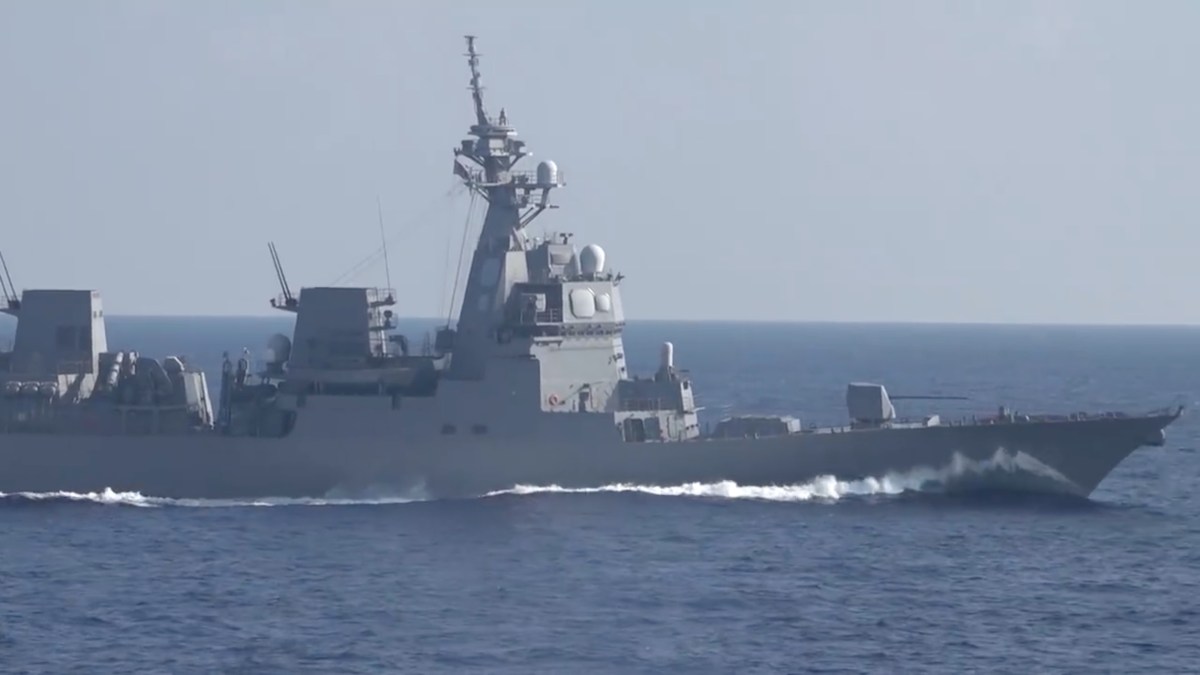
- The risk of a close‑proximity incident involving Chinese and Japanese units around Taiwan and the Philippine Sea is likely elevated given PLA carrier operations and recent close‑encounter imagery. (Confidence: medium · ASSESSED)
- I&W: Japan’s defence ministry reports an unsafe approach or hazardous manoeuvre near a PLA carrier group. (0-14 days)
- I&W: Release of additional PLA or Japanese footage showing unusually close interactions. (1-3 months)
- Competing legal narratives over the Taiwan Strait’s status are likely to keep tensions high during U.S. Navy transits and PLA challenges. (Confidence: medium · ASSESSED)
- I&W: PRC authorities restate sole‑sovereignty claims over the Taiwan Strait tied to a U.S. warship passage. (0-14 days)
- I&W: A period without reported U.S. transits or with muted PRC public messaging after a transit. (1-3 months)
Outlook & scenarios
Managed friction persists (60%)
PLA maintains a steady drumbeat of transits and drills, including further high‑visibility passages in the Taiwan Strait, while Taiwan continues elevated readiness training and public messaging. European partners issue occasional statements of concern. Encounters remain tense but controlled, with radio challenges and shadowing as the norm.
Tactical run‑in in Philippine‑claimed waters (30%)
A China Coast Guard patrol challenges a Philippine Coast Guard or supply mission near a Philippine‑held feature in the South China Sea. Radio challenges and close manoeuvring trigger a brief standoff and diplomatic protests. The event stops short of serious damage or injuries but hardens positions in Manila and prompts new coordination with partners.
East‑of‑Taiwan spike (25%)
A PLA carrier group operates east of Taiwan and in the Philippine Sea and has an unsafe close approach with a Japanese unit. Both sides release video and statements. The episode catalyses additional readiness measures in Tokyo and Taipei and sharper diplomatic language from European partners.
Short tactical pause (15%)
After the Fujian transit and heightened scrutiny, PLA carrier operations in the Taiwan Strait ease for several weeks. Diplomacy, including statements by European partners, helps cap public tensions. Activity later resumes at typical levels.
Recommendations
- Task persistent OSINT collection against Taiwan’s daily defence bulletins and Japan’s defence releases to flag PLA carrier or large surface combatant movements in near real time.
- Validate the alleged South China Sea PCG, CCG incident by fusing AIS tracks, commercial satellite imagery, and any official Philippine Coast Guard notices; treat the social post as non‑probative until corroborated.
- Build an indicators watchlist keyed to specific triggers in this brief, with automated alerting for carrier transits, joint diplomatic statements in Taipei, and announced Taiwan readiness activities.
- Map recent PLA carrier operating patterns across the Taiwan Strait, the South China Sea, and the Philippine Sea to identify likely operating boxes and crossover points with partner patrol routes.
- Prepare policy lines and escalation ladders for a close‑quarters incident involving the Philippines or Japan, including evidence‑handling protocols for rapid public release of imagery and tracks.
Confidence & uncertainty
Overall confidence is low. Several core developments rest on single major‑media reports without independent official documentation in the provided record, and one South China Sea incident relies solely on a low‑credibility social media post. Some context claims derive from earlier periods, which support pattern analysis but reduce timeliness. There are no strong, mutually corroborating multilateral or official sources for the Philippines, China interaction in this window. If additional official releases from Taipei, Tokyo or Manila corroborate these events, confidence would rise to medium, but based on the current source mix it remains low.
Alternative analysis (red cell)
The reporting supports plausible short‑term interpretations (episodic carrier deployments, discrete Taiwanese drills, isolated diplomatic concern) but does not uniformly demonstrate durable strategic shifts. Given multiple medium/low‑confidence items and unaddressed contradictions, a more conservative assessment — that recent activity reflects heightened near‑term signalling and routine readiness rather than sustained escalation — is defensible.
Intelligence gaps
- [EEI 1.2 · PARTIAL] Observed maneuvers or posture indicating hostile action: vessel-to-vessel blocking/contact, use of water cannons, boarding attempts, formation maneuvers to interdict Philippine vessels, or sustained stationing near Philippine resupply/relief routes. Recommended collection: imagery/satellite
- [EEI 1.3 · PARTIAL] Incidents of Philippine vessels (coast guard, navy, supply boats, civilian fishing vessels) being ordered to alter course, detained, chased, or physically impeded — with time, location, involved units, and damage/injuries if any. Recommended collection: open-source/official statements
- [EEI 2.1 · UNCOVERED] Issued directives, patrol orders, or internal guidance from PRC Central Military Commission, PLAN, CCG, or provincial maritime authorities that specify objectives, geographic limits, patrol tempos, or escalation thresholds for operations near Philippine-claimed features. Recommended collection: signals/communications
- [EEI 2.2 · UNCOVERED] Public declarations, maritime notices, or newly published 'maritime safety' or exclusion zones, with effective dates and coordinates, issued by Chinese authorities that could be used to justify interdiction or exclusion of Philippine activity. Recommended collection: open-source/official statements
- [EEI 2.3 · UNCOVERED] Evidence of mobilization orders, tasking lists, or logistics planning for Maritime Militia units (vessel requisitions, local fisheries bureau instructions, fuel/resupply manifests) indicating intent to employ militia alongside CCG/PLAN assets. Recommended collection: HUMINT/defense
- [EEI 3.1 · UNCOVERED] Deployment and movement of Philippine Coast Guard and Navy vessels (class, location, on-station times) and scheduled or unscheduled escort/resupply missions to occupied features. Recommended collection: military/AIS
- [EEI 3.2 · UNCOVERED] Air component activity: number and frequency of Philippine air patrol sorties, maritime domain awareness flights, and air-to-surface or maritime strike assets placed on alert or redeployed toward contested areas. Recommended collection: imagery/satellite
- [EEI 3.3 · UNCOVERED] Requests for diplomatic, intelligence, or military assistance from allies (e.g., U.S., Australia, Japan) including notifications of planned joint patrols, port calls, or freedom of navigation operations with dates and participating units. Recommended collection: open-source/official statements
- [EEI 3.4 · UNCOVERED] Changes to Philippine rules of engagement, emergency law measures, mobilization orders, or civil advisories (evacuations, fishing bans) that alter civilian or military behavior in contested maritime zones. Recommended collection: open-source/official statements
Cited sources
[1] marinelink.com · Chinese Advanced Aircraft Carrier Passes Through Sensitive Taiwan Strait (B) · sha256:13de1e93bf1e [2] newsweek.com · China shows aircraft carrier’s “dangerous” encounter with Japanese warship (B) · sha256:0da3f1605a21 [3] jpost.com · UK, France, Germany issue joint statement of concern about Chinese activities off coast of Taiwan (B) · sha256:91319c5b954d [4] The Pinoy Shorts · China Coast Guard Ignores Philippines! SHOCKING Incursion! #shorts (E) · sha256:5f493edd8160 [5] Los Angeles Times · China’s newest aircraft carrier sails through the Taiwan Strait - Los Angeles Times (A) · sha256:5ecab7cdc860
Source content hashes were computed at collection time; the cited text is preserved unmodified for the life of this product.
Red cell review: PARTIAL DISSENT
TLP:CLEAR