TLP:CLEAR · Disclosure is not limited.
South China Sea: CCG pressure on Taiwan and the Philippines as Beijing signals with South Pacific missile test
Time window: Last 7 days · Audience: General analyst · Type: Situation report · DTG: 2026-07-06 10:14Z · Overall confidence: MEDIUM
BLUF
China is very likely to sustain grey‑zone pressure at sea in July, with China Coast Guard operations east of Taiwan and legal‑administrative moves and militia activity constraining Philippine access at Bajo de Masinloc, while a South Pacific missile test signals continued PLA assertiveness. There is a roughly even chance of a non‑lethal at‑sea run‑in in the next 1-3 months.
Executive summary
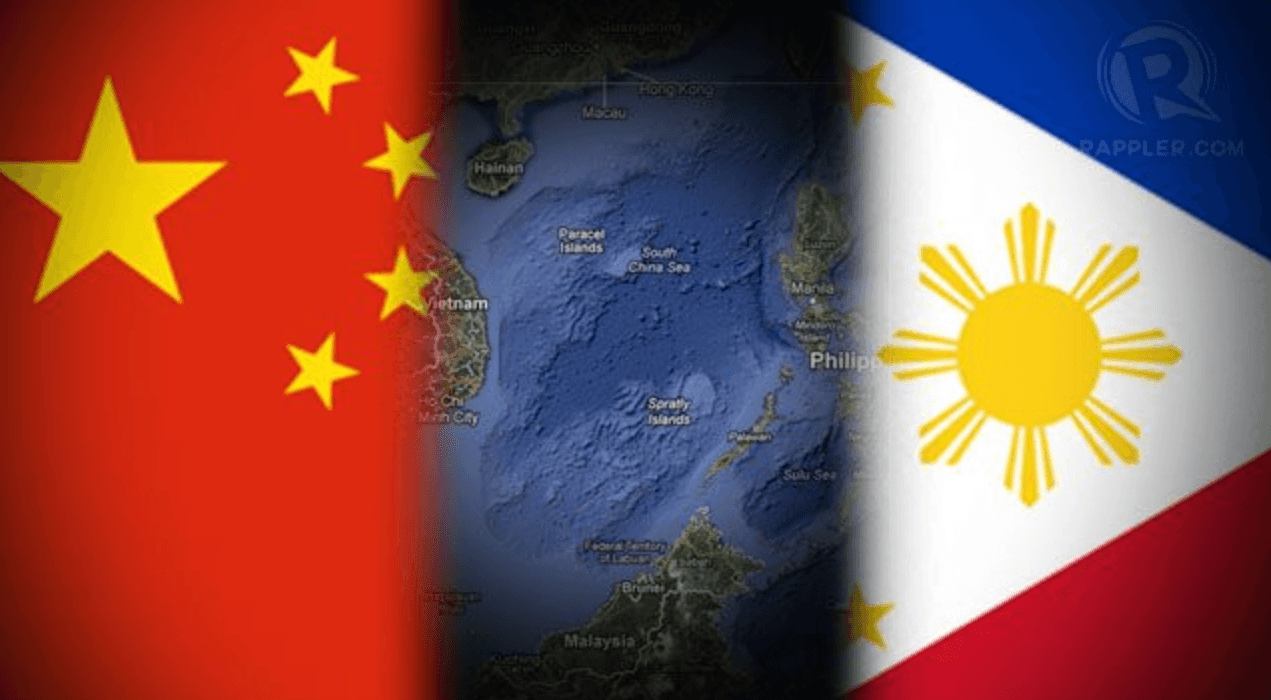
On 4 July, China launched a China Coast Guard patrol east of Taiwan and stated it would strengthen such patrols. Taiwan deployed monitoring vessels, instructed masters to ignore boarding and inspection demands, and is tracking an upward trend in Chinese naval movements. In the South China Sea, reporting points to Chinese maritime militia deployments and aggressive coast guard tactics that have restricted Philippine access at Bajo de Masinloc, including use of barriers and a Chinese designation of the shoal as a national nature reserve. On 6 July, China conducted a long‑range missile test in the South Pacific at 12:01, with a dummy warhead landing in designated waters, drawing criticism from Australia, New Zealand and Japan; Beijing described the test as part of routine training. Diplomatic friction between Manila and Beijing persists after Chinese sanctions on Defence Secretary Gilberto Teodoro Jr, which President Ferdinand Marcos Jr called unhelpful, even as Manila’s defence ties with partners like Italy, Australia and Japan deepen.
Change from previous assessment
New since the 5 July brief: China conducted a long‑range missile test in the South Pacific on 6 July, criticised by Australia, New Zealand and Japan, while Beijing framed it as a routine training event. This adds to the month’s signalling backdrop alongside ongoing China Coast Guard activity east of Taiwan. Our outlook for sustained grey‑zone pressure remains, and we retain a roughly even chance of a non‑lethal maritime incident in the coming 1-3 months; confidence is unchanged, though the missile test marginally raises the salience of regional risk signalling.
Key judgments
- China will very likely sustain heightened China Coast Guard presence east of Taiwan through mid‑July, and Taipei will continue to contest it by deploying cutters, instructing ships to ignore CCG boardings and threatening expulsions, raising the risk of close‑quarters interactions. (Confidence: high · ASSESSED)
- I&W: Public reports from Taiwan of daily CCG formations lingering off the island’s east coast and additional CCG statements about strengthened patrols (0-14 days)
- I&W: Noticeable reduction in Taiwan Coast Guard deployments east of the island or rescission of guidance to ignore CCG boarding demands (0-14 days)
- It is likely Beijing will continue applying legal‑administrative measures and maritime militia and coast guard pressure to restrict Philippine access at Bajo de Masinloc and other contested features over the next 1-3 months, ensuring recurrent friction despite the 2016 ruling against China’s expansive claims. (Confidence: medium · ASSESSED)
- I&W: Fresh imagery or patrol reporting of new floating barriers or net lines across Bajo de Masinloc’s entrances and expanded Chinese on‑scene presence (1-3 months)
- I&W: Manila and Beijing announce a practical fisheries access arrangement at Bajo de Masinloc with verifiable implementation (1-3 months)
- Diplomatic friction between Manila and Beijing will likely persist through August, with Chinese sanctions on Defence Secretary Gilberto Teodoro Jr and his family hardening positions even as President Ferdinand Marcos Jr signals interest in a reset; in parallel, defence ties with partners such as Italy, Australia and Japan are incrementally deepening. (Confidence: medium · ASSESSED)
- I&W: Announcement of further PRC punitive measures against Philippine officials or assets, or reciprocal steps by Manila (0-2 months)
- I&W: PRC lifts or suspends sanctions on Teodoro and initiates working‑level talks with Manila on maritime conduct (1-3 months)
- Beijing’s 6 July long‑range ballistic missile test into the South Pacific, criticised by Australia, New Zealand and Japan, very likely signals continued PLA confidence in projecting power beyond the First Island Chain this month, adding to deterrence signalling as CCG operations intensify nearer Taiwan and the South China Sea. (Confidence: high · ASSESSED)
- I&W: New Chinese navigation warnings or hazard areas in the Western Pacific for additional missile or space‑related tests (0-6 weeks)
- I&W: Official Chinese announcement of a pause in long‑range tests coupled with outreach to Pacific governments (0-6 weeks)
- There is a roughly even chance of a non‑lethal at‑sea confrontation in the next 1-3 months at South China Sea or Taiwan‑adjacent flashpoints involving China Coast Guard or Chinese maritime militia and Philippine or Taiwanese units, given aggressive CCG tactics, militia swarming and Taipei’s stated intent to expel harassers. (Confidence: medium · ASSESSED)
- I&W: Verified reports of ramming, water‑cannoning, or disabling manoeuvres against Philippine or Taiwanese vessels (0-3 months)
- I&W: Sustained reduction in close‑approach incidents and visible drawdown of CCG and militia formations (1-3 months)
Outlook & scenarios
Managed friction: persistent grey‑zone pressure without lethal escalation (60%)
China Coast Guard patrols continue east of Taiwan and at South China Sea features, Chinese maritime militia swarms persist around Bajo de Masinloc, and Taiwan and the Philippines contest presence without lethal force. Manila deepens practical defence ties with partners even as Marcos keeps channels open to Beijing. The legal narrative split remains: China reasserts expansive claims, while Manila cites the 2016 ruling. Maritime risks remain elevated but manageable.
Non‑lethal maritime incident triggers sharp diplomatic exchange (40%)
A collision, ramming or water‑cannoning incident near Bajo de Masinloc or east of Taiwan causes injuries or material damage but no fatalities. Taipei or Manila publish evidence and announce intent to increase patrols. Australia, New Zealand and Japan add public criticism in the wake of China’s recent missile test. Beijing blames the other party and reinforces on‑scene assets. Tensions spike for weeks before returning to the pre‑incident pattern.
Limited de‑escalation via practical arrangements (20%)
Working‑level contacts yield a tacit understanding on conduct at sea and limited fishing access at Bajo de Masinloc. China reduces visible barriers and tones down CCG messaging, while maintaining its legal position. Taiwan and China avoid close‑aboard manoeuvres east of the island. Friction persists but with fewer hazardous encounters.
Wildcard: new administrative designation over a contested feature (15%)
Beijing announces a fresh conservation or administrative status over a South China Sea feature, combining patrol presence with a legal‑propaganda push. Manila condemns and seeks partner support. Direct maritime impact is modest at first, but legal friction and information operations surge.
Recommendations
- Expand fused maritime domain awareness over Bajo de Masinloc and Taiwan’s east coast, integrating AIS, SAR and EO imagery with Taiwanese and Philippine reporting to produce a daily pattern‑of‑life product on China Coast Guard and maritime militia formations.
- Task collection on China Coast Guard public notices and navigation warnings, and monitor Western Pacific hazard areas for further long‑range test activity to provide 72‑hour early warning to policymakers.
- Prepare an incident playbook for non‑lethal confrontations at sea involving Taiwan or the Philippines, including rapid declassification options for imagery and comms to support partner narratives consistent with the 2016 arbitral ruling.
- Prioritise liaison with Italian, Australian and Japanese defence contacts to map upcoming activities with the Philippines and coordinate strategic messaging timelines.
- Track and analyse Chinese legal‑administrative moves, including any new protected‑area or nature‑reserve designations over disputed features, as leading indicators of on‑water enforcement attempts.
Confidence & uncertainty
Overall confidence is medium. Several developments rest on multiple, high‑reliability reports and official statements, including the 4 July China Coast Guard patrol east of Taiwan, Taiwan’s response, and China’s 6 July long‑range missile test and allied criticism. Assessments concerning sustained pressure on Philippine activities at Bajo de Masinloc draw on fewer and partly medium‑confidence sources and are less current to this exact week, which lowers confidence. There are no major unresolved contradictions among the cited items, but some elements are single‑source or analytical extrapolations, warranting a medium headline level.
Alternative analysis (red cell)
Beijing’s administrative actions (e.g., declaring Bajo de Masinloc a nature reserve) and a single long‑range missile test can plausibly be interpreted as calibrated, episodic measures rather than clear evidence of a sustained campaign of coercion or a new pattern of power projection. Given the mix of B6/A4 lower‑grade reports and B1/B1 snapshots without time‑series corroboration, a more cautious estimate is that maritime pressure and diplomatic friction will continue episodically, but sustained, escalatory campaigns or an elevated, persistent risk of regular at‑sea confrontations are less certain than the original judgments imply.
Intelligence gaps
- [EEI 1.1 · UNCOVERED] Number, class, and position (time-stamped) of Chinese Coast Guard (CCG), People’s Armed Forces Maritime Militia (PAFMM), and other PRC paramilitary/auxiliary vessels inside Philippine-claimed EEZ or within 12 nautical miles of Philippine-occupied features (e.g., Scarborough Shoal, Second Thomas/Ayungin Shoal, and other named features). Recommended collection: maritime/AIS
- [EEI 1.2 · UNCOVERED] Observed maneuvers or posture indicating hostile action: vessel-to-vessel blocking/contact, use of water cannons, boarding attempts, formation maneuvers to interdict Philippine vessels, or sustained stationing near Philippine resupply/relief routes. Recommended collection: imagery/satellite
- [EEI 1.3 · UNCOVERED] Incidents of Philippine vessels (coast guard, navy, supply boats, civilian fishing vessels) being ordered to alter course, detained, chased, or physically impeded — with time, location, involved units, and damage/injuries if any. Recommended collection: open-source/official statements
- [EEI 1.4 · UNCOVERED] Abrupt changes to vessel identification behavior: AIS transponder deactivations, spoofing, or mismatches between flagged identity and observed equipment/markings among PRC maritime law-enforcement or militia vessels operating near Philippine claims. Recommended collection: maritime/AIS
- [EEI 2.1 · PARTIAL] Issued directives, patrol orders, or internal guidance from PRC Central Military Commission, PLAN, CCG, or provincial maritime authorities that specify objectives, geographic limits, patrol tempos, or escalation thresholds for operations near Philippine-claimed features. Recommended collection: signals/communications
- [EEI 2.2 · UNCOVERED] Public declarations, maritime notices, or newly published 'maritime safety' or exclusion zones, with effective dates and coordinates, issued by Chinese authorities that could be used to justify interdiction or exclusion of Philippine activity. Recommended collection: open-source/official statements
- [EEI 2.3 · UNCOVERED] Evidence of mobilization orders, tasking lists, or logistics planning for Maritime Militia units (vessel requisitions, local fisheries bureau instructions, fuel/resupply manifests) indicating intent to employ militia alongside CCG/PLAN assets. Recommended collection: HUMINT/defense
- [EEI 3.1 · UNCOVERED] Deployment and movement of Philippine Coast Guard and Navy vessels (class, location, on-station times) and scheduled or unscheduled escort/resupply missions to occupied features. Recommended collection: military/AIS
- [EEI 3.2 · UNCOVERED] Air component activity: number and frequency of Philippine air patrol sorties, maritime domain awareness flights, and air-to-surface or maritime strike assets placed on alert or redeployed toward contested areas. Recommended collection: imagery/satellite
- [EEI 3.3 · UNCOVERED] Requests for diplomatic, intelligence, or military assistance from allies (e.g., U.S., Australia, Japan) including notifications of planned joint patrols, port calls, or freedom of navigation operations with dates and participating units. Recommended collection: open-source/official statements
- [EEI 3.4 · UNCOVERED] Changes to Philippine rules of engagement, emergency law measures, mobilization orders, or civil advisories (evacuations, fishing bans) that alter civilian or military behavior in contested maritime zones. Recommended collection: open-source/official statements
Cited sources
[1] jpost.com · China expands coast guard patrols off Taiwan’s coast, as Taiwan tracks 'upward trend' of movement (B) · sha256:a9f5994ec4c0 [2] rappler.com · [OPINION] Why China won't just leave out the Philippines (B) · sha256:ff58f1de45ba [3] rappler.com · Marcos: China's sanctions on Teodoro ‘unhelpful’ (B) · sha256:765e6bf18a9b [4] rappler.com · Thought Leaders (B) · sha256:490e8a76dd86 [5] The Guardian · China tests long-range missile in South Pacific in move Australia condemns as ‘destabilising to region’ (A) · sha256:c333270bcb16 [6] CBS News · China test-launches ballistic missile from sub in South Pacific, drawing protests (A) · sha256:3e59f45de575 [7] bbc.com · China tests missile in the Pacific after Australia-Fiji alliance signed (A) · sha256:03b898b33c7e
Source content hashes were computed at collection time; the cited text is preserved unmodified for the life of this product.
Red cell review: PARTIAL DISSENT
TLP:CLEAR