TLP:CLEAR · Disclosure is not limited.
South China Sea: China-Philippines Friction and Active Dialogue
Time window: Last 7 days · Audience: General analyst · Type: Situation report · DTG: 2026-11-04 10:08Z · Overall confidence: MEDIUM
BLUF
China and the Philippines are maintaining diplomatic contact despite sharper public rhetoric. China Coast Guard drills near Second Thomas Shoal and Sabina Shoal, alongside reported monitoring of a Philippine resupply operation, leave a continuing risk of close contact, but the reporting does not establish preparations for a deliberate attack.
Executive summary
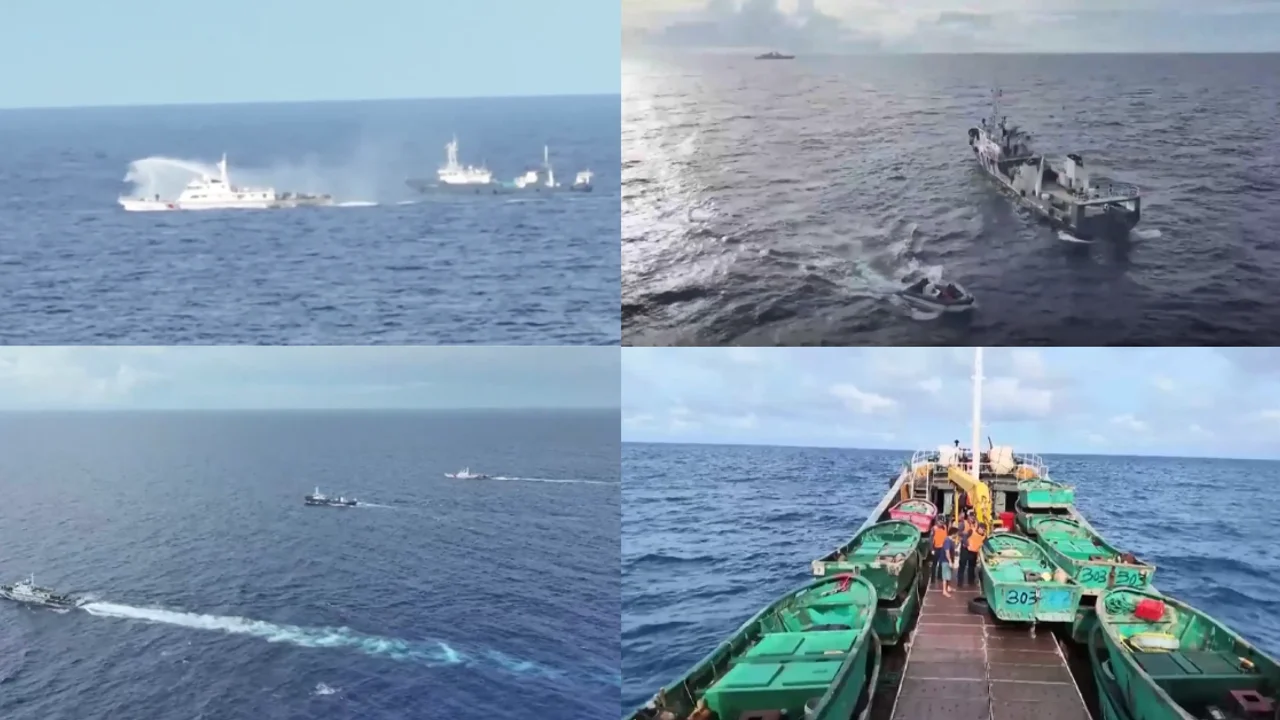
On 3 November, Chinese Foreign Minister Wang Yi warned Philippine Foreign Affairs Secretary Theresa Lazaro to exercise caution on maritime issues. Lazaro described their call as frank and constructive, and the two sides agreed to continue dialogue. China’s ambassador to the Philippines later said China would win easily if it used force, while saying it would not choose force; President Ferdinand Marcos Jr. said the remark sounded like a threat. A wire-service report, citing an anonymous Philippine official, says Wang and Lazaro also discussed resuming joint oil and gas exploration talks at Reed Bank. Separately, a local-media report describes China Coast Guard exercises practising interceptions, boarding and water cannon use near Second Thomas Shoal and Sabina Shoal, and says Beijing confirmed monitoring a Philippine resupply operation on 21 October. The exercise account has not been independently corroborated in the supplied reporting.
Change from previous assessment
Since the 3 November prior brief, the diplomatic assessment is more specific, not materially less tense. The latest reporting adds the Reed Bank exploration discussion and the Chinese ambassador’s force remark, which Marcos said sounded like a threat. The assessment that senior-level dialogue remains active is unchanged. The Second Thomas Shoal and Sabina Shoal readiness assessment remains low confidence because the exercise reporting is not independently corroborated in this run. The Scarborough Shoal vessel-identification issue remains unresolved and receives no new corroboration in the claims supplied here.
Key judgments
- China-Philippines diplomatic friction is likely to persist through early December, while official dialogue is likely to continue. Wang Yi warned Lazaro about maritime conduct, but Lazaro called their 3 November discussion frank and constructive, and both sides agreed to keep talking. The Chinese ambassador’s force remark and Marcos’s response add to the public tension. The call is covered by wire-service and Chinese state-media reporting, with Lazaro’s account providing a separate perspective; the reports differ in tone but do not establish a breakdown in contact. (Confidence: medium · ASSESSED)
- I&W: A new public warning from Wang Yi or a formal Chinese protest followed by a Philippine government response would confirm continued friction. (0-30 days)
- I&W: A joint Chinese and Philippine announcement setting a timetable for Reed Bank talks, accompanied by no new official protest or warning, would weaken this assessment. (0-3 months)
- China Coast Guard readiness signalling near Second Thomas Shoal and Sabina Shoal is likely to continue over the next month. A local-media account reports exercises practising vessel interceptions, boarding and water cannon deployments, and quotes China Coast Guard officer Lin Weicong describing preparedness and tactical coordination as the purpose. The assessment rests on one account, with no independent corroboration in the supplied reporting, so confidence is low. (Confidence: low · ASSESSED)
- I&W: A China Coast Guard announcement or Philippine report of another interception, boarding or water cannon exercise at either shoal would confirm continued readiness signalling. (0-30 days)
- I&W: A completed Philippine resupply operation at Second Thomas Shoal, reported by both governments without China Coast Guard interception, would weaken the assessment of continued operational pressure. (0-30 days)
- There is a roughly even chance of an unsafe close-contact encounter involving China Coast Guard and Philippine resupply vessels near Second Thomas Shoal within the next 30 days. The reported exercises practised interception and water cannon use; a separate report says Beijing confirmed monitoring a Philippine resupply operation on 21 October, while Manila had accused Chinese vessels of obstructing a September resupply mission. The forecast is an inference from reported activity, not a reported incident, and relies partly on a single local-media account and a Philippine allegation. (Confidence: low · ASSESSED)
- I&W: A Philippine report of a China Coast Guard vessel intercepting, boarding or using water cannon against a resupply vessel near Second Thomas Shoal would confirm the risk assessment. (0-30 days)
- I&W: A resupply completed near Second Thomas Shoal with an official account from either side confirming no interception or close approach would weaken the assessment. (0-30 days)
- The Reed Bank exploration issue remains at the discussion stage; the 3 November call does not establish that formal negotiations have restarted. A wire-service report citing an anonymous Philippine official says Wang and Lazaro discussed resuming long-stalled joint exploration talks. Reed Bank is described as lying within the Philippine exclusive economic zone and as claimed by both Beijing and Manila. The reported discussion is credible enough to track, but its status rests on one anonymous source. (Confidence: medium · ASSESSED)
- I&W: A public announcement by either government of a working-level meeting or a timetable for Reed Bank negotiations would confirm movement beyond exploratory discussion. (0-3 months)
- I&W: If neither government announces a meeting, timetable or formal negotiation mandate by the end of January, that would support the assessment that the discussion remained exploratory. (0-3 months)
Outlook & scenarios
Managed competition with continued dialogue (55%)
Through 4 December, Wang Yi and Lazaro’s diplomatic channel remains active while China Coast Guard activity continues near the disputed shoals. The sides exchange warnings and protests, but no reported encounter causes serious injury or ends senior-level contact.
Close encounter during a resupply operation (25%)
A China Coast Guard vessel intercepts or approaches a Philippine resupply vessel near Second Thomas Shoal. The encounter involves dangerous manoeuvring, boarding attempts or water cannon use, prompting public protests and raising the risk of a subsequent incident.
Reed Bank talks gain a formal schedule (15%)
China and the Philippines announce working-level talks on joint oil and gas exploration at Reed Bank. The announcement creates a diplomatic opening, but coast guard activity and public criticism continue separately.
Public rhetoric triggers a diplomatic rupture (5%)
The force-related remarks and official responses prompt a formal protest and suspension of planned contact. A close encounter at Second Thomas Shoal then produces injuries, sharply increasing pressure on both governments to take a harder position.
Recommendations
- Compare Chinese Foreign Ministry and Philippine Department of Foreign Affairs readouts of the 3 November call. Record separately what each side said about maritime conduct, dialogue and Reed Bank.
- Prioritise reporting on China Coast Guard activity at Second Thomas Shoal and Sabina Shoal. Record vessel identities where available, the date and location of each approach, and whether interception, boarding or water cannon use occurs.
- Seek confirmation from Philippine and Chinese officials before describing Reed Bank talks as formally resumed. Distinguish discussion of a possible restart from an agreed meeting or negotiating mandate.
- Keep the earlier Scarborough Shoal vessel-identification issue separate from reporting on Second Thomas Shoal and Sabina Shoal. The claims supplied for this update do not provide new corroboration on the Scarborough vessel or its equipment.
Confidence & uncertainty
The 3 November diplomatic exchange is supported by wire-service reporting and a separate Chinese state-media account, and Lazaro’s own description provides another perspective. Confidence is lower on maritime activity: the detailed China Coast Guard exercise account comes from one local-media report, and the Reed Bank discussion is attributed to an anonymous Philippine official. Reporting also contains differing official characterisations of the diplomatic exchange and maritime activity, so the evidence supports a medium overall assessment rather than high confidence.
Alternative analysis (red cell)
The Coast Guard evidence may indicate a one-off training event rather than a continuing readiness campaign, so persistence over the next month is not established by 4f6b4f21-bcd9-4f49-9adb-7fe3c015258b and f9b4ce35-96b3-4c98-8ae5-0fab2ccf0bd1. The reported monitoring and prior obstruction claims (0380e210-a430-4836-8066-6adf5c8eb473; a2ee1780-2eeb-4918-afba-862501342e09) show operational friction but do not make an unsafe encounter roughly as likely as not within 30 days. A lower-than-even chance is therefore defensible pending current movement data or evidence of a scheduled resupply.
Intelligence gaps
- [EEI 1.1 · PARTIAL] Number, class, and position (time-stamped) of Chinese Coast Guard (CCG), People’s Armed Forces Maritime Militia (PAFMM), and other PRC paramilitary/auxiliary vessels inside Philippine-claimed EEZ or within 12 nautical miles of Philippine-occupied features (e.g., Scarborough Shoal, Second Thomas/Ayungin Shoal, and other named features). Recommended collection: maritime/AIS
- [EEI 1.3 · PARTIAL] Incidents of Philippine vessels (coast guard, navy, supply boats, civilian fishing vessels) being ordered to alter course, detained, chased, or physically impeded, with time, location, involved units, and damage/injuries if any. Recommended collection: open-source/official statements
- [EEI 1.4 · UNCOVERED] Abrupt changes to vessel identification behavior: AIS transponder deactivations, spoofing, or mismatches between flagged identity and observed equipment/markings among PRC maritime law-enforcement or militia vessels operating near Philippine claims. Recommended collection: maritime/AIS
- [EEI 2.1 · UNCOVERED] Issued directives, patrol orders, or internal guidance from PRC Central Military Commission, PLAN, CCG, or provincial maritime authorities that specify objectives, geographic limits, patrol tempos, or escalation thresholds for operations near Philippine-claimed features. Recommended collection: signals/communications
- [EEI 2.2 · UNCOVERED] Public declarations, maritime notices, or newly published 'maritime safety' or exclusion zones, with effective dates and coordinates, issued by Chinese authorities that could be used to justify interdiction or exclusion of Philippine activity. Recommended collection: open-source/official statements
- [EEI 2.3 · UNCOVERED] Evidence of mobilization orders, tasking lists, or logistics planning for Maritime Militia units (vessel requisitions, local fisheries bureau instructions, fuel/resupply manifests) indicating intent to employ militia alongside CCG/PLAN assets. Recommended collection: HUMINT/defense
- [EEI 3.1 · PARTIAL] Deployment and movement of Philippine Coast Guard and Navy vessels (class, location, on-station times) and scheduled or unscheduled escort/resupply missions to occupied features. Recommended collection: military/AIS
- [EEI 3.2 · UNCOVERED] Air component activity: number and frequency of Philippine air patrol sorties, maritime domain awareness flights, and air-to-surface or maritime strike assets placed on alert or redeployed toward contested areas. Recommended collection: imagery/satellite
- [EEI 3.3 · PARTIAL] Requests for diplomatic, intelligence, or military assistance from allies (e.g., US, Australia, Japan) including notifications of planned joint patrols, port calls, or freedom of navigation operations with dates and participating units. Recommended collection: open-source/official statements
- [EEI 3.4 · UNCOVERED] Changes to Philippine rules of engagement, emergency law measures, mobilization orders, or civil advisories (evacuations, fishing bans) that alter civilian or military behavior in contested maritime zones. Recommended collection: open-source/official statements
Red cell review: PARTIAL DISSENT
TLP:CLEAR