TLP:CLEAR · Disclosure is not limited.
South China Sea: Chinese Coast Guard patrols off Luzon and east of Taiwan harden; PLAN shadows Philippine Navy at Scarborough
Time window: Last 7 days · Audience: General analyst · Type: Situation report · DTG: 2026-07-08 10:22Z · Overall confidence: MEDIUM
BLUF
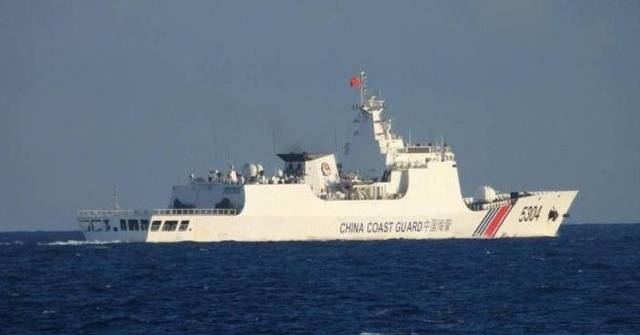
China is sustaining Coast Guard patrols 30-40 nautical miles off Luzon and entrenching a new law-enforcement presence east of Taiwan that includes hailing merchant ships. The Philippine Navy’s Diego Silang deployment towards Scarborough Shoal drew PLAN shadowing, keeping the risk of further at-sea confrontations elevated this month.
Executive summary
Chinese Coast Guard ship 5304 has patrolled within 30-40 nautical miles of Luzon, with the Philippine Coast Guard reporting ignored radio calls and labelling the behaviour provocative and a violation of Philippine jurisdiction. Manila continues to anchor its position to the 2016 arbitral ruling, which Beijing rejects, while China’s embassy asserts the legality of Chinese Coast Guard enforcement. Near Scarborough Shoal, the Philippine Navy’s frigate Diego Silang sailed on 20 June and was monitored by four Chinese naval vessels. East of Taiwan, China has signalled a sustained Coast Guard patrol that has hailed passing cargo ships for crew and destination details, with at least one Singapore-flagged container ship complying, and Taiwan deploying two Coast Guard vessels to monitor. Taiwan also reported a record high of over 110 PLAN and CCG vessels along the First Island Chain and four Chinese formations operating in the Western Pacific. Manila says it will increase presence and strengthen alliances, and aims to lift defence spending from about 1.6 percent of GDP towards 2 percent.
Change from previous assessment
This update pivots from the 6 July missile‑test brief to on‑water dynamics: sustained CCG patrols off Luzon, entrenched CCG hailing east of Taiwan, and PLAN shadowing near Scarborough Shoal. New judgments address potential shipping adjustments and recurrence of naval standoffs. Confidence remains medium given a mix of major‑media and blog sourcing and limited official detail on patrol schedules.
Key judgments
- China is very likely to sustain Chinese Coast Guard patrolling within 30-40 nautical miles off Luzon this month, elevating the risk of further at-sea confrontations with the Philippine Coast Guard. (Confidence: high · ASSESSED)
- I&W: Confirming: Philippine Coast Guard releases or briefings show continued tracking of CCG hull 5304 or additional CCG units operating within 30-40 nm of Luzon. (0-14 days)
- I&W: Breaking: Noticeable weekly gaps in CCG presence in Philippine Coast Guard reporting and absence of VHF hails in the Luzon approaches. (0-14 days)
- China is likely entrenching a new China Coast Guard law-enforcement presence east of Taiwan that includes routine hailing and data collection from merchant ships, with occasional compliance, and this pattern will likely persist over the next one to three months. (Confidence: high · ASSESSED)
- I&W: Confirming: Additional merchant master reports or AIS/VHF recordings show CCG querying ships east of Taiwan, or Taiwan authorities log similar contacts. (0-14 days)
- I&W: Breaking: China Coast Guard announces suspension of the patrols or Taiwan reports cessation of hailing activity. (0-14 days)
- Near Scarborough Shoal, PLAN shadowing of Philippine Navy deployments is likely to recur, creating a persistent risk of naval standoffs in the shoal’s approaches this quarter. (Confidence: medium · ASSESSED)
- I&W: Confirming: Philippine Navy or AFP publicises follow-on frigate or coast guard patrols to Scarborough and accompanying PLAN hulls appear in commercial satellite imagery. (1-3 months)
- I&W: Breaking: Extended public quiet from both Manila and Beijing on Scarborough deployments and absence of PLAN hulls near the shoal in imagery. (1-3 months)
- The legal positions of Manila and Beijing remain irreconcilable, making a negotiated legal resolution almost certainly off the table this quarter. (Confidence: high · ASSESSED)
- I&W: Confirming: Continued reciprocal statements from Manila and the Chinese Embassy in Manila restating opposing interpretations of the 2016 ruling and law-enforcement legitimacy. (0-14 days)
- I&W: Breaking: Announcement of a new bilateral legal framework or acceptance of elements of the 2016 tribunal decision by Beijing. (1-3 months)
- Chinese naval and coast guard operational tempo around the First Island Chain is very likely elevated, signalling pressure on Taiwan and allied maritime claims and adding to the South China Sea risk environment. (Confidence: medium · ASSESSED)
- I&W: Confirming: Taiwan reports comparable or higher daily counts of PLAN and CCG vessels along the First Island Chain. (0-14 days)
- I&W: Breaking: Sustained drop in Taiwan’s reported PRC naval and CCG tracks below recent levels. (1-3 months)
- There is a roughly even chance that commercial operators will adjust routing or bridge procedures in waters east of Taiwan over the next one to three months to manage China Coast Guard hailing and information requests. (Confidence: medium · ASSESSED)
- I&W: Confirming: Company advisories or Notices to Mariners address CCG hailing east of Taiwan, or AIS patterns show route adjustments around known patrol areas. (1-3 months)
- I&W: Breaking: Taiwan and industry reporting shows no further CCG hails and traffic follows prior waypoints without deviation. (1-3 months)
Outlook & scenarios
Managed friction: patrols and shadowing continue without a major incident (60%)
CCG 5304 and other hulls continue patrolling 30-40 nm off Luzon, China sustains its east‑of‑Taiwan patrol with periodic hailing of merchant ships, and PLAN units shadow intermittent Philippine Navy and Coast Guard activity near Scarborough Shoal. Diplomatic rhetoric remains hard, but no serious collision, ramming or boarding occurs. Shipping makes minor procedural adjustments.
Acute at-sea incident triggers a short crisis (30%)
An aggressive close pass or collision near Luzon or Scarborough, or a high‑profile merchant vessel compelled to comply publicly with CCG demands east of Taiwan, prompts Manila to surge presence and allies to issue coordinated statements. Beijing doubles down on legal assertions and deploys additional units, raising short‑term escalation risks before returning to managed friction.
Tactical de-escalation and quieter seas (20%)
China reduces the visible tempo of CCG patrols off Luzon and hailing east of Taiwan, and Taiwan reports fewer contacts. PLAN shadowing around Scarborough becomes less frequent. The legal dispute remains, but the operational temperature eases for several weeks.
Recommendations
- Build a fused daily track of CCG hull 5304 and any additional Chinese Coast Guard units operating within 50 nm of Luzon by combining Philippine Coast Guard reporting, commercial AIS and satellite imagery, and VHF-hail logs; disseminate a weekly overlay to maritime watchfloors.
- Establish an anonymised reporting channel with carriers transiting east of Taiwan to capture bridge‑level accounts of CCG hails, queries asked, and compliance outcomes; codebook and time‑stamp each event for trend analysis.
- Task commercial imagery for Scarborough Shoal approaches on a 72‑hour cadence to catalogue PLAN and CCG hull presence and proximity to Philippine Navy or Coast Guard assets; maintain a hull‑ID library with recurrence metrics.
- Coordinate with the Philippine Department of National Defense and Coast Guard to anticipate increased Philippine presence points, including frigate or Coast Guard patrol cycles, and prepare incident response lines with allied embassies in Manila.
- Update shipping risk notes for allied‑flag operators transiting east of Taiwan to include guidance on logging and reporting any CCG hail content and vessel responses; watch for carrier circulars that alter routing or bridge procedures.
- When using NASA FIRMS or other thermal anomaly data over the Philippines, apply strict analytic caveats that these detections record heat only and may reflect non‑security events; require corroboration before linking anomalies to maritime incidents.
Confidence & uncertainty
Overall confidence is medium. Multiple independent major‑media and official statements corroborate key elements: CCG patrols near Luzon and ignored radio calls, Manila’s legal stance versus Beijing’s rejection, PLAN shadowing of a Philippine frigate near Scarborough, and a sustained CCG presence east of Taiwan with merchant hailing and at least one compliance. Some inputs derive from blogs and earlier timelines, and there are date dispersions that limit precision on current tempo. Shipping‑behaviour impacts are prospective and rest on analytic inference, keeping confidence short of high.
Alternative analysis (red cell)
The reporting documents credible, discrete incidents of Chinese CCG and PLAN activity and on‑record statements of intent, but time‑series, multi‑source corroboration is thin. Consequently, a defensible alternative reading is that the events reflect probing or episodic operations with limited merchant compliance rather than entrenched, institutionalized patrol regimes or widespread commercial rerouting.
Intelligence gaps
- [EEI 1.2 · PARTIAL] Observed maneuvers or posture indicating hostile action: vessel-to-vessel blocking/contact, use of water cannons, boarding attempts, formation maneuvers to interdict Philippine vessels, or sustained stationing near Philippine resupply/relief routes. Recommended collection: imagery/satellite
- [EEI 1.3 · UNCOVERED] Incidents of Philippine vessels (coast guard, navy, supply boats, civilian fishing vessels) being ordered to alter course, detained, chased, or physically impeded — with time, location, involved units, and damage/injuries if any. Recommended collection: open-source/official statements
- [EEI 1.4 · UNCOVERED] Abrupt changes to vessel identification behavior: AIS transponder deactivations, spoofing, or mismatches between flagged identity and observed equipment/markings among PRC maritime law-enforcement or militia vessels operating near Philippine claims. Recommended collection: maritime/AIS
- [EEI 2.1 · PARTIAL] Issued directives, patrol orders, or internal guidance from PRC Central Military Commission, PLAN, CCG, or provincial maritime authorities that specify objectives, geographic limits, patrol tempos, or escalation thresholds for operations near Philippine-claimed features. Recommended collection: signals/communications
- [EEI 2.2 · PARTIAL] Public declarations, maritime notices, or newly published 'maritime safety' or exclusion zones, with effective dates and coordinates, issued by Chinese authorities that could be used to justify interdiction or exclusion of Philippine activity. Recommended collection: open-source/official statements
- [EEI 2.3 · UNCOVERED] Evidence of mobilization orders, tasking lists, or logistics planning for Maritime Militia units (vessel requisitions, local fisheries bureau instructions, fuel/resupply manifests) indicating intent to employ militia alongside CCG/PLAN assets. Recommended collection: HUMINT/defense
- [EEI 3.2 · UNCOVERED] Air component activity: number and frequency of Philippine air patrol sorties, maritime domain awareness flights, and air-to-surface or maritime strike assets placed on alert or redeployed toward contested areas. Recommended collection: imagery/satellite
- [EEI 3.3 · UNCOVERED] Requests for diplomatic, intelligence, or military assistance from allies (e.g., U.S., Australia, Japan) including notifications of planned joint patrols, port calls, or freedom of navigation operations with dates and participating units. Recommended collection: open-source/official statements
- [EEI 3.4 · PARTIAL] Changes to Philippine rules of engagement, emergency law measures, mobilization orders, or civil advisories (evacuations, fishing bans) that alter civilian or military behavior in contested maritime zones. Recommended collection: open-source/official statements
Cited sources
[1] bastillepost.com · 中國海警船貼呂宋島連日巡航 菲軍喊話遭無視束手無策 專家:實質捍衛九段線 (B) · sha256:cc56d5661306 [2] Inquirer.net · China signals ‘new normal’ with coast guard patrols off Taiwan’s east (B) · sha256:612cae2d9323 [3] marinelink.com · Taiwan official: China's actions could create a new status quo (D) · sha256:4c7ed4aea65c [4] 163.com · 离开火只差一步!菲律宾硬闯南海锁定中军舰,真当中国不敢动手? (B) · sha256:6e75642c6800 [5] Newsweek · How one U.S. ally is countering China (A) · sha256:3d59fe1e84e8 [6] Wikipedia · Territorial disputes in the South China Sea (F) · sha256:fbf6806d9839
Source content hashes were computed at collection time; the cited text is preserved unmodified for the life of this product.
Red cell review: PARTIAL DISSENT
TLP:CLEAR