TLP:CLEAR · Disclosure is not limited.
South China Sea: Chinese official vessels enter Itu Aba restricted waters as Taiwan protests
Time window: Last 7 days · Audience: General analyst · Type: Situation report · DTG: 2026-06-14 10:18Z · Overall confidence: MEDIUM
BLUF
Two Chinese official vessels entered the restricted waters around Taiwan‑controlled Itu Aba on Friday before exiting minutes later, prompting Taipei’s strongest condemnation and a vow to resist any normalisation of PRC ‘law‑enforcement’ in its eastern waters. Grey‑zone manoeuvring is likely to persist around Taiwan and nearby Philippine features in the short term.
Executive summary
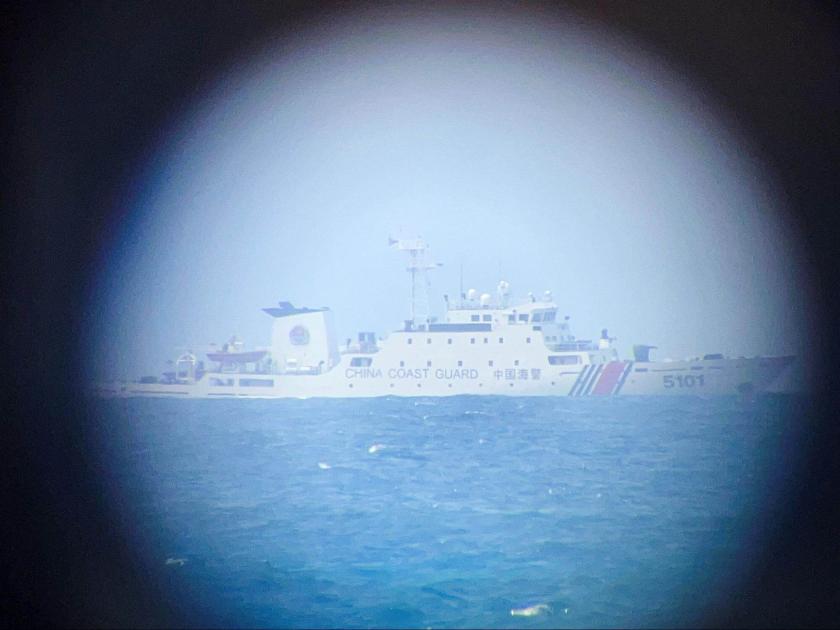
Taiwan reported that the Chinese patrol vessel Sansha Zhifa 301 and supply ship Sansha 2 twice entered the restricted zone around Itu Aba Island on Friday morning at 08:28 and 08:31, an area extending about 4-6 km from the shoreline, and exited by about 08:43. Taiwanese vessels tracked the intruders and repeatedly ordered them to leave. Taiwan’s Coast Guard Administration criticised Beijing and issued what it described as its strongest condemnation of the action, with Taiwan’s Ministry of Foreign Affairs simultaneously rejecting any PRC attempt to normalise patrols and ‘law‑enforcement’ in Taiwan’s eastern waters and pledging continued diplomatic messaging to relevant partners. Beyond Itu Aba, Vietnam has expanded construction across 21 Spratly features it occupies, the Philippines has deployed coast guard vessels and aircraft near Thitu Island, and Beijing has mobilised its coast guard, maritime militias and fishing fleets to press its claims. These developments point to continued friction managed through grey‑zone tactics rather than rapid escalation.
Change from previous assessment
New reporting shifts the focus from the prior brief’s Philippines‑centred friction to a Taiwan‑centred incident: Chinese official vessels entered the restricted waters around Taiwan‑controlled Itu Aba and exited minutes later, drawing strong condemnation from Taipei, alongside Taiwan’s rejection of PRC ‘law‑enforcement’ in its eastern waters. This constitutes an initial assessment of Itu Aba dynamics in this cycle while maintaining a grey‑zone outlook across the Spratlys.
Key judgments
- China very likely tested Taiwan’s control around Itu Aba by twice sending Sansha Zhifa 301 and Sansha 2 into the islet’s restricted waters on Friday morning, then exiting minutes later after Taiwanese vessels tracked them and ordered them to leave, prompting Taipei’s strongest condemnation. (Confidence: medium · ASSESSED)
- I&W: Repeat entries by Sansha Zhifa 301, Sansha 2, or other PRC official hulls into Itu Aba’s restricted zone. (0-14 days)
- I&W: PRC coast guard and support ships remain outside the 6 km restricted zone with no further entries reported by Taiwan’s CGA. (1-3 months)
- It is likely the first recorded incursion by Chinese official vessels into Itu Aba’s restricted zone, as noted by Taiwan’s Coast Guard Administration. (Confidence: medium · REPORTED)
- I&W: CGA or independent media publish corroborating reviews reaffirming ‘first recorded’ status. (0-14 days)
- I&W: Credible archival records emerge of prior PRC official vessel entries into Itu Aba’s restricted waters. (1-3 months)
- Taiwan is very likely to sustain a hard public line against PRC efforts to normalise patrols and ‘law‑enforcement’ in its eastern waters, while continuing to lobby relevant governments to protect its maritime rights and fishermen’s operations. (Confidence: high · ASSESSED)
- I&W: New MOFA statements reiterate non‑acceptance of PRC patrol ‘normalisation’ and call for international attention. (0-14 days)
- I&W: Noticeable moderation in MOFA or CGA language signalling openness to PRC patrols east of Taiwan. (1-3 months)
- Friction across the Spratlys is likely to persist: Vietnam has expanded construction across 21 features it occupies, the Philippines has deployed coast guard vessels and aircraft near Thitu Island, and Beijing has mobilised its coast guard, maritime militias and fishing fleets to enforce its claims. (Confidence: medium · ASSESSED)
- I&W: Imagery or credible reporting shows continued Vietnamese works on occupied Spratly features and regular PCG presence near Thitu. (1-3 months)
- I&W: Observable pause in Vietnamese construction and reduced PCG patrols around Thitu. (1-3 months)
- A rapid slide to open conflict in the South China Sea is unlikely in the near term, with incidents more likely to follow a grey‑zone pattern of short incursions and exits without force as seen at Itu Aba and in PRC operations targeting the Philippines and Vietnam. (Confidence: medium · ASSESSED)
- I&W: Repetition of short‑duration PRC entries near Taiwan‑ or Philippines‑held features that end without coercive enforcement. (1-3 months)
- I&W: Verified collision, ramming, water‑cannon use, or detentions around Itu Aba or Thitu. (0-14 days)
Outlook & scenarios
Repeat PRC incursions around Itu Aba and east of Taiwan without force (60%)
Chinese official vessels conduct additional short entries into Itu Aba’s restricted waters and the PRC pursues ‘law‑enforcement’ activity east of Taiwan. Taiwan’s CGA shadows, issues orders to leave, and Taipei publicly condemns the actions while vowing to resist any normalisation. Incidents resolve without collisions or detentions.
Wider Spratly friction involving Thitu and Vietnamese build‑outs (40%)
The Philippine Coast Guard sustains deployments and air patrols near Thitu Island as Vietnam continues construction across 21 occupied features. China mobilises coast guard, militias and fishing fleets across contested areas, increasing close‑quarters manoeuvring and maritime warnings.
Pause after diplomatic signalling (20%)
Following international attention to recent incidents, PRC official vessels avoid restricted waters around Taiwan‑controlled features for a period and reduce publicised ‘law‑enforcement’ activity east of Taiwan. Taipei maintains messaging but incident tempo dips temporarily.
Wildcard: Enforcement incident escalates (10%)
A miscalculation during a PRC approach near Itu Aba or around Thitu results in a collision or attempted boarding, triggering a protracted standoff and accelerated deployments by the directly involved parties.
Recommendations
- Establish persistent AIS and commercial satellite monitoring of Sansha Zhifa 301 and Sansha 2 and log any approaches within 6 km of Itu Aba.
- Institute a daily review of Taiwan MOFA and CGA channels for statements on PRC ‘law‑enforcement’ east of Taiwan and any Itu Aba after‑action reporting; archive and code for trend analysis.
- Task high‑revisit imagery over Itu Aba’s 4-6 km restricted zone to detect recurring track patterns and hull identities.
- Maintain an order‑of‑battle for PRC grey‑zone assets in the South China Sea, prioritising coast guard hulls, maritime militias and state‑directed fishing fleets active near Taiwan‑ and Philippines‑held features.
- Expand an incident baseline around Thitu Island by cataloguing Philippine Coast Guard vessel and aircraft presence and PRC reacting units.
- Use commercial imagery and open sources to track Vietnamese construction activity across 21 occupied Spratly features and flag any acceleration or shift in focus.
Confidence & uncertainty
Overall confidence is medium. The Itu Aba incursion report, including precise times and hull names, is from a single major‑media account citing Taiwan’s Coast Guard Administration and has not yet been widely corroborated by imagery. Taiwan MOFA statements rejecting PRC ‘law‑enforcement’ east of Taiwan are official government releases and therefore reliable for intent signalling. Judgments on Vietnam’s construction activity and PRC mobilisation rely on reputable analytical reporting but remain think‑tank sourced. Background context from encyclopaedic sources is used sparingly. Key uncertainties include the PRC’s operational intent at Itu Aba, whether further entries are planned, and the durability of Vietnam’s and the Philippines’ current activity levels.
Alternative analysis (red cell)
The reporting credibly documents that two Chinese vessels entered restricted waters near Itu Aba and that Taiwan tracked/order-removed them and condemned the action. However, the package lacks independent confirmation of vessel identities, contains unresolved timing contradictions, and provides no direct evidence of PRC intent to 'test' control. A more cautious characterization would separate the documented incident from the unproven inference of deliberate testing until AIS, imagery, or PRC records confirm vessel identities and intent.
Intelligence gaps
- [EEI 1.2 · PARTIAL] Observed maneuvers or posture indicating hostile action: vessel-to-vessel blocking/contact, use of water cannons, boarding attempts, formation maneuvers to interdict Philippine vessels, or sustained stationing near Philippine resupply/relief routes. Recommended collection: imagery/satellite
- [EEI 1.3 · UNCOVERED] Incidents of Philippine vessels (coast guard, navy, supply boats, civilian fishing vessels) being ordered to alter course, detained, chased, or physically impeded — with time, location, involved units, and damage/injuries if any. Recommended collection: open-source/official statements
- [EEI 1.4 · UNCOVERED] Abrupt changes to vessel identification behavior: AIS transponder deactivations, spoofing, or mismatches between flagged identity and observed equipment/markings among PRC maritime law-enforcement or militia vessels operating near Philippine claims. Recommended collection: maritime/AIS
- [EEI 2.1 · UNCOVERED] Issued directives, patrol orders, or internal guidance from PRC Central Military Commission, PLAN, CCG, or provincial maritime authorities that specify objectives, geographic limits, patrol tempos, or escalation thresholds for operations near Philippine-claimed features. Recommended collection: signals/communications
- [EEI 2.2 · UNCOVERED] Public declarations, maritime notices, or newly published 'maritime safety' or exclusion zones, with effective dates and coordinates, issued by Chinese authorities that could be used to justify interdiction or exclusion of Philippine activity. Recommended collection: open-source/official statements
- [EEI 2.3 · UNCOVERED] Evidence of mobilization orders, tasking lists, or logistics planning for Maritime Militia units (vessel requisitions, local fisheries bureau instructions, fuel/resupply manifests) indicating intent to employ militia alongside CCG/PLAN assets. Recommended collection: HUMINT/defense
- [EEI 3.1 · UNCOVERED] Deployment and movement of Philippine Coast Guard and Navy vessels (class, location, on-station times) and scheduled or unscheduled escort/resupply missions to occupied features. Recommended collection: military/AIS
- [EEI 3.2 · UNCOVERED] Air component activity: number and frequency of Philippine air patrol sorties, maritime domain awareness flights, and air-to-surface or maritime strike assets placed on alert or redeployed toward contested areas. Recommended collection: imagery/satellite
- [EEI 3.3 · UNCOVERED] Requests for diplomatic, intelligence, or military assistance from allies (e.g., U.S., Australia, Japan) including notifications of planned joint patrols, port calls, or freedom of navigation operations with dates and participating units. Recommended collection: open-source/official statements
- [EEI 3.4 · UNCOVERED] Changes to Philippine rules of engagement, emergency law measures, mobilization orders, or civil advisories (evacuations, fishing bans) that alter civilian or military behavior in contested maritime zones. Recommended collection: open-source/official statements
Cited sources
[1] newsable.asianetnews.com · Taiwan Blasts Beijing as Chinese Ships Enter Itu Aba Restricted Waters (B) · sha256:63203eac857f [2] mofa.gov.tw · 外交部譴責中國交通部於6月6日深夜宣布啟動所謂「台灣島東部海域海上交通專項執法行動」,並派遣海警船舶在我國東部海域從事非法執行活動,並進一步說明外界關注日本與菲律賓啟動專屬經濟海域及大陸礁層劃界談判事 (A) · sha256:773fa79bde61 [3] acleddata.com · Q&A: As South China Sea confrontations ramp up, what’s the risk of open conflict? (B) · sha256:7916ad9f9999
Source content hashes were computed at collection time; the cited text is preserved unmodified for the life of this product.
Red cell review: PARTIAL DISSENT
TLP:CLEAR