TLP:CLEAR · Disclosure is not limited.
South China Sea: Chinese pressure and Philippine response
Time window: Last 7 days · Audience: General analyst · Type: Situation report · DTG: 2026-08-23 10:06Z · Overall confidence: MEDIUM
BLUF
China is likely to sustain coercive pressure on Philippine activity around Huangyan Island. A further coercive air or maritime encounter is likely over the next 1-3 months, while an armed exchange is unlikely; conflicting dates and thin reporting on Philippine partner activity limit confidence.
Executive summary
Reporting states that three Philippine aircraft, identified in the Chinese account as a BN-2 Islander, C-208 and PA-31T, entered disputed airspace over Huangyan Island on 21 August 2026. Chinese PLA Air Force messaging described the airspace as Chinese territory and warned of possible misunderstandings. Separate reporting describes a Chinese coastguard proposal for autonomous robotic fortresses and a China Coast Guard Academy and Dalian Maritime University plan for air, surface and underwater drones. China and ASEAN held a South China Sea Code of Conduct meeting in Manila from 19 to 21 August, indicating that diplomatic engagement is continuing alongside coercive activity. The supplied evidence supports persistent pressure, but it does not establish imminent fielding of autonomous systems or a durable Philippine security coalition.
Change from previous assessment
Compared with the 22 August 2026 brief, this update adds the Chinese coastguard proposal for robotic fortresses and the China Coast Guard Academy and Dalian Maritime University plan for a multi-domain drone network. The assessment of likely coercive pressure and an unlikely armed exchange is unchanged. The external-coordination judgement is lowered from medium to low confidence because the current package provides only social-media reporting for the US-Philippine statement and Japan-Philippine sea-boundary talks. The unmanned-systems judgement is new. The conflicting 21 August 2023 and 21 August 2026 Huangyan dates remain unresolved.
Key judgments
- China is likely to repeat coercive air or maritime signalling against Philippine activity around Huangyan Island and other contested South China Sea islands over the next 0-14 days. On 21 August 2026, three Philippine aircraft, identified in the Chinese account as a BN-2 Islander, C-208 and PA-31T, entered disputed airspace over Huangyan Island. PLA Air Force messaging described the area as Chinese territory and associated the episode with possible misunderstandings. The inference is supported by Chinese coastguard proposals for autonomous defence of contested islands. Confidence is medium because the supplied record contains a conflicting 21 August 2023 date for a similar Huangyan aircraft episode and no independent Philippine account. (Confidence: medium · ASSESSED)
- I&W: Confirm: The PLA Southern Theater Command or Chinese coastguard publicly reports tracking, warning, intercepting or blocking a Philippine aircraft or government vessel near Huangyan Island. (0-14 days)
- I&W: Break: Philippine and Chinese official releases report no further aircraft or vessel encounter around Huangyan Island and no comparable Philippine activity is reported. (1-3 months)
- A further China-Philippines coercive encounter is likely over the next 1-3 months, while an armed exchange is unlikely. The 21 August 2026 aircraft episode is described as an airspace and sovereignty dispute rather than an exchange of fire. A separate, low-confidence account reports that a July 2026 encounter between Philippine and Chinese vessels injured two Philippine soldiers. The July account is single-source, and the supplied Huangyan reporting contains conflicting 2023 and 2026 dates, which lowers confidence. (Confidence: medium · ASSESSED)
- I&W: Confirm: Chinese and Philippine authorities report another close encounter near Huangyan Island or another named disputed South China Sea location, limited to tracking, warnings, manoeuvring or public sovereignty claims. (0-14 days)
- I&W: Break: Authorities report weapons discharge, a collision causing damage, or casualties involving Chinese and Philippine forces in the South China Sea. (0-14 days)
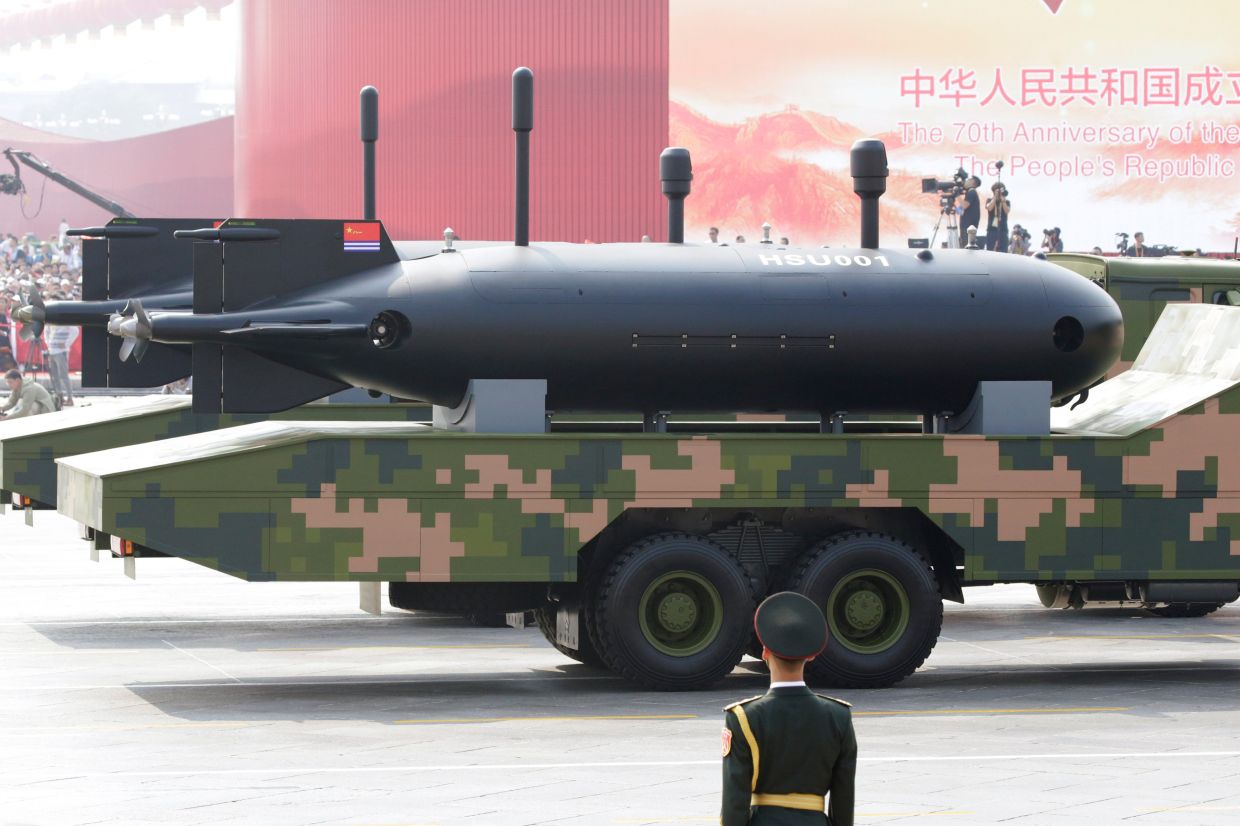
- China is likely to continue developing, testing or publicising autonomous air, surface and underwater systems for island defence in the South China Sea over the next 1-3 months. The Chinese coastguard has been reported to propose autonomous robotic fortresses, while researchers from the China Coast Guard Academy and Dalian Maritime University detailed a multi-domain drone network. Earlier reporting also described Chinese testing of surface, aerial and underwater drones in the northern South China Sea. The evidence supports continued development activity, but does not establish a deployment timetable, so confidence is medium. (Confidence: medium · ASSESSED)
- I&W: Confirm: Chinese authorities announce procurement, a named exercise or a field trial involving autonomous air, surface and underwater systems at a South China Sea island. (1-3 months)
- I&W: Break: The Chinese coastguard, PLA or named research institutions publicly cancel or disavow the autonomous-island defence concept. (1-3 months)
- China and ASEAN are likely to keep the South China Sea Code of Conduct process active through the end of 2026 while China and the Philippines continue disputed-airspace signalling. China and ASEAN held a working meeting in Manila from 19 to 21 August 2026, and Philippine Foreign Affairs Secretary Maria Theresa Lazaro stated that the parties were working towards completing negotiations by the end of 2026. The 2023 ASEAN target also supports continued engagement, but the supplied record does not establish that negotiations will conclude on schedule. Confidence is medium. (Confidence: medium · ASSESSED)
- I&W: Confirm: China and ASEAN announce another Code of Conduct working-group meeting, draft text or formal negotiating milestone. (1-3 months)
- I&W: Break: Beijing or ASEAN announces suspension of the negotiations, or publicly abandons the end-2026 completion objective. (1-3 months)
- The Philippines is likely to maintain visible diplomatic and security coordination with the US and Japan over the next 1-3 months, but the current evidence is insufficient to establish a durable security coalition. Reporting describes a US-Philippine statement on economic and security cooperation and Japan-Philippine talks over overlapping sea boundaries. Both accounts are sourced from social media, and Beijing is reported to have rejected the Japan-Philippine talks. Confidence is low. (Confidence: low · ASSESSED)
- I&W: Confirm: The US, Philippine or Japanese governments publish an official follow-up naming a maritime activity, boundary meeting or security measure with a date and location. (0-14 days)
- I&W: Break: No official follow-up appears and Manila, Tokyo or Washington publicly distances itself from the reported cooperation. (1-3 months)
Outlook & scenarios
Managed coercion and continued talks (60%)
China repeats sovereignty assertions and conducts tracking or warning activity against Philippine aircraft or vessels near Huangyan Island, while China-ASEAN negotiations continue. The Philippines maintains diplomatic contacts with the US and Japan. No weapons discharge is reported.
Recurring air and maritime incidents (35%)
A further encounter occurs near Huangyan Island or another contested South China Sea island. Close manoeuvring, warnings or limited physical interference increase political pressure in Manila and Beijing, but both governments contain the incident through public statements and diplomatic channels.
Unmanned deterrence signal (25%)
China publicises a trial, procurement decision or limited deployment of autonomous air, surface and underwater systems for island defence. The action strengthens Chinese surveillance and signalling without immediately producing an armed China-Philippines clash.
Collision and armed escalation wildcard (10%)
A collision, weapons discharge or encounter causing casualties involving Chinese and Philippine forces triggers rapid diplomatic escalation. The Code of Conduct process loses momentum as both sides present the incident as a sovereignty violation.
Recommendations
- Treat the 21 August 2026 aircraft episode as a partially corroborated lead. Seek an official Philippine account, the full Chinese Southern Theater Command statement and independent flight-tracking or imagery before raising confidence.
- Maintain a 0-14 day watchlist for PLA Southern Theater Command and Chinese coastguard reports involving Philippine aircraft or government vessels near Huangyan Island. Flag weapons discharge, collision damage, casualties and direct physical interference immediately.
- Track Chinese government, PLA and China Coast Guard Academy announcements for procurement, exercises or field trials involving autonomous air, surface and underwater systems. Separate research proposals and older testing from confirmed deployment.
- Monitor China-ASEAN Code of Conduct activity for a new working-group meeting, draft text or formal delay. Record whether the end-2026 negotiating objective is repeated or withdrawn.
- Verify the reported US-Philippine cooperation statement and Japan-Philippine sea-boundary talks through official government releases. Do not treat the social-media accounts as evidence of a durable coalition without a named activity, date and location.
- Keep the conflicting 21 August 2023 and 21 August 2026 Huangyan dates separate in reporting until the discrepancy is resolved. Avoid using the older account as independent confirmation of the 2026 episode.
Confidence & uncertainty
Overall confidence is medium. The 21 August 2026 aircraft episode has a high-proximity CNA report and a Chinese Southern Theater Command account carried by major media, while the autonomous-island reporting is supported by accounts of a Chinese coastguard proposal, academic planning and earlier drone testing. Confidence is constrained by the conflicting 2023 and 2026 dates for similar Huangyan episodes, the low-confidence July 2026 vessel incident, and social-media sourcing for reported US-Philippine and Japan-Philippine coordination. The supplied material contains no independent Philippine account of the aircraft episode and no deployment timetable for autonomous systems.
Intelligence gaps
- [EEI 1.1 · UNCOVERED] Number, class, and position (time-stamped) of Chinese Coast Guard (CCG), People’s Armed Forces Maritime Militia (PAFMM), and other PRC paramilitary/auxiliary vessels inside Philippine-claimed EEZ or within 12 nautical miles of Philippine-occupied features (e.g., Scarborough Shoal, Second Thomas/Ayungin Shoal, and other named features). Recommended collection: maritime/AIS
- [EEI 1.2 · PARTIAL] Observed maneuvers or posture indicating hostile action: vessel-to-vessel blocking/contact, use of water cannons, boarding attempts, formation maneuvers to interdict Philippine vessels, or sustained stationing near Philippine resupply/relief routes. Recommended collection: imagery/satellite
- [EEI 1.3 · PARTIAL] Incidents of Philippine vessels (coast guard, navy, supply boats, civilian fishing vessels) being ordered to alter course, detained, chased, or physically impeded, with time, location, involved units, and damage/injuries if any. Recommended collection: open-source/official statements
- [EEI 1.4 · UNCOVERED] Abrupt changes to vessel identification behavior: AIS transponder deactivations, spoofing, or mismatches between flagged identity and observed equipment/markings among PRC maritime law-enforcement or militia vessels operating near Philippine claims. Recommended collection: maritime/AIS
- [EEI 2.1 · UNCOVERED] Issued directives, patrol orders, or internal guidance from PRC Central Military Commission, PLAN, CCG, or provincial maritime authorities that specify objectives, geographic limits, patrol tempos, or escalation thresholds for operations near Philippine-claimed features. Recommended collection: signals/communications
- [EEI 2.2 · PARTIAL] Public declarations, maritime notices, or newly published 'maritime safety' or exclusion zones, with effective dates and coordinates, issued by Chinese authorities that could be used to justify interdiction or exclusion of Philippine activity. Recommended collection: open-source/official statements
- [EEI 2.3 · UNCOVERED] Evidence of mobilization orders, tasking lists, or logistics planning for Maritime Militia units (vessel requisitions, local fisheries bureau instructions, fuel/resupply manifests) indicating intent to employ militia alongside CCG/PLAN assets. Recommended collection: HUMINT/defense
- [EEI 3.1 · UNCOVERED] Deployment and movement of Philippine Coast Guard and Navy vessels (class, location, on-station times) and scheduled or unscheduled escort/resupply missions to occupied features. Recommended collection: military/AIS
- [EEI 3.2 · PARTIAL] Air component activity: number and frequency of Philippine air patrol sorties, maritime domain awareness flights, and air-to-surface or maritime strike assets placed on alert or redeployed toward contested areas. Recommended collection: imagery/satellite
- [EEI 3.3 · UNCOVERED] Requests for diplomatic, intelligence, or military assistance from allies (e.g., US, Australia, Japan) including notifications of planned joint patrols, port calls, or freedom of navigation operations with dates and participating units. Recommended collection: open-source/official statements
- [EEI 3.4 · UNCOVERED] Changes to Philippine rules of engagement, emergency law measures, mobilization orders, or civil advisories (evacuations, fishing bans) that alter civilian or military behavior in contested maritime zones. Recommended collection: open-source/official statements
Cited sources
[1] 中央社 CNA · 中國東協磋商南海爭議之際 菲律賓航機入民主礁空域 | 兩岸 | 中央社 CNA (A) · sha256:128f24a170d6 [2] 163.com · 菲方三架小飞机强闯中国领空,美国也逼中方认栽,解放军增兵已到 (B) · sha256:a90fdf9b1bc2 [3] thestar.com.my · Chinese coastguard proposes turning South China Sea isles into robotic fortress (B) · sha256:8dc03b60e096 [4] The Times of India · #China's coast guard reportedly stopped 198 commercial ships east of #Taiwan and demanded information including crew lists and ports of call. The reported maritime activity comes after #Japan and the #Philippines announced talks over overlapping sea boundaries — a move Beijing has rejected. At the same time, a U.S. Navy P-8A Poseidon aircraft transited the Taiwan Strait in international airspace. Watch | The Times of India (E) · sha256:577fbac8e43a [5] threads.com · Threads (E) · sha256:8dd3ba10f996
Source content hashes were computed at collection time; the cited text is preserved unmodified for the life of this product.
TLP:CLEAR