TLP:CLEAR · Disclosure is not limited.
South China Sea: Coast Guard Pressure and Encounter Risk
Time window: Last 7 days · Audience: General analyst · Type: Situation report · DTG: 2026-11-02 10:07Z · Overall confidence: MEDIUM
BLUF
China Coast Guard activity around Pratas and reported exercises near Second Thomas and Sabina Shoals sustain a near-term risk of unsafe maritime contact. The reporting does not establish preparations for a deliberate armed attack, and competing claims over approval of Philippine resupply remain unresolved.
Executive summary
The reporting adds detail on China Coast Guard activity around Pratas: Taiwan says it expelled Chinese vessels from Pratas waters 13 times in 2026, while a maritime-monitoring account describes cutter 3102 entering restricted waters and withdrawing after Taiwan Coast Guard vessel Taichung intercepted it. Separate reporting describes China Coast Guard exercises near Second Thomas and Sabina Shoals that included interception, boarding and water-cannon procedures. The evidence supports concern about close encounters, but exercise details and some incident particulars are not independently verified. A reported two-ship patrol off Taiwan's east coast is a separate incident and should not be treated as activity in the South China Sea. Reporting on Philippine resupply also leaves unresolved whether a Chinese claim requiring prior approval referred to the same operation Beijing said it monitored on 21 October.
Change from previous assessment
Since the 1 November brief, this assessment adds a reported pattern of China Coast Guard activity around Pratas, including Taiwan's count of 13 expulsions in 2026 and the separate account of cutter 3102's entry and withdrawal. It retains the low-confidence judgment on exercises near Second Thomas and Sabina Shoals and the near-term risk of unsafe contact. Beijing's confirmation that its Coast Guard monitored a 21 October resupply operation adds detail, but does not resolve whether China's prior-approval claim concerned that same mission. This brief also keeps the Taiwan east coast patrol separate from South China Sea activity.
Key judgments
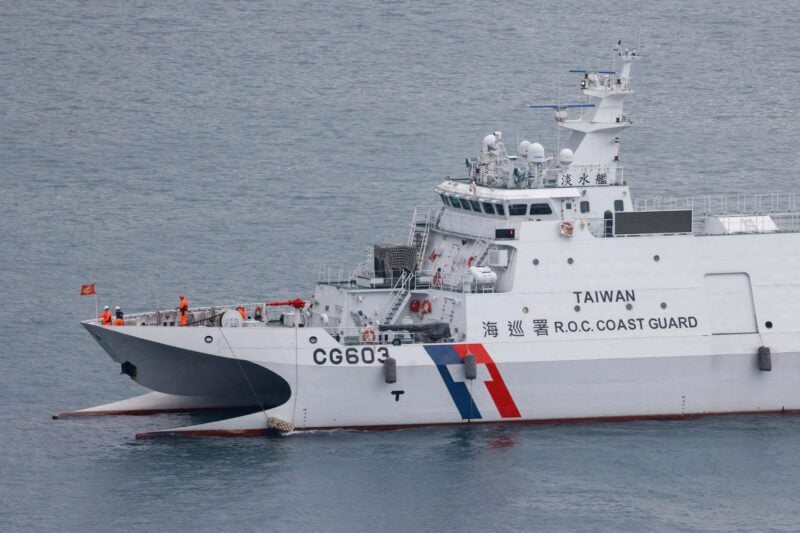
- China Coast Guard activity around Pratas is likely to remain a close-contact risk over the next 14 days. Taiwan's Coast Guard says cutter 3102 entered restricted waters northwest of Dongsha with its AIS transponder disabled; patrol vessel Taichung closed to 1.85 kilometres and the cutter withdrew. Taiwan also reported 13 expulsions of Chinese Coast Guard vessels from Pratas waters so far in 2026. The incident-level details rely on a maritime-monitoring account, while a wire-service report relays Taiwan's annual count. (Confidence: medium · ASSESSED)
- I&W: Taiwan's Coast Guard reports another Chinese Coast Guard entry into Pratas restricted waters, or reports cutter 3102 returning to the area. (0-14 days)
- I&W: Taiwan's Coast Guard reports no Chinese Coast Guard presence around Pratas, and available vessel tracking shows no return by cutter 3102. (0-14 days)
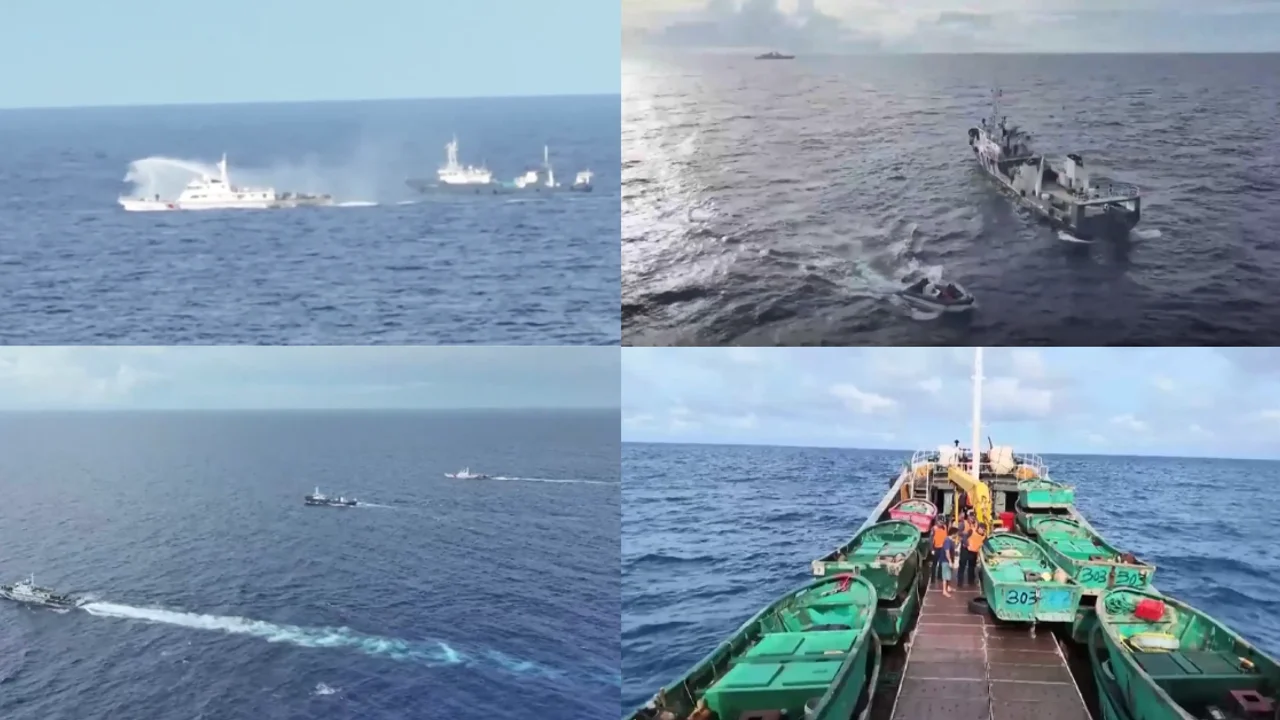
- The reported China Coast Guard exercises near Second Thomas Shoal and Sabina Shoal rehearsed vessel interception, boarding and water-cannon procedures. The available reporting does not show those procedures being used against a Philippine vessel during the exercises. The exercise account and its operational details rest mainly on local-media reporting and Chinese-released footage, so confidence is low. (Confidence: low · REPORTED)
- I&W: A dated China Coast Guard release or verifiable footage places interception, boarding or water-cannon drills at Second Thomas Shoal or Sabina Shoal. (0-1 month)
- I&W: The source footage is dated or located elsewhere, or a subsequent correction withdraws the account of exercises at either shoal. (0-1 month)
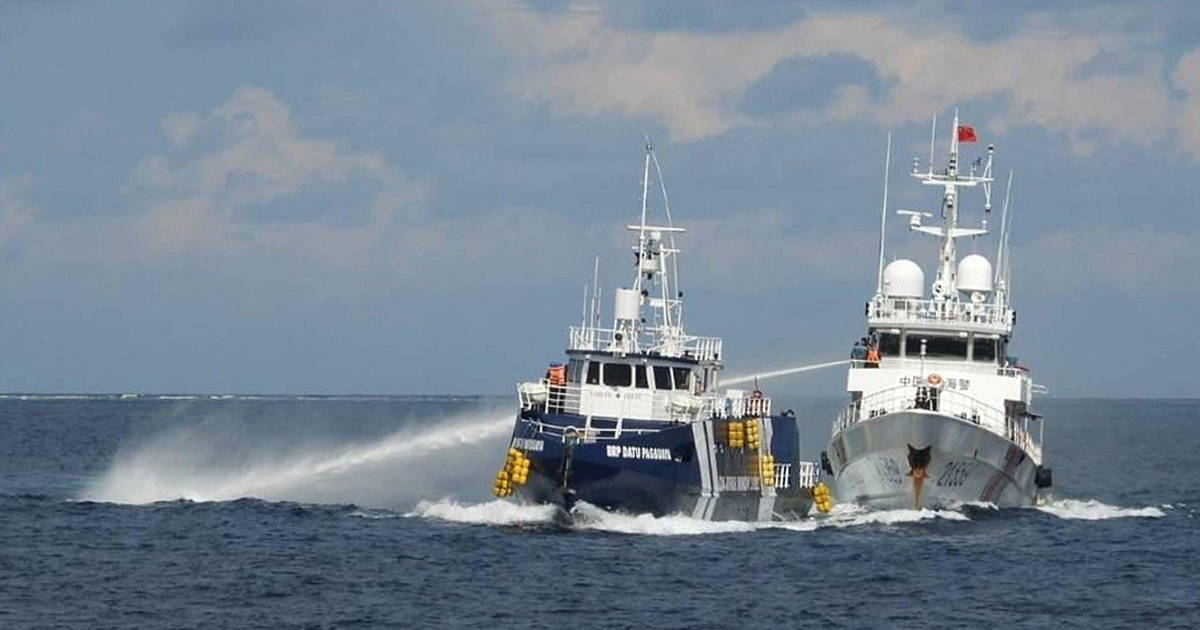
- An unsafe coast guard encounter is likely to be the more immediate South China Sea risk over the next 14 days; a deliberate armed attack is unlikely on the reporting available. The claims describe coast guard exercises and interceptions, including a Philippine resupply interception at Second Thomas Shoal, rather than an order to attack or reported preparations for an armed strike. Confidence is low because operational details are thin and the reporting does not establish Chinese or Philippine intent. (Confidence: low · ASSESSED)
- I&W: The Philippine Coast Guard or China Coast Guard reports a close interception, collision, water-cannon use or injury involving vessels near Second Thomas Shoal or Sabina Shoal. (0-14 days)
- I&W: A Philippine resupply operation reaches Second Thomas Shoal with no reported close manoeuvres and no reported Chinese naval or coast guard obstruction. (0-14 days)
- The competing positions on Chinese approval of Philippine resupply at Second Thomas Shoal remain unresolved. Beijing confirmed that its Coast Guard monitored a Philippine resupply operation on 21 October; separately, China's state-run Global Times, citing an unnamed source, called a Philippine mission illegal because it lacked prior Chinese approval. The reporting does not establish that the approval claim concerned the same operation. Confidence is low because the Chinese account relies on an unnamed source and the claims may refer to different missions. (Confidence: low · REPORTED)
- I&W: Beijing or Manila publishes a mission-specific account identifying whether the prior-approval claim concerned the 21 October operation. (0-30 days)
- I&W: Chinese statements continue to assert an approval requirement without identifying the operation, while Manila continues to describe resupply as obstructed. (0-30 days)
Outlook & scenarios
Continued coast guard pressure without a serious incident (55%)
Over the next 14 days, China Coast Guard vessels maintain pressure around Pratas or conduct further activity near Second Thomas and Sabina Shoals. Philippine and Taiwan coast guard units monitor or shadow the vessels, but no collision or injury is reported.
Close encounter during an interception or resupply (30%)
A Philippine resupply run or coast guard response near Second Thomas Shoal brings Chinese and Philippine vessels into close contact. A collision, water-cannon use or injury raises the risk of a sustained diplomatic and operational crisis.
Temporary reduction in visible activity (10%)
No further reported Chinese Coast Guard entry around Pratas or exercise near Second Thomas and Sabina Shoals occurs during the next 14 days. The underlying dispute over resupply and authority at the shoals remains unresolved.
Low-probability armed escalation (5%)
A close encounter involving Chinese and Philippine vessels causes casualties, followed by a more visible posture by Chinese naval forces. This is a low-probability, high-impact outcome; the current reporting does not indicate preparations for it.
Recommendations
- Maintain separate incident records for Pratas, Second Thomas Shoal, Sabina Shoal, Scarborough Shoal and Taiwan's east coast. Do not combine the east coast patrol account with South China Sea incidents.
- Seek time-stamped confirmation of the reported Pratas entry by cutter 3102 and Taiwan Coast Guard vessel Taichung's response. Record the source and verification status for each detail.
- Track official releases and footage for the reported Second Thomas and Sabina Shoals exercises. Record whether the material identifies the date, location and specific interception, boarding or water-cannon procedures.
- Compare Chinese and Philippine accounts of the 21 October resupply operation before drawing conclusions about whether Beijing's prior-approval claim applied to that mission.
- Keep unsafe maritime contact as the primary near-term warning focus. Do not treat reported coast guard exercises alone as evidence of an imminent armed attack.
Confidence & uncertainty
Wire-service reporting relays Taiwan's account of repeated expulsions around Pratas, while a separate maritime-monitoring account provides details of cutter 3102 and Taichung. The exercises near Second Thomas and Sabina Shoals are described mainly in local-media reporting and Chinese-released footage. Resupply accounts conflict, and the Chinese approval claim relies on an unnamed source. The overall picture supports medium confidence, but incident-level details and intent remain uncertain.
Intelligence gaps
- [EEI 1.1 · PARTIAL] Number, class, and position (time-stamped) of Chinese Coast Guard (CCG), People’s Armed Forces Maritime Militia (PAFMM), and other PRC paramilitary/auxiliary vessels inside Philippine-claimed EEZ or within 12 nautical miles of Philippine-occupied features (e.g., Scarborough Shoal, Second Thomas/Ayungin Shoal, and other named features). Recommended collection: maritime/AIS
- [EEI 1.4 · UNCOVERED] Abrupt changes to vessel identification behavior: AIS transponder deactivations, spoofing, or mismatches between flagged identity and observed equipment/markings among PRC maritime law-enforcement or militia vessels operating near Philippine claims. Recommended collection: maritime/AIS
- [EEI 2.1 · PARTIAL] Issued directives, patrol orders, or internal guidance from PRC Central Military Commission, PLAN, CCG, or provincial maritime authorities that specify objectives, geographic limits, patrol tempos, or escalation thresholds for operations near Philippine-claimed features. Recommended collection: signals/communications
- [EEI 2.2 · PARTIAL] Public declarations, maritime notices, or newly published 'maritime safety' or exclusion zones, with effective dates and coordinates, issued by Chinese authorities that could be used to justify interdiction or exclusion of Philippine activity. Recommended collection: open-source/official statements
- [EEI 2.3 · PARTIAL] Evidence of mobilization orders, tasking lists, or logistics planning for Maritime Militia units (vessel requisitions, local fisheries bureau instructions, fuel/resupply manifests) indicating intent to employ militia alongside CCG/PLAN assets. Recommended collection: HUMINT/defense
- [EEI 3.1 · PARTIAL] Deployment and movement of Philippine Coast Guard and Navy vessels (class, location, on-station times) and scheduled or unscheduled escort/resupply missions to occupied features. Recommended collection: military/AIS
- [EEI 3.2 · UNCOVERED] Air component activity: number and frequency of Philippine air patrol sorties, maritime domain awareness flights, and air-to-surface or maritime strike assets placed on alert or redeployed toward contested areas. Recommended collection: imagery/satellite
- [EEI 3.3 · UNCOVERED] Requests for diplomatic, intelligence, or military assistance from allies (e.g., US, Australia, Japan) including notifications of planned joint patrols, port calls, or freedom of navigation operations with dates and participating units. Recommended collection: open-source/official statements
- [EEI 3.4 · UNCOVERED] Changes to Philippine rules of engagement, emergency law measures, mobilization orders, or civil advisories (evacuations, fishing bans) that alter civilian or military behavior in contested maritime zones. Recommended collection: open-source/official statements
Red cell review: CONCUR WITH COMMENT
TLP:CLEAR