TLP:CLEAR · Disclosure is not limited.
South China Sea: Grey-zone pressure intensifies around Taiwan, with spillover risks for Manila
Time window: Last 7 days · Audience: General analyst · Type: Situation report · DTG: 2026-07-05 10:15Z · Overall confidence: LOW
BLUF
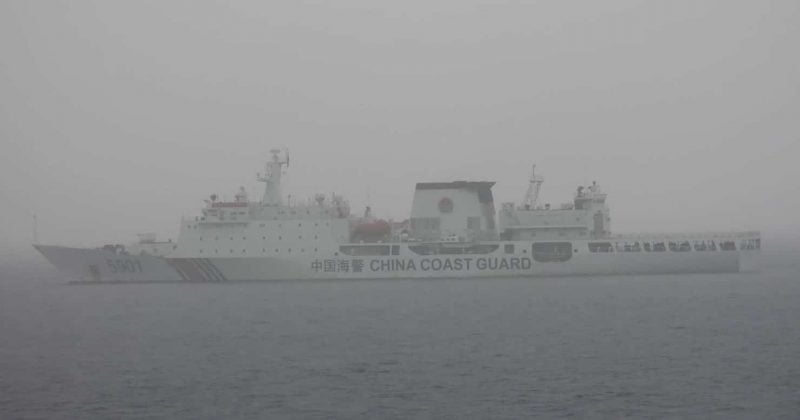
China launched a coast guard patrol east of Taiwan on 4 July and signalled more to come; Taipei deployed vessels, ordered ships to ignore Chinese boarding and vowed expulsions. This pattern, alongside Beijing’s rejection of Japan, Philippines boundary talks, points to sustained grey‑zone pressure and a roughly even chance of a non-lethal at-sea incident in the coming weeks.
Executive summary
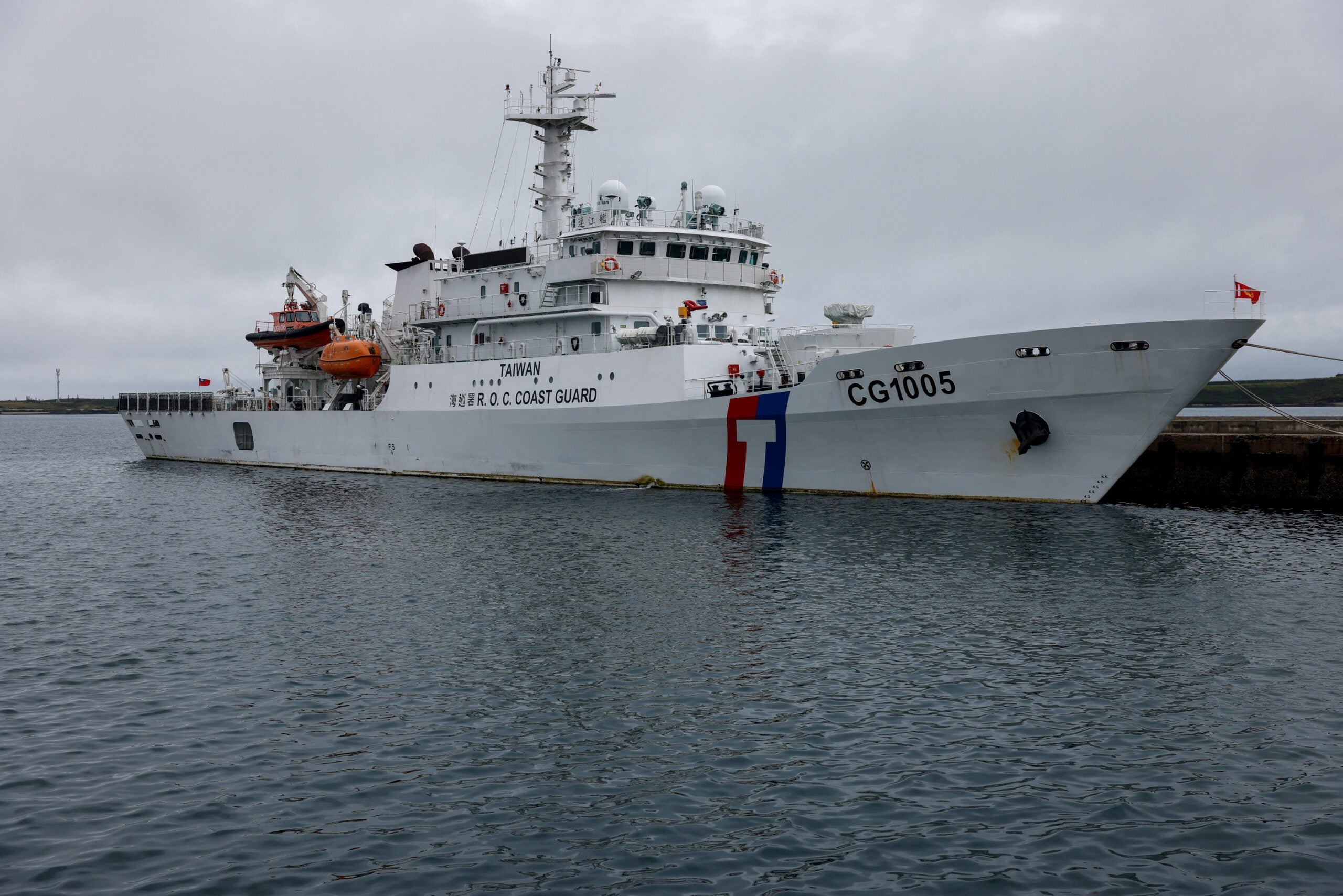
Beijing sent China Coast Guard units east of Taiwan on 4 July and publicly said patrols would be strengthened, the second such move in roughly a month. Taiwan deployed vessels, reiterated that Taiwanese ships should ignore China Coast Guard boarding or inspection demands, and stated it would expel harassing vessels. In parallel, China’s foreign and defence ministries declared opposition to Japan, Philippines maritime boundary negotiations, while prior PLA Southern Theater patrols at Huangyan Island and recurring U.S., Philippine joint patrols reflect enduring contestation in the South China Sea. We assess grey‑zone activity will persist around Taiwan with spillover risks for Philippine positions in the South China Sea, and a roughly even chance of non‑lethal confrontation at sea over the next one to three months.
Change from previous assessment
New patrol activity was reported on 4 July east of Taiwan and Taiwan’s response was explicit, including guidance to ignore China Coast Guard boarding and vows to expel. China also publicly opposed Japan, Philippines maritime boundary negotiations. Compared with the prior brief, we sustain the judgement that patrols will continue and raise the immediacy of a non‑lethal at‑sea incident to a roughly even chance in the next 1-3 months east of Taiwan. Confidence is lower overall because South China Sea‑specific developments in the current window rely on medium‑confidence or earlier reporting. Initial assessment of Beijing’s administrative‑pressure risk toward Manila has been added.
Key judgments
- China will very likely sustain and intensify China Coast Guard patrols east of Taiwan through mid-July, after launching a patrol on 4 July 2026 and stating it would strengthen such patrols in what it calls China’s jurisdictional waters, the second such deployment in roughly a month. (Confidence: medium · ASSESSED)
- I&W: Official Chinese or Taiwanese reporting of additional China Coast Guard vessels operating east of Hualien or Taitung. (0-14 days)
- I&W: Fourteen consecutive days without publicly reported China Coast Guard presence east of Taiwan alongside Chinese statements signalling a stand-down. (0-14 days)
- Taiwan will likely continue to contest Chinese coast guard presence east of the island, having deployed vessels on 4 July, instructed Taiwanese ships on 1 July to ignore China Coast Guard boarding or inspection demands, and vowed to expel harassing vessels. (Confidence: high · ASSESSED)
- I&W: Taiwan Coast Guard publishes intercept footage or incident summaries of attempted expulsions east of Taiwan. (0-14 days)
- I&W: Taipei issues guidance rescinding the 1 July instruction or directing compliance with China Coast Guard demands. (0-14 days)
- Beijing’s declared opposition to Japan, Philippines maritime boundary negotiations, combined with prior PLA Southern Theater patrols around Huangyan Island and recurring U.S., Philippine joint patrols, makes it likely China will apply additional administrative‑pressure measures against Philippine activities in the South China Sea over the next 1-3 months. (Confidence: low · ASSESSED)
- I&W: China Coast Guard or PLA announces or is observed conducting patrols or interdictions at Scarborough Shoal or in waters near Thitu Island. (1-3 months)
- I&W: Chinese public statements indicating acceptance of Japan, Philippines technical talks and a visible reduction in Chinese patrol reporting around Philippine‑held features. (1-3 months)
- There is a roughly even chance of a non‑lethal confrontation at sea in the next 1-3 months either east of Taiwan or at South China Sea flashpoints, given repeated China Coast Guard patrols, Taiwan’s stated intent to expel Chinese vessels, and assessments that such deployments represent an escalation in grey‑zone tactics to assert administrative control. (Confidence: medium · ASSESSED)
- I&W: Official reporting of close‑quarters manoeuvres, collision warnings, or escalated radio challenges between Chinese and Taiwanese or Philippine government vessels. (0-1 months)
- I&W: Publicly announced deconfliction protocols or hotlines that reduce on‑water confrontations. (1-3 months)
- China will almost certainly continue to characterise these operations as within its jurisdictional waters, while Taipei will reject any Chinese sovereignty claims over the island or its waters, ensuring legal friction persists around future maritime encounters. (Confidence: medium · ASSESSED)
- I&W: Continued use of the term "jurisdictional waters" by Chinese authorities in public releases, and repeat Taiwanese guidance rejecting compliance. (0-3 months)
- I&W: A bilateral statement reframing the area as disputed in official language. (1-3 months)
Outlook & scenarios
Baseline: Sustained grey‑zone patrols and pushback without injuries (60%)
China Coast Guard runs recurring patrols east of Taiwan; Taiwan deploys monitoring vessels, issues radio challenges and conducts shadowing or expulsion attempts. South China Sea frictions persist at a low boil but without new serious incidents.
Limited collision east of Taiwan (30%)
A bow‑crossing or hull‑to‑hull contact occurs during a Taiwan interception of a Chinese coast guard vessel, producing minor damage and short‑lived medical evacuations. Both sides publish footage and lodge protests; operations continue.
South China Sea flare‑up focused on Scarborough or Thitu (40%)
China leverages administrative‑pressure tactics at Scarborough Shoal or near Thitu Island as it contests Manila’s positions, prompting rapid Philippine and U.S. signalling and a tense multi‑day standoff without live fire.
Short operational pause (20%)
Public reporting of Chinese patrols east of Taiwan drops for a few weeks, and rhetoric cools, but core positions on jurisdiction and sovereignty remain unchanged and activity later resumes.
Recommendations
- Maintain a running incident log from 1 July capturing official Chinese and Taiwanese statements, ship locations, and intercept narratives east of Hualien, Taitung, with timestamps and video where available.
- Stand up a targeted watch on Scarborough Shoal and waters around Thitu Island for new China Coast Guard or PLA activity, correlating official communiqués with commercial maritime data.
- Prepare a quick‑turn brief on likely non‑lethal incident pathways and diplomatic messaging options should a collision or forced expulsion occur east of Taiwan.
- Coordinate with maritime risk stakeholders to pre‑draft advisory language for regional government vessels on radio challenge protocols and safe‑separation practices.
- Task liaison to track statements from China’s foreign and defence ministries on Japan, Philippines boundary talks and any related legal or administrative announcements.
Confidence & uncertainty
Evidence for activity east of Taiwan rests on multiple independent major‑media reports that align on timing, actors and intent, which is strong. However, several South China Sea elements draw on medium‑confidence, older, or single‑source reporting, and the linkage from Beijing’s statements to prospective pressure on Manila is analytic rather than directly reported. There are also source‑level tensions over location framing, with China calling patrol areas "jurisdictional waters" and Taiwan rejecting that characterisation. Given these gaps and reliance on inference for forward‑looking elements, an overall low confidence rating is warranted.
Alternative analysis (red cell)
A more defensible reading of the available reporting is that recent July 4 patrols and reciprocal Taiwanese responses are best characterized as short‑term signaling and posturing rather than a clear near‑term escalation trajectory. While the legal positions of Beijing and Taipei make continued friction likely (judgment 4 is sound), the evidence does not provide firm proximate indicators (persistent asset massing, operational orders, recurrent harassment incidents) to justify high confidence in sustained intensification (judgment 0) or a 50/50 probability of non‑lethal confrontation (judgment 3). Similarly, Beijing’s opposition to bilateral boundary talks (judgment 2) is a credible source of tension, but the cited supporting items are largely contextual or dated and do not by themselves demonstrate imminent additional administrative pressure on the Philippines.
Intelligence gaps
- [EEI 1.1 · PARTIAL] Number, class, and position (time-stamped) of Chinese Coast Guard (CCG), People’s Armed Forces Maritime Militia (PAFMM), and other PRC paramilitary/auxiliary vessels inside Philippine-claimed EEZ or within 12 nautical miles of Philippine-occupied features (e.g., Scarborough Shoal, Second Thomas/Ayungin Shoal, and other named features). Recommended collection: maritime/AIS
- [EEI 1.2 · UNCOVERED] Observed maneuvers or posture indicating hostile action: vessel-to-vessel blocking/contact, use of water cannons, boarding attempts, formation maneuvers to interdict Philippine vessels, or sustained stationing near Philippine resupply/relief routes. Recommended collection: imagery/satellite
- [EEI 1.3 · UNCOVERED] Incidents of Philippine vessels (coast guard, navy, supply boats, civilian fishing vessels) being ordered to alter course, detained, chased, or physically impeded — with time, location, involved units, and damage/injuries if any. Recommended collection: open-source/official statements
- [EEI 1.4 · UNCOVERED] Abrupt changes to vessel identification behavior: AIS transponder deactivations, spoofing, or mismatches between flagged identity and observed equipment/markings among PRC maritime law-enforcement or militia vessels operating near Philippine claims. Recommended collection: maritime/AIS
- [EEI 2.2 · PARTIAL] Public declarations, maritime notices, or newly published 'maritime safety' or exclusion zones, with effective dates and coordinates, issued by Chinese authorities that could be used to justify interdiction or exclusion of Philippine activity. Recommended collection: open-source/official statements
- [EEI 2.3 · UNCOVERED] Evidence of mobilization orders, tasking lists, or logistics planning for Maritime Militia units (vessel requisitions, local fisheries bureau instructions, fuel/resupply manifests) indicating intent to employ militia alongside CCG/PLAN assets. Recommended collection: HUMINT/defense
- [EEI 3.2 · UNCOVERED] Air component activity: number and frequency of Philippine air patrol sorties, maritime domain awareness flights, and air-to-surface or maritime strike assets placed on alert or redeployed toward contested areas. Recommended collection: imagery/satellite
- [EEI 3.4 · UNCOVERED] Changes to Philippine rules of engagement, emergency law measures, mobilization orders, or civil advisories (evacuations, fishing bans) that alter civilian or military behavior in contested maritime zones. Recommended collection: open-source/official statements
Cited sources
[1] Jerusalem Post · China expands coast guard patrols off Taiwan’s east coast (B) · sha256:958b48e2e488 [2] cryptobriefing.com · China launches coast guard patrol east of Taiwan amid regional tensions (B) · sha256:789d135f0224 [3] cj.sina.com.cn · 陈冰:菲隔三差五就来南海找茬,中国就让它长长记性 (B) · sha256:082115e1914d [4] gcaptain.com · China Launches Coast Guard Patrol East Of Taiwan Despite International Pushback (A) · sha256:9a5c38d39b96
Source content hashes were computed at collection time; the cited text is preserved unmodified for the life of this product.
Red cell review: PARTIAL DISSENT
TLP:CLEAR