TLP:CLEAR · Disclosure is not limited.
South China Sea: Missile signalling and coast guard pressure raise miscalculation risk
Time window: Last 7 days · Audience: General analyst · Type: Situation report · DTG: 2026-07-16 10:13Z · Overall confidence: LOW
BLUF
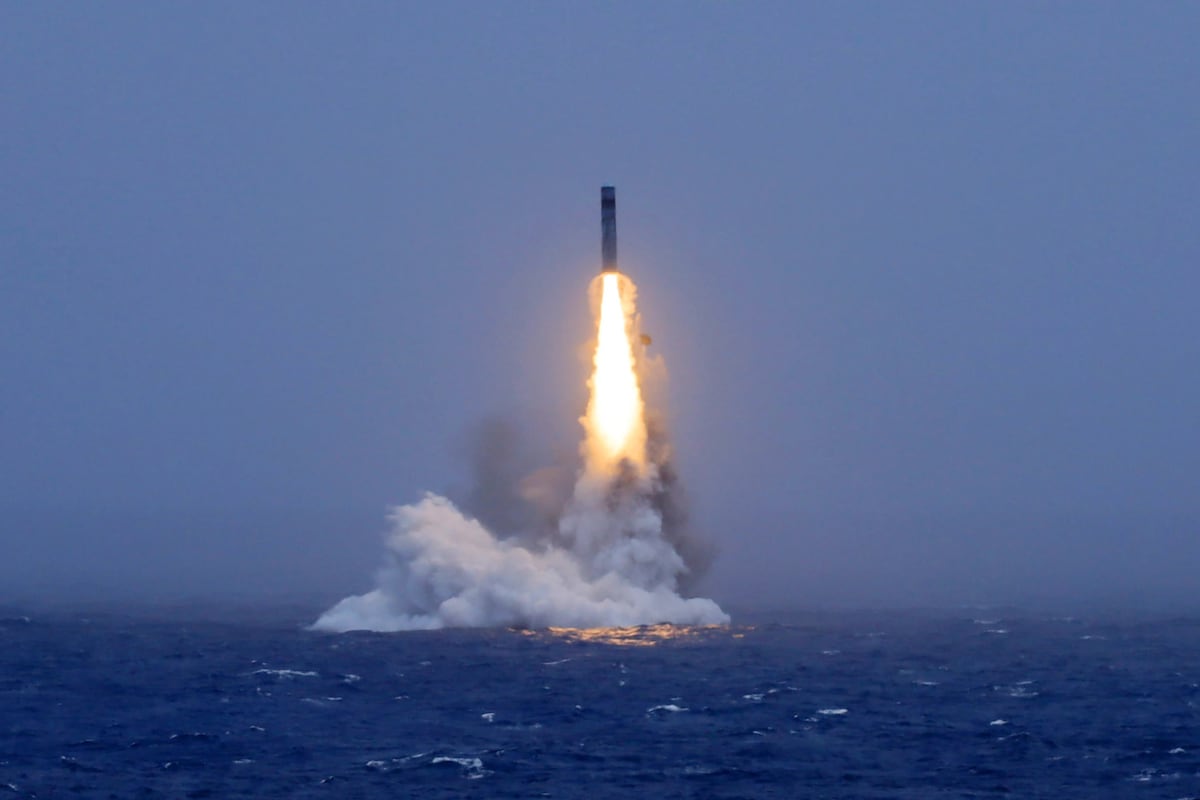
China very likely used a South China Sea launch area for a 6 July submarine‑launched ballistic missile that likely overflew parts of the Philippines, while sustaining coast guard patrols around Taiwan. There is a roughly even chance of a maritime or air incident involving Chinese and Philippine or allied assets in the next one to three months.
Executive summary
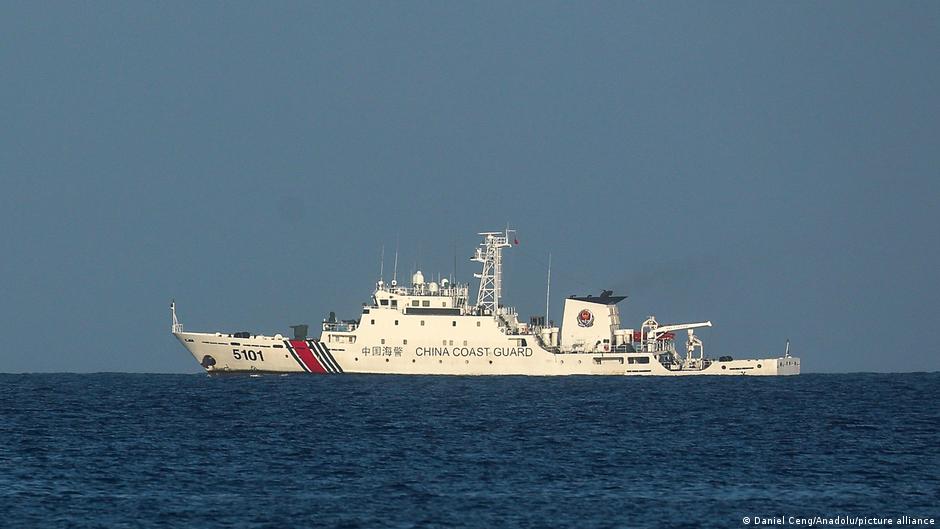
Open sources report that China test‑fired a submarine‑launched ballistic missile from the South China Sea on 6 July, likely overflying parts of the Philippines and drawing protests from Australia, Japan, New Zealand, the United States and several South Pacific leaders. Beijing is also sustaining China Coast Guard patrols around Taiwan, including patrols east of Taiwan initiated in June, which Taipei characterises as unlawful. The 2016 arbitral ruling against China’s expansive maritime claims remains a central legal reference point, though reporting on any new joint statements marking its anniversary is inconsistent. Manila continues to consolidate its position on Thitu Island via infrastructure upgrades since 2020 and has codified maritime laws since 2024. Taken together, these trends point to sustained pressure and an elevated risk of an operational incident, even as all actors retain incentives to avoid a prolonged clash.
Change from previous assessment
Since the prior brief, we retain the assessment on the 6 July missile test and its political fallout, now paired with additional open‑source reporting that China’s coast guard was sustaining ‘routine law enforcement patrols’ as of 10 July and had patrolled east of Taiwan in June. We have downgraded our confidence in any new 12 July joint statement marking the arbitration anniversary due to inconsistent dates and actors in available reporting, and we have not repeated earlier judgments on an alleged Philippine operational leak, a directive to the Armed Forces of the Philippines, or claims about the Batanes Islands due to lack of corroboration in this run.
Key judgments
- China very likely conducted a submarine‑launched ballistic missile test from the South China Sea on 6 July 2026 that likely overflew parts of the Philippines, prompting protests from Australia, Japan, New Zealand, the United States and several South Pacific leaders. (Confidence: medium · REPORTED)
- I&W: The Philippines publishes radar‑track or diplomatic documentation explicitly stating the missile overflew Philippine territory on 6 July. (0-14 days)
- I&W: Authoritative trajectory data from China or third‑party sensors shows the flight path remained clear of the Philippine archipelago. (0-14 days)
- Beijing is likely sustaining a pattern of layered pressure by pairing China Coast Guard ‘routine law enforcement patrols’ around Taiwan with earlier June patrols east of Taiwan, activity Taipei characterises as violating international law. (Confidence: medium · ASSESSED)
- I&W: China Coast Guard issues additional patrol notices or releases imagery showing patrols east or south‑east of Taiwan. (0-14 days)
- I&W: Taipei reports a sustained lull in China Coast Guard presence in waters around Taiwan for at least two consecutive weeks. (0-14 days)
- The 2016 arbitral ruling that China’s expansive South China Sea maritime claims have no legal basis remains a key diplomatic reference point, but the timing and composition of recent joint statements opposing Beijing’s claims are inconsistently reported. (Confidence: low · ASSESSED)
- I&W: Foreign ministries of Japan, the Philippines and the United States publish a mid‑July 2026 joint communiqué explicitly marking the arbitration anniversary. (0-14 days)
- I&W: Any named government publicly clarifies that no new joint statement was issued this July. (0-14 days)
- The Philippines is likely consolidating its position at Thitu Island and within its maritime zones by upgrading the island’s harbour and runway since 2020 and by enacting landmark maritime legislation in November 2024, which improves sustainment and signals intent to hold ground. (Confidence: medium · ASSESSED)
- I&W: Manila announces new tenders, logistics flights, or resupply plans tied to Thitu Island support. (1-3 months)
- I&W: A Philippine government statement defers further works or restricts access to Thitu Island. (1-3 months)
- There is a roughly even chance of a maritime or air incident between Chinese forces and Philippine or allied assets in the next one to three months, given the July overflight near the Philippines, sustained coast guard patrols and continued freedom of navigation operations in the South China Sea. (Confidence: low · ASSESSED)
- I&W: A publicly acknowledged collision, near miss within several hundred metres, or unplanned intercept involving China Coast Guard, PLA Navy or allied units near Philippine‑administered features in the Spratly Islands or east of Taiwan. (1-3 months)
- I&W: A sustained 30‑day period with no Chinese coast guard patrol notices or intercept reports around Taiwan and the Philippines. (1-3 months)
Outlook & scenarios
Calibrated pressure without clash (45%)
Beijing sustains coast guard patrols around Taiwan and messaging after the 6 July missile test. Manila continues outpost sustainment and legal signalling. Allies maintain periodic freedom of navigation operations. Protests persist but no kinetic incident occurs.
Operational incident triggers short crisis (35%)
A close pass or collision near the Spratly Islands or east of Taiwan involving China Coast Guard or PLA units and a Philippine or allied vessel sparks reciprocal protests and rapid deployments. Crisis management contains escalation within weeks but raises baseline risk.
Legal‑diplomatic surge and temporary de‑escalation (25%)
Regional actors coordinate fresh statements referencing the 2016 ruling and publicly press China. Beijing reduces publicity around patrols for a period while emphasising ‘routine’ narratives. Immediate incident risk dips, but core disputes and patrol activity resume later.
Recommendations
- Maintain a watch on China Coast Guard communications, including Taiwan.cn updates, and build a dataset of patrol dates, areas and language used to track any shift from ‘routine’ to coercive framing.
- Scrub NOTAMs and NAVAREA warnings across the South China Sea and western Pacific for missile tests or exercise windows, cross‑referencing with commercial satellite imagery to validate launch areas and hazard boxes.
- Produce a short chronology of official protests tied to the 6 July test by actor and date, and map them against reported flight paths to assess diplomatic momentum and gaps.
- Task periodic imagery review of Thitu Island to confirm utilisation of the harbour and runway and to detect any new construction or logistics patterns relevant to sustainment.
- Track announced freedom of navigation operations and allied transits through the South China Sea and correlate with Chinese patrol notices to identify peak friction windows.
- Prepare an incident indicators and escalation matrix, with thresholds for near‑misses, rammings and unplanned intercepts, and pre‑draft analytic flash templates for rapid reporting.
Confidence & uncertainty
The headline confidence is low because most core points rest on medium‑confidence reporting and a mix of official and media sources without detailed technical corroboration. The missile test and likely overflight are supported by multiple reports, but the ‘likely’ qualifier and absence of released trajectory data reduce certainty. Reporting on any new joint statement marking the arbitration anniversary contains internal inconsistencies on dates and signatories, lowering confidence. Several inferences about patterns and incident risk extend beyond direct reporting, and there is limited multi‑source confirmation within this one‑week window.
Alternative analysis (red cell)
The ledger contains multiple low‑admiralty, medium‑confidence reports and explicit contradictions that make stronger inferences premature. Higher‑quality corroboration (telemetry/satellite/radar tracks, official diplomatic communiqués, operational logs) is needed before concluding an SLBM overflight occurred, that China is executing a sustained coercive layering campaign, that joint statement reporting is meaningfully inconsistent, that Thitu upgrades equate to durable military consolidation, or that an incident is roughly even‑odds in the near term; absent such data, routine patrols, reporting noise, symbolic infrastructure works, and indeterminate near‑term risk remain plausible alternative interpretations.
Intelligence gaps
- [EEI 1.1 · UNCOVERED] Number, class, and position (time-stamped) of Chinese Coast Guard (CCG), People’s Armed Forces Maritime Militia (PAFMM), and other PRC paramilitary/auxiliary vessels inside Philippine-claimed EEZ or within 12 nautical miles of Philippine-occupied features (e.g., Scarborough Shoal, Second Thomas/Ayungin Shoal, and other named features). Recommended collection: maritime/AIS
- [EEI 1.2 · UNCOVERED] Observed maneuvers or posture indicating hostile action: vessel-to-vessel blocking/contact, use of water cannons, boarding attempts, formation maneuvers to interdict Philippine vessels, or sustained stationing near Philippine resupply/relief routes. Recommended collection: imagery/satellite
- [EEI 1.3 · UNCOVERED] Incidents of Philippine vessels (coast guard, navy, supply boats, civilian fishing vessels) being ordered to alter course, detained, chased, or physically impeded — with time, location, involved units, and damage/injuries if any. Recommended collection: open-source/official statements
- [EEI 1.4 · UNCOVERED] Abrupt changes to vessel identification behavior: AIS transponder deactivations, spoofing, or mismatches between flagged identity and observed equipment/markings among PRC maritime law-enforcement or militia vessels operating near Philippine claims. Recommended collection: maritime/AIS
- [EEI 2.1 · UNCOVERED] Issued directives, patrol orders, or internal guidance from PRC Central Military Commission, PLAN, CCG, or provincial maritime authorities that specify objectives, geographic limits, patrol tempos, or escalation thresholds for operations near Philippine-claimed features. Recommended collection: signals/communications
- [EEI 2.2 · UNCOVERED] Public declarations, maritime notices, or newly published 'maritime safety' or exclusion zones, with effective dates and coordinates, issued by Chinese authorities that could be used to justify interdiction or exclusion of Philippine activity. Recommended collection: open-source/official statements
- [EEI 2.3 · UNCOVERED] Evidence of mobilization orders, tasking lists, or logistics planning for Maritime Militia units (vessel requisitions, local fisheries bureau instructions, fuel/resupply manifests) indicating intent to employ militia alongside CCG/PLAN assets. Recommended collection: HUMINT/defense
- [EEI 3.1 · UNCOVERED] Deployment and movement of Philippine Coast Guard and Navy vessels (class, location, on-station times) and scheduled or unscheduled escort/resupply missions to occupied features. Recommended collection: military/AIS
- [EEI 3.2 · UNCOVERED] Air component activity: number and frequency of Philippine air patrol sorties, maritime domain awareness flights, and air-to-surface or maritime strike assets placed on alert or redeployed toward contested areas. Recommended collection: imagery/satellite
- [EEI 3.3 · UNCOVERED] Requests for diplomatic, intelligence, or military assistance from allies (e.g., U.S., Australia, Japan) including notifications of planned joint patrols, port calls, or freedom of navigation operations with dates and participating units. Recommended collection: open-source/official statements
- [EEI 3.4 · UNCOVERED] Changes to Philippine rules of engagement, emergency law measures, mobilization orders, or civil advisories (evacuations, fishing bans) that alter civilian or military behavior in contested maritime zones. Recommended collection: open-source/official statements
Cited sources
[1] defensenews.com · First the coast guard, then an ICBM: China tests new, long-term ways to hold off rivals in Asia (A) · sha256:2cb8e61d2606 [2] dw.com · 南海仲裁十周年 14国联合发声 (A) · sha256:22c7529c66e7 [3] Wikipedia · Territorial disputes in the South China Sea (F) · sha256:2b1001cc8220 [4] Wikipedia · 南海爭端 (B) · sha256:2ab6855654d6 [5] Wikipedia · Thitu Island (F) · sha256:f24105c33501
Source content hashes were computed at collection time; the cited text is preserved unmodified for the life of this product.
Red cell review: PARTIAL DISSENT
TLP:CLEAR