TLP:CLEAR · Disclosure is not limited.
South China Sea: No Verified Operational Shift
Time window: Last 7 days · Audience: General analyst · Type: Situation report · DTG: 2026-11-23 10:06Z · Overall confidence: MEDIUM
BLUF
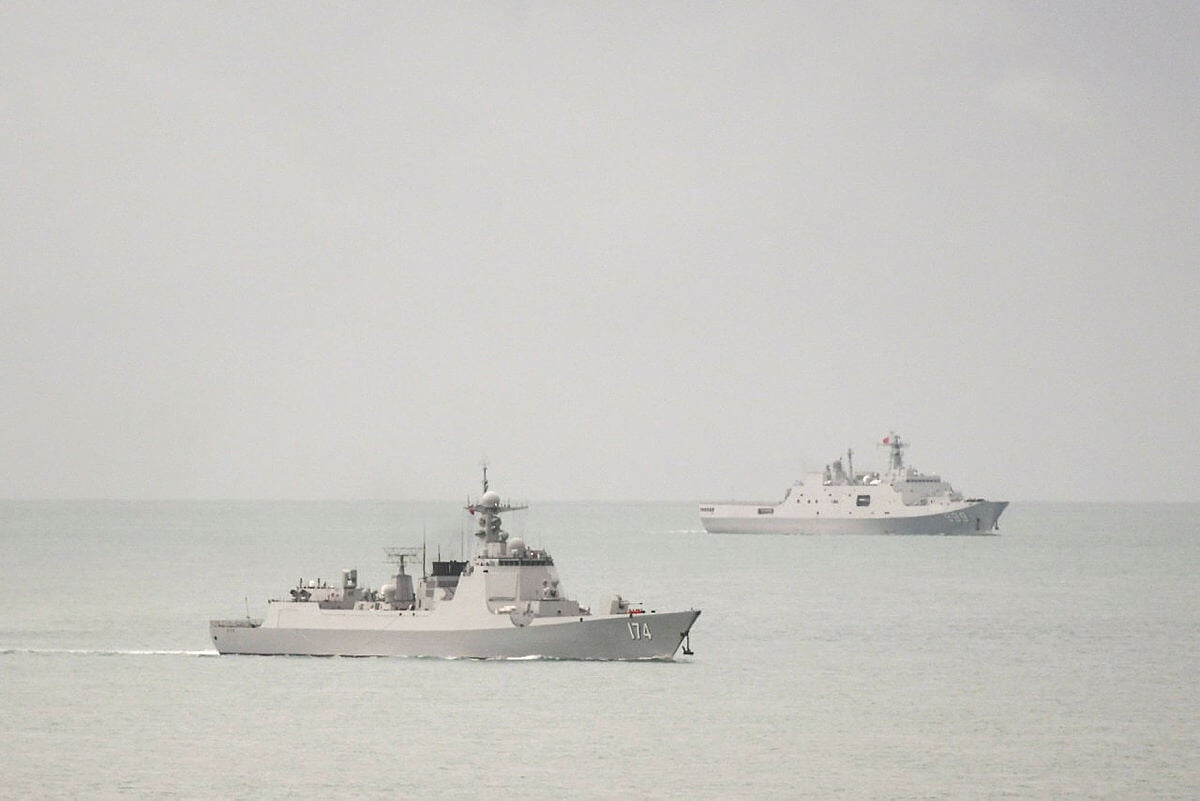
The only direct new operational report is an unverified 22 November claim that PLA anti-submarine ships patrolled with the Vietnamese navy in the South China Sea. Treat it as an item to verify, not evidence of a change in maritime activity or alignment.
Executive summary
The reporting for 16 to 23 November provides no independently corroborated evidence of a new South China Sea operational shift. A social-media relay alleges a joint PLA-Vietnamese anti-submarine patrol on 22 November, but gives no ship names, positions or operational details. Separately, reporting describes China-ASEAN economic and diplomatic ties and China's longer-term naval modernisation. Those developments provide strategic context, but do not establish a change in maritime conduct or an imminent deployment.
Change from previous assessment
The immediate operational assessment is unchanged from the 22 November brief: the reported PLA-Vietnamese patrol remains unverified, with no new corroboration in this reporting. This run adds broader context on Chinese naval modernisation and China-ASEAN ties, but it does not justify raising the near-term risk assessment or revising the prior brief's Code of Conduct and Japan-Philippines surveillance judgments.
Key judgments
- The reported 22 November 2026 joint patrol is not verified well enough to establish a change in South China Sea operations. The claim concerns PLA anti-submarine ships and the Vietnamese navy, but rests on a single social-media relay without vessel names, positions, operational details or independent confirmation. This single-source basis warrants low confidence. (Confidence: low · REPORTED)
- I&W: Confirm the patrol if the PLA Navy or Vietnamese navy issues a dated statement naming participating ships and the patrol area, or independent imagery verifies the activity. (0-14 days)
- I&W: Break the report if either navy explicitly denies the patrol or the relayed headline is corrected as false. (0-30 days)
- China and ASEAN are likely to sustain diplomatic and economic engagement, but the reporting does not establish that this engagement has eased South China Sea tensions. The reported 2021 strategic partnership, CAFTA 3.0 Upgrade Protocol and more than US$1 trillion in bilateral trade in 2025 show institutional and economic ties, not agreement on maritime conduct. These details come from one CGTN report, so confidence is low. (Confidence: low · ASSESSED)
- I&W: A jointly endorsed South China Sea Code of Conduct text with an agreed implementation timetable would break the assessment that current engagement has not demonstrated progress on maritime dispute management. (1-3 months)
- I&W: A China-ASEAN announcement suspending CAFTA 3.0 implementation or cancelling planned partnership activities would break the assessment that engagement is likely to continue. (1-6 months)
- China's naval modernisation is likely to expand Beijing's long-term maritime capacity, but the reporting does not establish an imminent change in its South China Sea force posture. It cites the 2026 Asia Power Index, a US Department of Defense projection of six additional Chinese aircraft carriers by 2035, and Type 004 construction activity at Dalian. The claims are relayed through one trade-publication article, and the construction start date is approximate; confidence is medium. (Confidence: medium · ASSESSED)
- I&W: Independent imagery or official naval notices showing a named PLA carrier group operating in the South China Sea would confirm a near-term posture change. (0-3 months)
- I&W: New satellite imagery at Dalian confirming continued Type 004 construction would support the long-term modernisation assessment; evidence that construction has halted would weaken it. (3-12 months)
Outlook & scenarios
Routine competition and diplomacy continue (70%)
China's naval modernisation and China-ASEAN economic engagement continue in parallel. The alleged PLA-Vietnamese patrol remains unverified, and no independently confirmed operational shift emerges over the next 1-3 months. This is the most likely scenario given the lack of corroborated operational reporting.
The joint patrol is confirmed as limited cooperation (20%)
Official statements or independent evidence confirm that PLA anti-submarine ships patrolled with the Vietnamese navy. The event indicates limited naval cooperation, but without evidence of repeated activity or a wider agreement it does not establish a broader change in South China Sea alignments.
Coast guard encounter becomes a regional flashpoint (10%)
The low-probability, high-impact wildcard is a publicly documented Chinese Coast Guard encounter with an ASEAN vessel that prompts a diplomatic protest or counter-deployment. A supplied social-media allegation of coercive conduct has no date, vessel or location, so this is a watch scenario rather than a current warning.
Recommendations
- Keep the alleged PLA-Vietnamese patrol labelled unverified unless an official statement or independent vessel-level evidence confirms it.
- Check PLA Navy and Vietnamese navy releases and independent maritime reporting for ship names, patrol area, date and imagery before treating the report as operational fact.
- Separate long-term Chinese naval modernisation indicators from near-term warning judgments. Do not infer an imminent South China Sea deployment from carrier construction reporting alone.
- Track China-ASEAN statements for an agreed Code of Conduct text, implementation timetable or explicit maritime dispute mechanism. Do not treat trade figures or partnership anniversaries as evidence of dispute resolution.
Confidence & uncertainty
Overall confidence is medium because the reporting provides some usable strategic context on China-ASEAN ties and Chinese naval modernisation, but the direct operational claim rests on a single low-reliability social-media relay. The naval-modernisation details are attributed to the Lowy Institute and a US Department of Defense assessment, but are relayed through one trade-publication article. No supplied reporting independently confirms a new South China Sea patrol or other operational shift.
Intelligence gaps
- [EEI 1.1 · UNCOVERED] Number, class, and position (time-stamped) of Chinese Coast Guard (CCG), People’s Armed Forces Maritime Militia (PAFMM), and other PRC paramilitary/auxiliary vessels inside Philippine-claimed EEZ or within 12 nautical miles of Philippine-occupied features (e.g., Scarborough Shoal, Second Thomas/Ayungin Shoal, and other named features). Recommended collection: maritime/AIS
- [EEI 1.2 · PARTIAL] Observed maneuvers or posture indicating hostile action: vessel-to-vessel blocking/contact, use of water cannons, boarding attempts, formation maneuvers to interdict Philippine vessels, or sustained stationing near Philippine resupply/relief routes. Recommended collection: imagery/satellite
- [EEI 1.3 · PARTIAL] Incidents of Philippine vessels (coast guard, navy, supply boats, civilian fishing vessels) being ordered to alter course, detained, chased, or physically impeded, with time, location, involved units, and damage/injuries if any. Recommended collection: open-source/official statements
- [EEI 1.4 · UNCOVERED] Abrupt changes to vessel identification behavior: AIS transponder deactivations, spoofing, or mismatches between flagged identity and observed equipment/markings among PRC maritime law-enforcement or militia vessels operating near Philippine claims. Recommended collection: maritime/AIS
- [EEI 2.1 · UNCOVERED] Issued directives, patrol orders, or internal guidance from PRC Central Military Commission, PLAN, CCG, or provincial maritime authorities that specify objectives, geographic limits, patrol tempos, or escalation thresholds for operations near Philippine-claimed features. Recommended collection: signals/communications
- [EEI 2.2 · UNCOVERED] Public declarations, maritime notices, or newly published 'maritime safety' or exclusion zones, with effective dates and coordinates, issued by Chinese authorities that could be used to justify interdiction or exclusion of Philippine activity. Recommended collection: open-source/official statements
- [EEI 2.3 · UNCOVERED] Evidence of mobilization orders, tasking lists, or logistics planning for Maritime Militia units (vessel requisitions, local fisheries bureau instructions, fuel/resupply manifests) indicating intent to employ militia alongside CCG/PLAN assets. Recommended collection: HUMINT/defense
- [EEI 3.1 · UNCOVERED] Deployment and movement of Philippine Coast Guard and Navy vessels (class, location, on-station times) and scheduled or unscheduled escort/resupply missions to occupied features. Recommended collection: military/AIS
- [EEI 3.2 · UNCOVERED] Air component activity: number and frequency of Philippine air patrol sorties, maritime domain awareness flights, and air-to-surface or maritime strike assets placed on alert or redeployed toward contested areas. Recommended collection: imagery/satellite
- [EEI 3.3 · PARTIAL] Requests for diplomatic, intelligence, or military assistance from allies (e.g., US, Australia, Japan) including notifications of planned joint patrols, port calls, or freedom of navigation operations with dates and participating units. Recommended collection: open-source/official statements
- [EEI 3.4 · UNCOVERED] Changes to Philippine rules of engagement, emergency law measures, mobilization orders, or civil advisories (evacuations, fishing bans) that alter civilian or military behavior in contested maritime zones. Recommended collection: open-source/official statements
Red cell review: CONCUR WITH COMMENT
TLP:CLEAR