TLP:CLEAR · Disclosure is not limited.
South China Sea: PCG challenges China Coast Guard near Luzon as Manila deepens coordination with Tokyo
Time window: Last 7 days · Audience: General analyst · Type: Situation report · DTG: 2026-06-23 10:17Z · Overall confidence: LOW
BLUF
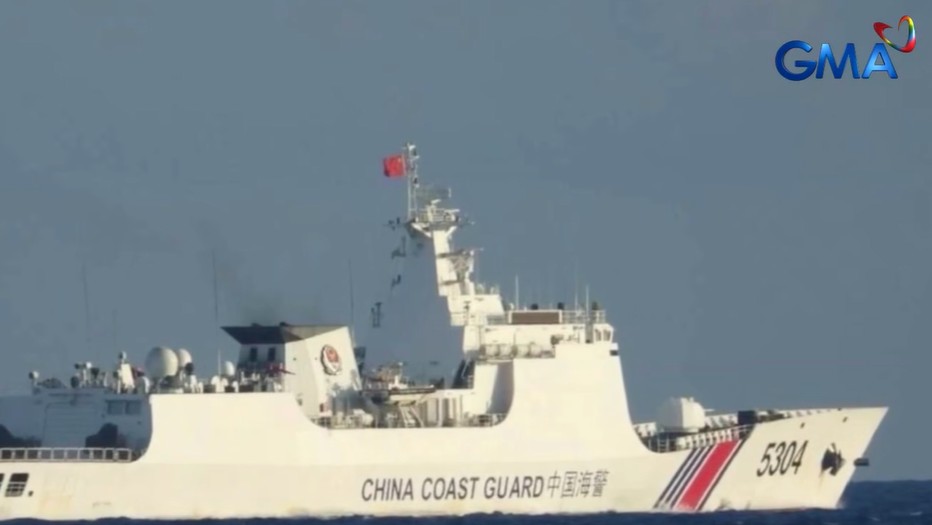
On 22 June, the Philippine Coast Guard (PCG) radio‑challenged China Coast Guard (CCG) vessel 5304 operating near Luzon and Bajo de Masinloc, highlighting continued friction at sea while Manila and Tokyo launched exclusive economic zone delimitation talks. Beijing’s grey‑zone pressure is likely to persist, but a broader breakdown in relations remains unlikely in the near term.
Executive summary
PCG unit BRP Malabrigo (MRRV‑4402) detected and radio‑challenged CCG vessel 5304 near Bajo de Masinloc and along Luzon’s west coast on 22 June, directing it to cease patrols inside the Philippine exclusive economic zone. PCG personnel reported alarm as the Chinese vessel approached Luzon’s coastal provinces. In parallel, China is applying coast‑guard pressure across the first island chain, including previous law‑enforcement patrols east of Taiwan, entries into waters around Taiwan‑administered Taiping Island in the Spratlys, and broadcasts asserting enforcement within Japan’s EEZ. Taiwan’s defence authorities characterise this as grey‑zone harassment, and experts assess it as blockade‑testing behaviour. Politically, Manila and Tokyo announced EEZ delimitation talks on 17 June, the PCG stated it will continue to challenge China at sea, and Beijing announced sanctions against the Philippine defence minister on 11 June. Analysts judge that measures taken so far are unlikely to significantly derail broader relations.
Change from previous assessment
Initial assessment of this topic. Compared with the prior brief’s focus on Thitu Island infrastructure and a quiet maritime picture, this run adds a reported PCG radio challenge to a CCG vessel near Luzon on 22 June, the 17 June Japan, Philippines EEZ delimitation announcement, the PCG’s stated intent to continue challenging China, and PRC sanctions against the Philippine defence minister on 11 June. The addition of these developments increases assessed friction at sea while keeping the likelihood of a broader breakdown in relations low.
Key judgments
- China Coast Guard very likely operated near the Philippine west coast and Bajo de Masinloc on 22 June and was radio‑challenged by PCG vessel BRP Malabrigo, indicating direct proximity to Luzon’s shoreline. (Confidence: low · REPORTED)
- I&W: Release of PCG bridge‑camera audio or AIS/radar tracks corroborating BRP Malabrigo’s challenge to CCG 5304 near Bajo de Masinloc (0-14 days)
- I&W: Absence of subsequent PCG situation reports or commercial AIS/radio intercepts placing CCG hulls near Bajo de Masinloc (0-14 days)
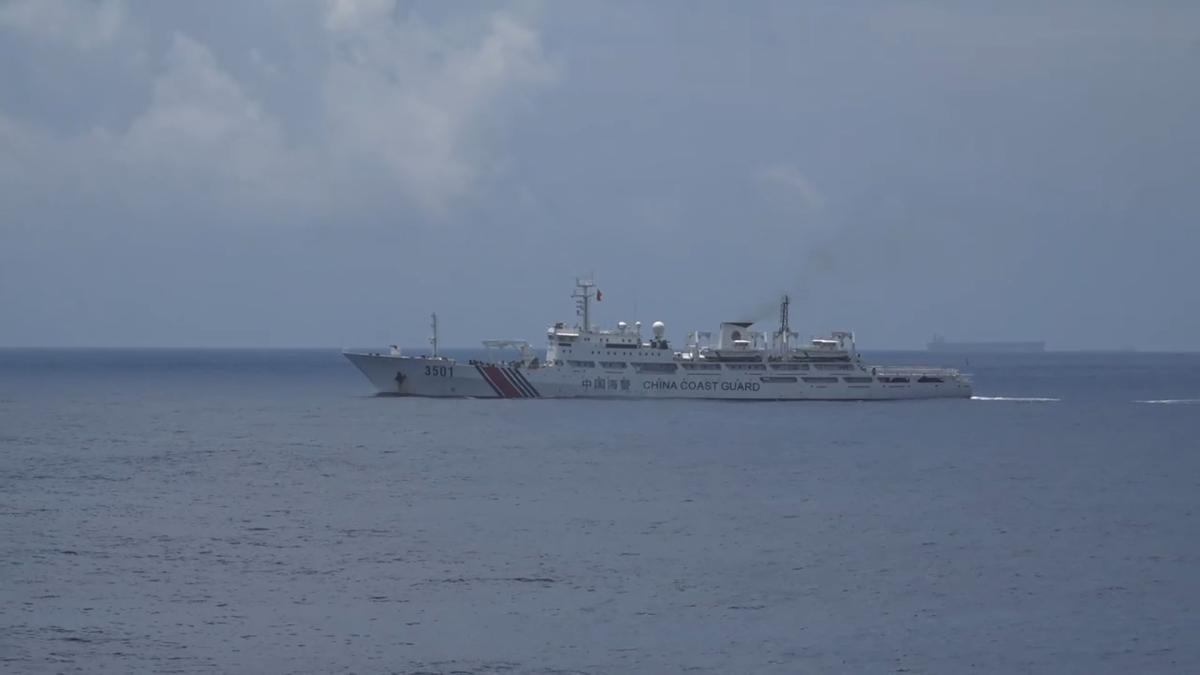
- Beijing is likely maintaining a multi‑front grey‑zone pressure campaign using coast‑guard and law‑enforcement actions around Taiwan, Japan’s EEZ, and Taiping Island in the Spratlys. (Confidence: medium · ASSESSED)
- I&W: Further CCG entries into Taiping’s restricted waters or parallel blocking manoeuvres against Taiwan’s coast guard (0-14 days)
- I&W: Noticeable pause of CCG patrols east of Taiwan and cessation of enforcement broadcasts in Japan’s EEZ (1-3 months)
- Manila is likely hardening its maritime posture and partnerships, signalled by Japan, Philippines EEZ delimitation talks and the PCG’s declared intent to keep challenging China at sea. (Confidence: medium · ASSESSED)
- I&W: Announcement of a Japan, Philippines technical working group schedule and draft terms of reference for EEZ talks (1-3 months)
- I&W: Public shelving or indefinite delay of EEZ talks by either Tokyo or Manila (1-3 months)
- China is likely to expand selective diplomatic and economic coercion toward the Philippines, as signalled by sanctions announced on the Philippine defence minister on 11 June. (Confidence: medium · ASSESSED)
- I&W: Additional PRC sanctions naming further Philippine security officials or sector‑specific trade restrictions (1-3 months)
- I&W: PRC foreign ministry signals of re‑engagement with sanctioned Philippine principals without new punitive measures (1-3 months)
- Despite recurring frictions, it is unlikely that these measures will significantly derail broader relations in the near term. (Confidence: medium · REPORTED)
- I&W: Sustained diplomatic engagement and working‑level mechanisms proceeding alongside maritime incidents (1-3 months)
- I&W: Formal suspension of talks, defence dialogues, or economic working groups attributable to maritime tensions (1-3 months)
Outlook & scenarios
Grey‑zone status quo persists around Bajo de Masinloc (60%)
CCG hulls continue episodic patrols near Bajo de Masinloc and Luzon’s west coast and are met by PCG radio challenges, with neither side seeking decisive escalation. Public narratives focus on EEZ rights, with Taiwan and Japan seeing parallel CCG pressure in adjacent waters.
Coercive diplomacy escalates without shots fired (40%)
Beijing layers additional targeted sanctions on Philippine officials and leverages administrative restrictions while Manila accelerates technical steps with Tokyo on EEZ delimitation. At sea, interactions remain tense but managed through hails and shadowing.
Dangerous at‑sea near‑miss at Scarborough approaches (20%)
A repeat of an hours‑long standoff near Bajo de Masinloc results in a minor collision or forced manoeuvre before both sides disengage, prompting reciprocal protests but stopping short of sustained military escalation.
Managed de‑escalation alongside legal and diplomatic tracks (30%)
Manila prioritises talks with Tokyo and continues public but measured PCG presence; Beijing reduces high‑visibility coast‑guard actions while amplifying legal‑political messaging. Maritime frictions ebb without resolution.
Recommendations
- Exploit open‑source radio and AIS: task collection for VHF recordings, Automatic Identification System tracks, and coastal radar feeds to verify the 22 June PCG challenge to CCG 5304 near Bajo de Masinloc and establish a pattern‑of‑life for CCG hulls operating off Luzon.
- Imagery tasking: prioritise medium‑resolution commercial SAR and optical imagery over Bajo de Masinloc and approaches to Zambales and Pangasinan to detect coast‑guard presence, blocking postures, and tow/small‑boat activity within 0-14 days.
- Incident logging: build a structured PCG, CCG incident database capturing hull numbers, ranges, bearing, hail transcripts, and manoeuvre types to support trend analysis and escalation thresholds.
- Diplomatic watch: track deliverables and timelines from the Japan, Philippines EEZ delimitation announcement, including formation of technical working groups and any published terms of reference.
- Sanctions monitoring: watch PRC statements and regulatory notices for additions to sanctions lists affecting Philippine officials or maritime sectors; cross‑reference with trade and port‑call data for early impacts.
- Narrative mapping: catalogue official Chinese and Philippine statements on the 2016 arbitral award to anticipate legal‑political lines likely to accompany future on‑water incidents.
Confidence & uncertainty
Much of the South China Sea reporting in this run rests on single‑source, low‑to‑medium confidence claims about a 22 June PCG, CCG interaction near Luzon and on older pattern reporting from neighbouring theatres around Taiwan and Japan’s EEZ. While there is corroborating context on grey‑zone behaviour, independent confirmation of the specific Luzon encounter is limited, and several sources are media reports without multi‑source validation. Hence the headline confidence remains low pending additional imagery, AIS, or official releases.
Alternative analysis (red cell)
The available reporting is thin, often single‑sourced, or low/medium‑rated and contains unresolved location and timeline inconsistencies; therefore, claims of confirmed CCG proximity to Luzon, a coordinated PRC multi‑front gray‑zone campaign, Manila’s definitive hardening, or an expanding coercive strategy are not the only plausible interpretations. A more cautious estimate is that the incidents reported likely reflect a mix of isolated coast‑guard maneuvers, public signaling, and routine diplomatic moves—actors may be testing responses, but the current evidence does not yet demonstrate sustained coordination or an irreversible shift in Manila‑Beijing relations.
Intelligence gaps
- [EEI 1.3 · PARTIAL] Incidents of Philippine vessels (coast guard, navy, supply boats, civilian fishing vessels) being ordered to alter course, detained, chased, or physically impeded — with time, location, involved units, and damage/injuries if any. Recommended collection: open-source/official statements
- [EEI 1.4 · UNCOVERED] Abrupt changes to vessel identification behavior: AIS transponder deactivations, spoofing, or mismatches between flagged identity and observed equipment/markings among PRC maritime law-enforcement or militia vessels operating near Philippine claims. Recommended collection: maritime/AIS
- [EEI 2.1 · UNCOVERED] Issued directives, patrol orders, or internal guidance from PRC Central Military Commission, PLAN, CCG, or provincial maritime authorities that specify objectives, geographic limits, patrol tempos, or escalation thresholds for operations near Philippine-claimed features. Recommended collection: signals/communications
- [EEI 2.2 · UNCOVERED] Public declarations, maritime notices, or newly published 'maritime safety' or exclusion zones, with effective dates and coordinates, issued by Chinese authorities that could be used to justify interdiction or exclusion of Philippine activity. Recommended collection: open-source/official statements
- [EEI 2.3 · UNCOVERED] Evidence of mobilization orders, tasking lists, or logistics planning for Maritime Militia units (vessel requisitions, local fisheries bureau instructions, fuel/resupply manifests) indicating intent to employ militia alongside CCG/PLAN assets. Recommended collection: HUMINT/defense
- [EEI 3.2 · UNCOVERED] Air component activity: number and frequency of Philippine air patrol sorties, maritime domain awareness flights, and air-to-surface or maritime strike assets placed on alert or redeployed toward contested areas. Recommended collection: imagery/satellite
- [EEI 3.3 · PARTIAL] Requests for diplomatic, intelligence, or military assistance from allies (e.g., U.S., Australia, Japan) including notifications of planned joint patrols, port calls, or freedom of navigation operations with dates and participating units. Recommended collection: open-source/official statements
- [EEI 3.4 · UNCOVERED] Changes to Philippine rules of engagement, emergency law measures, mobilization orders, or civil advisories (evacuations, fishing bans) that alter civilian or military behavior in contested maritime zones. Recommended collection: open-source/official statements
Cited sources
[1] GMA Network · PCG accosts China Coast Guard ship encroaching near west coast of Luzon (A) · sha256:4c8fd5a28520 [2] storm.mg · 陸文浩觀點:中國海警事船隊反應日菲「聯合劃界」行動,共軍同步行海軍實兵演練 | 陸文浩 | 評論 (B) · sha256:f666663f1af4 [3] epochtimes.com · 中共灰色作战四海点火 专家:国际合作反制 (B) · sha256:b99482502954 [4] scmp.com · China adds 10 US firms to export control list, restricts 46 others (B) · sha256:89477707632e
Source content hashes were computed at collection time; the cited text is preserved unmodified for the life of this product.
Red cell review: PARTIAL DISSENT
TLP:CLEAR