TLP:CLEAR · Disclosure is not limited.
South China Sea: PRC east-of-Taiwan patrols, US AUSVs to Manila, Scarborough uncertainty
Time window: Last 7 days · Audience: General analyst · Type: Situation report · DTG: 2026-06-26 10:17Z · Overall confidence: MEDIUM
BLUF
China has almost certainly expanded law-enforcement and mapping operations east of Taiwan via the Bashi Channel, drawing coordinated Western concern. The United States very likely transferred four OceanAero Triton autonomous unmanned vessels to the Philippine Navy, with deployment in the West Philippine Sea likely. Reporting on a Chinese floating platform at Scarborough Shoal is conflicting, keeping the risk of friction there likely but evidence mixed.
Executive summary
In late June, China’s Maritime Safety Agency and China Coast Guard operated east of Taiwan after transiting the Bashi Channel, inspecting 198 passing vessels, issuing radio challenges and prompting Taiwan to report harassment of three merchant ships. Beijing publicly defended the patrols as the United States, Britain, France and Germany raised alarm. In parallel, the United States very likely delivered four OceanAero Triton autonomous unmanned vessels worth about 754 million pesos to the Philippine Navy, with Manila likely to deploy them in the West Philippine Sea for subsea cable protection and monitoring of Chinese incursions. Open-source reports on a Chinese floating platform at Scarborough Shoal conflict between installation in late May and subsequent removal after Philippine protests, leaving near-term presence unclear.
Change from previous assessment
Since the 25 June brief, we assess expanded Chinese law‑enforcement and mapping east of Taiwan with reported inspections of 198 vessels, radio challenges and Western statements of concern, and note China’s public defence of these patrols. We added a judgment on the likely transfer of four OceanAero Triton AUSVs to the Philippine Navy and probable near‑term deployment in the West Philippine Sea. We retained Scarborough Shoal as a likely flashpoint but lowered confidence on platform presence due to conflicting reporting. The overall confidence remains medium, with stronger corroboration east of Taiwan contrasted by mixed open‑source reporting at Scarborough.
Key judgments
- China almost certainly expanded jurisdictional law-enforcement and mapping operations east of Taiwan in June, with the China Coast Guard inspecting 198 passing vessels, Maritime Safety Agency ships entering via the Bashi Channel to conduct mapping and law-enforcement, and issuing radio challenges, while Taiwan reported three merchant ships harassed, Beijing publicly defended the patrols, and the United States, Britain, France and Germany raised alarm. (Confidence: high · REPORTED)
- I&W: China Maritime Safety Agency or China Coast Guard releases additional public inspection tallies or routing advisories for waters east of Taiwan or the Bashi Channel. (0-14 days)
- I&W: Taiwan’s coast guard or maritime administration issues new notices documenting radio challenges or harassment reports from named merchant vessels on east-of-Taiwan routes. (0-14 days)
- China is likely using these MSA and CCG operations to normalise a precedent for jurisdiction east of the First Island Chain and to shape maritime access to Taiwan and the Luzon Strait, with military implications for South China Sea approaches, building on Beijing’s 2023 addition of a 10th dash east of Taiwan. (Confidence: medium · ASSESSED)
- I&W: China issues formal Notices to Mariners introducing reporting or inspection requirements for transits in the Bashi Channel or waters east of Taiwan. (1-3 months)
- I&W: Sustained MSA or CCG presence east of Taiwan with recurring radio challenges recorded by Taiwan’s coast guard for two consecutive weeks. (0-14 days)
- Scarborough Shoal remains a likely friction point, but open-source reporting on Chinese floating platforms there is conflicting, with claims of a late‑May 6×6 metre platform with an antenna at the shoal’s southeast and separate reporting of subsequent removal after Philippine diplomatic protests last week. (Confidence: low · ASSESSED)
- I&W: Commercial satellite imagery or Philippine Coast Guard releases show a time‑stamped platform present or being reinstalled at Scarborough Shoal. (0-14 days)
- I&W: Official Philippine and Chinese statements, with imagery, confirm removal and a sustained absence of any platform for at least 30 days. (1-3 months)
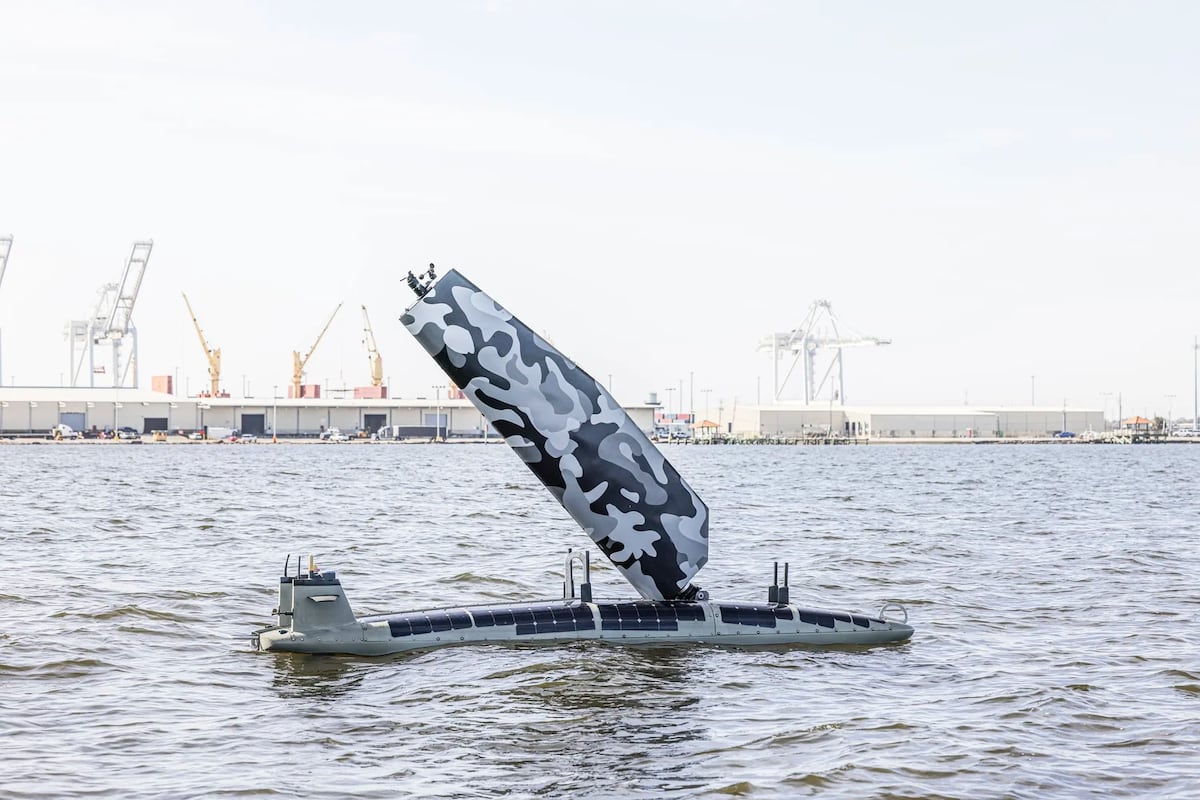
- The United States very likely transferred four OceanAero Triton autonomous unmanned vessels to the Philippine Navy around 23 June, valued at about 754 million pesos, and Manila is likely to begin deploying them in the West Philippine Sea to protect subsea cables and monitor incursions by Chinese vessels and maritime militia. (Confidence: medium · ASSESSED)
- I&W: Philippine Navy publishes imagery or statements of Triton patrols along known West Philippine Sea subsea cable routes and contested features. (0-14 days)
- I&W: Absence of operational deployments or official clarification that the AUSVs remain in training or refit status. (1-3 months)
- US‑Philippine maritime cooperation is likely to persist through 2026, supported by mid‑June joint exercises and US funding earmarked for Philippine military modernisation, but employment of US forces from Philippine territory will remain bounded by the Visiting Forces Agreement. (Confidence: medium · ASSESSED)
- I&W: Announcements of additional 2026 joint maritime patrols or exercises in the West Philippine Sea and disbursement milestones under the US$2.5 billion modernisation earmark. (1-3 months)
- I&W: Philippine legal or policy moves citing Visiting Forces Agreement limits to restrict or delay scheduled US activities. (1-3 months)
Outlook & scenarios
Normalisation of PRC law‑enforcement east of Taiwan (60%)
China sustains MSA and CCG patrols through the Bashi Channel and east of Taiwan, continues inspection campaigns and radio challenges, and frames activity as lawful jurisdiction. Taiwan reports further harassment incidents, while Western governments maintain public criticism without direct at‑sea intervention. Risk to commercial shipping transiting the Luzon Strait rises modestly through delays and compliance uncertainty.
Manila fields AUSVs and hardens posture off Luzon and Scarborough (50%)
The Philippine Navy deploys Triton AUSVs to surveil Chinese incursions and to patrol subsea cables in the West Philippine Sea. Philippine authorities increase presence near Scarborough Shoal and publicise footage of Chinese vessels, while Beijing tests responses with intermittent deployments or temporary structures. The chance of rammings, water‑cannoning, or collisions becomes likely in contested areas.
Managed pause via diplomatic signalling (30%)
Beijing scales down MSA activity east of Taiwan and avoids new at‑sea structures at Scarborough after coordinated Western messaging and regional diplomatic engagement. China continues to insist disputes be handled by regional dialogue and rejects external involvement, while Taiwan reports fewer merchant harassment incidents.
Wildcard: Semi‑permanent PRC platform at Scarborough triggers crisis (20%)
China installs a more durable, sensor‑equipped platform at Scarborough Shoal, prompting Manila to escalate diplomatic protests and highlight treaty assurances. At‑sea confrontations and reciprocal law‑enforcement shows of presence increase around the shoal and along Bashi‑Luzon approaches, raising miscalculation risk.
Recommendations
- Establish daily AIS and VHF monitoring of identified China Maritime Safety Agency and China Coast Guard hulls transiting the Bashi Channel and operating east of Taiwan, and fuse with merchant master incident logs from Taiwan’s reporting channels.
- Task commercial satellite imagery over Scarborough Shoal on a frequent revisit schedule to confirm or refute platform presence, and obtain timestamped Philippine Coast Guard imagery where available.
- Engage the Philippine Navy and US Embassy Manila to secure timelines and patrol concepts of operations for the four OceanAero Triton AUSVs, including intended subsea cable patrol boxes and data‑sharing mechanisms.
- Issue tailored advisories to US‑flag and allied merchant shipping routing through the Luzon Strait and east of Taiwan to report any radio challenges or boarding attempts, and to maintain AIS and bridge audio records.
- Update West Philippine Sea subsea cable risk mapping, incorporating expected AUSV coverage and recent Chinese presence, to prioritise protective patrols and surveillance gaps.
- Track legislative, budgetary and policy milestones on the US$2.5 billion US earmark for Philippine modernisation and any Philippine legal actions affecting Visiting Forces Agreement implementation to anticipate cooperation constraints.
Confidence & uncertainty
Multiple independent, reliable sources corroborate Chinese MSA and CCG activity east of Taiwan, including Bashi Channel transits, inspection counts, radio challenges, Taiwan’s harassment reports, Beijing’s defence of the patrols, and coordinated Western concern. Reporting on the US transfer of four OceanAero Triton AUSVs to the Philippine Navy appears across several outlets but includes single‑source elements on valuation and deployment intent. Open‑source accounts on Scarborough Shoal platforms conflict between installation and removal claims, lowering confidence on current status there. These mixed elements merit an overall medium confidence despite strong sourcing for the east‑of‑Taiwan operations.
Alternative analysis (red cell)
Available reporting that underpins claims of a sustained, jurisdiction‑setting expansion east of Taiwan is concentrated in a limited set of reporting and government statements and lacks independent, technical corroboration (e.g., AIS, imagery, radio recordings). Absent documentary evidence of changed Chinese maritime legal claims or repeated, independently verifiable enforcement actions against third‑party shipping, a more defensible assessment is that June activity consisted of episodic patrols and mapping sorties that may be intended for presence and surveillance but do not yet demonstrate an institutionalised legal normalisation campaign.
Intelligence gaps
- [EEI 1.3 · UNCOVERED] Incidents of Philippine vessels (coast guard, navy, supply boats, civilian fishing vessels) being ordered to alter course, detained, chased, or physically impeded — with time, location, involved units, and damage/injuries if any. Recommended collection: open-source/official statements
- [EEI 1.4 · UNCOVERED] Abrupt changes to vessel identification behavior: AIS transponder deactivations, spoofing, or mismatches between flagged identity and observed equipment/markings among PRC maritime law-enforcement or militia vessels operating near Philippine claims. Recommended collection: maritime/AIS
- [EEI 2.1 · PARTIAL] Issued directives, patrol orders, or internal guidance from PRC Central Military Commission, PLAN, CCG, or provincial maritime authorities that specify objectives, geographic limits, patrol tempos, or escalation thresholds for operations near Philippine-claimed features. Recommended collection: signals/communications
- [EEI 2.2 · UNCOVERED] Public declarations, maritime notices, or newly published 'maritime safety' or exclusion zones, with effective dates and coordinates, issued by Chinese authorities that could be used to justify interdiction or exclusion of Philippine activity. Recommended collection: open-source/official statements
- [EEI 2.3 · UNCOVERED] Evidence of mobilization orders, tasking lists, or logistics planning for Maritime Militia units (vessel requisitions, local fisheries bureau instructions, fuel/resupply manifests) indicating intent to employ militia alongside CCG/PLAN assets. Recommended collection: HUMINT/defense
- [EEI 3.1 · PARTIAL] Deployment and movement of Philippine Coast Guard and Navy vessels (class, location, on-station times) and scheduled or unscheduled escort/resupply missions to occupied features. Recommended collection: military/AIS
- [EEI 3.2 · UNCOVERED] Air component activity: number and frequency of Philippine air patrol sorties, maritime domain awareness flights, and air-to-surface or maritime strike assets placed on alert or redeployed toward contested areas. Recommended collection: imagery/satellite
- [EEI 3.4 · UNCOVERED] Changes to Philippine rules of engagement, emergency law measures, mobilization orders, or civil advisories (evacuations, fishing bans) that alter civilian or military behavior in contested maritime zones. Recommended collection: open-source/official statements
Cited sources
[1] defensenews.com · US, UK, France, Germany raise alarm about Chinese patrols off eastern Taiwan (A) · sha256:eaea6db6b5ba [2] cnn.com · ‘Salami slicing’: How China is trying to increase control in the Pacific | CNN (A) · sha256:9920d55afe9e [3] AP News · China defends patrols east of Taiwan after 3 European nations raise alarm (A) · sha256:94c233c6535c [4] defensenews.com · Philippines deploys US-made Triton naval drones in its western waters to scout for intruders (A) · sha256:82bc5e7e9984 [5] 經濟日報 · 美國支援菲律賓4艘無人艇 加強應對中國威脅 | 國際焦點 | 國際 | 經濟日報 (A) · sha256:ee409b57a662 [6] 163.com · 菲律宾拉域外势力“站岗”,中国联合国定性裁决,南海博弈新阶段 (B) · sha256:882783df0759
Source content hashes were computed at collection time; the cited text is preserved unmodified for the life of this product.
Red cell review: PARTIAL DISSENT
TLP:CLEAR