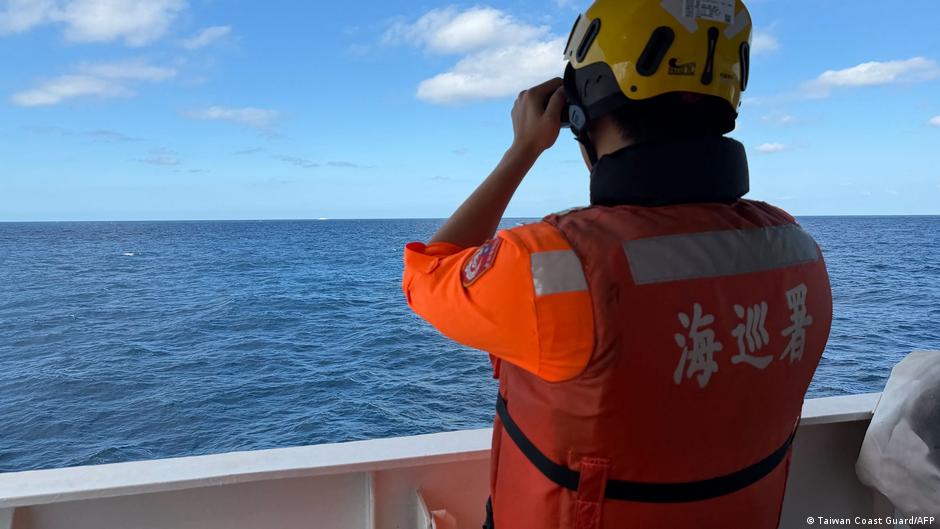
South China Sea: PRC ‘law-enforcement’ push east of Taiwan prompts Taiwan Coast Guard response; escalation risk elevated around Pratas
Time window: Last 7 days · Audience: General analyst · Type: Situation report · DTG: 2026-06-10 10:16Z · Overall confidence: MEDIUM
BLUF
Beijing’s maritime ‘law-enforcement’ operation east of Taiwan, described by Taipei as a provocation, has very likely raised near-term escalation risk around the Pratas (Dongsha) sector as Taiwan’s coast guard deploys multiple ships to shadow PRC vessels. Structural South China Sea sovereignty disputes and the strategic value of these sea lanes for China’s energy imports heighten the stakes if incidents occur.
Executive summary
Chinese authorities launched a maritime ‘law-enforcement’ operation in waters east of Taiwan, which Taiwan situates near the Pratas Islands and publicly labels a deliberate provocation violating international law. Taipei detected four Chinese government vessels departing Xiamen and deployed more than five coast guard ships to respond. Media reporting also characterizes this as the third maritime ‘incursion’ near Taiwan within a month. The action unfolds amid entrenched South China Sea sovereignty disputes, overlapping claims among Brunei, Indonesia, Malaysia, the Philippines, the PRC, Taiwan, and Vietnam; PRC occupation of the Paracels; Vietnamese positions across Spratly features; U.S. and partner freedom of navigation operations since 2015; and the 2016 arbitration finding against PRC ‘nine-dash line’ historic rights. The PLA’s unprecedented 2022 live-fire drills and missile firings around Taiwan demonstrate headroom for Beijing to scale coercive pressure should it choose, an important risk given the share of China’s energy imports transiting the South China Sea.
Key judgments
- PRC maritime activity east of Taiwan has very likely intensified under a ‘law‑enforcement’ rubric, prompting Taiwan’s coast guard to deploy and shadow multiple Chinese government vessels, including movements originating from Xiamen. (Confidence: medium)
- Escalation risk in the near term is likely elevated in Taiwan’s eastern approaches and the Pratas sector, given repeated PRC entries and Taipei’s public assertion that the operation violates international law. (Confidence: medium)
- South China Sea tensions remain structurally entrenched: overlapping sovereignty claims, PRC occupation of the Paracels, Vietnam’s extensive Spratly positions, PRC island building, and continued U.S./partner freedom of navigation operations. (Confidence: medium)
- Taiwan is very likely emphasizing a coast‑guard‑led response to avoid military escalation, deploying more than five cutters and, in at least one reported instance, expelling four PRC government vessels from restricted waters off its southern coast. (Confidence: low)
- Beijing likely intends the operation to counter Japan, Philippines maritime delimitation moves and buttress PRC jurisdictional narratives, while Taipei publicly frames the action as a deliberate provocation without legal basis. (Confidence: medium)
- Any sustained disruption or miscalculation in the South China Sea is likely to impose strategic costs on Beijing, given that roughly four‑fifths of China’s energy imports transit the waterway, creating incentives for calibrated pressure rather than uncontrolled escalation. (Confidence: medium)
- The PLA has demonstrated capacity to rapidly scale coercive pressure around Taiwan, via unprecedented 2022 live‑fire drills and at least 11 missile firings, indicating headroom to expand beyond ‘law‑enforcement’ patrols if Beijing chooses. (Confidence: medium)
Outlook & scenarios
Managed standoff: PRC ‘law-enforcement’ patrols persist; Taiwan Coast Guard shadows, 60%
PRC maintains recurring ‘law-enforcement’ sorties east of Taiwan and near the Pratas area, while Taiwan’s coast guard continues multi‑ship shadowing and public messaging that the activity violates international law. Media record additional ‘incursions,’ but both sides avoid collisions, and the posture settles into a tense status quo.
Escalatory signaling: PLA packages drills around Taiwan to reinforce coercion, 25%
Beijing supplements law‑enforcement patrols with a larger joint drill package reminiscent of 2022 activity (e.g., live‑fire areas and missile over‑water firings), heightening air and maritime exclusion notices. Taipei stays in a coast‑guard‑first posture, but risk of air/sea near‑misses increases and regional partners adjust FONOP scheduling to avoid miscalculation.
Limited incident: Close‑quarters navigation event triggers brief spike in tensions, 20%
A PRC government vessel and a Taiwan Coast Guard cutter experience a close‑quarters incident near a restricted‑waters boundary off Taiwan’s southern approaches or in the Pratas sector. No casualties occur, but competing legal claims harden in public statements, and both sides surge additional patrol craft for several days before de‑escalating.
Recommendations
- Enhance near‑real‑time maritime domain awareness east of Taiwan and around the Pratas (Dongsha) sector by fusing AIS, SAR imagery, and open‑source video to positively identify PRC ‘law‑enforcement’ hulls and distinguish them from PLA Navy units.
- Coordinate deconfliction with U.S. and partner planners for freedom of navigation operations in the South China Sea to avoid overlap with declared PRC exercise or ‘law‑enforcement’ boxes and minimize miscalculation risk.
- Support interagency and allied messaging that references established legal baselines in the South China Sea dispute, including the 2016 arbitration tribunal’s finding against PRC historic titles, when characterizing PRC jurisdictional claims.
- Deepen operational information‑sharing with Taiwan’s coast guard on vessel tracks, incident reporting, and public communications; monitor official Taipei channels for updates (e.g., statements from senior national security officials).
- Prepare a rapid‑response analytic playbook for a close‑quarters incident near Pratas or Taiwan’s southern restricted waters, including escalation ladders, likely PLA and Taiwan coast‑guard reinforcement timelines, and pre‑cleared talking points.
- Task collection to clarify PRC intent and command relationships for the current operation (e.g., Ministry of Transport, led coordination versus coast‑guard or naval leadership) and to track any expansion in geographic scope or rules‑enforcement behavior.
Confidence & uncertainty
Overall confidence is medium. Multiple, mutually reinforcing reports from a high‑reliability outlet (DW) support Beijing’s ‘law‑enforcement’ operation and Taiwan’s multi‑ship coast‑guard response, including detections of Chinese government vessels departing Xiamen. Additional assertions, such as repeated ‘incursions’ within a month and expulsion of four PRC vessels, rest on medium‑reliability media and are less corroborated, lowering confidence for those specifics. Foundational context on South China Sea claims, PRC island‑building, FONOPs, and the 2016 arbitration ruling is well documented but primarily sourced to encyclopedic compilations and thus treated with medium confidence. Key uncertainties include the precise command authority behind the PRC operation, the persistence of patrol patterns, and the threshold at which Beijing might escalate from law‑enforcement to overt military signaling.
Cited sources
[1] dw.com, Taiwan deploys vessels in response to Chinese operation (A) [2] WION, South China Sea: Third Chinese Maritime 'Incursion' Near Taiwan Within Month | WION FINEPRINT (B) [3] WION, South China Sea Clash: Third Chinese Maritime 'Incursion' Near Taiwan Within Month | WION Pulse (B) [4] Wikipedia, Territorial disputes in the South China Sea (F) [5] NewsX World, Taiwan Expels Chinese Vessels After Waters Incursion Near Coast | NewsX World (B) [6] Global Times, China launches maritime law enforcement operation in waters east of Taiwan island after Japan-Philippines unilateral delimitation move (B) · Sun Jun 26 2022 00:00:00 GMT+0000 (Coordinated Universal Time) [7] Wikipedia, Fourth Taiwan Strait Crisis (B)