TLP:CLEAR · Disclosure is not limited.
South China Sea: PRC legal offensive and Coast Guard presence keep encounter risk elevated
Time window: Last 7 days · Audience: General analyst · Type: Situation report · DTG: 2026-07-10 10:14Z · Overall confidence: HIGH
BLUF
Beijing is very likely doubling down on control in the South China Sea by pairing China Coast Guard patrols and new island‑based monitoring with a renewed legal narrative that delegitimises Manila’s claims. The risk of hazardous encounters around Philippine‑held features remains elevated in the near term.
Executive summary
Chinese outlets and official channels have amplified a detailed report that attacks the Philippines’ claims, rejects the 2016 Hague ruling, and portrays Manila as the escalator. In parallel, the China Coast Guard continues long‑running patrols, and reporting points to added infrastructure on PRC‑held features for real‑time monitoring. Messaging and patrol activity also reach beyond traditional South China Sea flashpoints into the Luzon Strait and Batanes area. Given Beijing’s stated stakes and patterns of presence, on‑water friction with the Philippines is likely to persist over the next 1‑3 months, with allies continuing diplomatic and operational pushback.
Change from previous assessment
Compared with the prior brief, current reporting leans more heavily on PRC information‑legal activity tied to the Hague ruling’s anniversary and on Coast Guard presence, including references to patrols east of Taiwan and around the Batanes. We therefore raise the prominence of Beijing’s narrative campaign and its geographic scope beyond traditional South China Sea flashpoints. We maintain the assessment that encounter risk off the Philippines is likely to persist, with confidence unchanged for PRC entrenchment but lowered granularity on immediate tactical developments due to fewer fresh incident reports in this cycle.
Key judgments
- China is very likely continuing to entrench administrative and on‑water control across the South China Sea through sustained China Coast Guard patrols, added monitoring infrastructure on PRC‑held features, and a legal narrative that rejects the 2016 Hague ruling. (Confidence: high · ASSESSED)
- I&W: Official PRC notices or white papers that further reject the 12 July 2016 ruling or set out new ‘law enforcement’ zones around Huangyan Island or Spratly features. (0-14 days)
- I&W: Imagery or PRC statements announcing completion of additional sensors or facilities on PRC‑held South China Sea outposts. (1-3 months)
- Beijing is very likely running an information‑legal campaign that frames the Philippines as the escalator and delegitimises Manila’s claims to Huangyan Island and parts of the Spratlys. (Confidence: high · REPORTED)
- I&W: PRC ministries or the embassy in Manila publish further English‑language material repeating that the arbitration ruling is invalid and that Manila’s claims lack legal basis. (0-14 days)
- I&W: A PRC‑Philippines joint communiqué adopting de‑escalatory language or referencing mechanisms to manage incidents. (1-3 months)
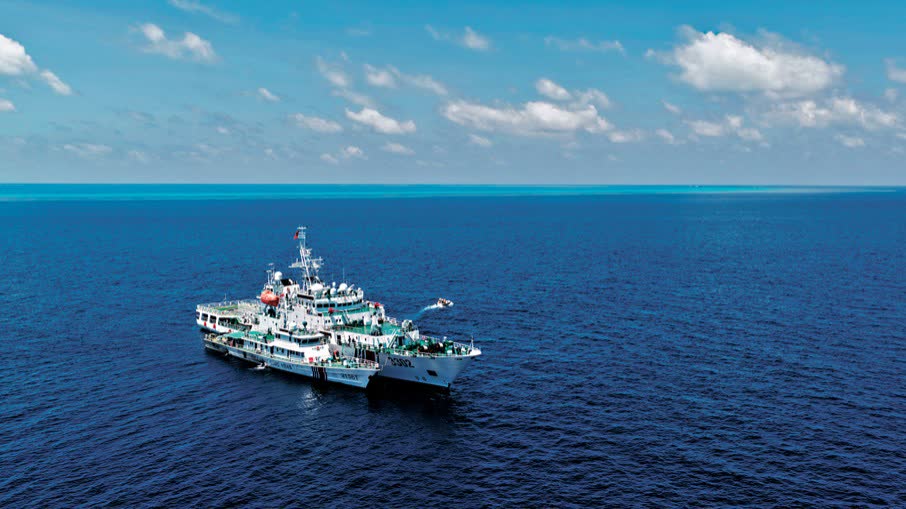
- It is likely that the tactical risk of hazardous encounters near Philippine‑held features will persist this quarter as the China Coast Guard expands ‘actual control’ and patrol tempo while Manila signals resolve at home and abroad. (Confidence: medium · ASSESSED)
- I&W: Public releases by the Philippine Coast Guard documenting close‑quarters manoeuvring or obstruction by China Coast Guard units near Thitu Island or resupply routes. (0-14 days)
- I&W: A sustained lull in China Coast Guard communiqués or media coverage of activities around Philippine‑held features. (1-3 months)
- PRC activity in the Luzon Strait and around the Batanes is likely to extend pressure on Manila beyond traditional South China Sea flashpoints, complicating crisis management. (Confidence: medium · ASSESSED)
- I&W: Renewed China Coast Guard announcements of patrol rotations east of Taiwan and visible patrols abutting the Batanes chain. (1-3 months)
- I&W: PRC media and academic discourse drops references to Batanes and the Luzon Strait. (1-3 months)
- Given that a large share of China’s energy imports transits the South China Sea, Beijing is likely to sustain an assertive maritime posture rather than accept constraints on presence and patrols. (Confidence: medium · ASSESSED)
- I&W: PRC statements linking energy security to sustained patrols and monitoring infrastructure in the South China Sea. (1-3 months)
- I&W: A declared reduction in China Coast Guard patrol frequency in South China Sea waters. (1-3 months)
Outlook & scenarios
Baseline pressure: legal offensive plus steady Coast Guard presence (60%)
PRC organs continue to promote the multi‑institution report that rejects the 2016 ruling and accuses Manila of destabilising behaviour, while China Coast Guard patrols and PRC‑held outpost monitoring persist. Manila publicises incidents but avoids drastic counter‑moves. Encounter risk remains elevated near Philippine‑held features and routes to them.
On‑water escalation: hazardous encounter triggers diplomatic flare‑up (35%)
A close‑quarters incident near a Philippine‑held feature during a China Coast Guard patrol results in damage or injuries, prompting sharper condemnations and accelerated documentation campaigns by Manila and its partners. Beijing doubles down on its narrative and patrols, rejecting the 2016 ruling and blaming the Philippines.
Northward extension: pressure shifts into the Luzon Strait (25%)
PRC patrol messaging and legal‑narrative activity increasingly reference the Batanes and the Luzon Strait, leveraging prior patrols east of Taiwan and scholars’ assertions about the area’s status. This widens the geographic scope of friction and complicates crisis lines.
Managed cool‑down: rhetoric peaks, on‑water friction eases (15%)
After an anniversary‑driven spike in PRC messaging, practical interactions at sea ease. Beijing keeps its legal position intact but allows patrol tempo and proximity to recede, reducing immediate encounter risk without resolving underlying disputes.
Recommendations
- Maintain a rolling watch centred on 12 July for PRC legal and diplomatic outputs that reiterate rejection of the 2016 ruling and portray Manila as the escalator. Archive statements from the Marine Development Strategy Research Institute and the PRC embassy in Manila for trend analysis.
- Task maritime OSINT to track China Coast Guard patrol patterns and proximity to Philippine‑held features and the Batanes, correlating public communiqués with commercial AIS where available. Flag any PRC announcements of new ‘law enforcement’ zones.
- Map PRC‑held South China Sea outpost infrastructure growth and monitoring capabilities using open reporting. Prioritise indications of new sensors or facilities that would enable real‑time maritime domain awareness.
- Coordinate with Philippines‑facing reporting channels to capture timely, verifiable incident media from the Philippine Coast Guard around Thitu Island and key resupply routes, enabling rapid cross‑checking against PRC narratives.
- Prepare short, factual briefs for policymakers on the legal positions at stake around Huangyan Island and the Spratlys to pre‑empt narrative gaps when incidents occur, anchored to the 2016 Hague ruling and current PRC claims.
Confidence & uncertainty
Multiple, independent sources support the core picture: long‑running China Coast Guard patrols, PRC‑held outpost infrastructure for real‑time monitoring, and an official narrative rejecting the 2016 arbitration and attacking Manila’s claims. These include official and quasi‑official PRC statements and reporting that cross‑refer to the same themes. Some elements, such as the precise current patrol tempo, activities around the Batanes, and the scale of ‘actual control’ expansion, rely on major‑media or social‑media reporting and older patrol references, which lowers confidence on fine detail and timing. The headline judgments rest on corroborated strands, justifying overall high confidence.
Alternative analysis (red cell)
The ledger documents PRC rhetorical rejection of the 2016 arbitration and continued presence at sea, including patrols and at least one critical institutional report, but the reporting is often single‑product or lacks independent, time‑sequenced verification. A reasonable alternative assessment is that Beijing is maintaining routine law‑enforcement presence and using legal and media narratives to press its position, thereby increasing friction risk, but the current evidence does not yet demonstrate a coordinated, sustained escalation in administrative entrenchment or an orchestrated information‑legal campaign at the scale asserted.
Intelligence gaps
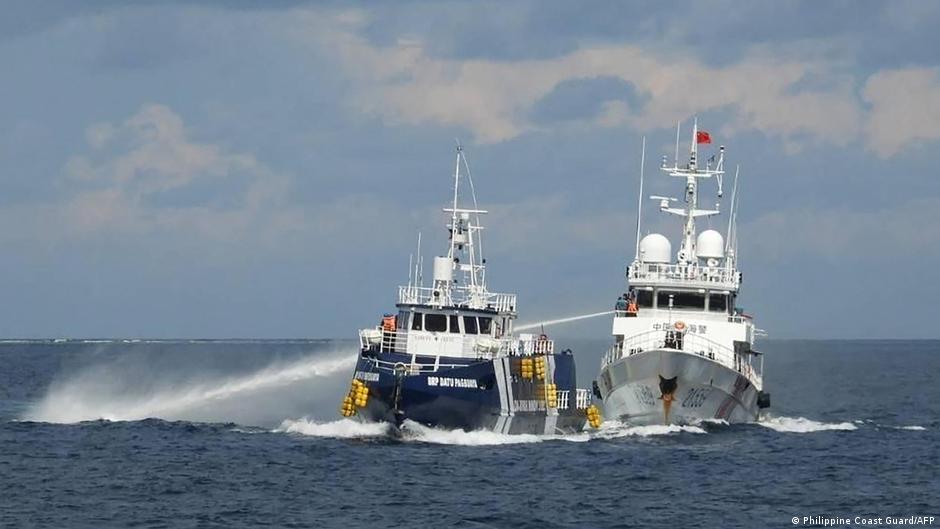
- [EEI 1.2 · PARTIAL] Observed maneuvers or posture indicating hostile action: vessel-to-vessel blocking/contact, use of water cannons, boarding attempts, formation maneuvers to interdict Philippine vessels, or sustained stationing near Philippine resupply/relief routes. Recommended collection: imagery/satellite
- [EEI 1.3 · UNCOVERED] Incidents of Philippine vessels (coast guard, navy, supply boats, civilian fishing vessels) being ordered to alter course, detained, chased, or physically impeded — with time, location, involved units, and damage/injuries if any. Recommended collection: open-source/official statements
- [EEI 1.4 · UNCOVERED] Abrupt changes to vessel identification behavior: AIS transponder deactivations, spoofing, or mismatches between flagged identity and observed equipment/markings among PRC maritime law-enforcement or militia vessels operating near Philippine claims. Recommended collection: maritime/AIS
- [EEI 2.1 · UNCOVERED] Issued directives, patrol orders, or internal guidance from PRC Central Military Commission, PLAN, CCG, or provincial maritime authorities that specify objectives, geographic limits, patrol tempos, or escalation thresholds for operations near Philippine-claimed features. Recommended collection: signals/communications
- [EEI 2.2 · PARTIAL] Public declarations, maritime notices, or newly published 'maritime safety' or exclusion zones, with effective dates and coordinates, issued by Chinese authorities that could be used to justify interdiction or exclusion of Philippine activity. Recommended collection: open-source/official statements
- [EEI 2.3 · UNCOVERED] Evidence of mobilization orders, tasking lists, or logistics planning for Maritime Militia units (vessel requisitions, local fisheries bureau instructions, fuel/resupply manifests) indicating intent to employ militia alongside CCG/PLAN assets. Recommended collection: HUMINT/defense
- [EEI 3.1 · UNCOVERED] Deployment and movement of Philippine Coast Guard and Navy vessels (class, location, on-station times) and scheduled or unscheduled escort/resupply missions to occupied features. Recommended collection: military/AIS
- [EEI 3.2 · UNCOVERED] Air component activity: number and frequency of Philippine air patrol sorties, maritime domain awareness flights, and air-to-surface or maritime strike assets placed on alert or redeployed toward contested areas. Recommended collection: imagery/satellite
- [EEI 3.3 · PARTIAL] Requests for diplomatic, intelligence, or military assistance from allies (e.g., U.S., Australia, Japan) including notifications of planned joint patrols, port calls, or freedom of navigation operations with dates and participating units. Recommended collection: open-source/official statements
- [EEI 3.4 · UNCOVERED] Changes to Philippine rules of engagement, emergency law measures, mobilization orders, or civil advisories (evacuations, fishing bans) that alter civilian or military behavior in contested maritime zones. Recommended collection: open-source/official statements
Cited sources
[1] h5.ifeng.com · 中国海警轮番上阵,美军臆测大事不妙,拉4国下水,大陆打法变了 (B) · sha256:b4ee7c292055 [2] today.line.me · 南海仲裁案10週年前夕!北京發表62頁英文報告 猛批菲律賓領土主張 | CTWANT | LINE TODAY (A) · sha256:95cdee519a92 [3] dw.com · 菲律宾纪念南海仲裁案十周年 (A) · sha256:d1661ea67f6f [4] 香港文匯報 · 中方批菲領土擴張違國際法 斥菲南海行徑威脅地區和平穩定 - 香港文匯報 (B) · sha256:57158ea9e32c [5] 美国之音中文网 · 菲律宾海岸警卫队今年首次派遣巡逻舰加布里埃拉·西朗号(BRP Gabriela Silang),参与正在夏威夷举行的环太平洋军演,美国之音专访到舰长乔马克·安格,他也首度对中文媒体针对2025年8月中菲在南中国海对峙时,两艘中国船舰意外相撞的事件做出回应. 更多:https://voachinese.com/a/philippine-coast-guard-joins-rimpac-for-first-time-captain-reflects-on-south-china-sea-collision-20260709/8169953.html | 美国之音中文网 (E) · sha256:c9026f1fa8ce [6] Wikipedia · Thitu Island (F) · sha256:6a5dc4e3208f [7] maritime-executive.com · Chinese Scholars Claim That the Batanes Aren't Part of Philippines (B) · sha256:8feec1aa83d8 [8] Wikipedia · Territorial disputes in the South China Sea (F) · sha256:550ad10f7c81
Source content hashes were computed at collection time; the cited text is preserved unmodified for the life of this product.
Red cell review: PARTIAL DISSENT
TLP:CLEAR