TLP:CLEAR · Disclosure is not limited.
South China Sea: PRC maritime activity east of Taiwan and Japan, Philippines EEZ talks frame a tense but contained week
Time window: Last 7 days · Audience: General analyst · Type: Situation report · DTG: 2026-06-22 16:27Z · Overall confidence: MEDIUM
BLUF
Beijing ran multiple maritime law-enforcement operations east of Taiwan in early June and publicly rejected Japan, Philippines EEZ boundary talks launched on 18 June near the Yaeyama and Batan Islands, keeping regional friction high without a clear on‑water trigger in the South China Sea itself. US, China export-control sparring on 22 June appears largely symbolic and is unlikely to drive immediate maritime escalation.
Executive summary
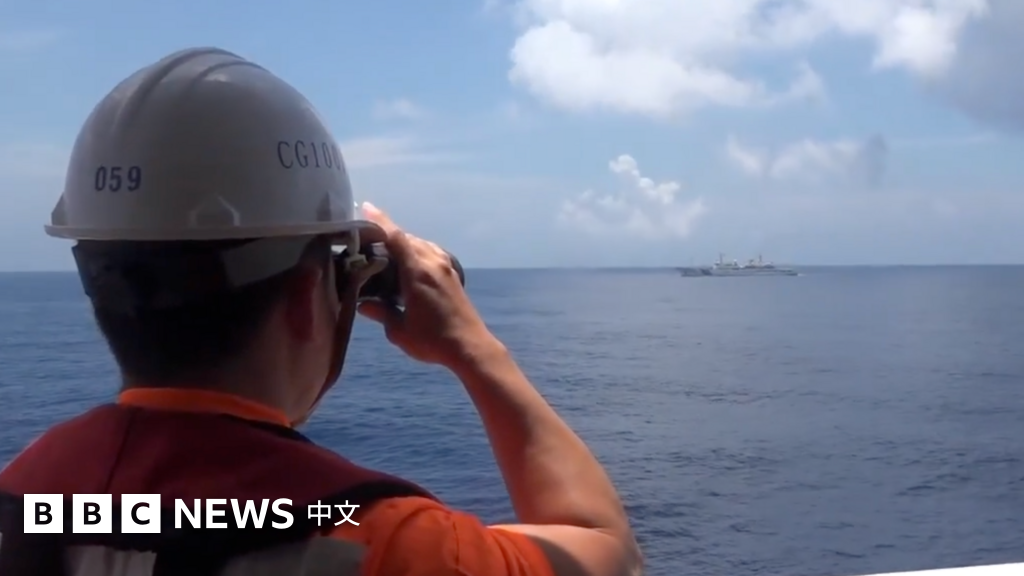
The Chinese Coast Guard and China’s Ministry of Transport conducted successive operations east of Taiwan on 1 June and 6-10 June, with additional Chinese Coast Guard activity noted on 8 June. On 18 June, Tokyo and Manila elevated ties to a comprehensive strategic partnership and formally opened EEZ boundary negotiations focused on waters between the Yaeyama Islands and the Batan Islands, which China’s Ministry of Foreign Affairs labelled completely illegal and invalid. NASA logged 25 thermal detections in the Philippines on 21-22 June, which by themselves do not evidence maritime incidents. In parallel, Beijing added 10 US firms to an export-control list and barred government procurement from 46 US companies on 22 June, moves experts described as retaliatory and largely symbolic, with analysts judging they are unlikely to significantly derail relations. The net effect is sustained political and law-enforcement pressure around contested maritime spaces, particularly north of the Philippines, without confirmed disruptions to South China Sea shipping in this window.
Change from previous assessment
This update shifts focus from the prior brief’s emphasis on Scarborough Shoal to developments north of the Philippines: Tokyo and Manila launched EEZ boundary talks on 18 June, which Beijing publicly rejected, and China conducted multiple law‑enforcement operations east of Taiwan in early June. We incorporate fresh reporting on US, China export‑control actions on 22 June as context and reiterate, with new NASA data from 21-22 June, that thermal detections do not by themselves evidence maritime incidents.
Key judgments
- China is likely to sustain forward maritime pressure around Taiwan’s eastern approaches through July, after the Chinese Coast Guard ran law-enforcement patrols east of Taiwan on 1 June and remained active on 8 June, and the Ministry of Transport executed a large-scale law-enforcement and survey operation in the same area on 6-10 June, raising the risk of friction in adjacent waters between the Yaeyama and Batan Islands. (Confidence: medium · ASSESSED)
- I&W: New Chinese Coast Guard or Ministry of Transport notices, AIS or visual confirmation of large cutters such as Haixun 09 or Haixun 06 operating in waters between the Yaeyama and Batan Islands. (0-14 days)
- I&W: A sustained lull in reported PRC maritime law-enforcement activity east of Taiwan and muted official statements on Japan, Philippines boundary talks. (0-14 days)
- Japan and the Philippines are likely to intensify coordination on maritime boundaries north of the Philippines this quarter, and Beijing will continue to oppose it publicly, after Tokyo and Manila elevated relations and launched EEZ boundary negotiations on 18 June focused on waters between the Yaeyama and Batan Islands that China’s Ministry of Foreign Affairs called completely illegal and invalid. (Confidence: medium · ASSESSED)
- I&W: Public scheduling of follow-on Japan, Philippines EEZ working-group meetings or release of joint readouts advancing technical boundary work. (1-3 months)
- I&W: Fresh Chinese Ministry of Foreign Affairs statements rejecting the talks or signalling countermeasures. (0-14 days)
- Persistent low-level friction in the South China Sea is very likely to continue given long-standing, conflicting island and maritime claims by Brunei, Indonesia, Malaysia, the Philippines, the People’s Republic of China, Taiwan and Vietnam, alongside Beijing’s historical claims over the Spratly Islands. (Confidence: medium · ASSESSED)
- I&W: Publicised coast guard encounters or announced patrols by any claimant around contested Spratly features. (1-3 months)
- I&W: Mutual confidence-building steps or joint statements by at least two claimants pledging to scale back patrols in disputed waters. (1-3 months)
- NASA’s 21-22 June detections of 25 thermal anomalies in the Philippines almost certainly do not, by themselves, indicate maritime incidents, since thermal signatures record heat, not cause. (Confidence: high · ASSESSED)
- I&W: No corroborating reports from Philippine authorities or credible media linking specific FIRMS detections to maritime strikes or vessel fires. (0-14 days)
- I&W: Verified imagery and official reporting tying a FIRMS detection to a maritime incident in Philippine or adjacent waters. (0-14 days)
- US, China economic steps announced on 22 June are likely to remain largely symbolic signals that keep relations strained but are unlikely to drive immediate on‑water escalation in the South China Sea: Beijing added 10 US-based firms to its export-control list and barred procurement from 46 US companies, framed as responses to US actions, while experts and analysts assessed the moves as retaliatory and unlikely to significantly derail relations. (Confidence: medium · ASSESSED)
- I&W: Further Chinese export or procurement restrictions announced without concurrent new maritime coercive actions by the Chinese Coast Guard at contested features. (1-3 months)
- I&W: Official linkage in Chinese statements between export controls and maritime operations, followed by sharper law‑enforcement actions at sea. (0-14 days)
Outlook & scenarios
North-of-Philippines boundary talks proceed amid PRC maritime pressure (40%)
Japan, Philippines EEZ negotiations continue through the summer while China sustains law‑enforcement operations east of Taiwan and stages visible patrols closer to the waters between the Yaeyama and Batan Islands. Beijing reiterates opposition to the talks, but interactions remain below the threshold of a major incident. Risks concentrate on navigation safety during close‑quarters manoeuvring rather than broad shipping disruption.
Contained friction with symbolic geopolitical signalling (50%)
US, China trade and procurement measures continue at a calibrated pace and remain largely symbolic. Claimant coast guards maintain presence around disputed features, but the week’s focal activity stays east of Taiwan rather than in the central South China Sea. Shipping and energy flows through the South China Sea proceed normally, and thermal detections in the Philippines do not correspond to maritime incidents.
Low-probability escalation at a contested feature (20%)
A law‑enforcement action by a claimant coast guard around a disputed area escalates into a collision or use of non‑lethal force, prompting sharp diplomatic protests and temporary suspension of boundary talks. While still limited, the incident hardens positions and complicates crisis communications among claimants.
Recommendations
- Task maritime domain awareness teams to track Chinese Coast Guard and Ministry of Transport cutters referenced in recent reporting, including Haixun 09 and Haixun 06, for movement patterns towards waters between the Yaeyama and Batan Islands; fuse AIS, satellite imagery and official notices.
- Establish a watch on official outputs tied to the Japan, Philippines EEZ process, including scheduling announcements and joint readouts, and mirror this with a daily scrape of Chinese Ministry of Foreign Affairs statements for shifts in tone or threatened countermeasures.
- Treat NASA FIRMS thermal detections as corroborative only: require cross‑cue with imagery, local media and government reporting before flagging any heat signature as a maritime incident indicator.
- Prepare concise briefers outlining the claimant map of South China Sea disputes and PRC historical claims to the Spratlys for rapid reference during any emergent encounter reporting.
- Coordinate with economic and technology analysts to monitor implementation of China’s 22 June export controls and procurement bans for any explicit linkage to maritime signalling that would warrant elevating collection on at‑sea activity.
Confidence & uncertainty
Overall confidence is medium. The core developments are supported by multiple, independent major‑media and official sources: Chinese law‑enforcement activity east of Taiwan on 1 June and 6-10 June, the 18 June Japan, Philippines EEZ announcement focused between the Yaeyama and Batan Islands together with China’s rejection, and NASA’s thermal anomaly data and caveat on causation. Assessments that these moves heighten friction around northern Philippine waters and that US, China export steps are largely symbolic extend beyond the direct reporting, and some background claims on South China Sea disputes and historical usage derive from less firmly attributed sources. The paucity of direct, time‑bound reporting of on‑water incidents inside the South China Sea this week remains a key uncertainty.
Alternative analysis (red cell)
The evidence better supports cautious, short‑term interpretations: early‑June CCG/MOT activity could be routine or episodic rather than indicative of a sustained July campaign; Japan–Philippines EEZ talks may remain legal/diplomatic without immediate operational coordination; and while VIIRS detected thermal anomalies, absent high‑resolution imagery or AIS correlation some could plausibly indicate maritime incidents. Targeted collection and monitoring are required before asserting sustained operational escalation.
Intelligence gaps
- [EEI 1.1 · PARTIAL] Number, class, and position (time-stamped) of Chinese Coast Guard (CCG), People’s Armed Forces Maritime Militia (PAFMM), and other PRC paramilitary/auxiliary vessels inside Philippine-claimed EEZ or within 12 nautical miles of Philippine-occupied features (e.g., Scarborough Shoal, Second Thomas/Ayungin Shoal, and other named features). Recommended collection: maritime/AIS
- [EEI 1.2 · UNCOVERED] Observed maneuvers or posture indicating hostile action: vessel-to-vessel blocking/contact, use of water cannons, boarding attempts, formation maneuvers to interdict Philippine vessels, or sustained stationing near Philippine resupply/relief routes. Recommended collection: imagery/satellite
- [EEI 1.3 · UNCOVERED] Incidents of Philippine vessels (coast guard, navy, supply boats, civilian fishing vessels) being ordered to alter course, detained, chased, or physically impeded — with time, location, involved units, and damage/injuries if any. Recommended collection: open-source/official statements
- [EEI 1.4 · UNCOVERED] Abrupt changes to vessel identification behavior: AIS transponder deactivations, spoofing, or mismatches between flagged identity and observed equipment/markings among PRC maritime law-enforcement or militia vessels operating near Philippine claims. Recommended collection: maritime/AIS
- [EEI 2.1 · PARTIAL] Issued directives, patrol orders, or internal guidance from PRC Central Military Commission, PLAN, CCG, or provincial maritime authorities that specify objectives, geographic limits, patrol tempos, or escalation thresholds for operations near Philippine-claimed features. Recommended collection: signals/communications
- [EEI 2.2 · PARTIAL] Public declarations, maritime notices, or newly published 'maritime safety' or exclusion zones, with effective dates and coordinates, issued by Chinese authorities that could be used to justify interdiction or exclusion of Philippine activity. Recommended collection: open-source/official statements
- [EEI 2.3 · UNCOVERED] Evidence of mobilization orders, tasking lists, or logistics planning for Maritime Militia units (vessel requisitions, local fisheries bureau instructions, fuel/resupply manifests) indicating intent to employ militia alongside CCG/PLAN assets. Recommended collection: HUMINT/defense
- [EEI 3.1 · UNCOVERED] Deployment and movement of Philippine Coast Guard and Navy vessels (class, location, on-station times) and scheduled or unscheduled escort/resupply missions to occupied features. Recommended collection: military/AIS
- [EEI 3.2 · UNCOVERED] Air component activity: number and frequency of Philippine air patrol sorties, maritime domain awareness flights, and air-to-surface or maritime strike assets placed on alert or redeployed toward contested areas. Recommended collection: imagery/satellite
- [EEI 3.3 · UNCOVERED] Requests for diplomatic, intelligence, or military assistance from allies (e.g., U.S., Australia, Japan) including notifications of planned joint patrols, port calls, or freedom of navigation operations with dates and participating units. Recommended collection: open-source/official statements
- [EEI 3.4 · UNCOVERED] Changes to Philippine rules of engagement, emergency law measures, mobilization orders, or civil advisories (evacuations, fishing bans) that alter civilian or military behavior in contested maritime zones. Recommended collection: open-source/official statements
Cited sources
[1] BBC News 中文 · 日菲经济专区划界 中国海警东进回应:从台海中线到太平洋 北京为何宣称“近海治理”台湾奏效? - BBC News 中文 (A) · sha256:9ececea797fa [2] Wikipedia · Territorial disputes in the South China Sea (F) · sha256:1d5bd5a3150d [3] Wikipedia · Timeline of the South China Sea dispute (F) · sha256:7fc6466eff7e [4] NASA · NASA FIRMS thermal detections — Philippines (2d) (A) · sha256:77a03321c190 [5] aljazeera.com · China adds 10 US firms, including rare-earth miner, to export control list (A) · sha256:95c6ac8de1fa [6] fashionunited.uk · China imposes export controls on ten US companies (B) · sha256:49e863d5a252 [7] scmp.com · China adds 10 US firms to export control list, restricts 46 others (B) · sha256:89477707632e
Source content hashes were computed at collection time; the cited text is preserved unmodified for the life of this product.
Red cell review: PARTIAL DISSENT
TLP:CLEAR