TLP:CLEAR · Disclosure is not limited.
South China Sea: Scarborough posture hardens as China applies EW pressure at Second Thomas Shoal
Time window: Last 7 days · Audience: General analyst · Type: Situation report · DTG: 2026-06-19 13:35Z · Overall confidence: HIGH
BLUF
Beijing is very likely tightening practical control around Scarborough Shoal while using electronic warfare around Second Thomas Shoal to blunt Philippine monitoring and messaging, making further confrontations with Manila at sea likely in the near term. The South China Sea’s economic centrality amplifies the risk that tactical incidents could carry wider costs.
Executive summary
Open-source reporting indicates a pattern of Chinese electronic warfare and communications interference against Philippine vessels near Second Thomas Shoal, consistent with previously deployed radar and EW systems on China’s outposts. Around Scarborough Shoal, China has approved a national-level nature reserve at Huangyan Island while Manila and Beijing have issued competing notices and conducted moves that keep friction high. A January capsizing 55 nautical miles northwest of Huangyan saw the China Coast Guard conduct most rescues before the Philippine Coast Guard arrived, showcasing on-scene dominance and narrative leverage. With the South China Sea a key artery for China’s trade and energy and a web of overlapping claims in play, the likelihood of recurring stand-offs remains elevated.
Change from previous assessment
Since the prior brief, our assessment shifts emphasis from a research‑driven foothold to administrative and electromagnetic tools: we add a judgment on sustained EW interference around Second Thomas Shoal and assess the approved national‑level nature reserve at Huangyan Island as a likely vehicle for tighter control. We did not identify new, corroborated reporting in this run window on a floating research platform inside Scarborough Shoal. Overall likelihood of persistent friction with Manila remains elevated, with similar confidence.
Key judgments
- China is very likely conducting sustained electronic warfare and communications interference against Philippine vessels around Second Thomas Shoal to degrade Manila’s ability to monitor and publicise maritime incidents. (Confidence: medium · ASSESSED)
- I&W: Philippine resupply convoys to Second Thomas Shoal publish authenticated recordings of VHF Channel 16 interference and AIS spoofing coincident with China Coast Guard presence. (0-14 days)
- I&W: Two consecutive Philippine resupply rotations achieve uninterrupted live uploads via commercial satcom from Second Thomas Shoal. (1-3 months)
- Maritime friction between China and the Philippines around Scarborough Shoal and Second Thomas Shoal is very likely to persist over the next quarter, given opposing legal‑administrative moves and a record of confrontations. (Confidence: medium · ASSESSED)
- I&W: New China Coast Guard notices establishing temporary exclusion zones or enforcement campaigns around Huangyan (Scarborough) or interdictions of Philippine missions documented at Second Thomas Shoal. (0-14 days)
- I&W: Announcement and use of an operational hotline or joint on‑scene protocol between Manila and Beijing for activities around Scarborough or Second Thomas. (1-3 months)
- China’s approval of a national‑level nature reserve at Huangyan Island likely provides a policy vehicle to tighten access control at Scarborough Shoal under the guise of environmental management. (Confidence: medium · ASSESSED)
- I&W: PRC authorities issue implementing rules that restrict foreign fishing, tourism or research within specified reserve coordinates at Huangyan. (1-3 months)
- I&W: Public suspension or rollback of the reserve framework, or PRC‑cleared Philippine government scientific access inside the shoal’s lagoon. (1-3 months)
- Beijing is likely to leverage search‑and‑rescue incidents near Scarborough Shoal to reinforce a narrative of de facto authority, as illustrated by reporting that the China Coast Guard rescued most of the 21 Filipino crew after a 22 January capsizing northwest of Huangyan before the Philippine Coast Guard arrived. (Confidence: medium · ASSESSED)
- I&W: High‑visibility, state‑media‑amplified China Coast Guard‑led SAR operations near Huangyan with rapid release of footage and crew interviews. (0-14 days)
- I&W: Philippine Coast Guard leads joint or unilateral SAR near Huangyan with public acknowledgment by Chinese outlets of PCG primacy. (1-3 months)
- The South China Sea almost certainly remains a critical maritime artery for China and global trade, which raises the economic stakes of any escalation around flashpoints such as Scarborough and Second Thomas Shoal. (Confidence: low · ASSESSED)
- I&W: Marine insurers or industry bodies issue advisories raising war‑risk premiums or recommending rerouting for commercial traffic transiting near the Spratlys or Scarborough. (0-14 days)
- I&W: Sustained period without insurer or shipowner operational changes after a publicised at‑sea confrontation in the South China Sea. (1-3 months)
Outlook & scenarios
Managed confrontation: routine stand‑offs and EW interference continue without major kinetic escalation (60%)
China Coast Guard units and maritime militia persist in blocking, warning‑off, and electronically disrupting Philippine missions at Second Thomas Shoal while Chinese administrative moves at Huangyan constrain access. Manila continues public documentation and legal references to the 2016 arbitral award. Friction remains chronic, but incidents stop short of fatal clashes.
Administrative tightening at Scarborough: environmental pretext expands practical control (35%)
Beijing operationalises the national‑level nature reserve at Huangyan with implementing rules, restricted zones and stepped‑up patrols, effectively limiting Philippine and foreign activities inside and around the shoal. This deepens routine confrontations and complicates Manila’s options short of alliance consultations.
Low‑probability shock: injurious clash at Second Thomas triggers rapid international attention (15%)
A resupply run faces aggressive manoeuvres or disabling EW that contribute to a collision and serious injuries. Manila amplifies the event, citing the 2016 award, prompting heightened foreign naval presence and commercial risk advisories that temporarily inflate shipping costs through adjacent waters.
Recommendations
- Prioritise collection on electromagnetic spectrum activity around Second Thomas Shoal: seek authenticated VHF recordings, AIS anomalies, and satcom outage logs from Philippine crews and commercial providers to attribute jamming patterns.
- Map and monitor PRC administrative steps at Huangyan Island: track publication of reserve boundaries, functional zoning and implementing rules, and compare against at‑sea enforcement reports to assess tightening access control.
- Develop a joint incident documentation protocol with Philippine counterparts that preserves chain of custody for radio logs, video, and AIS data to support rapid public attribution when confrontations occur.
- Establish a maritime risk watch for Scarborough and Second Thomas that fuses CCG and militia vessel tracking with reports of AIS spoofing and distress‑channel interference to flag emerging tripwires in near‑real time.
- Engage commercial shipping interlocutors to gauge shifts in routing, insurance, and crew advisories related to the Spratly and Scarborough areas, using these as early warnings for wider economic spillover.
- Prepare targeted messaging lines that reference the 2016 arbitral award’s findings on maritime entitlements to support partners’ communications after incidents without over‑claiming sovereignty issues.
- Wargame crisis response options for an injurious at‑sea clash, including search‑and‑rescue deconfliction mechanisms and third‑party verification of EW interference, to reduce miscalculation and accelerate fact‑finding.
Confidence & uncertainty
Overall confidence is high because multiple, mutually reinforcing open sources describe China’s electronic warfare use around Second Thomas Shoal, its deployed EW infrastructure on artificial islands, and duelling legal‑administrative actions around Scarborough. Although several key items derive from reputable think‑tank analyses and major media rather than official releases, they align and cross‑support. Uncertainties remain about the precise scope and cadence of reserve enforcement at Huangyan and the full technical attribution of specific jamming events, which tempers individual judgment confidence to medium.
Alternative analysis (red cell)
The reporting supports that incidents, administrative measures, and economic importance exist in the South China Sea, but many inferences in the key judgments rely on episodic, single‑source, or medium‑confidence claims. It is reasonable to read the evidence as indicating intermittent, opportunistic use of EW and administrative tools rather than a sustained, coordinated campaign or inevitable short‑term escalation; targeted technical forensics, operational orders, and independent trade data are required to strengthen the original assessments.
Intelligence gaps
- [EEI 1.1 · UNCOVERED] Number, class, and position (time-stamped) of Chinese Coast Guard (CCG), People’s Armed Forces Maritime Militia (PAFMM), and other PRC paramilitary/auxiliary vessels inside Philippine-claimed EEZ or within 12 nautical miles of Philippine-occupied features (e.g., Scarborough Shoal, Second Thomas/Ayungin Shoal, and other named features). Recommended collection: maritime/AIS
- [EEI 1.2 · PARTIAL] Observed maneuvers or posture indicating hostile action: vessel-to-vessel blocking/contact, use of water cannons, boarding attempts, formation maneuvers to interdict Philippine vessels, or sustained stationing near Philippine resupply/relief routes. Recommended collection: imagery/satellite
- [EEI 1.3 · PARTIAL] Incidents of Philippine vessels (coast guard, navy, supply boats, civilian fishing vessels) being ordered to alter course, detained, chased, or physically impeded — with time, location, involved units, and damage/injuries if any. Recommended collection: open-source/official statements
- [EEI 2.1 · UNCOVERED] Issued directives, patrol orders, or internal guidance from PRC Central Military Commission, PLAN, CCG, or provincial maritime authorities that specify objectives, geographic limits, patrol tempos, or escalation thresholds for operations near Philippine-claimed features. Recommended collection: signals/communications
- [EEI 2.3 · UNCOVERED] Evidence of mobilization orders, tasking lists, or logistics planning for Maritime Militia units (vessel requisitions, local fisheries bureau instructions, fuel/resupply manifests) indicating intent to employ militia alongside CCG/PLAN assets. Recommended collection: HUMINT/defense
- [EEI 3.2 · UNCOVERED] Air component activity: number and frequency of Philippine air patrol sorties, maritime domain awareness flights, and air-to-surface or maritime strike assets placed on alert or redeployed toward contested areas. Recommended collection: imagery/satellite
- [EEI 3.3 · UNCOVERED] Requests for diplomatic, intelligence, or military assistance from allies (e.g., U.S., Australia, Japan) including notifications of planned joint patrols, port calls, or freedom of navigation operations with dates and participating units. Recommended collection: open-source/official statements
- [EEI 3.4 · UNCOVERED] Changes to Philippine rules of engagement, emergency law measures, mobilization orders, or civil advisories (evacuations, fishing bans) that alter civilian or military behavior in contested maritime zones. Recommended collection: open-source/official statements
Cited sources
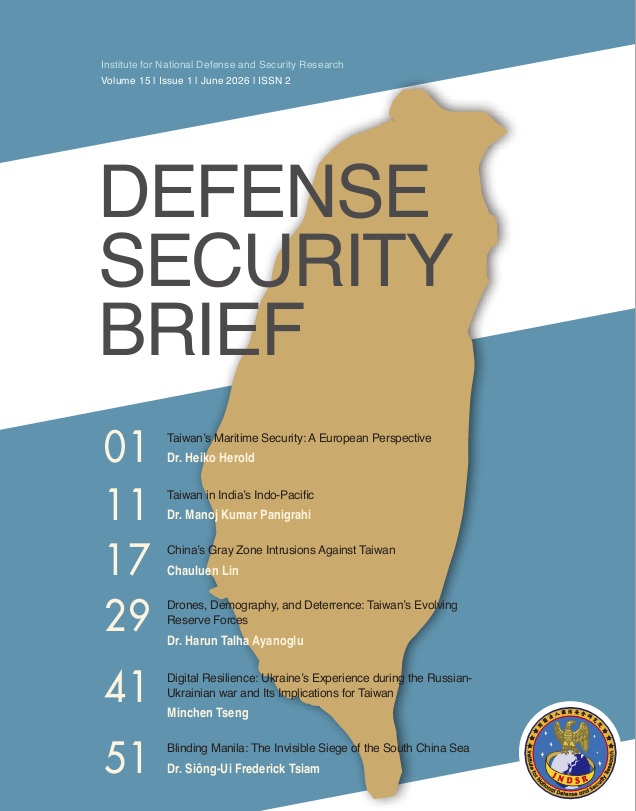
[1] indsr.org.tw · Volume 15 Issue1 (C) · sha256:ef1a841d3a77 [2] 163.com · 无解的阳谋!菲律宾傻眼,美国做梦也不敢想,黄岩岛中国会这样干 (B) · sha256:cb6f955387fc [3] Wikipedia · Territorial disputes in the South China Sea (F) · sha256:1d5bd5a3150d
Source content hashes were computed at collection time; the cited text is preserved unmodified for the life of this product.
Red cell review: PARTIAL DISSENT — KJ-5 downgraded MEDIUM→LOW (kj_single_origin)
TLP:CLEAR