TLP:CLEAR · Disclosure is not limited.
South China Sea: Scarborough Shoal remains the live flashpoint amid entrenched PRC outposts
Time window: Last 7 days · Audience: General analyst · Type: Situation report · DTG: 2026-06-22 10:12Z · Overall confidence: MEDIUM
BLUF
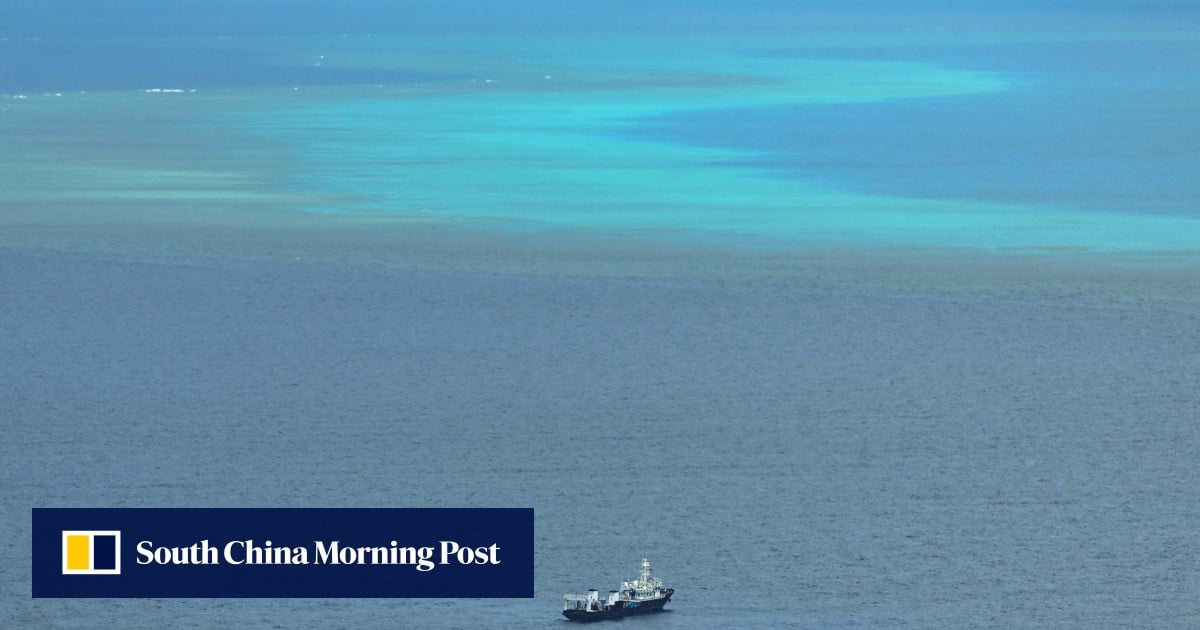
Scarborough Shoal is likely to remain the most immediate flashpoint this quarter: Manila has set public red lines against any structures at the shoal and previously reported a floating platform likely linked to Chinese vessels, while China’s network of outposts and reclaimed features continues to shape the on‑water balance. US freedom of navigation operations are likely to continue, sustaining low‑level friction without a decisive shift.
Executive summary
The Philippines and China both claim Scarborough Shoal, and Philippine authorities have stated they will not allow structures there. The Philippine Coast Guard previously reported a floating structure at the shoal, assessed as likely deployed by Chinese research vessels. In the broader theatre, China has established South China Sea outposts and reclaimed around five square miles of land by 2023, with at least one artificial island housing military equipment. Since 2015, the United States and partners have conducted freedom of navigation operations in the South China Sea. Against that context, routine friction at contested features is likely to persist this quarter. NASA recorded 25 thermal anomalies in the Philippines on 21-22 June, but NASA emphasises such detections register heat, not cause, and therefore do not by themselves indicate maritime incidents.
Change from previous assessment
This update adds sourced detail on Scarborough Shoal’s dual‑claimant status, Manila’s stated red lines against any structures, and a prior Philippine Coast Guard report of a floating structure at the shoal. There are no new claims in this run that update round‑the‑clock patrol patterns or recent enforcement cycles cited previously. We therefore retain a baseline expectation of persistent low‑level friction this quarter and keep confidence at medium.
Key judgments
- Scarborough Shoal is likely to remain the most immediate flashpoint between Manila and Beijing this quarter, given both sides’ standing claims, Manila’s public red lines against any structures, and prior reporting of a floating platform at the shoal attributed to Chinese research vessels. (Confidence: medium · ASSESSED)
- I&W: Philippine Coast Guard releases dated imagery of a new floating barrier or platform at Scarborough Shoal. (0-14 days)
- I&W: Official statement by either capital announcing a practical arrangement to avoid new structures at Scarborough Shoal. (1-3 months)
- China has very likely consolidated a durable footprint across the South China Sea through outposts and reclaimed features, including at least one artificial island with military equipment, shaping the risk environment around contested features. (Confidence: medium · REPORTED)
- I&W: Commercial satellite imagery or official releases show additional military equipment emplacement on PRC‑held South China Sea features. (1-3 months)
- I&W: Verified removal or demilitarisation of equipment on PRC artificial islands. (3-6 months)
- Given overlapping sovereignty claims by seven parties and dual claimant status at Scarborough Shoal, there is likely to be persistent low‑level friction around disputed features this quarter. (Confidence: medium · ASSESSED)
- I&W: Philippine Coast Guard incident bulletins describing close‑quarters encounters at or near Scarborough Shoal. (0-14 days)
- I&W: Announcement of structured bilateral talks on incident prevention at contested features. (1-3 months)
- US and partner freedom of navigation operations are likely to continue as a countervailing signal in the South China Sea, sustaining presence but not decisively altering on‑water dynamics. (Confidence: low · ASSESSED)
- I&W: Public releases by US or partner navies on transits or FONOPs near Paracel or Spratly features. (1-3 months)
- I&W: A full quarter without any publicly acknowledged FONOPs in the South China Sea. (3-6 months)
- Recent Chinese export control and procurement restrictions targeting US firms, framed as responses to US actions, likely add to a strained US, China climate that will colour signalling in the South China Sea, though a direct causal link to on‑water activity is unproven. (Confidence: low · ASSESSED)
- I&W: Chinese or US official statements explicitly linking sanctions episodes to naval or coast guard activity in the South China Sea. (1-3 months)
- I&W: Bilateral announcements of maritime risk‑reduction or mil‑to‑mil engagement specific to the South China Sea. (1-3 months)
- NASA’s thermal anomaly detections in the Philippines on 21-22 June almost certainly do not, by themselves, indicate South China Sea maritime incidents, since the system records heat signatures rather than causation. (Confidence: high · ASSESSED)
- I&W: Absence of time‑ and location‑matched Philippine Coast Guard incident reports corresponding to the recorded thermal anomalies. (0-14 days)
- I&W: Verified incident reports co‑located with FIRMS anomalies near contested maritime features. (0-14 days)
Outlook & scenarios
Baseline: Routine friction at Scarborough Shoal without decisive shift (60%)
Manila maintains a visible law‑enforcement posture and public red lines at Scarborough Shoal while Beijing sustains presence patterns anchored by its wider network of outposts and reclaimed features. Encounters and rhetoric continue, but neither side seeks a rapid change in the on‑water status quo.
Escalatory episode: New floating barrier or platform triggers removal attempt (30%)
A new floating device appears at Scarborough Shoal, prompting a Philippine move to document and remove it. Tense manoeuvring and sharp rhetoric follow. The episode remains contained locally but elevates near‑term collision and miscalculation risk.
Quiet period: Signalling shifts to statements while presence continues (20%)
With no new structures reported and routine presence operations ongoing, both capitals emphasise signalling through statements and legal positions. Friction persists at a low level, and US freedom of navigation operations continue episodically.
Recommendations
- Prioritise daily monitoring of official Philippine Coast Guard and Armed Forces of the Philippines channels for incident bulletins or imagery from Scarborough Shoal; log time, position and platforms referenced for trend analysis.
- Task commercial SAR and optical imagery collection on Scarborough Shoal at frequent revisit to detect any renewed emplacement of floating barriers or platforms and to map vessel patterns at the approaches.
- Maintain a standing watch on public releases by US and partner navies for South China Sea transits or FONOPs, and cross‑reference with known PRC outpost locations to assess signalling cycles.
- Track Ministry of Commerce and Finance Ministry notices and Chinese press briefings on export controls and procurement restrictions involving US firms, and flag any language linking measures to maritime or security issues.
- Build and maintain a discrete indicator log for Scarborough Shoal with clear confirm/break thresholds, including: appearance of new floating structures, official bilateral statements on structures, and any reported close‑quarters manoeuvres.
Confidence & uncertainty
Overall confidence is medium. Core judgments draw on multiple, mutually consistent items: dual claims at Scarborough Shoal and Philippine statements against structures are reported by major media, and prior observation of a floating structure is attributed to the Philippine Coast Guard. Background on PRC outposts and reclamation relies on sources of mixed reliability, though they broadly align. The projection that US freedom of navigation operations will continue rests on single‑source historical reporting and is forward‑looking, reducing confidence. NASA’s technical caveat on thermal detections is well‑sourced and raises confidence in discounting those signatures as event indicators absent corroboration. The principal uncertainty is the absence of fresh, within‑window on‑water reporting around Scarborough in this run.
Alternative analysis (red cell)
While the record shows Scarborough is a bilateral Philippine–Chinese claim and that Philippine officials have stated red lines and a floating platform was reported, the available reporting is insufficient to declare Scarborough the single most immediate flashpoint this quarter. Claims about China’s consolidated footprint rely heavily on a single reporting origin and do not independently demonstrate active militarization of reclaimed features. Overlapping claims create latent risk of low‑level friction, but the absence of recent incident data means persistent friction this quarter is plausible rather than probable. Continued FONOPs are historically likely but their near‑term tempo and effect on on‑water dynamics are not established by the cited reporting.
Intelligence gaps
- [EEI 1.1 · UNCOVERED] Number, class, and position (time-stamped) of Chinese Coast Guard (CCG), People’s Armed Forces Maritime Militia (PAFMM), and other PRC paramilitary/auxiliary vessels inside Philippine-claimed EEZ or within 12 nautical miles of Philippine-occupied features (e.g., Scarborough Shoal, Second Thomas/Ayungin Shoal, and other named features). Recommended collection: maritime/AIS
- [EEI 1.2 · UNCOVERED] Observed maneuvers or posture indicating hostile action: vessel-to-vessel blocking/contact, use of water cannons, boarding attempts, formation maneuvers to interdict Philippine vessels, or sustained stationing near Philippine resupply/relief routes. Recommended collection: imagery/satellite
- [EEI 1.3 · UNCOVERED] Incidents of Philippine vessels (coast guard, navy, supply boats, civilian fishing vessels) being ordered to alter course, detained, chased, or physically impeded — with time, location, involved units, and damage/injuries if any. Recommended collection: open-source/official statements
- [EEI 1.4 · UNCOVERED] Abrupt changes to vessel identification behavior: AIS transponder deactivations, spoofing, or mismatches between flagged identity and observed equipment/markings among PRC maritime law-enforcement or militia vessels operating near Philippine claims. Recommended collection: maritime/AIS
- [EEI 2.1 · UNCOVERED] Issued directives, patrol orders, or internal guidance from PRC Central Military Commission, PLAN, CCG, or provincial maritime authorities that specify objectives, geographic limits, patrol tempos, or escalation thresholds for operations near Philippine-claimed features. Recommended collection: signals/communications
- [EEI 2.2 · UNCOVERED] Public declarations, maritime notices, or newly published 'maritime safety' or exclusion zones, with effective dates and coordinates, issued by Chinese authorities that could be used to justify interdiction or exclusion of Philippine activity. Recommended collection: open-source/official statements
- [EEI 2.3 · UNCOVERED] Evidence of mobilization orders, tasking lists, or logistics planning for Maritime Militia units (vessel requisitions, local fisheries bureau instructions, fuel/resupply manifests) indicating intent to employ militia alongside CCG/PLAN assets. Recommended collection: HUMINT/defense
- [EEI 3.1 · UNCOVERED] Deployment and movement of Philippine Coast Guard and Navy vessels (class, location, on-station times) and scheduled or unscheduled escort/resupply missions to occupied features. Recommended collection: military/AIS
- [EEI 3.2 · UNCOVERED] Air component activity: number and frequency of Philippine air patrol sorties, maritime domain awareness flights, and air-to-surface or maritime strike assets placed on alert or redeployed toward contested areas. Recommended collection: imagery/satellite
- [EEI 3.3 · PARTIAL] Requests for diplomatic, intelligence, or military assistance from allies (e.g., U.S., Australia, Japan) including notifications of planned joint patrols, port calls, or freedom of navigation operations with dates and participating units. Recommended collection: open-source/official statements
- [EEI 3.4 · UNCOVERED] Changes to Philippine rules of engagement, emergency law measures, mobilization orders, or civil advisories (evacuations, fishing bans) that alter civilian or military behavior in contested maritime zones. Recommended collection: open-source/official statements
Cited sources
[1] scmp.com · ‘Not a single inch’: Philippines vows to block structures at Scarborough Shoal (A) · sha256:99ebf3ee44db [2] Wikipedia · Territorial disputes in the South China Sea (F) · sha256:1d5bd5a3150d [3] scmp.com · China adds 10 US firms to export control list, restricts 46 others (B) · sha256:89477707632e [4] newsweek.com · China imposes export controls on Pentagon-linked US companies (B) · sha256:03530343c029 [5] NASA · NASA FIRMS thermal detections — Philippines (2d) (A) · sha256:77a03321c190
Source content hashes were computed at collection time; the cited text is preserved unmodified for the life of this product.
Red cell review: PARTIAL DISSENT
TLP:CLEAR