TLP:CLEAR · Disclosure is not limited.
South China Sea: SLBM test fallout, legal pushback, and allied deployments
Time window: Last 7 days · Audience: General analyst · Type: Situation report · DTG: 2026-07-17 10:13Z · Overall confidence: MEDIUM
BLUF
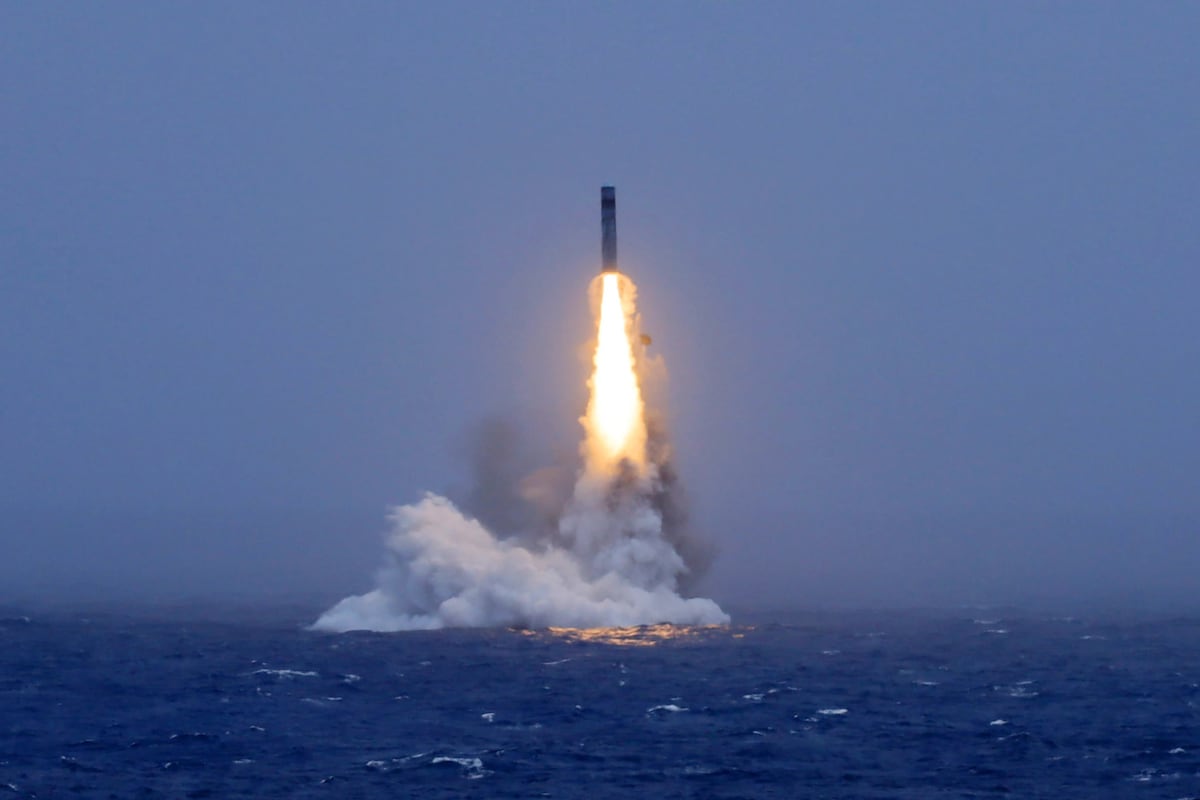
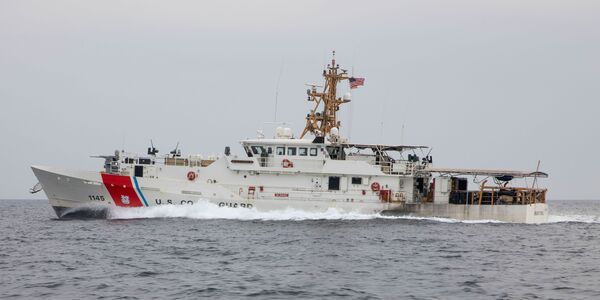
China’s 6 July SLBM launch from the South China Sea drew multi‑country protests, and fourteen governments on 12 July reaffirmed the 2016 arbitration ruling. The United States is redeploying US Coast Guard cutters to operate from Singapore and Subic Bay through September 2026, likely keeping tensions elevated; a run‑in near Scarborough Shoal in the next 1-3 months is a roughly even chance but rests on thin immediate indications.
Executive summary
Beijing very likely conducted a submarine‑launched ballistic missile test from the South China Sea on 6 July, prompting protests by Australia, Japan, New Zealand, the United States and South Pacific leaders, while Chinese state media cast the event as routine training. On 12 July, fourteen countries publicly reaffirmed the 2016 Hague arbitration ruling that found no legal basis for China’s expansive South China Sea claims. In parallel, Washington is moving an expeditionary squadron of six Sentinel‑class fast response cutters to operate from Singapore and Subic Bay, with approvals through September 2026, signalling a sustained allied maritime presence. China’s pattern of on‑water activity and earlier infrastructure moves suggest Beijing is unlikely to moderate behaviour despite legal pressure. The risk of a maritime run‑in near Scarborough Shoal over the next quarter is non‑trivial, but current cues of imminent barrier activity are single‑source.
Change from previous assessment
New since the prior brief: fourteen governments issued the 12 July statement reaffirming the legal force of the 2016 ruling, and open reporting on US Coast Guard expeditionary cutters operating from Singapore and Subic Bay through September 2026 clarifies allied posture. The SLBM test assessment remains consistent, with added corroboration of protests and Chinese framing as annual training. We continue to judge a roughly even chance of a maritime run‑in near contested features in the next 1-3 months, with confidence kept low due to thin immediate indicators.
Key judgments
- China very likely conducted a submarine‑launched ballistic missile test from the South China Sea to the Pacific on 6 July 2026, drawing protests from Australia, Japan, New Zealand, the United States and several South Pacific leaders, while Beijing described the launch as part of its annual training programme. (Confidence: high · REPORTED)
- I&W: Additional NOTAMs or maritime exclusion notices and satellite or commercial RF data indicating further PLA ballistic missile test activity from South China Sea launch boxes (0-30 days)
- I&W: Public retraction or contradiction by protesting governments regarding the 6 July launch (0-30 days)
- The 6 July missile event was likely intended as deterrence signalling to regional actors contemplating nuclear‑related capabilities, beyond Beijing’s framing as routine training. (Confidence: medium · ASSESSED)
- I&W: Chinese state or PLA commentary linking the test to red lines on basing or nuclear capability development in the Indo‑Pacific (0-3 months)
- I&W: Absence of follow‑on messaging paired with a halt in long‑range testing activity originating in the South China Sea (0-3 months)
- Fourteen countries on 12 July 2026 reaffirmed that the 2016 Hague arbitration ruling is legally binding and urged China to comply, restating that China’s expansive South China Sea claims have no legal basis. (Confidence: high · REPORTED)
- I&W: Additional joint or national statements by signatories and partners explicitly citing the 2016 ruling in response to new incidents (0-3 months)
- I&W: A major signatory walking back the 12 July language or declining to reference the ruling in subsequent communiqués (0-3 months)
- The United States Coast Guard is redeploying and approved to operate a squadron of six Sentinel‑class fast response cutters from Singapore and Subic Bay through September 2026, likely increasing allied maritime presence and encounter risk in and around the South China Sea over the next quarter. (Confidence: medium · ASSESSED)
- I&W: Port call notices or imagery confirming USCG fast response cutters alongside in Singapore or Subic Bay and publicised joint patrols with regional partners (0-60 days)
- I&W: Official notice of cancellation or diversion of the cutter squadron away from Singapore and Subic Bay (0-60 days)
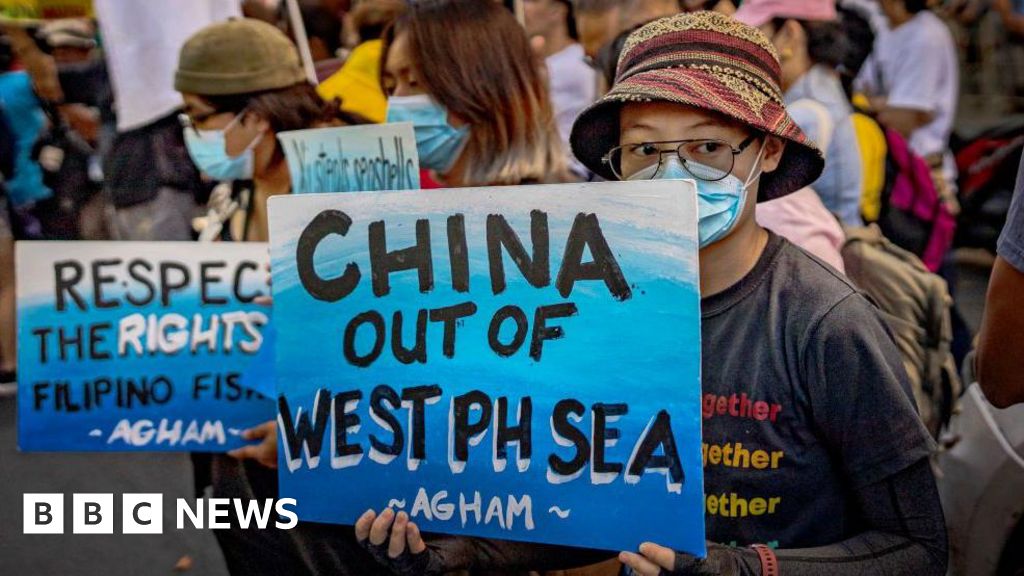
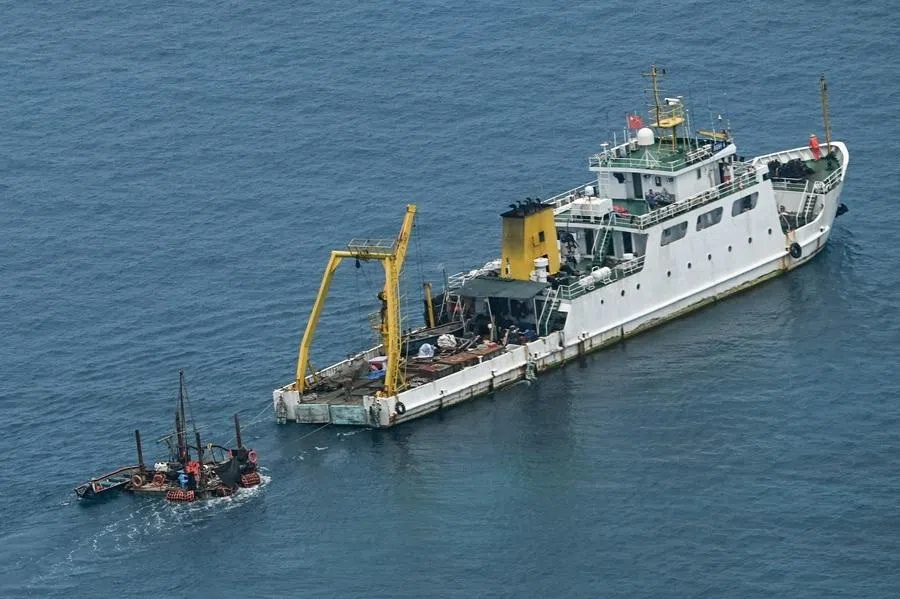
- Beijing is unlikely to materially moderate on‑water behaviour in disputed areas despite renewed legal pressure, given sustained maritime patrol activity and earlier construction or barrier actions at contested features and the escalation of China, Philippines tensions in recent years. (Confidence: medium · ASSESSED)
- I&W: Fresh installation of barriers or China Coast Guard exclusion tactics around Scarborough Shoal or other features within the Philippine EEZ (0-3 months)
- I&W: Verified drawdown in China Coast Guard or maritime militia deployments and unimpeded Philippine operations at disputed features (0-3 months)
- There is a roughly even chance of a maritime run‑in near Scarborough Shoal in the next 1-3 months, but immediate indications of barrier activity are thin and largely single‑source. (Confidence: low · ASSESSED)
- I&W: Philippine Coast Guard or commercial satellite imagery showing barrier towing or emplacement at Scarborough Shoal (0-60 days)
- I&W: Publicised bilateral de‑confliction steps or operational hotlines reducing on‑scene frictions between China and the Philippines (0-60 days)
- The strategic stakes for China remain high given that a large share of its energy imports transits the South China Sea, which likely reinforces Beijing’s incentive to assert control over key sea lines. (Confidence: low · ASSESSED)
- I&W: Official Chinese statements linking South China Sea posture to protecting sea lines of communication for energy imports (1-3 months)
- I&W: Evidence of reduced Chinese emphasis on South China Sea SLOC security in official messaging (1-3 months)
Outlook & scenarios
Steady contestation without clash (60%)
Allies sustain legal and diplomatic pressure following the 12 July statement while Beijing keeps patrols and messaging steady after the 6 July SLBM test, which it frames as training. US Coast Guard cutters operate from Singapore and Subic Bay, conducting visible but measured presence operations together with regional partners. Encounters remain tense but controlled, and no major on‑scene incident occurs.
Scarborough flashpoint (35%)
Barrier emplacement or blockade tactics at Scarborough Shoal prompt Philippine challenges and allied signalling transits. A China Coast Guard, Philippine Coast Guard stand‑off escalates into ramming, water‑cannoning, or hazardous manoeuvres. US and partner presence is nearby but avoids direct intervention. Diplomatic protests follow, and references to the 2016 ruling increase.
Short diplomatic lull (20%)
Beijing reduces visible on‑water friction while amplifying narrative and legal arguments. No barrier activity surfaces, and allied cutters keep mostly to exercises and port calls. The lull is tactical and does not change underlying positions.
Recommendations
- Task continuous monitoring for Chinese maritime NOTAMs and navigation warnings that could signal further missile activity or live‑fire windows in South China Sea launch areas; pair with commercial satellite and RF analytics to corroborate.
- Set geofenced alerting on Scarborough Shoal and Second Thomas Shoal for high‑resolution satellite passes, looking for floating barriers, large China Coast Guard formations, or tug activity consistent with barrier towing.
- Maintain an order of battle and movement log for the USCG expeditionary cutter squadron, using port notices, imagery, and official releases to confirm presence from Singapore and Subic Bay through September 2026.
- Compile and track state statements citing the 2016 arbitration, mapping which of the fourteen signatories reference the ruling in response to any new at‑sea frictions to assess diplomatic momentum.
- Pre‑position incident response templates and annotated legal maps for rapid use if a Scarborough or Second Thomas run‑in occurs, explicitly citing the 2016 ruling and likely navigational rights to support decision‑makers.
- Flag single‑source reports of barrier activity for urgent validation through independent imagery or Philippine Coast Guard releases before incorporating into risk triggers.
Confidence & uncertainty
Overall confidence is medium. The SLBM test and ensuing protests are supported by multiple reliable reports, including state media characterisation of the launch, which underpins high confidence in that event. The 12 July joint statement and the 2016 ruling are well documented. Assessments about intended signalling, likely Chinese behaviour at sea, and near‑term incident risk rely on pattern analysis and some single‑source or older contextual reporting, which lowers confidence. Indicators of imminent barrier activity at Scarborough Shoal are thin and uncorroborated, further constraining confidence.
Alternative analysis (red cell)
The evidence for intentional deterrence signaling and near‑term escalation risk is thin and concentrated in single analytic or low‑confidence reports (see 957e5d74; 075b2770) and source clusters (origin_cluster_id cf19fceb for 16b455c6 and 853ff5ba). A more cautious estimate is that the 6 July event—absent independent technical corroboration—could plausibly be routine training, and that Scarborough Shoal activity currently lacks the multiple, contemporaneous indicators needed to justify a 50/50 projection of a maritime run‑in.
Intelligence gaps
- [EEI 1.1 · PARTIAL] Number, class, and position (time-stamped) of Chinese Coast Guard (CCG), People’s Armed Forces Maritime Militia (PAFMM), and other PRC paramilitary/auxiliary vessels inside Philippine-claimed EEZ or within 12 nautical miles of Philippine-occupied features (e.g., Scarborough Shoal, Second Thomas/Ayungin Shoal, and other named features). Recommended collection: maritime/AIS
- [EEI 1.2 · UNCOVERED] Observed maneuvers or posture indicating hostile action: vessel-to-vessel blocking/contact, use of water cannons, boarding attempts, formation maneuvers to interdict Philippine vessels, or sustained stationing near Philippine resupply/relief routes. Recommended collection: imagery/satellite
- [EEI 1.3 · UNCOVERED] Incidents of Philippine vessels (coast guard, navy, supply boats, civilian fishing vessels) being ordered to alter course, detained, chased, or physically impeded — with time, location, involved units, and damage/injuries if any. Recommended collection: open-source/official statements
- [EEI 1.4 · UNCOVERED] Abrupt changes to vessel identification behavior: AIS transponder deactivations, spoofing, or mismatches between flagged identity and observed equipment/markings among PRC maritime law-enforcement or militia vessels operating near Philippine claims. Recommended collection: maritime/AIS
- [EEI 2.1 · UNCOVERED] Issued directives, patrol orders, or internal guidance from PRC Central Military Commission, PLAN, CCG, or provincial maritime authorities that specify objectives, geographic limits, patrol tempos, or escalation thresholds for operations near Philippine-claimed features. Recommended collection: signals/communications
- [EEI 2.2 · PARTIAL] Public declarations, maritime notices, or newly published 'maritime safety' or exclusion zones, with effective dates and coordinates, issued by Chinese authorities that could be used to justify interdiction or exclusion of Philippine activity. Recommended collection: open-source/official statements
- [EEI 2.3 · UNCOVERED] Evidence of mobilization orders, tasking lists, or logistics planning for Maritime Militia units (vessel requisitions, local fisheries bureau instructions, fuel/resupply manifests) indicating intent to employ militia alongside CCG/PLAN assets. Recommended collection: HUMINT/defense
- [EEI 3.1 · UNCOVERED] Deployment and movement of Philippine Coast Guard and Navy vessels (class, location, on-station times) and scheduled or unscheduled escort/resupply missions to occupied features. Recommended collection: military/AIS
- [EEI 3.2 · UNCOVERED] Air component activity: number and frequency of Philippine air patrol sorties, maritime domain awareness flights, and air-to-surface or maritime strike assets placed on alert or redeployed toward contested areas. Recommended collection: imagery/satellite
- [EEI 3.3 · PARTIAL] Requests for diplomatic, intelligence, or military assistance from allies (e.g., U.S., Australia, Japan) including notifications of planned joint patrols, port calls, or freedom of navigation operations with dates and participating units. Recommended collection: open-source/official statements
- [EEI 3.4 · UNCOVERED] Changes to Philippine rules of engagement, emergency law measures, mobilization orders, or civil advisories (evacuations, fishing bans) that alter civilian or military behavior in contested maritime zones. Recommended collection: open-source/official statements
Cited sources
[1] defensenews.com · First the coast guard, then an ICBM: China tests new, long-term ways to hold off rivals in Asia (A) · sha256:2cb8e61d2606 [2] thinkchina.sg · Ten years after the South China Sea ruling: Is China’s position better or worse? (C) · sha256:5beb90cb6b9f [3] BBC · Philippines condemns monkey video on Chinese media as racist (A) · sha256:246e59053e37 [4] Wikipedia · Territorial disputes in the South China Sea (F) · sha256:2b1001cc8220 [5] janes.com · USCG deploys cutter squadron to Singapore and Subic Bay (A) · sha256:1e411345ff65 [6] BBC · Philippines condemns monkey video on Chinese media as racist (A) · sha256:2e84ae45136d
Source content hashes were computed at collection time; the cited text is preserved unmodified for the life of this product.
Red cell review: PARTIAL DISSENT
TLP:CLEAR