TLP:CLEAR · Disclosure is not limited.
South China Sea: Ten-year legal reaffirmations amid persistent China Coast Guard coercion
Time window: Last 7 days · Audience: General analyst · Type: Situation report · DTG: 2026-07-13 10:14Z · Overall confidence: MEDIUM
BLUF
Fourteen governments, including the United States, the United Kingdom and the Philippines, almost certainly reaffirmed the 12 July 2016 arbitral award as final and legally binding, sustaining diplomatic pressure on Beijing’s expansive claims. China Coast Guard coercive behaviour against Philippine vessels is likely to persist this quarter, keeping collision and injury risk elevated while Manila leans on US defence ties.
Executive summary
A broad coalition marked the tenth anniversary of the 12 July 2016 South China Sea arbitral award, urging adherence to the ruling and opposing coercion. The award is repeatedly characterised as final and legally binding between China and the Philippines, with multiple statements rejecting expansive maritime claims. Reporting over the past year details China Coast Guard use of water cannons, military‑grade lasers and dangerous blocking of Philippine vessels, indicating coercive enforcement that is likely to continue. Manila is positioned to keep challenging presence at sea while drawing on deepening US defence access. Chinese maritime activity east of Taiwan and inside Japan’s EEZ suggests a wider enforcement pattern along the first island chain, creating some spillover risk into Philippine approaches north and east of Luzon. High economic stakes for both Manila and Beijing reduce the odds of meaningful de‑escalation in the near term.
Change from previous assessment
The tenth‑anniversary joint statement and associated government messaging further consolidate the international legal position on the 2016 award. This strengthens our confidence that partners will continue to reject expansive claims. We saw no new, sourced on‑water confrontation in this window to alter the previously assessed hazard level, though reporting on Chinese enforcement east of Taiwan and in Japan’s EEZ informs our added judgment on potential spillover risk north and east of Luzon. Confidence is raised for the legal‑diplomatic judgment and maintained or lowered for forward‑leaning operational inferences.
Key judgments
- A 14-country coalition almost certainly reaffirmed the 12 July 2016 arbitral award as final and legally binding between China and the Philippines, and rejected expansive maritime claims in the South China Sea. (Confidence: high · REPORTED)
- I&W: Additional official communiqués from regional governments explicitly referencing the 2016 award and urging compliance. (0-14 days)
- I&W: Any signatory publicly walks back or issues a statement contradicting the anniversary joint statement. (0-14 days)
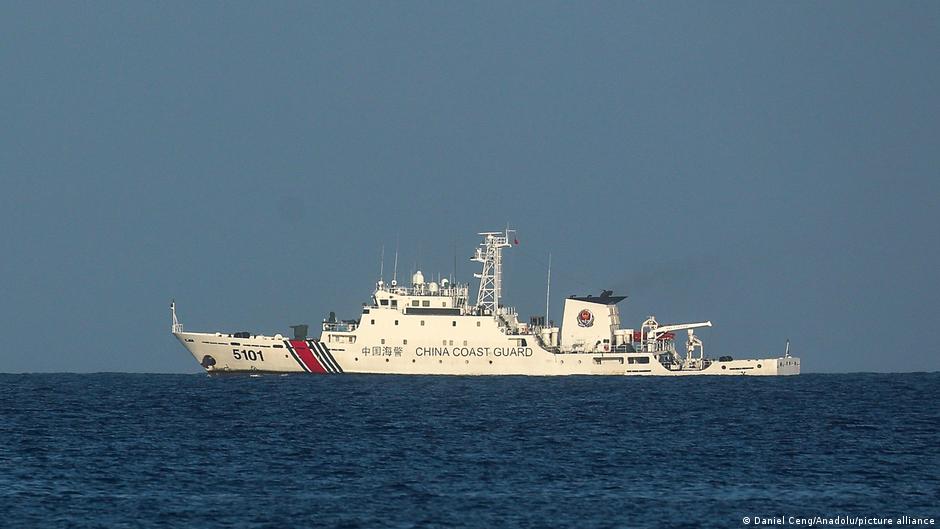
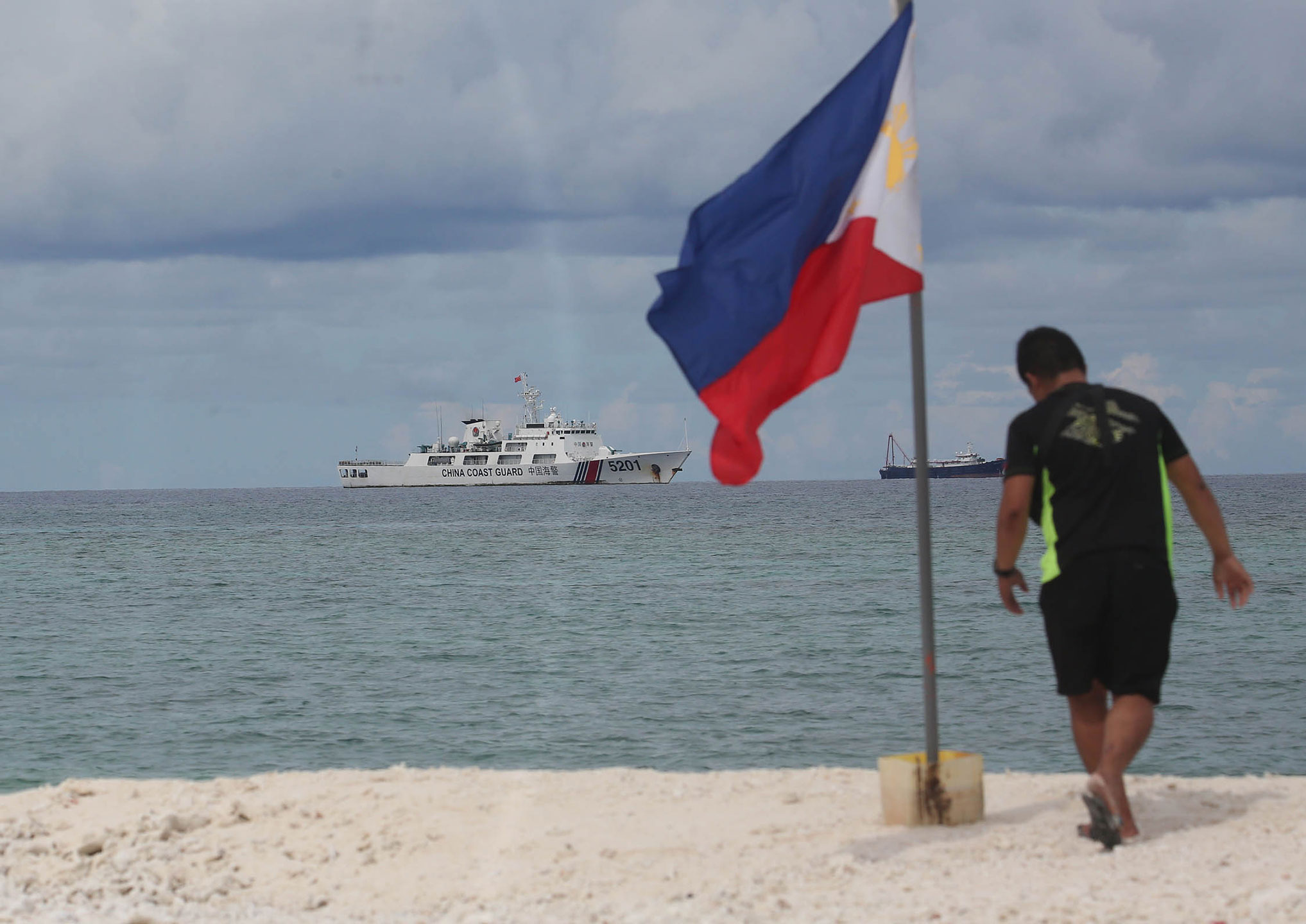
- China Coast Guard coercive tactics against Philippine government and fishing vessels are likely to persist this quarter, keeping collision and injury risk elevated around Philippine‑held features. (Confidence: medium · ASSESSED)
- I&W: Fresh Philippine reports, imagery or video of water‑cannoning, laser use, or ramming against resupply or patrol missions. (0-14 days)
- I&W: Sustained reduction in China Coast Guard deployments near Philippine‑held outposts as observed in official releases or commercial imagery. (1-3 months)
- Manila is very likely to continue publicly challenging PRC presence and to lean on US defence ties, including expanded US access to additional bases, to bolster deterrence and maritime monitoring. (Confidence: medium · ASSESSED)
- I&W: Announcements of new or expanded US‑Philippines joint patrols, exercises, or forward presence tied to the additional access sites. (1-3 months)
- I&W: Philippine senior officials increase frequency of public statements invoking the 2016 award and calling out PRC actions at sea. (0-14 days)
- PRC maritime enforcement activity east of Taiwan and inside Japan’s EEZ makes it likely that frictions extend along first‑island‑chain approaches, creating a roughly even chance of operational spillover into Philippine approaches north and east of Luzon over the next 1-3 months. (Confidence: low · ASSESSED)
- I&W: China Coast Guard or PLA Navy patrol notices or sightings in waters east of Taiwan trending south toward areas north and east of Luzon. (1-3 months)
- I&W: A public reduction of China Coast Guard activities in Japan’s EEZ and cessation of declared patrols east of Taiwan. (1-3 months)
- Given the West Philippine Sea’s fisheries output and stated hydrocarbon reserves, and China’s reliance on South China Sea energy routes, it is unlikely that either side will materially de‑escalate resource‑linked disputes in the near term. (Confidence: medium · ASSESSED)
- I&W: Announcements by Manila of new or resumed fisheries protection or exploration activity in the West Philippine Sea. (1-3 months)
- I&W: Publicly declared moratoriums by either side on resource activities in contested areas. (1-3 months)
Outlook & scenarios
Steady‑state coercion with recurring on‑water incidents (60%)
China Coast Guard maintains coercive patrols and interference against Philippine vessels near Philippine‑held features. Manila continues resupply and documentation, backed by public diplomacy that highlights the 2016 award. External partners keep issuing statements opposing coercion and reaffirming the ruling, but there is no major tactical shift at sea.
Collision or injury incident triggers sharper external involvement (35%)
A coercive encounter results in serious damage or casualties to a Philippine crew, prompting Manila to request visible US backing. Washington reiterates that attacks on Philippine forces in disputed waters would engage defence commitments and increases joint patrols and presence. Diplomatic tempers rise and operational de‑confliction becomes harder.
Modest diplomatic cooling without policy change (15%)
After the anniversary statements, back‑channel contacts reduce public confrontation. No party yields legal positions, and Beijing does not accept the award, but incidents dip temporarily. The calm proves fragile because resource protection and sovereignty narratives remain entrenched.
Recommendations
- Task open‑source monitoring to catalogue China Coast Guard deployments and incident tactics against Philippine vessels, prioritising video and imagery that can be quickly validated and cross‑referenced with official statements.
- Support pre‑planned US‑Philippines crisis communications and incident playbooks that clarify thresholds for an ‘armed attack’ under alliance commitments and outline proportional response options.
- Encourage Manila to harden evidence capture on resupply missions with redundant cameras, laser detectors and hull‑mounted sensors to document coercive acts for rapid diplomatic use.
- Leverage the tenth‑anniversary momentum by coordinating with like‑minded capitals for sequenced statements, keeping the 2016 award central in public messaging on any new incident.
- Map and brief decision‑makers on the specific fisheries and hydrocarbon stakes in the West Philippine Sea to frame potential escalation costs and guide prioritisation of maritime domain awareness support.
- Track Chinese maritime enforcement activity east of Taiwan and inside Japan’s EEZ as potential precursors to pressure on Philippine approaches north and east of Luzon, and prepare advisories for operators in those waters.
Confidence & uncertainty
Overall confidence is medium. The legal and diplomatic groundwork is strongly corroborated by multiple official statements and government sources that reinforce the 12 July 2016 award as final and binding and oppose coercion. Reporting on China Coast Guard tactics is consistent across wire and major media, though some specific incidents are drawn from lower‑confidence or blog‑sourced material, and no new at‑sea event in the current window is reported here. Assessments about spillover from patrols east of Taiwan rely partly on lower‑confidence sourcing and analytic inference, which tempers confidence.
Alternative analysis (red cell)
Multiple states publicly urged compliance with the 2016 Award, but the available reporting documents political reaffirmation rather than evidence that China accepted the ruling or that the coalition’s action altered legal relations; equating diplomacy with a legal change is not supported by the claims and contradicting reports. Predictions about persistent coercion, Manila’s reliance on expanded US basing, and an even chance of operational spillover rely on past incidents or medium/low‑grade reporting and lack contemporaneous operational indicators; alternative readings that emphasize localized activity, political constraints, or risk‑management by Manila are plausible. Targeted collection—official texts and PRC responses, up‑to‑date maritime movement data, and current Philippine policy signals—would meaningfully reduce these analytic uncertainties.
Intelligence gaps
- [EEI 1.1 · PARTIAL] Number, class, and position (time-stamped) of Chinese Coast Guard (CCG), People’s Armed Forces Maritime Militia (PAFMM), and other PRC paramilitary/auxiliary vessels inside Philippine-claimed EEZ or within 12 nautical miles of Philippine-occupied features (e.g., Scarborough Shoal, Second Thomas/Ayungin Shoal, and other named features). Recommended collection: maritime/AIS
- [EEI 1.4 · UNCOVERED] Abrupt changes to vessel identification behavior: AIS transponder deactivations, spoofing, or mismatches between flagged identity and observed equipment/markings among PRC maritime law-enforcement or militia vessels operating near Philippine claims. Recommended collection: maritime/AIS
- [EEI 2.1 · UNCOVERED] Issued directives, patrol orders, or internal guidance from PRC Central Military Commission, PLAN, CCG, or provincial maritime authorities that specify objectives, geographic limits, patrol tempos, or escalation thresholds for operations near Philippine-claimed features. Recommended collection: signals/communications
- [EEI 2.2 · UNCOVERED] Public declarations, maritime notices, or newly published 'maritime safety' or exclusion zones, with effective dates and coordinates, issued by Chinese authorities that could be used to justify interdiction or exclusion of Philippine activity. Recommended collection: open-source/official statements
- [EEI 2.3 · UNCOVERED] Evidence of mobilization orders, tasking lists, or logistics planning for Maritime Militia units (vessel requisitions, local fisheries bureau instructions, fuel/resupply manifests) indicating intent to employ militia alongside CCG/PLAN assets. Recommended collection: HUMINT/defense
- [EEI 3.1 · UNCOVERED] Deployment and movement of Philippine Coast Guard and Navy vessels (class, location, on-station times) and scheduled or unscheduled escort/resupply missions to occupied features. Recommended collection: military/AIS
- [EEI 3.2 · UNCOVERED] Air component activity: number and frequency of Philippine air patrol sorties, maritime domain awareness flights, and air-to-surface or maritime strike assets placed on alert or redeployed toward contested areas. Recommended collection: imagery/satellite
- [EEI 3.3 · PARTIAL] Requests for diplomatic, intelligence, or military assistance from allies (e.g., U.S., Australia, Japan) including notifications of planned joint patrols, port calls, or freedom of navigation operations with dates and participating units. Recommended collection: open-source/official statements
- [EEI 3.4 · UNCOVERED] Changes to Philippine rules of engagement, emergency law measures, mobilization orders, or civil advisories (evacuations, fishing bans) that alter civilian or military behavior in contested maritime zones. Recommended collection: open-source/official statements
Cited sources
[1] Government of the United Kingdom · Joint statement on the tenth anniversary of the Philippines-China South China Sea Arbitral Tribunal Award (A) · sha256:c3be9e8140f6 [2] Associated Press · 14 nations and the EU reaffirm 2016 ruling invalidating China's claims in South China Sea (A) · sha256:12e7c645fb78 [3] 德國之聲 (Deutsche Welle) · 南海仲裁十周年 14国联合发声 (A) · sha256:e661ecde493b [4] 法国国际广播电台 - 茉莉花新闻网 · 对抗日菲海洋划界 中国海警船进入日本专属经济区 - 法国国际广播电台 - 茉莉花新闻网 (B) · sha256:fb4c60373692 [5] inquirer.net · West Philippine Sea (B) · sha256:e1bc57bce68e [6] Wikipedia · Territorial disputes in the South China Sea (F) · sha256:2b1001cc8220
Source content hashes were computed at collection time; the cited text is preserved unmodified for the life of this product.
Red cell review: PARTIAL DISSENT
TLP:CLEAR