TLP:CLEAR · Disclosure is not limited.
South China Sea Tensions: Chinese Naval Activity and Diplomatic Friction
Time window: Last 7 days · Audience: General analyst · Type: Situation report · DTG: 2026-10-30 10:06Z · Overall confidence: HIGH
BLUF
Taiwan officials reported 53 Chinese vessels, including 34 navy warships and the carrier Liaoning, across a wide area that included waters east of the Philippines. This raises the need for close monitoring, but the reporting does not establish an operation directed at the Philippines or an imminent confrontation; the reported 47-day closure is in the southern Yellow Sea, not the South China Sea.
Executive summary
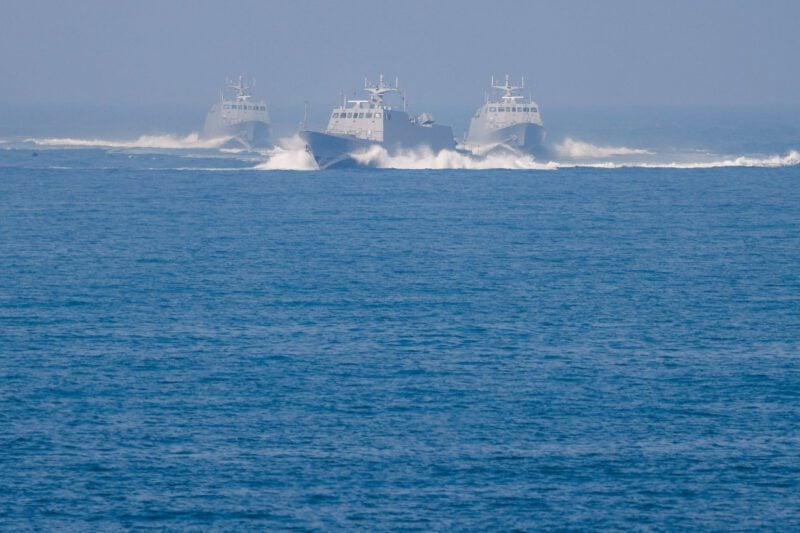
On 29 October, a senior Taiwan security official reported more than 50 Chinese navy and other official vessels operating from southern Japan to waters off the Philippines. A map posted by Joseph Wu showed 53 ships, including 34 warships and the Liaoning carrier group east of the Philippines. Japan's Defence Ministry separately reported tracking three Chinese warships and a Coast Guard ship through the Osumi Strait on 28 October. China's Ministry of National Defense described the Liaoning's western Pacific training as an annual routine. China and the Philippines also exchanged accusations over China's participation in the 13th ADMM-Plus meeting, while the Philippine president called for progress on South China Sea Code of Conduct consultations. A Sohu self-media account places the reported 47-day navigation restriction in designated waters off Yancheng in the southern Yellow Sea, not the South China Sea. A separate social-media report of China Coast Guard training at Ren'ai Reef and Xianbin Reef is undated and uncorroborated.
Change from previous assessment
Compared with the 29 October brief, the assessment now includes Taiwan officials' report of 53 Chinese vessels, including the Liaoning carrier group east of the Philippines, and Japan's report of Chinese warships and a Coast Guard ship passing through the Osumi Strait on 28 October. The brief also adds the ADMM-Plus participation dispute and clarifies that the reported 47-day restriction is in the southern Yellow Sea, not the South China Sea. The prior focus on Second Thomas Shoal and the US Marine rotational presence is not updated by new supporting reporting in this period. The new vessel reporting raises monitoring priority, but does not support a forecast of armed confrontation.
Key judgments
- Continued Chinese naval activity around the Philippine Sea is likely to sustain regional scrutiny over the next 14 days, but the reporting does not establish a deployment directed at the Philippines. The 29 October wire-service account relayed a senior Taiwan official's report and Joseph Wu's map of 53 ships, including 34 navy warships and the Liaoning; it placed the carrier group east of the Philippines. Japan's Defence Ministry separately reported tracking three Chinese warships and a Coast Guard ship through the Osumi Strait on 28 October. China's Ministry of National Defense called the Liaoning's western Pacific training an annual routine. This supports the reported movements, but leaves their purpose unresolved. Confidence is medium because the detailed vessel count rests on Taiwan officials' reporting, while the Japanese tracking report is separate and the Chinese account contests the interpretation of intent. (Confidence: medium · ASSESSED)
- I&W: A dated Taiwan or Philippine government update again places the Liaoning and its battle group east of the Philippines, confirming continued presence in that area. (0-14 days)
- I&W: A dated Chinese defence ministry or Japanese Defence Ministry update reports the Liaoning group has left waters east of the Philippines and completed its western Pacific training, weakening the assessment of continued presence there. (0-14 days)
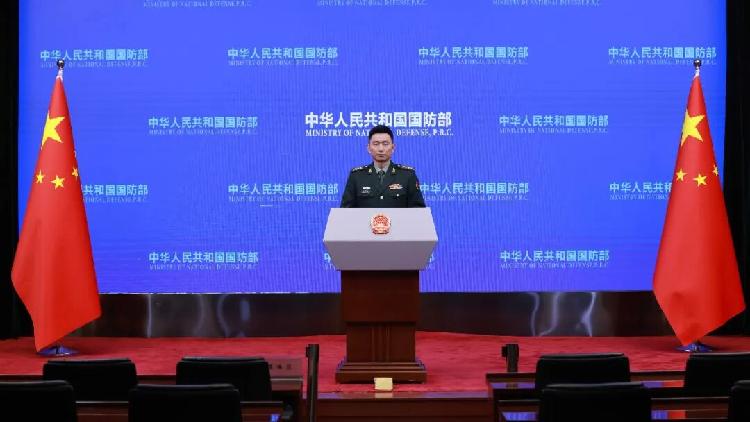
- China-Philippines diplomatic friction is likely to continue over the next month, but current reporting does not establish that Manila prevented China's participation in the 13th ADMM-Plus meeting. Zhang Xiaogang and China's Ministry of National Defense accused the Philippines of obstructing participation; China also said it had decided to send personnel. The Philippine president expressed concern that a misstep by fishermen or soldiers could cause escalation and called for progress on Code of Conduct consultations. Confidence is medium: major-media reporting captures the public statements, but the supplied reporting does not resolve whether Chinese personnel attended. (Confidence: medium · ASSESSED)
- I&W: An official 13th ADMM-Plus participant list names Chinese personnel, confirming attendance and weakening the claim that China was excluded. (0-14 days)
- I&W: An official meeting record shows no Chinese delegation attended and attributes the absence to Philippine obstruction, confirming exclusion and breaking this assessment. (0-14 days)
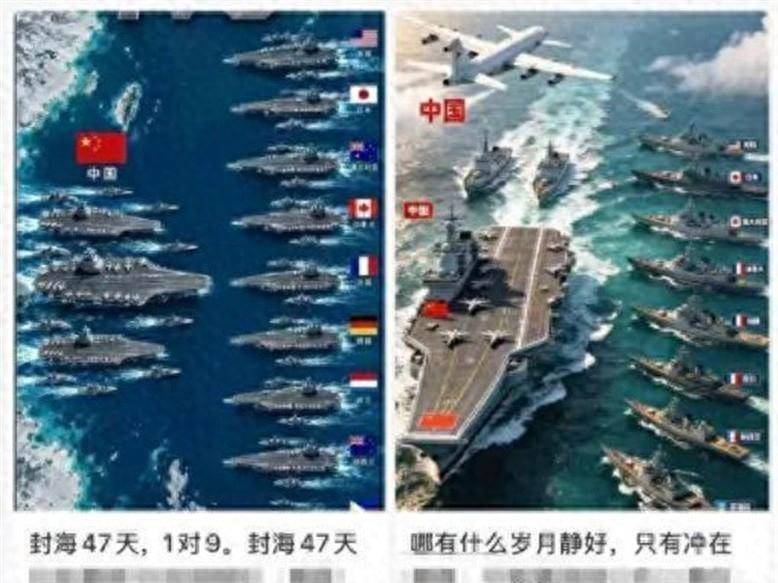
- The reported 47-day navigation restriction is in designated southern Yellow Sea waters off Yancheng, not the South China Sea. The same account describes separate short-duration live-fire drills in the South China Sea from 12 to 17 October, which do not establish a 47-day closure there. Confidence is low because the notice and correction are conveyed through a Sohu self-media account, not a supplied primary maritime-authority publication. (Confidence: low · REPORTED)
- I&W: A primary Yancheng Maritime Safety Administration notice confirms the restricted area's location and the 15 October to 30 November dates. (0-14 days)
- I&W: A primary maritime-authority notice identifies a 47-day restricted area in the South China Sea, breaking the reported location assessment. (0-14 days)
- The report of China Coast Guard comprehensive law-enforcement training at Ren'ai Reef and Xianbin Reef is too thin to establish a new Philippine-facing operation. It comes from one undated social-media post with no independent confirmation. Confidence is low because the report is single-source and lacks a date. (Confidence: low · ASSESSED)
- I&W: A dated China Coast Guard notice or independent imagery identifies training activity at Ren'ai Reef or Xianbin Reef, confirming the reported activity. (0-14 days)
- I&W: An authoritative correction identifies the reported training as false or places it elsewhere, breaking the report. (0-14 days)
Outlook & scenarios
Continued regional naval activity without a confirmed Philippines-directed operation (55%)
Over the next 1-3 months, Chinese naval and official vessels continue activity across the western Pacific, with Taiwan and Japan monitoring movements. China maintains its stated position that the Liaoning's training is routine. No supplied reporting confirms a new operation directed at the Philippines.
Diplomatic dispute continues alongside Code of Conduct consultations (25%)
Over the next 1-3 months, China and the Philippines continue public exchanges over ADMM-Plus participation and South China Sea policy. China proceeds with its stated decision to send personnel to the meeting, while both sides continue to discuss Code of Conduct consultations without a reported maritime incident.
China Coast Guard activity near Ren'ai or Xianbin is confirmed (15%)
Within 1-3 months, dated official reporting or independent imagery confirms China Coast Guard training near Ren'ai Reef or Xianbin Reef. Philippine officials raise concern about the activity, adding pressure to an already tense relationship. The current single-source report does not establish that this scenario is developing.
Low-probability, high-impact physical incident (5%)
A close encounter involving Chinese and Philippine personnel produces an injury or collision, followed by public accusations and a sharper diplomatic dispute. The Philippine president's warning about missteps by fishermen or soldiers makes this a relevant risk, but the supplied reporting does not establish that an encounter is imminent.
Recommendations
- For the next 14 days, track dated Taiwan, Japanese and Philippine government updates on the Liaoning and Chinese vessel concentrations. Separate reported positions from assessments of Chinese intent.
- Check the official 13th ADMM-Plus participant list before describing China as excluded. Record the distinction between China's accusation of obstruction and confirmed attendance.
- Do not circulate claims of a 47-day South China Sea closure. Describe the available account as a reported restriction off Yancheng in the southern Yellow Sea from 15 October to 30 November, and keep it separate from the reported South China Sea drills of 12 to 17 October.
- Treat the Ren'ai Reef and Xianbin Reef training report as unverified until dated China Coast Guard reporting or independent imagery confirms it. Seek separate Philippine Coast Guard reporting before assessing operational effects.
Confidence & uncertainty
Overall confidence is high for the broad chronology of reported vessel movements and public statements. A high-reliability wire-service report relayed Taiwan officials' vessel information and Japan's Defence Ministry tracking, while Chinese officials provided a competing explanation of the Liaoning's activity. This does not independently verify every reported position or resolve intent. Confidence is lower for the alleged China Coast Guard training near Ren'ai and Xianbin reefs and for the Yancheng restriction, both of which rely on low-reliability or uncorroborated reporting.
Alternative analysis (red cell)
The available reporting may be better read as evidence of a bounded, possibly routine training cycle that attracted temporary attention rather than activity likely to sustain scrutiny for 14 days. Taiwan's vessel count and map (4fcc8b62-6f69-430c-9773-84c0deed4cd9; 0653da1d-254c-4af3-9d4e-5c8a145a51b2) are not independently corroborated in the ledger, and China's annual-routine characterization (ed3fc5d4-4974-4e14-9c68-3911dd927ba9) remains a plausible alternative. Japan's separate observation (d87e58b7-6f5e-4097-9141-f8ea5086c5b1) confirms movement but not persistence or Philippine-directed intent.
Intelligence gaps
- [EEI 1.1 · PARTIAL] Number, class, and position (time-stamped) of Chinese Coast Guard (CCG), People’s Armed Forces Maritime Militia (PAFMM), and other PRC paramilitary/auxiliary vessels inside Philippine-claimed EEZ or within 12 nautical miles of Philippine-occupied features (e.g., Scarborough Shoal, Second Thomas/Ayungin Shoal, and other named features). Recommended collection: maritime/AIS
- [EEI 1.4 · UNCOVERED] Abrupt changes to vessel identification behavior: AIS transponder deactivations, spoofing, or mismatches between flagged identity and observed equipment/markings among PRC maritime law-enforcement or militia vessels operating near Philippine claims. Recommended collection: maritime/AIS
- [EEI 2.1 · UNCOVERED] Issued directives, patrol orders, or internal guidance from PRC Central Military Commission, PLAN, CCG, or provincial maritime authorities that specify objectives, geographic limits, patrol tempos, or escalation thresholds for operations near Philippine-claimed features. Recommended collection: signals/communications
- [EEI 2.2 · PARTIAL] Public declarations, maritime notices, or newly published 'maritime safety' or exclusion zones, with effective dates and coordinates, issued by Chinese authorities that could be used to justify interdiction or exclusion of Philippine activity. Recommended collection: open-source/official statements
- [EEI 2.3 · UNCOVERED] Evidence of mobilization orders, tasking lists, or logistics planning for Maritime Militia units (vessel requisitions, local fisheries bureau instructions, fuel/resupply manifests) indicating intent to employ militia alongside CCG/PLAN assets. Recommended collection: HUMINT/defense
- [EEI 3.1 · UNCOVERED] Deployment and movement of Philippine Coast Guard and Navy vessels (class, location, on-station times) and scheduled or unscheduled escort/resupply missions to occupied features. Recommended collection: military/AIS
- [EEI 3.2 · UNCOVERED] Air component activity: number and frequency of Philippine air patrol sorties, maritime domain awareness flights, and air-to-surface or maritime strike assets placed on alert or redeployed toward contested areas. Recommended collection: imagery/satellite
- [EEI 3.3 · UNCOVERED] Requests for diplomatic, intelligence, or military assistance from allies (e.g., US, Australia, Japan) including notifications of planned joint patrols, port calls, or freedom of navigation operations with dates and participating units. Recommended collection: open-source/official statements
- [EEI 3.4 · UNCOVERED] Changes to Philippine rules of engagement, emergency law measures, mobilization orders, or civil advisories (evacuations, fishing bans) that alter civilian or military behavior in contested maritime zones. Recommended collection: open-source/official statements
Red cell review: PARTIAL DISSENT
TLP:CLEAR