TLP:CLEAR · Disclosure is not limited.
South China Sea Tensions: Coordinated Chinese Civil-Military Operations in Huangyan Island Waters
Time window: Last 7 days · Audience: General analyst · Type: Situation report · DTG: 2026-07-02 18:38Z · Overall confidence: MEDIUM
BLUF
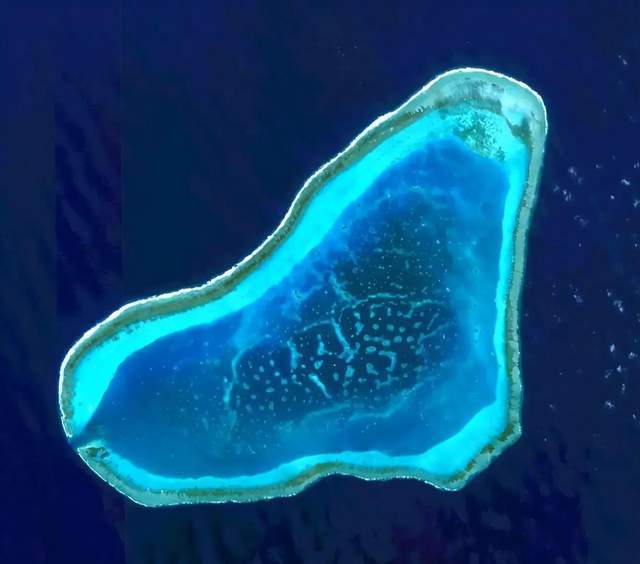
Chinese authorities have commenced coordinated Coast Guard and Southern Theater Command patrols around Huangyan Island (Scarborough Shoal), representing a significant escalation of Beijing's integrated maritime enforcement strategy. This development follows Philippine-US joint patrols on 27-28 June 2026 and likely increases risks of confrontations during heightened Philippine election season. Beijing now explicitly frames its operations as responding to Manila's alleged 'troublemaking' in the South China Sea.
Executive summary
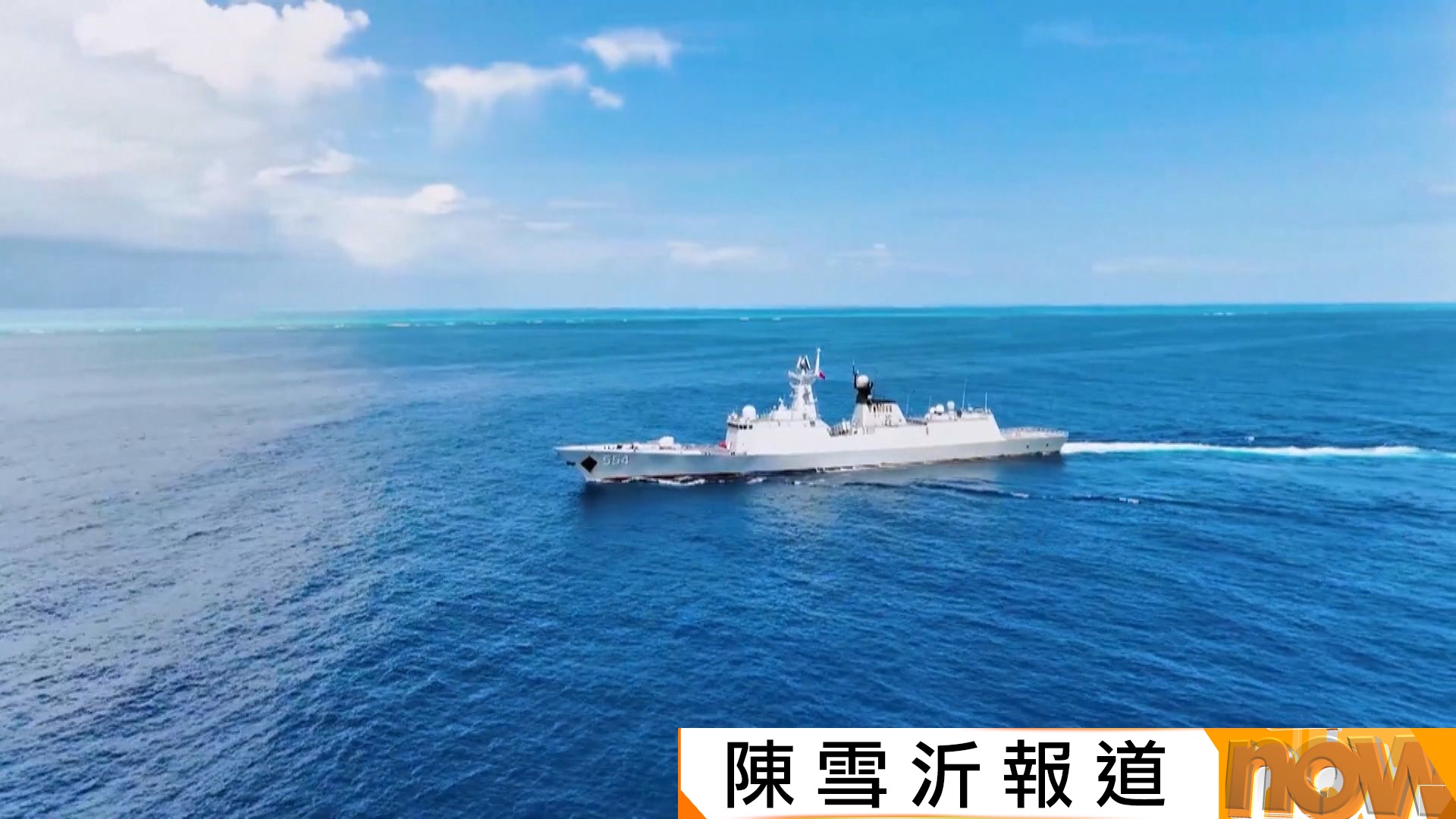
Chinese authorities have implemented coordinated maritime operations involving both Coast Guard and military assets around Huangyan Island, marking evolution from previous single-agency patrols. The People's Liberation Army Southern Theater Command and China Coast Guard concurrently conducted patrols on 1-2 July 2026, with Chinese diplomatic statements explicitly describing Manila's activities as 'troublemaking'. Meanwhile, Manila conducted its fifth Maritime Cooperation Activity with the United States in 2026 during the reporting period, which Beijing condemned as violating its 'inherent sovereignty'. The integration of civil and military maritime enforcement capabilities suggests a more assertive Chinese approach to disputed waters while Manila continues leveraging external partnerships to pressure Beijing, creating conditions for potential miscalculation.
Change from previous assessment
This assessment differs from the prior brief through confirmed civil-military coordination around Huangyan Island rather than separate Coast Guard and military operations. Previous Chinese messaging focused on 'lawful enforcement' whereas current statements explicitly label Manila a 'troublemaker', indicating rhetorical escalation. Confidence in Chinese operational details is higher than prior due to official announcements, but confidence regarding Philippine political dynamics is lower owing to domestic election considerations. The prior brief highlighted isolated Coast Guard patrols near Luzon whereas current analysis addresses integrated Chinese maritime strategy against multiple fronts.
Key judgments
- Chinese Coast Guard and Southern Theater Command units conducted coordinated patrols around Huangyan Island on 1-2 July 2026, implementing a new integrated enforcement strategy in disputed waters. (Confidence: high · REPORTED)
- I&W: Chinese state media publishes operational details of Coast Guard-military coordination within 24 hours (0-48 hours)
- I&W: Official Chinese statements cease mentioning 'routine patrols' in favour of 'lawful enforcement' terminology (1-2 weeks)
- Chinese diplomatic statements explicitly characterise Philippine-US joint patrols as violating China's 'indisputable sovereignty' over Huangyan Island, marking rhetorical escalation compared to previous 'unprovoked intrusion' framing. (Confidence: high · REPORTED)
- I&W: Chinese Foreign Ministry statements cease referencing 'temporary operations' or 'procedural compliance' (0-14 days)
- I&W: PLA Southern Theater Command issues written warnings prior to intercepts rather than verbal radio transmissions (1-3 weeks)
- It is likely that Philippine-US maritime cooperation will expand beyond previous joint patrols to include more sensitive capabilities given Manila's fifth Maritime Cooperation Activity of 2026 coinciding with increased Chinese enforcement activity. (Confidence: medium · ASSESSED)
- I&W: Philippine military acknowledges US Navy participation in at-sea communications during patrols (1-4 weeks)
- I&W: Joint patrols extend within 12 nautical miles of Chinese-occupied features (1-3 months)
- It is very likely that China will maintain this integrated enforcement approach at Huangyan Island while monitoring Japanese diplomatic reactions to parallel Chinese Coast Guard operations in Japan's exclusive economic zone east of Taiwan. (Confidence: medium · ASSESSED)
- I&W: Tokyo issues formal diplomatic protest against Chinese Coast Guard operations (0-14 days)
- I&W: Japanese Coast Guard vessels increase presence in area without direct Chinese vessel interactions (1-4 weeks)
- Unlikely that Philippine election dynamics will cause Manila to moderate its maritime cooperation with the United States despite Chinese condemnation. (Confidence: high · ASSESSED)
- I&W: Philippine military announces additional joint patrols with the United States or Japan (1-3 months)
- I&W: Manila formally invites external coast guard vessels to visit Philippine ports in disputed area (1-3 months)
Outlook & scenarios
Continued Coordinated Enforcement (65%)
Beijing maintains the current coordinated civil-military patrol pattern around Huangyan Island while Manila sustains regular joint patrols with the United States, resulting in frequent close encounters but no physical confrontations. Chinese authorities continue characterising Manila as a 'troublemaker' while avoiding escalation beyond radio hailing incidents and water cannon usage.
Diplomatic De-escalation (15%)
Manila suspends joint patrols for several months to facilitate election-period stability, prompting Beijing to scale back its civil-military coordination in favour of routine Coast Guard patrols. Both sides engage in working-level discussions through ASEAN mechanisms to establish confidence-building measures, though sovereignty disputes remain formally unresolved.
Accidental Escalation (15%)
During a Philippine-US patrol, a Chinese Coast Guard vessel executes aggressive manoeuvres to block an approaching US naval asset, causing minor damage to both vessels. Beijing claims Manila 'provoked' the incident while Manila demands reparations through ASEAN channels, prompting the United States to increase freedom of navigation operations in the area.
Japanese Diplomatic Response (5%)
Tokyo formally protests Chinese operations in its exclusive economic zone east of Taiwan, resulting in Manila and Tokyo establishing trilateral maritime coordination with the United States. This prompts Beijing to deploy additional resources across its maritime fronts, straining PRC enforcement capabilities across a wider operational area.
Recommendations
- Monitor AIS data for Chinese Coast Guard vessel concentrations within 50 nautical miles of Huangyan Island and Second Thomas Shoal to anticipate patrol patterns
- Track Japanese diplomatic channels for formal responses to Chinese operations within Japan's exclusive economic zone east of Taiwan
- Analyse Philippine presidential debates for candidates' positions on the 2016 arbitration ruling and joint patrols to forecast policy shifts post-election
- Identify Chinese Coast Guard vessels participating in integrated operations through satellite imagery analysis to assess resource allocation patterns
- Develop early warning indicator for Philippine election-related maritime activities that might prompt Chinese enforcement responses
Confidence & uncertainty
Assessed medium confidence stems from multiple Chinese government sources directly reporting coordinated patrols (Southern Theater Command announcements and Coast Guard operations), corroborated by Philippine media on joint patrols. However, the analysis of Beijing's strategic motivation rests largely on single-source Chinese statements without independent verification of internal decision-making processes. While the observable activities are well-documented, the assessment of Manila's future naval response depends heavily on single-source Philippine military statements that may reflect election-season positioning rather than operational reality.
Intelligence gaps
- [EEI 1.1 · PARTIAL] Number, class, and position (time-stamped) of Chinese Coast Guard (CCG), People’s Armed Forces Maritime Militia (PAFMM), and other PRC paramilitary/auxiliary vessels inside Philippine-claimed EEZ or within 12 nautical miles of Philippine-occupied features (e.g., Scarborough Shoal, Second Thomas/Ayungin Shoal, and other named features). Recommended collection: maritime/AIS
- [EEI 1.2 · UNCOVERED] Observed maneuvers or posture indicating hostile action: vessel-to-vessel blocking/contact, use of water cannons, boarding attempts, formation maneuvers to interdict Philippine vessels, or sustained stationing near Philippine resupply/relief routes. Recommended collection: imagery/satellite
- [EEI 1.3 · UNCOVERED] Incidents of Philippine vessels (coast guard, navy, supply boats, civilian fishing vessels) being ordered to alter course, detained, chased, or physically impeded — with time, location, involved units, and damage/injuries if any. Recommended collection: open-source/official statements
- [EEI 1.4 · UNCOVERED] Abrupt changes to vessel identification behavior: AIS transponder deactivations, spoofing, or mismatches between flagged identity and observed equipment/markings among PRC maritime law-enforcement or militia vessels operating near Philippine claims. Recommended collection: maritime/AIS
- [EEI 2.1 · PARTIAL] Issued directives, patrol orders, or internal guidance from PRC Central Military Commission, PLAN, CCG, or provincial maritime authorities that specify objectives, geographic limits, patrol tempos, or escalation thresholds for operations near Philippine-claimed features. Recommended collection: signals/communications
- [EEI 2.2 · UNCOVERED] Public declarations, maritime notices, or newly published 'maritime safety' or exclusion zones, with effective dates and coordinates, issued by Chinese authorities that could be used to justify interdiction or exclusion of Philippine activity. Recommended collection: open-source/official statements
- [EEI 2.3 · UNCOVERED] Evidence of mobilization orders, tasking lists, or logistics planning for Maritime Militia units (vessel requisitions, local fisheries bureau instructions, fuel/resupply manifests) indicating intent to employ militia alongside CCG/PLAN assets. Recommended collection: HUMINT/defense
- [EEI 3.1 · PARTIAL] Deployment and movement of Philippine Coast Guard and Navy vessels (class, location, on-station times) and scheduled or unscheduled escort/resupply missions to occupied features. Recommended collection: military/AIS
- [EEI 3.2 · UNCOVERED] Air component activity: number and frequency of Philippine air patrol sorties, maritime domain awareness flights, and air-to-surface or maritime strike assets placed on alert or redeployed toward contested areas. Recommended collection: imagery/satellite
- [EEI 3.3 · UNCOVERED] Requests for diplomatic, intelligence, or military assistance from allies (e.g., U.S., Australia, Japan) including notifications of planned joint patrols, port calls, or freedom of navigation operations with dates and participating units. Recommended collection: open-source/official statements
- [EEI 3.4 · UNCOVERED] Changes to Philippine rules of engagement, emergency law measures, mobilization orders, or civil advisories (evacuations, fishing bans) that alter civilian or military behavior in contested maritime zones. Recommended collection: open-source/official statements
Cited sources
[1] 163.com · 中方在黄岩岛清场,海警和解放军同步行动,对菲律宾挑衅不留情面 (B) · sha256:c9bbcc5a51ec [2] news.biyapay.com · 南海巡航常态化加剧,菲律宾拉拢域外力量会否触发误判风险? (B) · sha256:e6d733dc3a2e [3] m.sohu.com · 黄岩岛,中国挥出了重拳 (A) · sha256:2a7c86c33a57 [4] 163.com · 黄岩岛海警海军同时行动,菲律宾的30国外援,到底能帮什么忙? (B) · sha256:b1f699d7ce1d [5] news.now.com · 菲美聯合巡航爭議海域 中方批菲拉攏域外國家攪局南海 (B) · sha256:6054bda82e96 [6] 經濟日報 · 菲美8天2度南海聯合巡航 提升區域安全即時應對 | 國際焦點 | 國際 | 經濟日報 (A) · sha256:e6dcd0b07fd0 [7] 經濟日報 · 日媒:中國海警在台灣東海域常態航行 鮮明對抗日菲 | 大陸政經 | 兩岸 | 經濟日報 (B) · sha256:ec57459f0b88 [8] maritime-executive.com · Greece Arrests Cruise Ship Captain After Lines Part and Passenger Falls (B) · sha256:330d7a6d7e0c
Source content hashes were computed at collection time; the cited text is preserved unmodified for the life of this product.
TLP:CLEAR