TLP:CLEAR · Disclosure is not limited.
South China Sea Tensions: Maritime Pressure and Regional Military Activity
Time window: Last 7 days · Audience: General analyst · Type: Situation report · DTG: 2026-10-24 10:08Z · Overall confidence: HIGH
BLUF
The clearest evidence of elevated Chinese maritime presence near Thitu Island and Sabina Shoal is Manila’s report of more than 100 Chinese naval and coast guard vessels in September; it does not establish the level of activity during 17-24 October. China announced live-fire activity near Zhanjiang from 12 to 16 October, but the available reporting does not show that it was directed at the Philippines.
Executive summary
Reporting describes Chinese naval and coast guard activity near Philippine-held features, Chinese military training across several seas, and steps by Taiwan and the Philippines to strengthen maritime ties. The reported count near Thitu Island and Sabina Shoal refers to September, while a separate China Coast Guard sighting near Thitu carries a 21 February date and does not establish activity this week. Keen Sword 27 began in Japan on 19 October and was reported to involve nearly 60,000 personnel; whether the US deployed NMESIS to Yonaguni during the exercise remains disputed. China’s 47-day live-fire closure is in the southern Yellow Sea, not the South China Sea, and should be treated as separate activity. Reports about an entry into Taiwan-designated restricted waters near Dongsha remain weakly corroborated.
Change from previous assessment
Since the 23 October brief, the supplied reporting adds mid-October Chinese training notices across several seas, the 47-day southern Yellow Sea firing period, the start of Keen Sword 27, and reported steps towards closer Taiwan-Philippines maritime ties. This strengthens the picture of concurrent regional military activity but does not establish that the Chinese exercises were directed at Manila or linked to Keen Sword 27. The current claims do not independently confirm the previously reported Scarborough Shoal encounter or the weekly vessel tally, so those assessments remain unresolved. The Dongsha restricted-waters concern is retained at low confidence because the entry claim remains weakly corroborated.
Key judgments
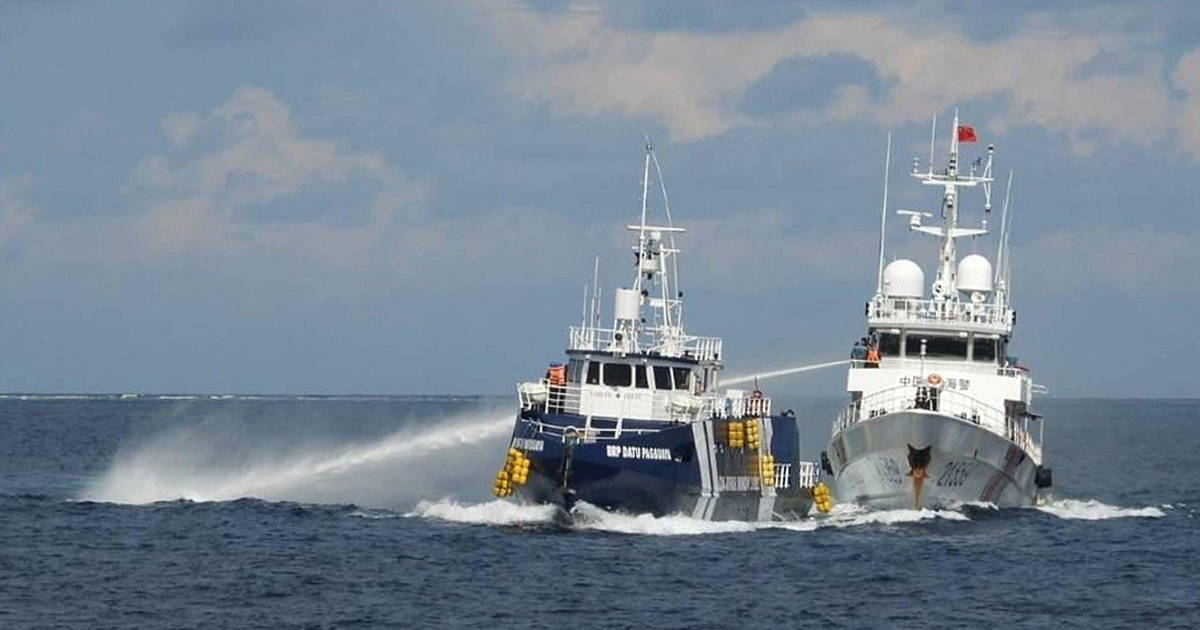
- Chinese naval and coast guard presence near Thitu Island and Sabina Shoal was reported as elevated in September, but the reporting does not establish the same level during 17-24 October. Manila reported more than 100 vessels in the area; a separate report of a China Coast Guard ship near Thitu carries a 21 February date, with no year specified in the claim. Confidence is low because the vessel count is attributed to Manila through social media and the separate sighting is not clearly dated to this reporting period. (Confidence: low · REPORTED)
- I&W: Confirm: the Armed Forces of the Philippines or Philippine Coast Guard publishes a dated count or sighting record for Chinese naval or coast guard vessels near Thitu Island or Sabina Shoal. (0-14 days)
- I&W: Break: Manila publicly corrects or withdraws its report of more than 100 vessels near Thitu Island and Sabina Shoal in September. (0-14 days)
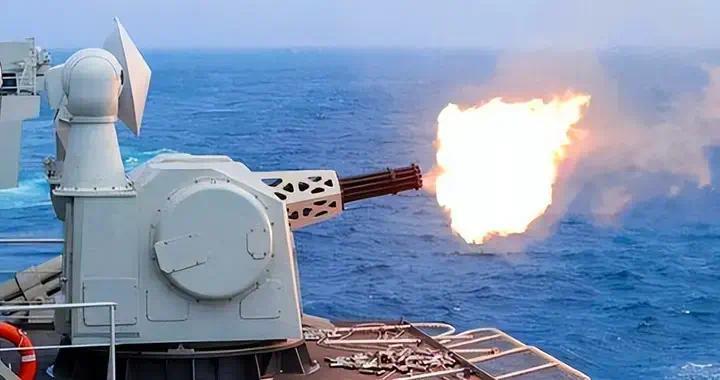
- Chinese maritime authorities announced military activity across the South China Sea, East China Sea, Yellow Sea and Bohai Sea in mid-October, including reported live firing near Zhanjiang from 12 to 16 October. Accounts differ on the number of activity areas and the end dates reported for some zones, so the full scale is not settled. Confidence is medium: several reports describe the notices, but some are low-reliability accounts and the details conflict. (Confidence: medium · REPORTED)
- I&W: Confirm: the original Zhanjiang maritime warning specifies live firing in the South China Sea from 12 to 16 October. (0-14 days)
- I&W: Break: an original maritime warning or official correction shows that the Zhanjiang notice did not cover live firing on those dates. (0-14 days)
- The available reporting does not substantiate a direct link between China’s mid-October exercise activity and either Keen Sword 27 or an effort to compel Manila to reduce maritime activity. The claims that the exercise was a response or an attempt to intimidate the Philippines come from commentary, not evidence of Chinese operational intent. Confidence is low because intent is uncorroborated and the supporting assessments rely on social media reporting. (Confidence: low · ASSESSED)
- I&W: Confirm: a Chinese government or PLA statement explicitly links the October exercise activity to Keen Sword 27 or Philippine maritime operations. (0-14 days)
- I&W: Break: an authoritative exercise schedule or statement identifies the relevant activity as planned independently of Keen Sword 27 and Philippine operations. (0-14 days)
- Keen Sword 27 was reported to have begun in Japan on 19 October with nearly 60,000 Japanese and US personnel, including the USS Theodore Roosevelt. Whether the US deployed NMESIS to Yonaguni during the exercise remains unresolved: some reports say it was deployed, while an earlier account says it was planned. Confidence is medium because the exercise is reported across multiple accounts, but deployment status is directly contested and several supporting reports are blogs or social media. (Confidence: medium · REPORTED)
- I&W: Confirm: a US or Japanese official release, or clear exercise imagery, establishes that NMESIS operated from Yonaguni during Keen Sword 27. (0-14 days)
- I&W: Break: a US or Japanese official statement says NMESIS was not deployed to Yonaguni or remained only a planned deployment. (0-14 days)
- There is a roughly even chance of another close-range encounter involving Chinese and Philippine forces near Scarborough Shoal, Thitu Island, Sabina Shoal or Second Thomas Shoal within 1 to 3 months. Reports of Chinese vessel concentrations, an interception at Second Thomas Shoal and a cutter ramming a Philippine fisheries vessel support the forecast, but the incident accounts are thin and rely heavily on social media or think-tank reporting. Confidence is low. (Confidence: low · ASSESSED)
- I&W: Confirm: the Philippine Coast Guard or Armed Forces of the Philippines reports an interception, collision or close approach involving Chinese vessels during a patrol or resupply operation at one of the named features. (1-3 months)
- I&W: Break: the Philippine Coast Guard or Armed Forces of the Philippines records no Chinese interception or close approach at the named features through 24 January 2027. (1-3 months)
- Taiwan and the Philippines are reported to be taking steps to strengthen maritime ties amid pressure from Chinese vessels, but the reporting does not identify a new agreement or operation. Confidence is medium: the account comes from a major media outlet, while the specific cooperation measures remain unspecified. (Confidence: medium · REPORTED)
- I&W: Confirm: Taipei or Manila announces a new joint maritime activity or a specific maritime cooperation arrangement. (1-3 months)
- I&W: Break: either government publicly clarifies that no new maritime cooperation steps are under way. (1-3 months)
- There is a roughly even chance that some Chinese vessels entered Taiwan-designated restricted waters near Dongsha on 18 October. Taiwan’s coast guard said it drove away 16 Chinese coast guard, research and fishing vessels around Taiwan and Pratas, but the claim that some entered restricted waters is carried in weakly corroborated social media reporting. Confidence is low. (Confidence: low · REPORTED)
- I&W: Confirm: Taiwan’s coast guard publishes a dated incident account identifying vessels and positions inside the restricted waters near Dongsha. (0-14 days)
- I&W: Break: Taiwan’s coast guard clarifies that the vessels reported on 18 October remained outside the restricted waters. (0-14 days)
Outlook & scenarios
Continued maritime pressure without a major incident (45%)
Chinese naval and coast guard activity continues near Thitu Island, Sabina Shoal or other disputed features. Manila maintains its maritime activities and public claims, while encounters remain controlled and no collision is reported.
A controlled close-range encounter (40%)
A Chinese vessel approaches or intercepts a Philippine patrol or resupply operation near Second Thomas Shoal, Thitu Island, Sabina Shoal or Scarborough Shoal. Both sides issue competing accounts, but the encounter does not cause fatalities or weapons use.
Reduced contact and practical maritime cooperation (13%)
Chinese and Philippine vessels have fewer close interactions at the named features. Taiwan and the Philippines make their reported maritime cooperation more concrete through an announced joint activity or arrangement.
High-impact collision or weapons incident (2%)
A collision causing fatalities or the use of weapons during an encounter at a disputed feature prompts an immediate crisis between Beijing and Manila and demands urgent regional diplomatic attention.
Recommendations
- For the next update, separate September vessel counts from sightings dated within 17-24 October. Record the original reporting date, observation date, named vessel and location for each claim about Thitu Island and Sabina Shoal.
- Check the original Chinese maritime warnings for Zhanjiang and the other named locations. Reconcile the reported number of exercise areas and their end dates before describing the activity as a single coordinated operation.
- Keep the southern Yellow Sea 47-day closure separate from South China Sea activity. Do not use the closure alone as evidence of pressure on the Philippines.
- Treat the NMESIS deployment to Yonaguni as unconfirmed until a US or Japanese official release or clear exercise evidence resolves the conflicting reports.
- Seek a dated Taiwan Coast Guard account of the 18 October vessel activity around Dongsha, including vessel types and positions. Do not merge the restricted-waters allegation with reports of separate encounters involving fishing vessels.
- Track Philippine Coast Guard and Armed Forces of the Philippines reporting on encounters at Second Thomas Shoal, Thitu Island, Sabina Shoal and Scarborough Shoal. Record whether each report describes an approach, interception, collision or resupply disruption.
Confidence & uncertainty
Overall confidence is high in the broad picture of heightened regional military and maritime activity, including the reported start of Keen Sword 27 and the publication of Chinese maritime training warnings. Confidence is lower in the precise scale of Chinese activity in the South China Sea, the status of the NMESIS deployment, and claims about intent or entry into restricted waters; those details rely on contested, social media or single-source reporting.
Alternative analysis (red cell)
The available incidents indicate elevated maritime friction, but claims, and 58944b5e-6ee0-48cf-a2c9-4bd2f953e327 do not support a calibrated 50 percent forecast for another encounter. Similarly, claim b5ec0aee-af76-41f1-aaf4-0edeae9e751b supports vessel presence and a reported expulsion, while claims 5edb3a2b-6581-44d3-82f1-680758961abf and 71884de2-9e21-4821-9d09-1cddd55446b8 do not independently establish entry into restricted waters. The more defensible reading is that both outcomes remain indeterminate, with the underlying encounter or presence claims better supported than the stated probabilities.
Intelligence gaps
- [EEI 1.1 · PARTIAL] Number, class, and position (time-stamped) of Chinese Coast Guard (CCG), People’s Armed Forces Maritime Militia (PAFMM), and other PRC paramilitary/auxiliary vessels inside Philippine-claimed EEZ or within 12 nautical miles of Philippine-occupied features (e.g., Scarborough Shoal, Second Thomas/Ayungin Shoal, and other named features). Recommended collection: maritime/AIS
- [EEI 1.4 · UNCOVERED] Abrupt changes to vessel identification behavior: AIS transponder deactivations, spoofing, or mismatches between flagged identity and observed equipment/markings among PRC maritime law-enforcement or militia vessels operating near Philippine claims. Recommended collection: maritime/AIS
- [EEI 2.1 · PARTIAL] Issued directives, patrol orders, or internal guidance from PRC Central Military Commission, PLAN, CCG, or provincial maritime authorities that specify objectives, geographic limits, patrol tempos, or escalation thresholds for operations near Philippine-claimed features. Recommended collection: signals/communications
- [EEI 2.2 · PARTIAL] Public declarations, maritime notices, or newly published 'maritime safety' or exclusion zones, with effective dates and coordinates, issued by Chinese authorities that could be used to justify interdiction or exclusion of Philippine activity. Recommended collection: open-source/official statements
- [EEI 2.3 · PARTIAL] Evidence of mobilization orders, tasking lists, or logistics planning for Maritime Militia units (vessel requisitions, local fisheries bureau instructions, fuel/resupply manifests) indicating intent to employ militia alongside CCG/PLAN assets. Recommended collection: HUMINT/defense
- [EEI 3.1 · UNCOVERED] Deployment and movement of Philippine Coast Guard and Navy vessels (class, location, on-station times) and scheduled or unscheduled escort/resupply missions to occupied features. Recommended collection: military/AIS
- [EEI 3.2 · UNCOVERED] Air component activity: number and frequency of Philippine air patrol sorties, maritime domain awareness flights, and air-to-surface or maritime strike assets placed on alert or redeployed toward contested areas. Recommended collection: imagery/satellite
- [EEI 3.3 · PARTIAL] Requests for diplomatic, intelligence, or military assistance from allies (e.g., US, Australia, Japan) including notifications of planned joint patrols, port calls, or freedom of navigation operations with dates and participating units. Recommended collection: open-source/official statements
- [EEI 3.4 · UNCOVERED] Changes to Philippine rules of engagement, emergency law measures, mobilization orders, or civil advisories (evacuations, fishing bans) that alter civilian or military behavior in contested maritime zones. Recommended collection: open-source/official statements
Red cell review: PARTIAL DISSENT
TLP:CLEAR