TLP:CLEAR · Disclosure is not limited.
South China Sea Tensions: Monitored Resupply, Unverified Vessel Surge
Time window: Last 7 days · Audience: General analyst · Type: Situation report · DTG: 2026-10-28 10:08Z · Overall confidence: MEDIUM
BLUF
China Coast Guard permission preceded a reported 21 October delivery of basic supplies to the Sierra Madre at Second Thomas Shoal, but the evidence does not establish a durable easing of Chinese enforcement. Manila says Chinese military and coast guard presence nearly doubled in September, while a summary-only report of 48 Chinese fishing vessels near Recto Bank remains unverified.
Executive summary
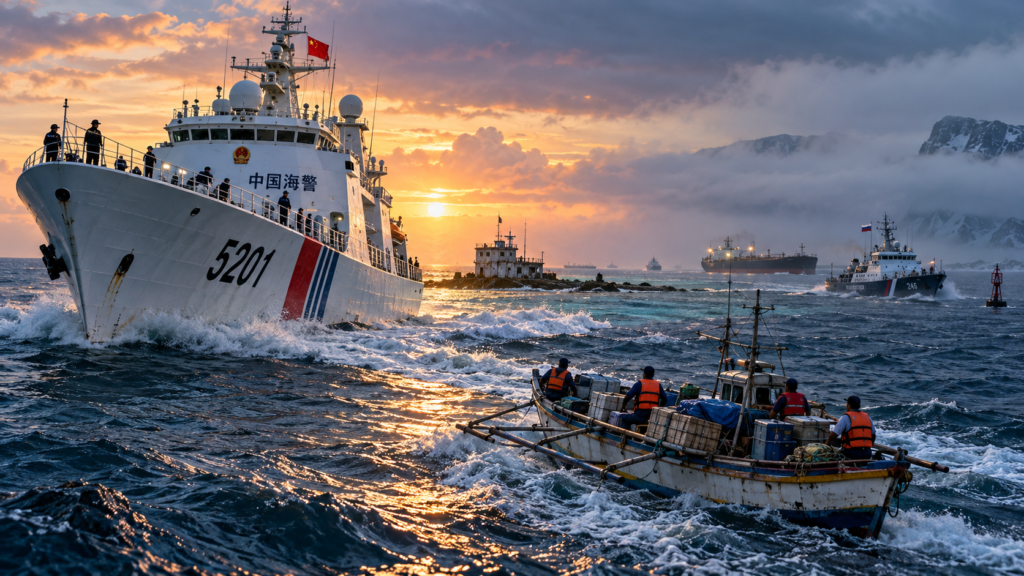
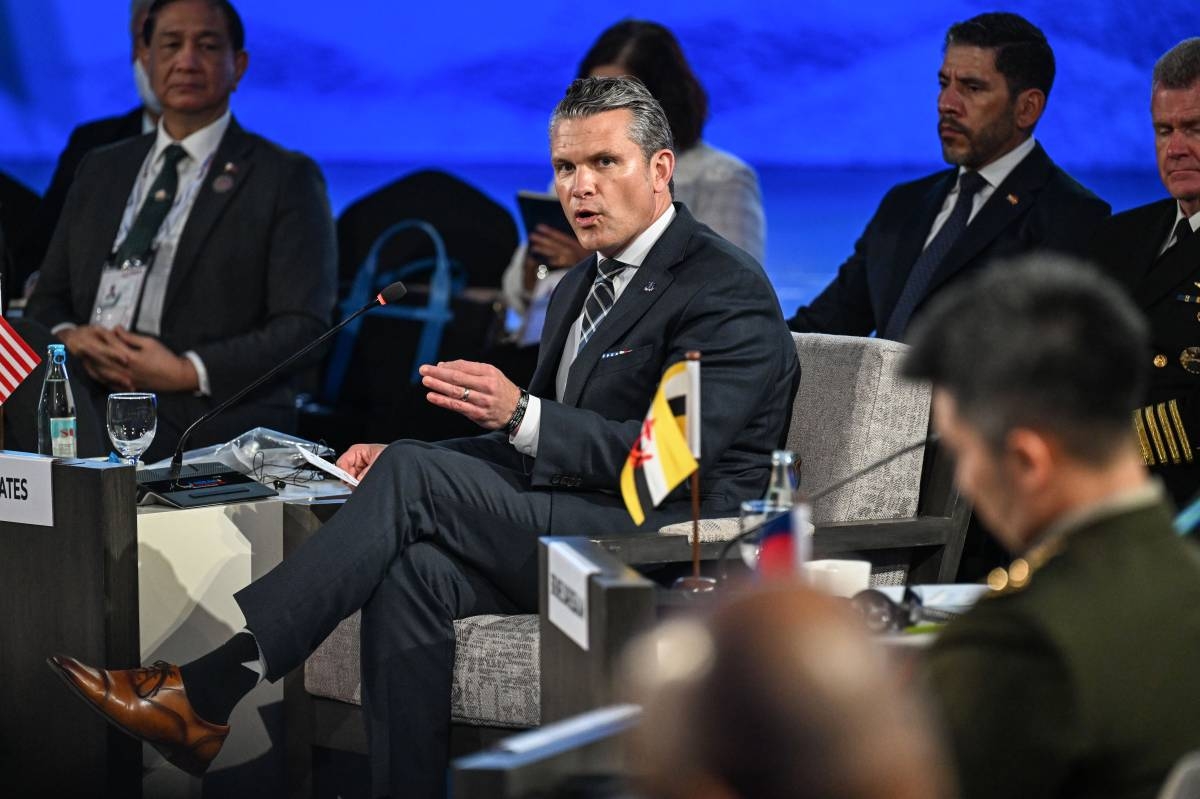
China Coast Guard announced on 21 October that it would allow Philippine supply vessels to reach Second Thomas Shoal. A later social-media account says Philippine forces delivered basic supplies to the Sierra Madre under China Coast Guard supervision. This contrasts with reports of Chinese interference with a September resupply, but the sources do not show whether October marked a lasting change in practice. Manila's claim that Chinese military and coast guard presence nearly doubled in September is reported by major media and a wire service, though neither establishes the underlying counts. A 28 October article summary attributes a report of 48 Chinese fishing vessels near Iroquois and Sabina at Recto Bank to the Armed Forces of the Philippines; the full article was unavailable. At a meeting in Cebu on 28 October, Pete Hegseth proposed a US-Asean defence framework and called for stronger maritime domain awareness. That proposal is not evidence of an operational change.
Change from previous assessment
Since the 27 October brief, the resupply is now described as occurring on 21 October rather than 20 October, and a China Coast Guard permission statement has been added. I raise the delivery judgment from low to medium confidence because the permission statement accompanies reporting of the delivery, while retaining the caveat that completion and supervision rely on social media. New reporting adds Manila's claim that Chinese military and coast guard presence nearly doubled in September and a 28 October summary-only report of 48 vessels near Recto Bank. The estimate of another close encounter remains a roughly even chance at low confidence.
Key judgments
- The 21 October delivery of basic living supplies to the Sierra Madre at Second Thomas Shoal likely took place under China Coast Guard supervision, after the China Coast Guard announced permission for Philippine vessels. The Coast Guard statement confirms permission, while accounts of the completed delivery and its supervision rely on social-media reporting. (Confidence: medium · REPORTED)
- I&W: A Philippine or China Coast Guard statement confirms that supplies reached the Sierra Madre on 21 October and describes the monitoring arrangement. (0-14 days)
- I&W: Manila or Beijing issues a correction stating that the 21 October delivery did not take place or that the reported date is wrong. (0-14 days)
- There is a roughly even chance that the 21 October permission was an incident-specific accommodation rather than a durable easing of China Coast Guard enforcement at Second Thomas Shoal. Reports describe Chinese interference with a September resupply, while October reporting describes permission and a monitored delivery; the reporting on both episodes has gaps and does not resolve whether policy changed. (Confidence: low · ASSESSED)
- I&W: The China Coast Guard permits the next Philippine resupply to the Sierra Madre without blocking or turning back the vessels, which would support a durable easing. (1-3 months)
- I&W: China Coast Guard cutters block or turn back a Philippine resupply mission to Second Thomas Shoal, which would support an incident-specific accommodation. (1-3 months)
- Chinese military and coast guard presence in contested South China Sea waters likely rose sharply in September, but the nearly doubled figure remains Manila's estimate and is not independently established by the supplied reporting. Major media and a wire service report Manila's claim, but both attribute it to the Philippine government. (Confidence: medium · REPORTED)
- I&W: Manila publishes a September vessel-count series that supports its nearly doubled estimate. (0-30 days)
- I&W: Manila revises the estimate, or publishes counts that do not show a near-doubling of Chinese presence. (0-30 days)
- A 28 October article summary attributes to the Armed Forces of the Philippines a report of 48 Chinese fishing vessels near Iroquois and Sabina at Recto Bank. The full article was not available, so the reported number and vessel concentration remain unverified. (Confidence: low · REPORTED)
- I&W: A full Armed Forces of the Philippines statement or time-stamped imagery confirms 48 Chinese fishing vessels near Iroquois and Sabina. (0-14 days)
- I&W: The Armed Forces of the Philippines corrects the count or identifies the vessels as being elsewhere or of a different type. (0-14 days)
- There is a roughly even chance of another close encounter involving Chinese and Philippine vessels near Second Thomas Shoal, Scarborough Shoal or Recto Bank within 1-3 months. Reports of September resupply interference, an air confrontation at Scarborough Shoal and recent vessel activity support recurring contact, but gaps and disputed details limit confidence. The supplied reporting does not support predicting an armed exchange. (Confidence: low · ASSESSED)
- I&W: The Philippine Coast Guard or China Coast Guard reports a close approach, interception, collision or water-cannon incident involving Chinese and Philippine vessels at one of the named shoals or banks. (0-3 months)
- I&W: Official Philippine and Chinese reporting records no close approach or interception at Second Thomas Shoal, Scarborough Shoal or Recto Bank during the period. (0-3 months)
Outlook & scenarios
Monitored resupply continues (55%)
A managed pattern is likely: the China Coast Guard permits Philippine deliveries of necessities to the Sierra Madre while monitoring the vessels. Close contact continues, but neither side uses force during the next resupply.
Interference resumes (35%)
A renewed obstruction is unlikely, but remains a credible outcome. China Coast Guard cutters block or turn back a Philippine resupply, prompting public protest from Manila and renewed attention to Philippine Defence Secretary Gilberto Teodoro's warning about forcible removal of the Sierra Madre.
Forcible removal attempt (5%)
A forcible attempt to tow the Sierra Madre is very unlikely, but would carry high escalation risk. Teodoro has reportedly said the Philippines would consider such an action an act of war; the supplied reporting does not establish what response Manila would take.
Recommendations
- Verify the 21 October delivery against Philippine and China Coast Guard statements. Record separately whether permission was announced, whether supplies reached the Sierra Madre, and whether China Coast Guard vessels monitored the operation.
- Seek the full 28 October report and any detailed Armed Forces of the Philippines statement on the 48 vessels near Iroquois and Sabina. Do not treat the count as confirmed until the location, vessel types and reporting time are checkable.
- Maintain separate counts for China Coast Guard vessels, PLA Navy ships and Chinese fishing vessels at Second Thomas Shoal, Scarborough Shoal and Recto Bank. Distinguish Philippine government estimates from independently corroborated positions.
- Track whether Hegseth's proposed US-Asean defence framework produces specific maritime domain awareness measures. Treat the proposal as intent until an operational activity is reported.
Confidence & uncertainty
Confidence is medium because the China Coast Guard's permission announcement is reported by a wire service, and Manila's near-doubling claim is carried by major media and a wire service. Those reports establish what the parties said more firmly than they establish the underlying vessel counts. The reported completion and supervision of the October delivery rely on social-media accounts, the September resupply reports conflict with the October account, and the Recto Bank count was read only in an article summary.
Intelligence gaps
- [EEI 1.4 · UNCOVERED] Abrupt changes to vessel identification behavior: AIS transponder deactivations, spoofing, or mismatches between flagged identity and observed equipment/markings among PRC maritime law-enforcement or militia vessels operating near Philippine claims. Recommended collection: maritime/AIS
- [EEI 2.1 · PARTIAL] Issued directives, patrol orders, or internal guidance from PRC Central Military Commission, PLAN, CCG, or provincial maritime authorities that specify objectives, geographic limits, patrol tempos, or escalation thresholds for operations near Philippine-claimed features. Recommended collection: signals/communications
- [EEI 2.2 · PARTIAL] Public declarations, maritime notices, or newly published 'maritime safety' or exclusion zones, with effective dates and coordinates, issued by Chinese authorities that could be used to justify interdiction or exclusion of Philippine activity. Recommended collection: open-source/official statements
- [EEI 2.3 · UNCOVERED] Evidence of mobilization orders, tasking lists, or logistics planning for Maritime Militia units (vessel requisitions, local fisheries bureau instructions, fuel/resupply manifests) indicating intent to employ militia alongside CCG/PLAN assets. Recommended collection: HUMINT/defense
- [EEI 3.1 · PARTIAL] Deployment and movement of Philippine Coast Guard and Navy vessels (class, location, on-station times) and scheduled or unscheduled escort/resupply missions to occupied features. Recommended collection: military/AIS
- [EEI 3.2 · UNCOVERED] Air component activity: number and frequency of Philippine air patrol sorties, maritime domain awareness flights, and air-to-surface or maritime strike assets placed on alert or redeployed toward contested areas. Recommended collection: imagery/satellite
- [EEI 3.3 · PARTIAL] Requests for diplomatic, intelligence, or military assistance from allies (e.g., US, Australia, Japan) including notifications of planned joint patrols, port calls, or freedom of navigation operations with dates and participating units. Recommended collection: open-source/official statements
- [EEI 3.4 · PARTIAL] Changes to Philippine rules of engagement, emergency law measures, mobilization orders, or civil advisories (evacuations, fishing bans) that alter civilian or military behavior in contested maritime zones. Recommended collection: open-source/official statements
Red cell review: CONCUR WITH COMMENT
TLP:CLEAR