TLP:CLEAR · Disclosure is not limited.
South China Sea tensions: Pacific missile test fuels diplomatic friction
Time window: Last 7 days · Audience: General analyst · Type: Situation report · DTG: 2026-07-07 10:16Z · Overall confidence: HIGH
BLUF
China’s 6 July submarine‑launched ballistic missile test in the South Pacific drew public condemnation from the United States, Australia, New Zealand and Japan, and is likely to amplify strategic signalling that spills into the South China Sea in the coming weeks. Notification and legality are already contested, which will keep the diplomatic temperature high.
Executive summary
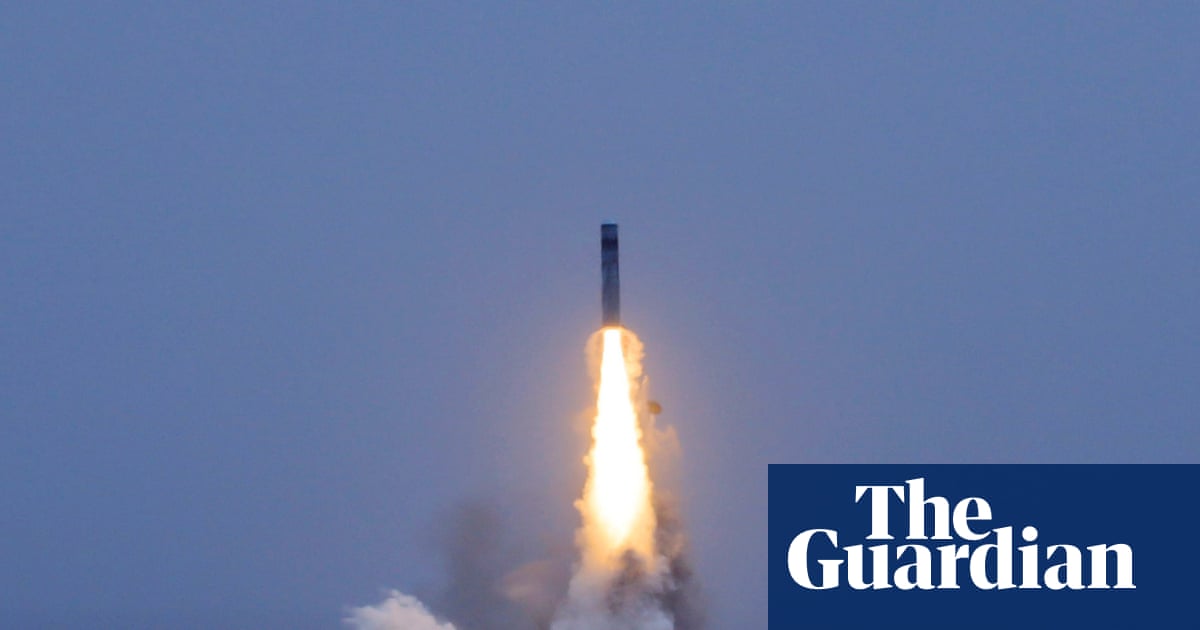
China’s navy test‑launched a long‑range ballistic missile from a nuclear‑powered submarine into the South Pacific on 6 July, using an unarmed round with a dummy warhead. Washington monitored the launch and governments in Canberra, Wellington and Tokyo publicly criticised it as destabilising, while Beijing described it as a routine, safe and professional training activity. Australia has also argued the test did not comply with international law and was conducted with insufficient notice, and New Zealand said it received word only hours beforehand. The incident has increased U.S., China tensions and will shape regional signalling. The South China Sea remains structurally contested by overlapping claims and by earlier Chinese island‑building and outposts, conditions that typically generate recurrent grey‑zone friction among claimants even when specific at‑sea incidents are not in focus.
Change from previous assessment
New reporting confirms the 6 July submarine‑launched ballistic missile test into the South Pacific and documents allied condemnation and Chinese official justifications. This update shifts weight from anticipated signalling to confirmed strategic messaging and adds a legal‑notification dispute line. South China Sea‑specific operational reporting is thinner in this cycle, so prior expectations of persistent grey‑zone friction are retained but not expanded. Initial assessment of spillover into South China Sea signalling is added with medium confidence.
Key judgments
- China very likely conducted a submarine‑launched long‑range ballistic missile test into the South Pacific on 6 July using an unarmed round with a dummy warhead, which the United States monitored and which the United States, Australia, New Zealand and Japan publicly criticised as destabilising. (Confidence: high · REPORTED)
- I&W: Official release of test hazard‑area coordinates or telemetry by Beijing or Washington that matches reported timing and splashdown area. (0-14 days)
- I&W: Additional allied government statements or parliamentary records formally condemning the 6 July launch. (0-14 days)
- The test is likely to heighten strategic signalling and diplomatic friction across the Western Pacific, including the South China Sea, over the next one to three months. (Confidence: medium · ASSESSED)
- I&W: China’s Maritime Safety Administration or PLA issues new navigational warnings establishing live‑fire or exercise closure areas in the South China Sea. (0-14 days)
- I&W: Publicly announced allied operations or statements that explicitly link the South China Sea to the 6 July test and call for restraint. (1-3 months)
- Notification and legality of the 6 July launch will likely remain contested, with Australia alleging insufficient notice and non‑compliance with international law, New Zealand saying it was informed only hours beforehand, and Beijing insisting the test was safe, routine and professionally conducted. (Confidence: high · REPORTED)
- I&W: Australia or New Zealand publishes diplomatic demarches or legal analyses detailing notice shortfalls or treaty implications. (0-14 days)
- I&W: China releases detailed pre‑notification records acknowledged by Australia or New Zealand as sufficient. (0-14 days)
- Structural drivers of South China Sea friction are intact, making recurrent grey‑zone contention among claimants likely to persist this quarter, given the overlapping claims, the 2016 tribunal ruling against the nine‑dash line narrative, and China’s prior island‑building and outpost network. (Confidence: medium · ASSESSED)
- I&W: Fresh enforcement actions or construction activity reported at Spratly or other contested features by any claimant. (1-3 months)
- I&W: Public references by claimant governments to the 2016 arbitral award in new diplomatic protests. (1-3 months)
Outlook & scenarios
Diplomatic censure and routine signalling (60%)
Allies sustain public criticism of the 6 July launch while China reiterates that it was routine and lawful. Expect intermittent exercise closure notices and rhetorical sparring that spills over into South China Sea talking points, but without a major operational departure from recent patterns.
Follow‑on missile test or high‑visibility drills (40%)
Within the training cycle, the PLA conducts an additional long‑range test or announces prominent exercises, prompting renewed statements from Washington, Tokyo, Canberra and Wellington and reinforcing a firmer allied narrative that links Pacific tests to wider maritime concerns including the South China Sea.
Legal and notification dispute intensifies (30%)
Australia formalises a legal challenge narrative focused on insufficient notice and regional treaty sensitivities, New Zealand presses for earlier notifications, and Beijing releases limited procedural details. The argument hardens positions, complicating de‑escalatory messaging tied to South China Sea risk management.
Non‑lethal at‑sea run‑in (20%)
Heightened tensions contribute to a non‑injurious interaction at sea in South China Sea contested waters as patrols and presence operations intersect. The event triggers duelling narratives and brief spikes in diplomatic friction without sustained force employment.
Recommendations
- Monitor China’s Maritime Safety Administration and NOTAM channels for new South China Sea exercise or exclusion notices and map them against contested features for potential access impacts.
- Track official statements from Washington, Tokyo, Canberra, Wellington and Taipei for shifts from rhetorical censure to operational signalling tied explicitly to the South China Sea.
- Compile and compare any released hazard‑area coordinates or pre‑notification records with allied timelines to assess the strength of legality and notification claims.
- Prepare a short‑fuse indicator set for non‑lethal maritime run‑ins: sudden navigational warnings near Spratly features, unusual massing of law‑enforcement or militia vessels, and rapidly issued duelling press releases.
- Update partner outreach notes to emphasise crisis‑communication channels and deconfliction mechanisms that can be activated quickly if exercise areas overlap with commercial routes.
Confidence & uncertainty
Overall confidence is high because multiple independent, reliable sources corroborate the 6 July submarine‑launched missile test, its unarmed nature, allied monitoring, and broad condemnation. Chinese official and media lines describing the launch as routine and professional are also on record, offering source diversity that supports contested‑narrative analysis. Uncertainties remain around the precise trajectory and notification regime, and the extent to which the test will translate into concrete South China Sea operational changes, but these do not materially undercut the central, well‑sourced judgments.
Alternative analysis (red cell)
There are credible reports that a Chinese ballistic‑missile launch occurred into the Pacific and that several governments criticised it, but the ledger shows key technical and legal elements (submarine platform, SLBM characterization, exact trajectory, and notification timing) are concentrated in a limited source set and contradicted in places. A cautious estimate is warranted: the event is plausibly a Chinese missile test that drew international concern, but critical details remain unresolved pending independent sensor, imagery, and diplomatic records.
Intelligence gaps
- [EEI 1.1 · UNCOVERED] Number, class, and position (time-stamped) of Chinese Coast Guard (CCG), People’s Armed Forces Maritime Militia (PAFMM), and other PRC paramilitary/auxiliary vessels inside Philippine-claimed EEZ or within 12 nautical miles of Philippine-occupied features (e.g., Scarborough Shoal, Second Thomas/Ayungin Shoal, and other named features). Recommended collection: maritime/AIS
- [EEI 1.2 · UNCOVERED] Observed maneuvers or posture indicating hostile action: vessel-to-vessel blocking/contact, use of water cannons, boarding attempts, formation maneuvers to interdict Philippine vessels, or sustained stationing near Philippine resupply/relief routes. Recommended collection: imagery/satellite
- [EEI 1.3 · UNCOVERED] Incidents of Philippine vessels (coast guard, navy, supply boats, civilian fishing vessels) being ordered to alter course, detained, chased, or physically impeded — with time, location, involved units, and damage/injuries if any. Recommended collection: open-source/official statements
- [EEI 1.4 · UNCOVERED] Abrupt changes to vessel identification behavior: AIS transponder deactivations, spoofing, or mismatches between flagged identity and observed equipment/markings among PRC maritime law-enforcement or militia vessels operating near Philippine claims. Recommended collection: maritime/AIS
- [EEI 2.1 · UNCOVERED] Issued directives, patrol orders, or internal guidance from PRC Central Military Commission, PLAN, CCG, or provincial maritime authorities that specify objectives, geographic limits, patrol tempos, or escalation thresholds for operations near Philippine-claimed features. Recommended collection: signals/communications
- [EEI 2.2 · UNCOVERED] Public declarations, maritime notices, or newly published 'maritime safety' or exclusion zones, with effective dates and coordinates, issued by Chinese authorities that could be used to justify interdiction or exclusion of Philippine activity. Recommended collection: open-source/official statements
- [EEI 2.3 · UNCOVERED] Evidence of mobilization orders, tasking lists, or logistics planning for Maritime Militia units (vessel requisitions, local fisheries bureau instructions, fuel/resupply manifests) indicating intent to employ militia alongside CCG/PLAN assets. Recommended collection: HUMINT/defense
- [EEI 3.1 · UNCOVERED] Deployment and movement of Philippine Coast Guard and Navy vessels (class, location, on-station times) and scheduled or unscheduled escort/resupply missions to occupied features. Recommended collection: military/AIS
- [EEI 3.2 · UNCOVERED] Air component activity: number and frequency of Philippine air patrol sorties, maritime domain awareness flights, and air-to-surface or maritime strike assets placed on alert or redeployed toward contested areas. Recommended collection: imagery/satellite
- [EEI 3.3 · UNCOVERED] Requests for diplomatic, intelligence, or military assistance from allies (e.g., U.S., Australia, Japan) including notifications of planned joint patrols, port calls, or freedom of navigation operations with dates and participating units. Recommended collection: open-source/official statements
- [EEI 3.4 · UNCOVERED] Changes to Philippine rules of engagement, emergency law measures, mobilization orders, or civil advisories (evacuations, fishing bans) that alter civilian or military behavior in contested maritime zones. Recommended collection: open-source/official statements
Cited sources
[1] military.com · China Test-Launches a Ballistic Missile in the South Pacific and Raises Regional Concerns (A) · sha256:8b6159113165 [2] jpost.com · China test fires missile into Pacific, alarming regional powers (B) · sha256:97407745f45b [3] theguardian.com · China missile test: what do we know and why are countries in the region concerned? (A) · sha256:99a81a1088a4 [4] marinelink.com · China Alarms Other Pacific Powers With Missile Test (B) · sha256:b54d65aa1321 [5] Wikipedia · 2023 Chinese balloon incident (B) · sha256:668e970993bc [6] theguardian.com · Australian PM says Chinese missile test could have caused ‘considerable damage’ if weaponised (A) · sha256:1ed2e4521a44 [7] Wikipedia · Territorial disputes in the South China Sea (F) · sha256:9bd4070987a2
Source content hashes were computed at collection time; the cited text is preserved unmodified for the life of this product.
Red cell review: PARTIAL DISSENT
TLP:CLEAR