TLP:CLEAR · Disclosure is not limited.
South China Sea tensions: Philippines-China maritime friction and outlook, 7-14 July 2026
Time window: Last 7 days · Audience: General analyst · Type: Situation report · DTG: 2026-07-14 10:35Z · Overall confidence: MEDIUM
BLUF
Friction between the Philippines and China in the South China Sea is likely to persist this quarter around Second Thomas Shoal and Thitu Island, as Manila sustains an assertive policy grounded in the 2016 arbitral award and U.S. access arrangements. Beijing is very likely to keep pressing expansive claims despite international legal and diplomatic pushback.
Executive summary
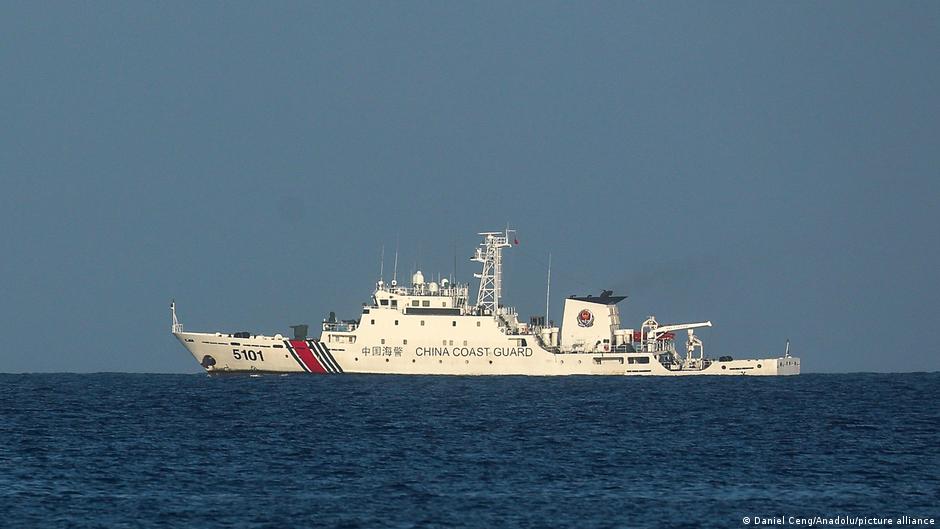
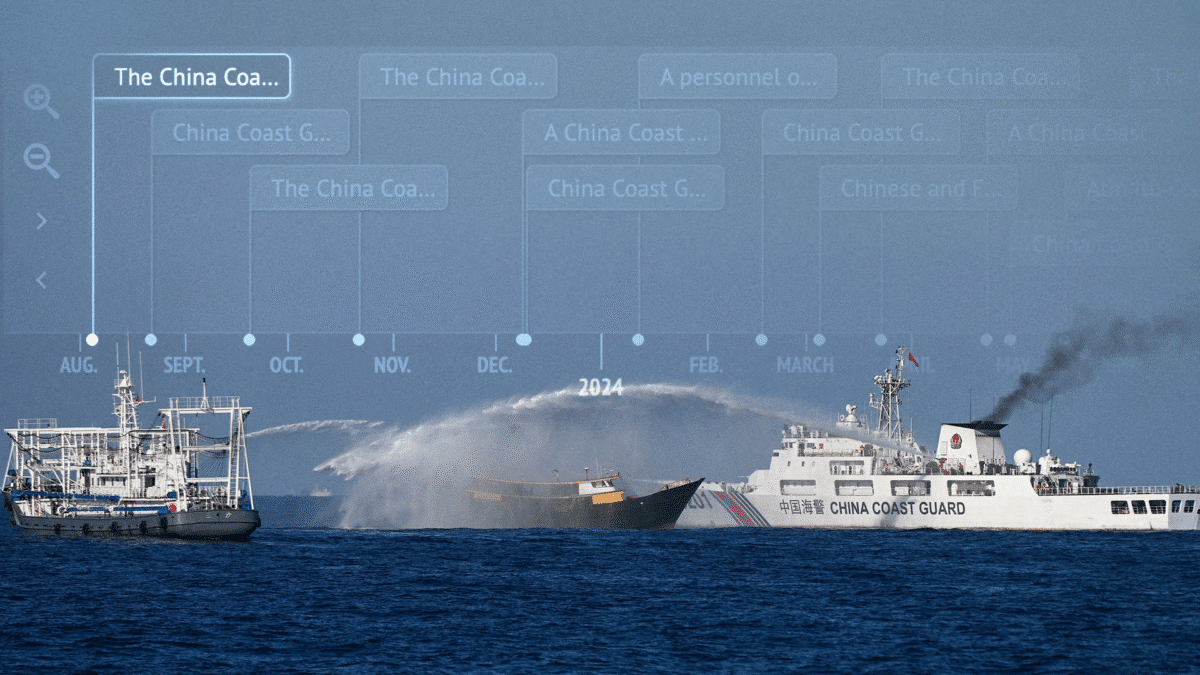
Manila has shifted to a more assertive posture since 2022, strengthened access for U.S. forces in 2023, and lodged hundreds of diplomatic protests by late 2025, all framed by the 2016 arbitral ruling that invalidated China’s nine-dash line claims. At sea, the pattern of China Coast Guard coercion continued through 2023 to 2025, including lasers and water cannons, and a reported confrontation off Second Thomas Shoal in June 2024. China’s outposts and reclaimed features anchor persistent presence, while U.S. and partner freedom of navigation operations continue. Given that a large share of China’s energy imports transits the South China Sea, Beijing has strong incentives to maintain pressure. Thitu Island, which the Philippines administers and where a resident community lives, remains a plausible flashpoint.
Change from previous assessment
Initial assessment of this topic.
Key judgments
- Manila is likely to sustain an assertive South China Sea policy this quarter, leaning on the 2016 arbitral award, continued diplomatic protests, and expanded U.S. access under the Enhanced Defence Cooperation Agreement. (Confidence: medium · ASSESSED)
- I&W: Philippine Department of Foreign Affairs publishes new diplomatic protests over incidents in the West Philippine Sea. (0-14 days)
- I&W: Announcements of activities or deployments at the four additional U.S.-access sites under EDCA, particularly those supporting operations from Palawan. (1-3 months)
- Coercive encounters between China Coast Guard units and Philippine vessels are likely to recur around Second Thomas Shoal and other Philippine-administered features this quarter. (Confidence: medium · ASSESSED)
- I&W: Philippine Coast Guard or Armed Forces announce or publicise resupply or patrols to Second Thomas Shoal, followed by reports of water cannoning, ramming, or laser use. (0-14 days)
- I&W: Chinese maritime law-enforcement patrols massing within the immediate approaches to Second Thomas Shoal or other Philippine-administered reefs, visible in commercial imagery or AIS-adjacent monitoring. (0-14 days)
- Beijing is very likely to continue pressing expansive South China Sea claims and maintaining forward presence despite the 2016 arbitral ruling and external diplomatic statements rejecting those claims. (Confidence: medium · ASSESSED)
- I&W: Official Chinese statements restating rejection of the 2016 ruling around key anniversaries or following foreign freedom of navigation operations. (0-14 days)
- I&W: Sustained China Coast Guard or maritime militia patrol cycles around Philippine-held features, detected through open reporting or imagery. (1-3 months)
- Given that a large share of China’s energy imports transits the South China Sea, it is likely Beijing will prioritise controlling key sea-lanes and deterring activities it views as challenges to its claims. (Confidence: medium · ASSESSED)
- I&W: People’s Liberation Army Navy or China Coast Guard exercises and transits aligned with principal shipping corridors, especially the Luzon and Malacca approaches. (1-3 months)
- I&W: Public messaging linking sovereignty assertions to the security of maritime energy flows through the South China Sea. (1-3 months)
- Thitu Island remains a plausible flashpoint, given it is the largest Philippine-administered island in the Spratlys and hosts a resident community. (Confidence: low · ASSESSED)
- I&W: Air or sea resupply movements to Thitu Island followed by Chinese maritime law-enforcement challenges within 12 nautical miles. (1-3 months)
- I&W: Open-source imagery showing Chinese patrol craft loitering near Thitu’s approaches or construction activity prompting maritime warnings. (1-3 months)
Outlook & scenarios
Grinding status quo with recurrent standoffs (60%)
Regular Philippine patrols and resupply runs draw predictable China Coast Guard challenges around Second Thomas Shoal and other Philippine-administered features. Manila continues to file protests and publicise incidents. U.S. and partner freedom of navigation operations occur episodically. No lethal exchange occurs, but operational risk remains elevated.
Acute incident at Second Thomas Shoal escalates tensions (35%)
A water cannoning, collision, or laser incident causes injuries or serious damage to a Philippine vessel near Second Thomas Shoal. Manila issues a high-tempo diplomatic and public response and accelerates coordination with U.S. forces under existing access arrangements. Beijing increases patrol density. Crisis management prevents further escalation, but relations deteriorate.
Managed de-escalation through limited confidence-building (20%)
After public and private signalling by external stakeholders, tactical communications slightly improve and some patrol interactions are less confrontational. Incidents decrease in frequency, though the dispute’s core legal and sovereignty positions remain unchanged.
Recommendations
- Maintain an incident log keyed to Second Thomas Shoal and Thitu Island, ingesting Philippine Coast Guard releases, commercial satellite imagery, and AIS-adjacent tracking to flag laser use, water cannoning, ramming, or unsafe manoeuvres.
- Prioritise monitoring of Chinese maritime law-enforcement and militia presence around Philippine-administered features using repeat imagery and maritime domain awareness feeds to detect patrol surges or blocking formations.
- Task diplomatic monitoring for fresh Philippine protest notes and official Chinese statements on the 2016 arbitral ruling to anticipate rhetorical escalations and pre-emptively brief policymakers.
- Cross-cue military and economic analysts on planned U.S. access activities under EDCA and on scheduled freedom of navigation operations to assess interplay with at-sea risk windows.
- Develop contingency talking points and red-lines for a serious injury or hull loss at Second Thomas Shoal, explicitly anchoring to the 2016 award language for legal framing.
Confidence & uncertainty
Overall confidence is medium. The core pattern of confrontations is supported by multiple independent reports spanning 2023 to 2025, including specific laser and water cannon incidents and a reported clash off Second Thomas Shoal in June 2024. Manila’s policy shift, expanded U.S. access, and extensive diplomatic protests are well documented, as is the 2016 arbitral ruling’s content. However, fresh 2026 incident reporting in the current window is limited in the provided claims, several infrastructure details for Thitu are lower-confidence, and some statements are dated or general, which tempers confidence in near-term forecasting.
Alternative analysis (red cell)
Historical incidents and legal rulings in the ledger establish persistent risk and a background incentive for both Manila and Beijing to act, but they do not constitute contemporaneous indicators of intent or operations this quarter. Past coercive encounters and construction demonstrate capability and risk, yet attribution ambiguities and the absence of current‑quarter maritime domain awareness reduce confidence in projecting near‑term escalatory actions; lower or more qualified judgments are therefore defensible.
Intelligence gaps
- [EEI 1.1 · PARTIAL] Number, class, and position (time-stamped) of Chinese Coast Guard (CCG), People’s Armed Forces Maritime Militia (PAFMM), and other PRC paramilitary/auxiliary vessels inside Philippine-claimed EEZ or within 12 nautical miles of Philippine-occupied features (e.g., Scarborough Shoal, Second Thomas/Ayungin Shoal, and other named features). Recommended collection: maritime/AIS
- [EEI 1.4 · UNCOVERED] Abrupt changes to vessel identification behavior: AIS transponder deactivations, spoofing, or mismatches between flagged identity and observed equipment/markings among PRC maritime law-enforcement or militia vessels operating near Philippine claims. Recommended collection: maritime/AIS
- [EEI 2.1 · UNCOVERED] Issued directives, patrol orders, or internal guidance from PRC Central Military Commission, PLAN, CCG, or provincial maritime authorities that specify objectives, geographic limits, patrol tempos, or escalation thresholds for operations near Philippine-claimed features. Recommended collection: signals/communications
- [EEI 2.2 · UNCOVERED] Public declarations, maritime notices, or newly published 'maritime safety' or exclusion zones, with effective dates and coordinates, issued by Chinese authorities that could be used to justify interdiction or exclusion of Philippine activity. Recommended collection: open-source/official statements
- [EEI 2.3 · UNCOVERED] Evidence of mobilization orders, tasking lists, or logistics planning for Maritime Militia units (vessel requisitions, local fisheries bureau instructions, fuel/resupply manifests) indicating intent to employ militia alongside CCG/PLAN assets. Recommended collection: HUMINT/defense
- [EEI 3.1 · PARTIAL] Deployment and movement of Philippine Coast Guard and Navy vessels (class, location, on-station times) and scheduled or unscheduled escort/resupply missions to occupied features. Recommended collection: military/AIS
- [EEI 3.2 · UNCOVERED] Air component activity: number and frequency of Philippine air patrol sorties, maritime domain awareness flights, and air-to-surface or maritime strike assets placed on alert or redeployed toward contested areas. Recommended collection: imagery/satellite
- [EEI 3.3 · UNCOVERED] Requests for diplomatic, intelligence, or military assistance from allies (e.g., U.S., Australia, Japan) including notifications of planned joint patrols, port calls, or freedom of navigation operations with dates and participating units. Recommended collection: open-source/official statements
- [EEI 3.4 · UNCOVERED] Changes to Philippine rules of engagement, emergency law measures, mobilization orders, or civil advisories (evacuations, fishing bans) that alter civilian or military behavior in contested maritime zones. Recommended collection: open-source/official statements
Cited sources
[1] inquirer.net · From lasers to water cannons: China’s aggression in West Philippine Sea (B) · sha256:90e3e7d3a55a [2] 德國之聲 (Deutsche Welle) · 南海仲裁十周年 14国联合发声 (A) · sha256:e661ecde493b [3] Wikipedia · Territorial disputes in the South China Sea (F) · sha256:2b1001cc8220 [4] Wikipedia · Thitu Island (F) · sha256:f24105c33501
Source content hashes were computed at collection time; the cited text is preserved unmodified for the life of this product.
Red cell review: PARTIAL DISSENT
TLP:CLEAR