TLP:CLEAR · Disclosure is not limited.
South China Sea tensions: structural drivers and interaction risk, week of 22-29 June 2026
Time window: Last 7 days · Audience: General analyst · Type: Situation report · DTG: 2026-06-29 10:11Z · Overall confidence: HIGH
BLUF
With no corroborated new at-sea incidents reported in this window, South China Sea tensions remain structurally high: seven parties still contest claims, a 2016 tribunal finding on the nine-dash line remains contested in practice, and China has strong incentives to police these waters because most of its energy imports transit the sea. Interaction risks with US and allied forces are likely to persist, reflected in ongoing freedom of navigation operations and recent Chinese and Russian military flights that triggered South Korean fighter sorties.
Executive summary
The South China Sea remains a live theatre of contestation among Brunei, Indonesia, Malaysia, the Philippines, the People’s Republic of China, Taiwan and Vietnam. The 2016 arbitral tribunal finding that China lacks historical titles within the nine-dash line continues to sit uneasily with practice at sea. China’s reliance on South China Sea sea lines for energy imports adds a strategic impulse to an assertive maritime posture. Although this reporting window did not produce new, corroborated at-sea incidents within the South China Sea, regional interaction risk endures, as seen in Chinese and Russian aircraft activity that drew South Korean fighter sorties and in the pattern of freedom of navigation operations since 2015. Security challenges in the Sulu Sea also complicate Manila’s ability to sustain maritime law enforcement on its southwestern approaches.
Change from previous assessment
We shift from last week’s feature‑specific discussion to a structural outlook. No corroborated new China Coast Guard activity near Luzon appeared in this window, so we retired the ship‑specific presence judgment and reframed the outlook around enduring drivers and interaction risks. We added a judgment tying China’s energy‑import dependence to sustained maritime posture and introduced a cross‑theatre scenario linking Gulf shipping disruptions to potential posture amplification in the South China Sea. Confidence on legal‑context judgments is lowered where the underpinning claims are single‑source compilations.
Key judgments
- South China Sea sovereignty and maritime‑rights disputes among Brunei, Indonesia, Malaysia, the Philippines, the People’s Republic of China, Taiwan and Vietnam are likely to persist without resolution through 2026, sustaining routine friction at sea. (Confidence: medium · ASSESSED)
- I&W: New law‑enforcement or administrative measures by any claimant on Spratly features visible in state announcements or satellite imagery. (1-3 months)
- I&W: ASEAN and China release an agreed Code of Conduct text with an implementation roadmap. (1-3 months)
- Legal avenues will remain constrained: the 2016 arbitration finding that China lacks historical titles within the nine‑dash line is likely to remain contested in narrative and practice. (Confidence: low · ASSESSED)
- I&W: PRC ministries or state media reiterate positions rejecting or minimising the tribunal finding in official statements. (0-14 days)
- I&W: Parties announce steps to align domestic maritime practice to the 2016 award, such as enforcement rules in the Philippine EEZ that are publicly accepted by other claimants. (3-6 months)
- China is likely to maintain an assertive maritime posture across the South China Sea to protect sea lanes because roughly 80 percent of its energy imports transit the area. (Confidence: medium · ASSESSED)
- I&W: Published China Coast Guard or PLA Navy patrol regimes emphasising main shipping corridors between the Malacca approach, the Spratlys and the Luzon Strait. (1-3 months)
- I&W: Official PRC policy announcements materially reducing reliance on South China Sea shipping routes. (3-6 months)
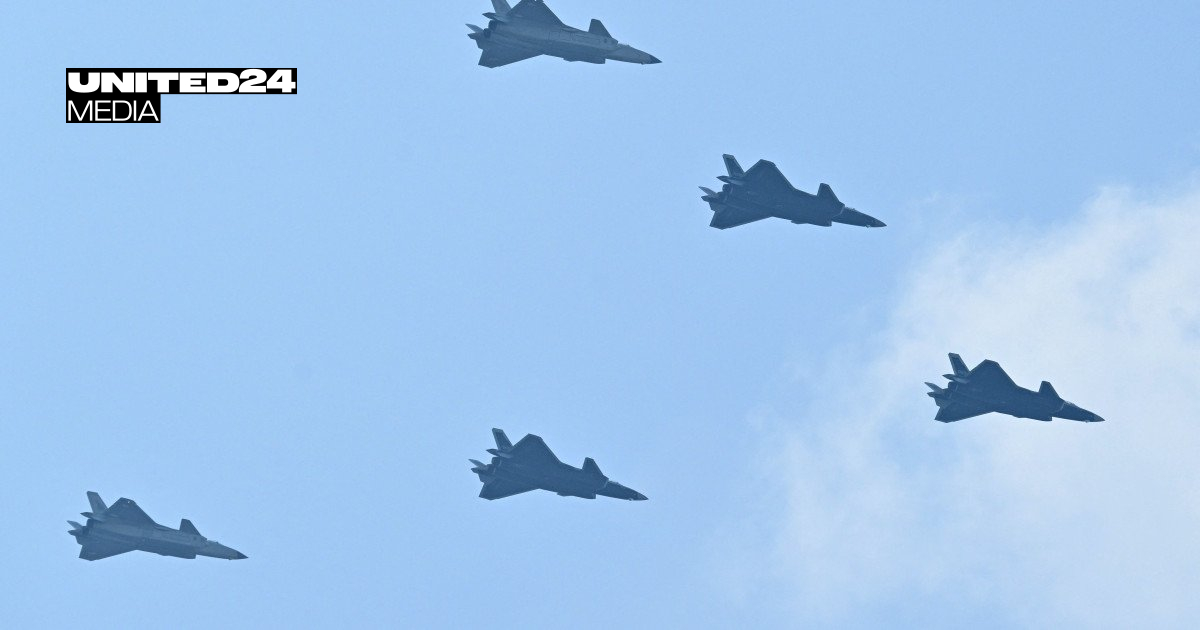
- Interaction risks between PLA units and US and allied forces are likely to persist, given continued freedom of navigation operations since 2015 and recent entries by Chinese and Russian aircraft into South Korea’s air defence identification zone that prompted ROK fighter deployments. (Confidence: medium · ASSESSED)
- I&W: US Navy or allied South China Sea freedom of navigation operations publicly announced alongside PRC responses. (0-14 days)
- I&W: US and PRC defence ministries announce a new bilateral maritime and air deconfliction protocol with an operational hotline. (1-3 months)
- Security risks in the Sulu Archipelago and southern Sulu Sea, including kidnap‑for‑ransom by armed groups, are likely to complicate Manila’s ability to project consistent maritime law‑enforcement capacity on its southwestern approaches, with limited US emergency support available in those waters. (Confidence: medium · ASSESSED)
- I&W: Philippine or US authorities issue updated movement restrictions for government personnel on Sulu Sea routes. (0-14 days)
- I&W: Publicly announced multi‑agency maritime security surge operations in the Sulu Sea with reported patrol hours. (1-3 months)
Outlook & scenarios
Managed friction: routine patrols, FONOPs and episodic standoffs continue (60%)
Claimants maintain presence operations and competing narratives while the United States and partners continue freedom of navigation operations. China sustains an assertive but calibrated posture to safeguard energy sea lines through the South China Sea. Friction persists without major escalation, and incidents are managed through existing channels.
Acute incident: collision or aggressive intercept near a disputed feature triggers a short crisis (35%)
A law‑enforcement or naval interaction near a contested reef or shoal results in a collision or hazardous intercept. Intensified patrols, media campaigns and diplomatic protests follow, with temporary suspension of cooperative activities. De‑escalation occurs within weeks but leaves higher baselines of presence and risk.
External shock to sea lanes amplifies SCS posture (25%)
Shipping disruptions around the Strait of Hormuz strand vessels and delay cargoes, highlighting global chokepoint exposure. Given China’s reliance on South China Sea routes for energy imports, Beijing increases visible maritime security along SCS corridors, raising interaction risks with US and allied forces and complicating regional diplomacy.
Recommendations
- Maintain an open‑source indicator deck tracking claimant maritime announcements and visible activity on Spratly features, and align this with a rolling log of South China Sea freedom of navigation operations.
- Task collection to map China Coast Guard and PLA Navy presence along main South China Sea shipping corridors, correlating patrol patterns with China’s energy import exposure.
- Catalogue official statements by China, the Philippines and other claimants referencing the 2016 arbitration finding and the nine‑dash line to baseline positions and identify rhetorical shifts.
- Update internal movement and engagement guidance for analysts and partners working on Philippine maritime issues to reflect heightened risks in the Sulu Sea and the limited ability for external emergency support in those waters.
- Prioritise monitoring for new US, PRC maritime and air deconfliction mechanisms or exercises that could lower interaction risk, and prepare an assessment of likely efficacy based on recent regional intercept behaviour.
- Establish a cross‑theatre watch function linking Middle East shipping disruptions with South China Sea posture changes to anticipate spillover effects on regional naval and coast guard operations.
Confidence & uncertainty
Overall confidence is high because the core elements of the assessment rest on multiple official and major‑media sources: the roster of South China Sea claimants, the 2016 tribunal finding on the nine‑dash line, the long‑running pattern of freedom of navigation operations, China’s energy‑import reliance on South China Sea routes, and recent Chinese and Russian air activity that triggered South Korean fighter sorties are all supported in the provided claims by government, multilateral and reputable media reporting. That said, some South China Sea‑specific items draw on compilations with lower source reliability, and there were no corroborated new incidents in this reporting window, so individual judgments that extrapolate from structural drivers are carried at medium or low confidence.
Alternative analysis (red cell)
The claims establish unresolved territorial overlap and PRC gradualist behavior, a high share of Chinese energy transit through the South China Sea, and credible kidnap‑for‑ransom threats in the Sulu region. However, the evidence lacks time‑bound operational data, doctrinal or policy directives, and incident‑level trends needed to support the specific through‑2026 projections. Alternative, defensible readings — including episodic incidents with effective management, legal contestation limited to narrative rather than enforcement, or Chinese maritime posture driven by multiple motives beyond protecting energy transit — are consistent with the cited claims.
Intelligence gaps
- [EEI 1.1 · PARTIAL] Number, class, and position (time-stamped) of Chinese Coast Guard (CCG), People’s Armed Forces Maritime Militia (PAFMM), and other PRC paramilitary/auxiliary vessels inside Philippine-claimed EEZ or within 12 nautical miles of Philippine-occupied features (e.g., Scarborough Shoal, Second Thomas/Ayungin Shoal, and other named features). Recommended collection: maritime/AIS
- [EEI 1.2 · UNCOVERED] Observed maneuvers or posture indicating hostile action: vessel-to-vessel blocking/contact, use of water cannons, boarding attempts, formation maneuvers to interdict Philippine vessels, or sustained stationing near Philippine resupply/relief routes. Recommended collection: imagery/satellite
- [EEI 1.3 · UNCOVERED] Incidents of Philippine vessels (coast guard, navy, supply boats, civilian fishing vessels) being ordered to alter course, detained, chased, or physically impeded — with time, location, involved units, and damage/injuries if any. Recommended collection: open-source/official statements
- [EEI 1.4 · UNCOVERED] Abrupt changes to vessel identification behavior: AIS transponder deactivations, spoofing, or mismatches between flagged identity and observed equipment/markings among PRC maritime law-enforcement or militia vessels operating near Philippine claims. Recommended collection: maritime/AIS
- [EEI 2.1 · UNCOVERED] Issued directives, patrol orders, or internal guidance from PRC Central Military Commission, PLAN, CCG, or provincial maritime authorities that specify objectives, geographic limits, patrol tempos, or escalation thresholds for operations near Philippine-claimed features. Recommended collection: signals/communications
- [EEI 2.2 · UNCOVERED] Public declarations, maritime notices, or newly published 'maritime safety' or exclusion zones, with effective dates and coordinates, issued by Chinese authorities that could be used to justify interdiction or exclusion of Philippine activity. Recommended collection: open-source/official statements
- [EEI 2.3 · UNCOVERED] Evidence of mobilization orders, tasking lists, or logistics planning for Maritime Militia units (vessel requisitions, local fisheries bureau instructions, fuel/resupply manifests) indicating intent to employ militia alongside CCG/PLAN assets. Recommended collection: HUMINT/defense
- [EEI 3.1 · UNCOVERED] Deployment and movement of Philippine Coast Guard and Navy vessels (class, location, on-station times) and scheduled or unscheduled escort/resupply missions to occupied features. Recommended collection: military/AIS
- [EEI 3.2 · UNCOVERED] Air component activity: number and frequency of Philippine air patrol sorties, maritime domain awareness flights, and air-to-surface or maritime strike assets placed on alert or redeployed toward contested areas. Recommended collection: imagery/satellite
- [EEI 3.3 · PARTIAL] Requests for diplomatic, intelligence, or military assistance from allies (e.g., U.S., Australia, Japan) including notifications of planned joint patrols, port calls, or freedom of navigation operations with dates and participating units. Recommended collection: open-source/official statements
- [EEI 3.4 · UNCOVERED] Changes to Philippine rules of engagement, emergency law measures, mobilization orders, or civil advisories (evacuations, fishing bans) that alter civilian or military behavior in contested maritime zones. Recommended collection: open-source/official statements
Cited sources
[1] Wikipedia · Territorial disputes in the South China Sea (F) · sha256:1d5bd5a3150d [2] united24media.com · China and Russia Send More Than 10 Military Aircraft Into South Korea’s Air Defense Zone (B) · sha256:959792c9d546 [3] U.S. Department of State · Philippines Travel Advisory (A) · sha256:a8f9f789aff7
Source content hashes were computed at collection time; the cited text is preserved unmodified for the life of this product.
Red cell review: PARTIAL DISSENT
TLP:CLEAR