TLP:CLEAR · Disclosure is not limited.
Strait of Hormuz: contested closure claims, fragile US, Iran roadmap, and shipping on hold
Time window: Last 7 days · Audience: General analyst · Type: Situation report · DTG: 2026-06-25 06:20Z · Overall confidence: LOW
BLUF
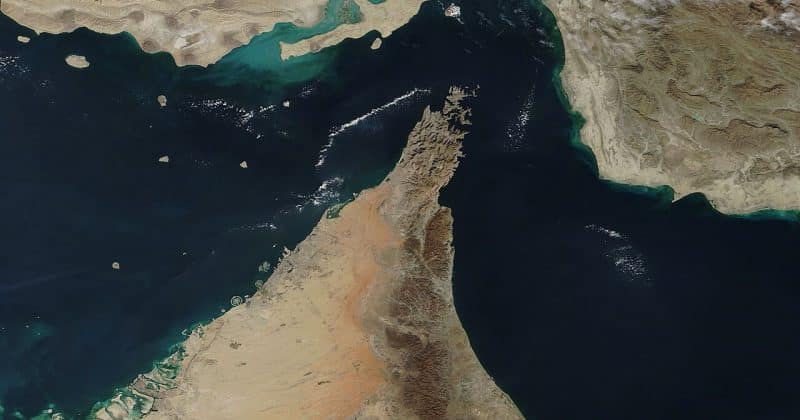
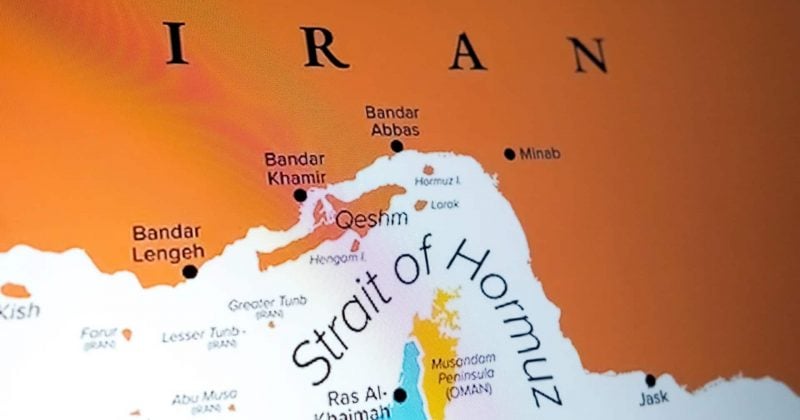
The Strait of Hormuz remains contested and very likely constrained for commercial traffic, even as Washington and Tehran pursue a 60 day roadmap to reopen. Expect curtailed flows through at least end June absent visible mine clearance and an agreed, functioning routing regime.
Executive summary
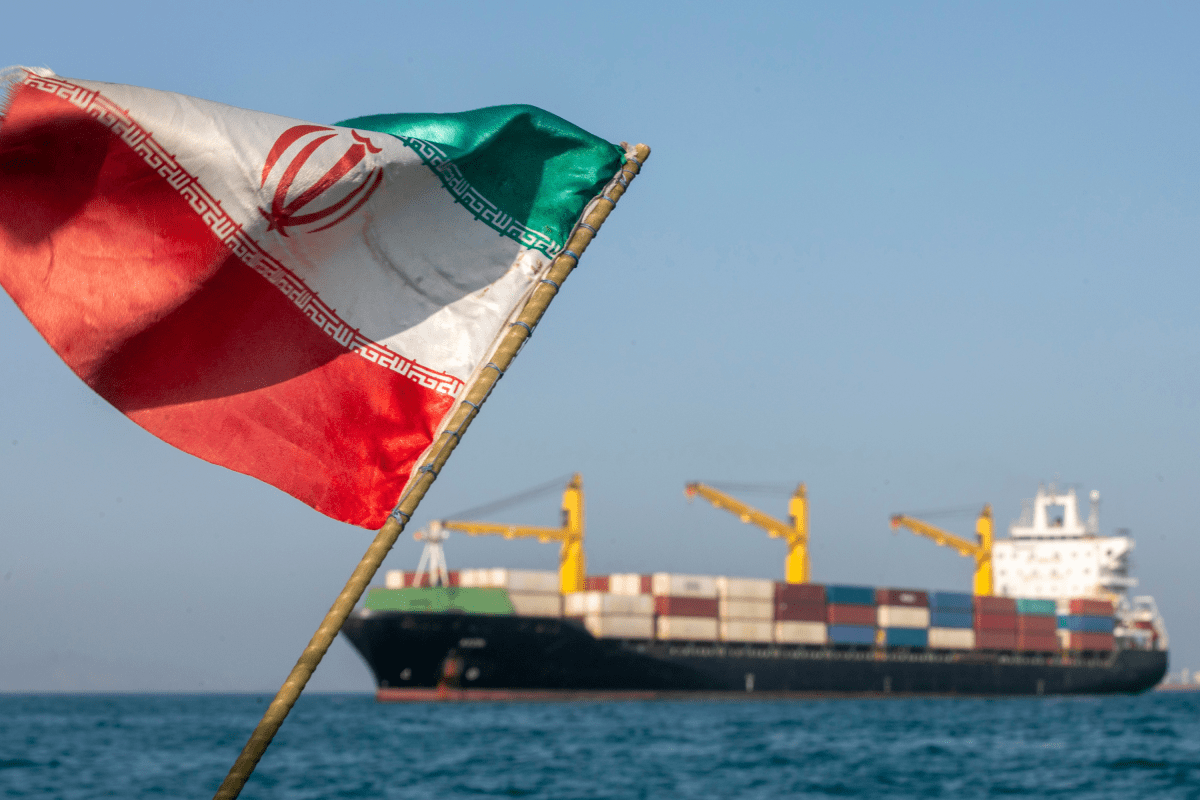
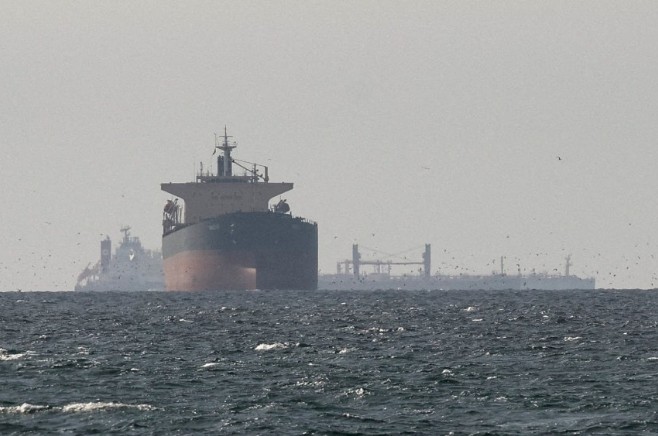
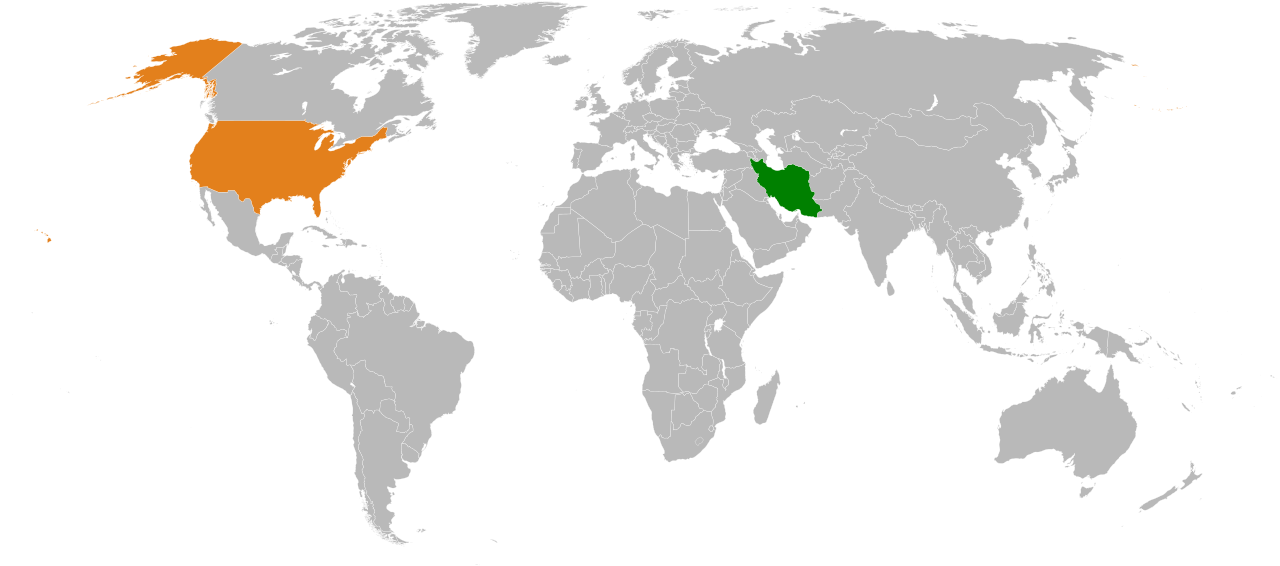
Since 20-21 June, senior US and Iranian representatives met in Switzerland and almost certainly agreed a roadmap toward a final deal, with multiple reports that a memorandum of understanding to reopen the Strait of Hormuz exists or is being implemented. In parallel, Iran’s military publicly declared the strait closed in response to Israeli strikes in Lebanon, while Iran’s foreign ministry, US Central Command and the US vice president asserted the waterway remained open. On the water, most operators have pulled back since March and the International Maritime Organization has begun organising the evacuation of more than 11,000 seafarers, advising ships to hold position while the traditional traffic separation scheme remains unusable due to reported mines. Rhetoric remains heated, including threats against Iran and Iranian statements about targeting UAE locations associated with the United States. Oil benchmarks sit in the high‑70s per barrel, consistent with markets pricing managed, but not yet normalised, conditions.
Key judgments
- High-level US, Iran talks in Switzerland almost certainly produced a 60 day roadmap toward a final agreement. (Confidence: high · REPORTED)
- I&W: Official release of a joint roadmap text or mediator readout detailing milestones and timelines. (0-14 days)
- I&W: Public postponement or cancellation of follow-on sessions in Switzerland. (0-14 days)
- The Strait of Hormuz is very likely operating under de facto restrictions rather than full normalcy, with most commercial carriers avoiding transit despite conflicting official claims. (Confidence: medium · ASSESSED)
- I&W: IMO and UKMTO continue instructing vessels to remain in place while the traditional Traffic Separation Scheme stays inactive. (0-14 days)
- I&W: Sustained, scheduled convoys via designated waypoints without wait-to-be-contacted procedures. (0-14 days)
- The emerging framework to reopen Hormuz is likely fragile and contingent on reduced hostilities in Lebanon, so renewed cross-border fire or claims of ceasefire breaches are likely to derail implementation. (Confidence: medium · ASSESSED)
- I&W: Public activation of the agreed de-confliction mechanism for Lebanon and several days without recorded IDF, Hezbollah exchanges. (0-14 days)
- I&W: Fresh Iranian military announcements tying a Hormuz ‘closure’ to events in Lebanon or reports of renewed heavy exchanges. (0-14 days)
- Through end June, commercial shipping is very likely to remain curtailed, as shipowners and insurers are unlikely to embrace reopening before credible mine clearance and verified routes are in place. (Confidence: medium · ASSESSED)
- I&W: No public start of mine-clearance operations in Hormuz and continued insurer advisories urging caution on transits. (0-14 days)
- I&W: Official launch of multinational minehunting sorties in the Strait and insurer endorsements of verified routes. (1-3 months)
- US-linked facilities in the UAE are likely at elevated risk while Iranian threats persist and US authorities maintain travel and aviation cautions. (Confidence: medium · ASSESSED)
- I&W: Iranian state-linked messaging naming UAE sites or an attempted drone or missile incident near Fujairah or Abu Dhabi. (0-14 days)
- I&W: FAA rescinds regional NOTAM cautions and the State Department downgrades its UAE threat posture. (1-3 months)
- Crude benchmarks very likely reflect managed, but not normalised, risk: prices near the high‑70s and references to a peace deal suggest expectations of a controlled reopening with persistent disruption risk. (Confidence: medium · ASSESSED)
- I&W: EIA spot prices remain broadly stable alongside public statements referencing interim arrangements to keep flows moving. (0-14 days)
- I&W: A sharp price spike aligned with new verified closure announcements or escalatory military actions. (0-14 days)
Outlook & scenarios
Toll‑free, coordinated reopening under a 60 day roadmap (45%)
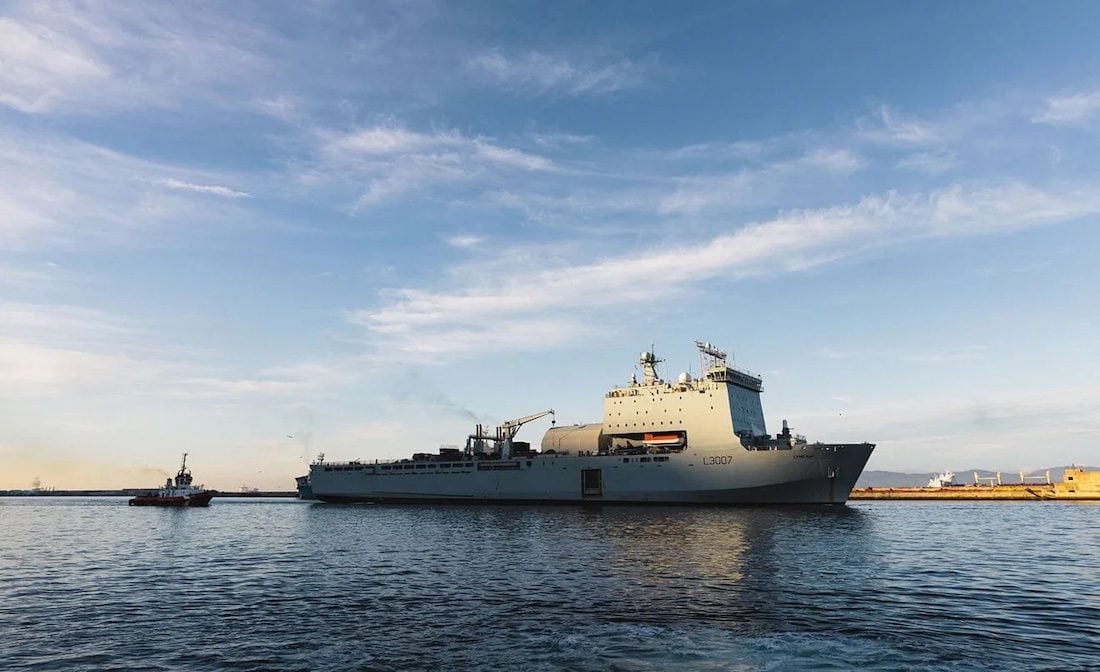
The MOU framework is implemented with a joint Iran, Oman working group and temporary routing. Oman keeps the strait open without tolls for an initial period, a UK, France led multinational mission and UK mine countermeasures support verified routes, and insurers gradually endorse transits. Traffic rises in stages as the de‑confliction mechanism reduces fire in Lebanon and a no‑toll window takes effect.
Managed partial opening with exclusions and Iranian coordination requirements (60%)
Hormuz reopens unevenly. Passage requires security coordination with Iran, and vessels linked to ‘enemy’ states face exclusion. IRGC rejects elements of the IMO/Omani plan, keeping control contested. Insurers and owners remain cautious until mine threats are credibly cleared, so flows recover only partially.
Re‑closure and escalation following Lebanon-linked triggers (35%)
Renewed Israeli, Hezbollah exchanges prompt Iran’s military to declare Hormuz closed again. Washington reiterates threats against Iranian energy infrastructure. Most operators halt transits, IMO continues evacuation of trapped crews, and tankers reroute around the Cape of Good Hope. Benchmarks jump on perceived supply risk.
Recommendations
- Maintain continuous monitoring of IMO, UKMTO and MICA advisories on routing, wait‑instructions, and mine warnings, and publish a daily strait status update for decision‑makers.
- Task OSINT collection to track IRGC, Iranian foreign ministry and Persian Gulf Strait Authority statements on closure status, routing control, tolls and insurance, and flag any divergence within hours.
- Use AIS and owner reporting to build a rolling baseline of daily Hormuz transits and waiting‑area density, and alert if convoys form or volumes fall below recent lows.
- Set energy market tripwires using EIA spot prices and structure (e.g., shifts consistent with tightening), and integrate them with shipping indicators to trigger analytic or operational escalations.
- Advise US‑linked operators in the UAE to review site security and continuity plans, with specific attention to Fujairah and Abu Dhabi logistics nodes, in line with US travel and FAA advisories.
- Coordinate with shipping partners on alternatives that bypass Hormuz, including use of the Abu Dhabi Crude Oil Pipeline to Fujairah, and pre‑plan Cape of Good Hope diversions where feasible.
- Engage marine insurers and industry bodies to obtain written conditions for cover tied to verified routes and mine‑clearance milestones, and share changes promptly with operators.
- Track the multinational minehunting effort’s deployment and first operational sorties, and update risk posture once independent verification of cleared lanes is published.
Confidence & uncertainty
Overall confidence is low because core facts are contested by credible actors: Iran’s military publicly declared the Strait of Hormuz closed while Iran’s foreign ministry and US officials asserted it remained open, and shipping behaviour points to severe curtailment rather than clarity. Reporting on an MOU and a 60 day roadmap is strong but includes timing inconsistencies. Many sources are major media and trade outlets with limited independent corroboration, and key shipping and military details are single‑source or disputed. These contradictions reduce confidence in the precise status and near‑term trajectory despite multiple seemingly reliable reports.
Alternative analysis (red cell)
The evidence frequently conflicts and relies on mixed‑quality sources; a restrained alternative is that high‑level meetings likely occurred but did not produce a verified 60‑day roadmap, shipping behavior is heterogeneous rather than uniformly avoided, and reopening prospects hinge on a mix of financial incentives, operational assurances (mine clearance), and political sequencing rather than solely on a Lebanon ceasefire. Market prices alone do not confirm a controlled reopening and require deeper market‑structure analysis to interpret geopolitical risk premia.
Cited sources
[1] npr.org · The U.S. and Iran agree to a 'road map' for a final deal, mediators say (A) · sha256:b436aa3d962f [2] haaretz.com · Trump's threats to 'blow the shit' out of Iran strain first round of truce talks in Switzerland (A) · sha256:7f26a1724b1c [3] Knewdex News · UPDATE: Iran Closes Strait of Hormuz Amid Ongoing Tensions (B) · sha256:43908ed36def [4] newsweek.com · Iran declares Strait of Hormuz 'closed' over MOU 'breach' (B) · sha256:1badd30ab852 [5] cryptobriefing.com · Iran shuts Strait of Hormuz again, sharply reducing shipping traffic (B) · sha256:551fc75ae55f [6] gcaptain.com · IMO Tells Ships to Stay Put, Await Instructions as Hormuz Evacuation Begins (B) · sha256:2eaa3088e4a6 [7] Fortune · Dow futures drop as first day of U.S.-Iran talks sees Trump threaten Tehran on Hormuz: 'You close it and you won’t have a country' | Fortune (B) · sha256:415a8ecbe524 [8] cnnews.chosun.com · 伊朗:除敌国外开放霍尔木兹…需与我方协调后通行 (B) · sha256:18f718d35b1f [9] Atlantic Council · What the US-Iran deal means for the rest of the Middle East (and beyond) (C) · sha256:5f93318fe142 [10] Wikipedia · Iran–United States relations (B) · sha256:a8319a3ebe51 [11] cryptobriefing.com · Iran to close Strait of Hormuz, citing US ceasefire agreement failure (B) · sha256:e0389332caf7 [12] gcaptain.com · UK Minehunting Force Arrives in Middle East as Multinational Hormuz Mission Takes Shape (B) · sha256:c3e2cea96ee4 [13] U.S. Department of State · United Arab Emirates Travel Advisory (A) · sha256:7a0c71f2991b [14] U.S. Energy Information Administration · EIA crude oil spot prices — 2026-06-22 (A) · sha256:fc0e8841f16c [15] gcaptain.com · UAE Oil Exports Surged to 85% of Pre-War Levels, IEA Says (B) · sha256:eaa0f3244cc1
Source content hashes were computed at collection time; the cited text is preserved unmodified for the life of this product.
Red cell review: PARTIAL DISSENT
TLP:CLEAR