TLP:CLEAR · Disclosure is not limited.
Strait of Hormuz: Iranian enforcement and attacks constrain shipping as limited passages continue
Time window: Last 7 days · Audience: General analyst · Type: Situation report · DTG: 2026-07-14 06:14Z · Overall confidence: MEDIUM
BLUF
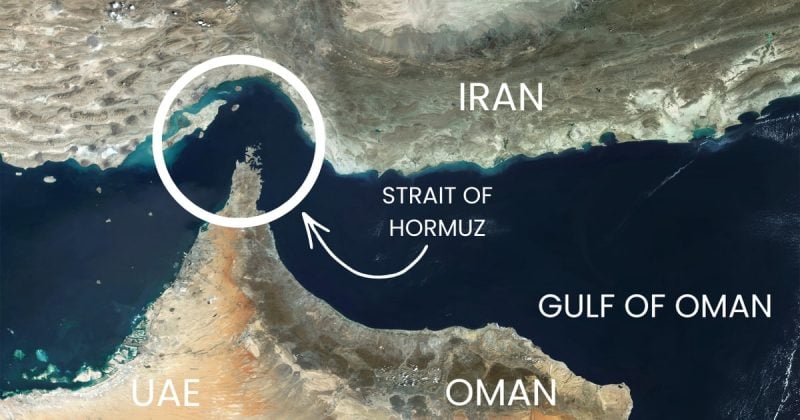
Access to the Strait of Hormuz is contested. Iranian forces are attacking or intercepting vessels and asserting control over routing, while the United States maintains some pathways remain open and is striking Iranian maritime capabilities. Shipping is disrupted, energy prices are higher, and the risk to U.S.-linked personnel in the UAE remains elevated.
Executive summary
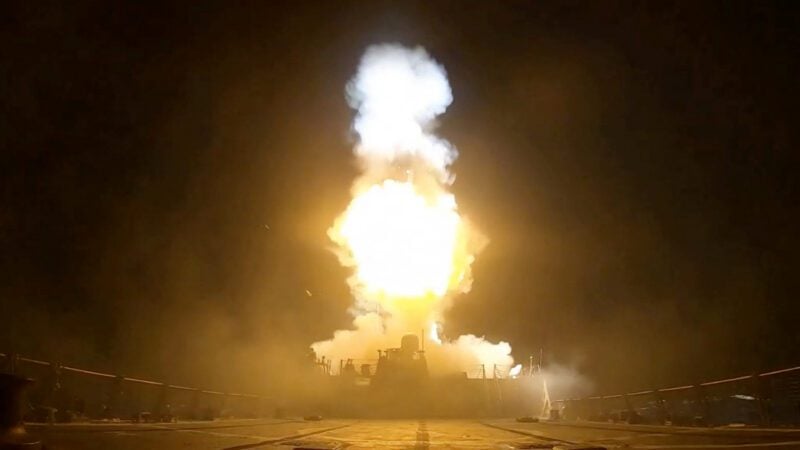
Following the 28 February 2026 joint U.S., Israeli strikes in Iran, Tehran has attacked merchant shipping and U.S. regional targets, and is asserting control over routing in the Strait of Hormuz. Reporting indicates at least four vessels were attacked near Oman’s Musandam peninsula, the Islamic Revolutionary Guard Corps intercepted two ships it deemed off an unauthorised route, and the container ship GFS Galaxy was struck, with one Indian crewmember missing and 23 later rescued by the Oman Navy. Observable crossings along the Omani southern corridor have halted, some tankers are transiting with transponders off, and at least two supertankers used a U.S.-protected route, while overall volumes remain below normal. Iran warns against U.S.-recommended routes and says transits require permission, and Iran’s Persian Gulf Strait Authority has suspended transit permit applications. The United States says free-crossing pathways remain open and has conducted repeated strikes on Iranian air defences, coastal radar, anti-ship, drone and small-boat capabilities, including a submarine and ship maintenance facility. The IMO Council reaffirmed freedom of navigation and condemned attacks, and tasked its Secretary-General to explore safety improvements. Energy prices have risen and inflation concerns have increased alongside the International Energy Agency’s characterisation of the war as the largest-ever oil supply disruption. The FAA has advised caution for U.S. air carriers and State ordered a drawdown of U.S. government personnel from the UAE.
Key judgments
- Iranian forces are very likely prosecuting a coercive campaign against merchant shipping in and around the Strait of Hormuz, including attacks on at least four vessels near Oman’s Musandam peninsula, interceptions of ships judged to be on an unauthorised route, and the strike on the GFS Galaxy whose crew abandoned ship and were partly rescued. (Confidence: high · REPORTED)
- I&W: IRGC Navy publishes additional communiqués or video showing vessels intercepted or struck northeast of Oman’s Musandam peninsula. (0-14 days)
- I&W: UKMTO and JMIC advisories record zero confirmed attacks or interceptions across Hormuz approaches for 14 consecutive days. (0-1 month)
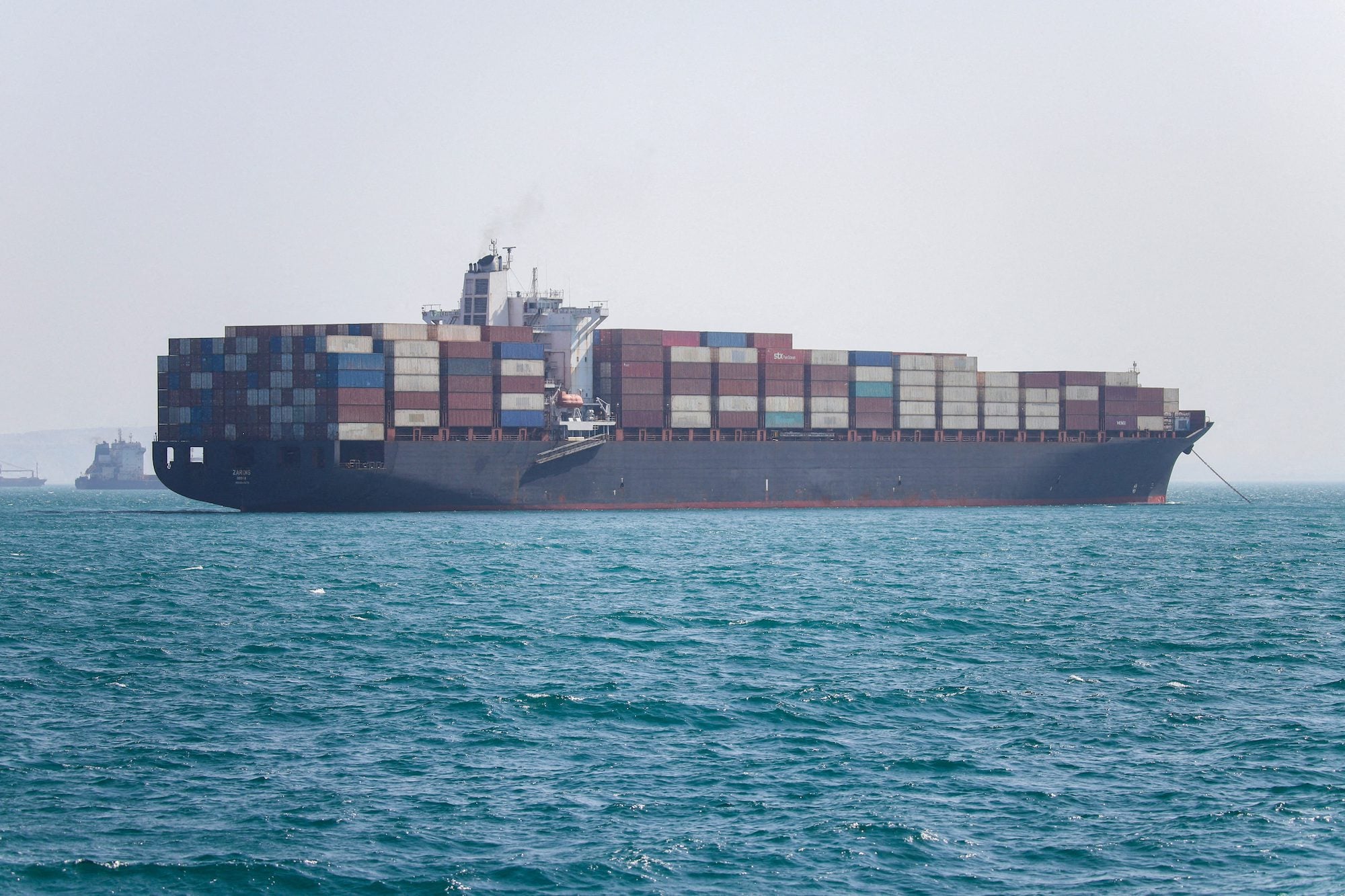
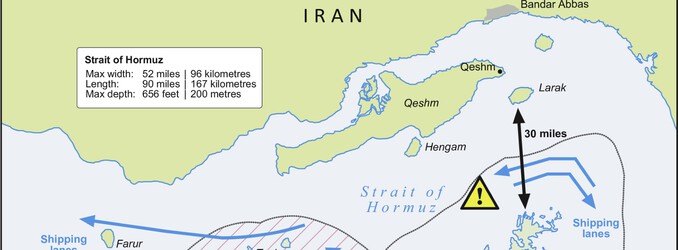
- Commercial transits through Hormuz are highly disrupted: observable crossings along the southern corridor by Oman’s coast have halted, multiple tankers have transited with AIS switched off, and at least two supertankers used a U.S.-protected route, while overall volumes remain below normal. (Confidence: high · REPORTED)
- I&W: SAT‑AIS shows at least 10 transits in a week conducted with AIS off and no AIS-positive passages along the Omani coastal corridor. (0-14 days)
- I&W: Five or more laden tankers transit the southern corridor with AIS on within a seven‑day window. (0-14 days)
- Access to Hormuz is contested and will likely remain constrained in the near term, with Iran asserting a permission requirement and warning against U.S.-recommended routes while the United States maintains pathways remain open; Iran’s Persian Gulf Strait Authority has suspended permit processing and labelled passage unfeasible despite claims of an agreement to restore passage. (Confidence: medium · ASSESSED)
- I&W: Iran’s PGSA continues rejecting transit permits and Tehran reiterates the permission requirement in maritime notices while CENTCOM publicises additional escorted transits. (0-14 days)
- I&W: An Oman-brokered joint notice to mariners publishes harmonised routing without Iranian preclearance or Iran publicly rescinds the permission requirement. (1-3 months)
- The threat to U.S.-linked personnel and facilities in the United Arab Emirates remains elevated due to Tehran’s stated intent to target U.S.-associated locations, the ongoing drone and missile threat since 28 February, and U.S. government travel and aviation warnings and orders. (Confidence: high · REPORTED)
- I&W: Iranian officials issue new public threats naming U.S.-associated sites in Abu Dhabi or Dubai, or associated missile/drone alerts are reported. (0-14 days)
- I&W: State rescinds the UAE ordered departure and the FAA cancels the regional caution advisory. (1-3 months)
- Energy prices are likely to remain under upward pressure while Hormuz traffic is constrained, reflected in Brent closing above 83 dollars per barrel and WTI near 78 dollars, coupled with reporting of an effective blockade pushing up prices, the IEA’s description of the largest-ever supply disruption, and output drops in Kuwait, Iraq, Saudi Arabia and the UAE. (Confidence: medium · ASSESSED)
- I&W: Brent sustains above 83 dollars and WTI above 78 dollars for two consecutive weeks as JMIC retains a Severe threat level for Hormuz. (1-3 months)
- I&W: IMO announces sustained, unhindered transit restoration and spot Brent retraces below 80 dollars. (1-3 months)
- U.S. strikes have likely degraded parts of Iran’s anti-ship and coastal defence network, yet Iran retains the capability and intent to threaten shipping and U.S. bases. (Confidence: medium · ASSESSED)
- I&W: CENTCOM announces further strikes on Iranian coastal radar, missile or IRGC small‑boat sites while Iran claims additional attacks on U.S. bases. (0-14 days)
- I&W: A 30‑day absence of Iranian missile or drone attacks on U.S. or allied targets and UKMTO logs no vessel attacks. (1-2 months)
Outlook & scenarios
Managed contestation: constrained throughput via covert or escorted transits (50%)
Iran continues to enforce routing and threaten ships on the Omani approach while permitting a northerly route through its waters, producing a pattern of AIS‑dark passages and limited U.S.-escorted movements. Observable crossings along the southern corridor remain halted and overall volumes stay below normal. Energy prices hold firm. The JMIC maintains a Severe threat level and IMO messaging focuses on safety options and freedom of navigation without immediate restoration of normal traffic.
Oman-brokered stabilisation: partial restoration of passage (30%)
With Muscat in the lead, Washington and Tehran operationalise understandings to restore passage, including public commitments to halt attacks on ships and workable routing and deconfliction protocols. Passage gradually normalises from reduced baselines, and the IMO Secretary‑General’s options inform practical safety enhancements. U.S. statements about open pathways are reflected in visible AIS‑on convoys, and price pressure eases.
Escalation to de facto closure and renewed blockade enforcement (25%)
Iran intensifies attacks and detentions, reinforcing permission requirements and targeting ships on U.S.-recommended routes. Observable transits fall further, and Washington proceeds from plans to active enforcement of a maritime blockade, with CENTCOM publicly scheduling interdiction operations. Energy prices spike and shipping largely avoids Hormuz pending new security arrangements.
Wildcard: GCC infrastructure strikes trigger regional supply stress (15%)
Attacks extend to desalination or other critical infrastructure in Kuwait or Qatar, prompting water and food logistics disruptions. By precedent of mid‑March disruptions to food imports and grocery supply emergencies during the blockade, GCC states face renewed supply chain strain even if maritime security stabilises around limited corridors.
Recommendations
- Maintain a daily integrated maritime picture for Hormuz that fuses SAT‑AIS, UKMTO/JMIC advisories, and CENTCOM routing guidance, with alerts when AIS‑dark transits exceed a defined threshold or when the Omani southern corridor shows renewed AIS‑on traffic.
- Task imagery and signals collection on IRGC small‑boat hubs, coastal radar and missile storage sites from Bandar Abbas through the Strait approaches to detect regeneration after U.S. strikes; cross‑cue thermal anomaly detections to corroborate strike damage or fires at maritime facilities.
- Issue updated guidance to U.S.-linked shipowners and insurers to avoid the Omani coastal corridor absent escort, adhere to published U.S.-protected routes, and maintain continuous communications with naval authorities when transiting.
- Engage Oman and the IMO Secretariat on practical safety measures modelled on the Malacca, Singapore cooperative management approach, including shared routing protocols, incident reporting, and rapid salvage and rescue coordination.
- Coordinate with energy and economic counterparts to monitor Brent and WTI benchmarks alongside reported production drops, and prepare contingency assessments for further supply shocks tied to Hormuz throughput.
- Sustain elevated protective security for U.S. diplomatic and commercial facilities in the UAE, including counter‑UAS measures and shelter‑in‑place drills, consistent with FAA advisories and the earlier ordered departure.
- Track Iran’s Persian Gulf Strait Authority communications and permit posture; flag any shift towards processing transit applications as an early indicator of opening or, conversely, additional restrictions as an escalation signal.
- Prepare humanitarian impact estimates for the GCC if maritime disruptions persist, focusing on food import dependencies and air‑bridge contingencies seen during prior blockade‑related shortages.
Confidence & uncertainty
Multiple high‑confidence official and major‑media reports corroborate attacks on merchant vessels, IRGC interceptions, disrupted shipping patterns, U.S. strikes on Iranian maritime capabilities, and energy price impacts. However, there are unresolved contradictions over the status of passage through Hormuz, with Iran asserting permission requirements and suspension of transit processing while U.S. authorities state pathways remain open. Some elements rely on single‑source or medium‑confidence reporting and reflect evolving events within the same week. These factors justify an overall medium confidence despite strong corroboration on core disruption and threat dynamics.
Alternative analysis (red cell)
While shipping movements are clearly disrupted, the reporting supports interpreting the situation as heavy constraint and episodic contestation rather than a uniform, sustained closure. Contradictory items (b5ac6a07 vs c0c3b007/4503c8df; c30a8a75 vs 13d750cf/31ddef78) show competing narratives — southern-corridor activity may be near-zero to some sensors yet clandestine or escorted transits continue. Absent independent, high-confidence maritime movement data and authoritative battle-damage assessments, stronger claims about a complete halt or definitive operational degradation are not analytically warranted.
Cited sources
[1] gcaptain.com · Ships Transit Hormuz in Secret as US and Iran Trade Strikes (B) · sha256:fd2602fdd5fa [2] worldoil.com · Hormuz oil tanker traffic persists along Oman route as conflict escalates (B) · sha256:3c6a09c04175 [3] gcaptain.com · Rescuers Search for Crew Member After Container Ship Attack in Strait of Hormuz (B) · sha256:12e5c26167bd [4] gcaptain.com · U.S. Launches Fourth Wave of Strikes Against Iran as Hormuz Shipping Crisis Deepens (B) · sha256:2400d1e5b8e5 [5] ynetnews.com · Iran attacks ship in Strait of Hormuz, declares waterway 'closed until further notice' (A) · sha256:a6ef492db3f4 [6] sohu.com · 联合海上信息中心:中东海域安全威胁等级维持“严重”级别 (B) · sha256:5833273f7dd7 [7] cryptobriefing.com · Iran warns ships at risk on US-recommended routes in Strait of Hormuz (B) · sha256:9010560f81e2 [8] cn.nytimes.com · 商船遇袭后,美国对伊朗发动空袭并撤销制裁豁免令 (A) · sha256:506e7630aaee [9] U.S. Department of State · United Arab Emirates Travel Advisory (A) · sha256:7a0c71f2991b [10] worldoil.com · Oil surges as Trump reinstates Hormuz blockade, proposes transit fee (B) · sha256:d0ec59d360fc [11] gcaptain.com · Trump Says the US Should Control the Strait of Hormuz and Get Paid For It (A) · sha256:3d7ea488a4ec [12] Wikipedia · Economic impact of the 2026 Iran war (B) · sha256:f9a96f754522 [13] gcaptain.com · Iran Widens Attacks on US Bases in Gulf, Hormuz Tensions Lift Oil Prices (B) · sha256:c1323c3bca46 [14] Wikipedia · Reactions to the 2026 Iran war (B) · sha256:e719729416e6
Source content hashes were computed at collection time; the cited text is preserved unmodified for the life of this product.
Red cell review: PARTIAL DISSENT
TLP:CLEAR