TLP:CLEAR · Disclosure is not limited.
Sudan Conflict: Continued SAF-RSF Combat and Rising Regional Risk
Time window: Last 7 days · Audience: General analyst · Type: Situation report · DTG: 2026-09-01 22:09Z · Overall confidence: HIGH
BLUF
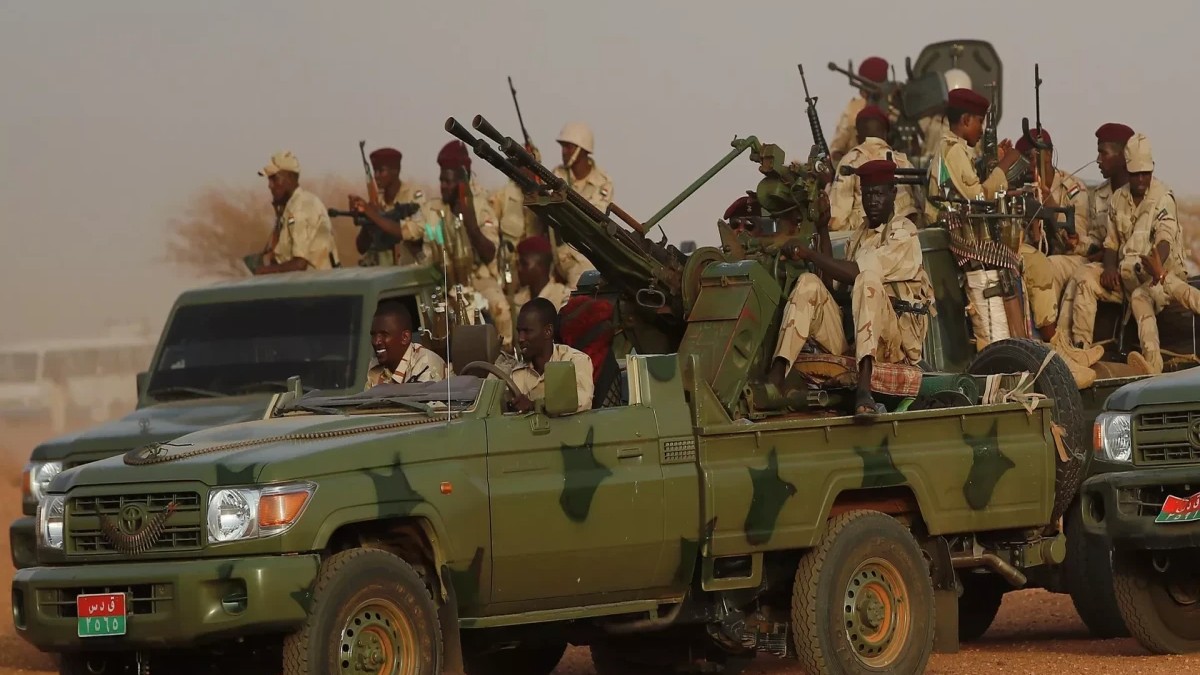
The SAF and RSF are very likely to remain in active combat through 1 October 2026, with Kordofan, Darfur and Blue Nile the main pressure points. SAF battlefield gains and reported RSF defections have not removed the RSF's ability to conduct drone attacks or contest territory. Humanitarian conditions in Darfur and Kordofan are very likely to worsen, while the status of several Blue Nile bases and the purpose of Ethiopian activity near Asosa remain unresolved.
Executive summary
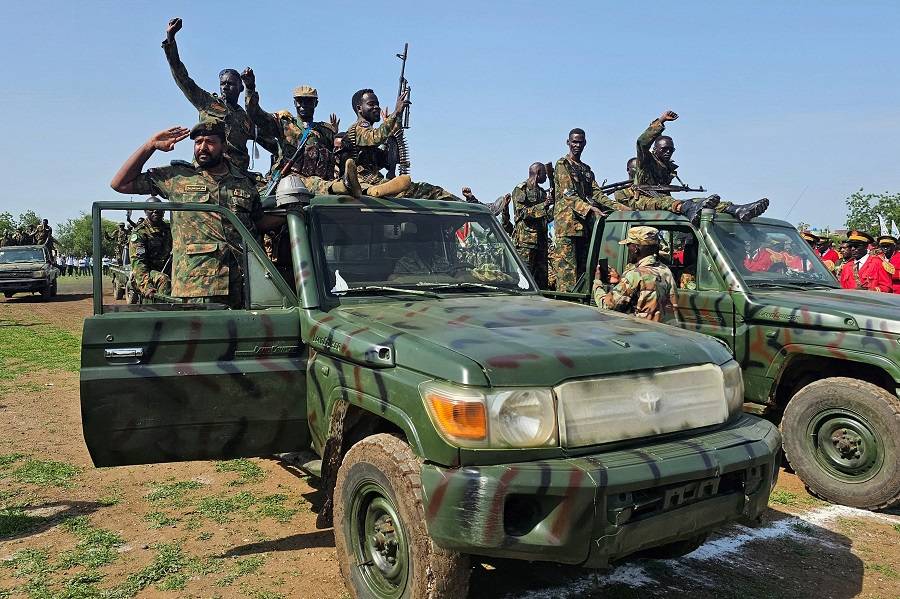
The SAF reports gains along the Export Road and at the border triangle, while around 200 RSF fighters are reported to have defected to the SAF. The RSF and SPLM-North have nevertheless continued operations in Blue Nile, and the RSF retains the ability to strike army-controlled cities with drones. Civilian harm remains high, including reported attacks at Adekong, al-Zawiya Ghara and Um Sharow. More than 100,000 people face displacement in Darfur and Kordofan, while around 21 million people across Sudan require food assistance. Chad has increased its military posture near the Sudanese border, and Ethiopia has expanded resources at Asosa, but the evidence does not establish an imminent regional war.
Change from previous assessment
Since the prior brief, the assessment of sustained SAF-RSF combat and worsening humanitarian conditions is unchanged. New reporting provides more detail on the reported defection of around 200 RSF fighters, SAF-reported control of the border triangle, renewed fighting around Blue Nile, seven NASA FIRMS thermal detections in Darfur and the lifting of Khartoum's curfew and state of emergency. Confidence in persistent Chad-Sudan border tension is raised from low to medium because of reported Chadian deployments near Tine, while confidence in claims about Ethiopian operational intent remains low. The competing claims over Bekouri and Sarkam remain unresolved.
Key judgments
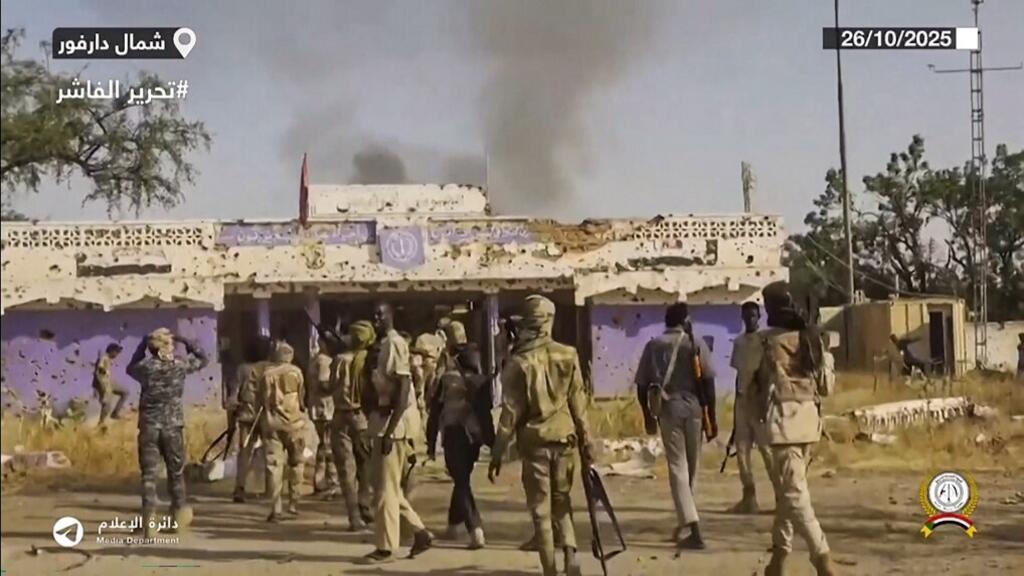
- The SAF and RSF are very likely to remain in active combat through 1 October 2026, with North Kordofan, North Darfur, West Darfur, South Kordofan and Blue Nile the principal pressure points. The forces are competing around El Obeid, the SAF reports control of the Omdurman-El Obeid Export Road and the border triangle, and the RSF and SPLM-North led by Abdulaziz al-Hilu have retaken Kurmuk and seized Geisan. The status of Bekouri and Sarkam remains unresolved because the SAF reports repelling attacks and a tactical withdrawal, while the RSF claims its Tasees alliance forces captured both bases. This contradiction lowers confidence in local battlefield control, but not in the broader assessment that fighting will continue. (Confidence: high · ASSESSED)
- I&W: New SAF-RSF ground combat or drone strikes are reported in North Kordofan, North Darfur, West Darfur, South Kordofan or Blue Nile, or fighting resumes around El Obeid, Bekouri or Sarkam. (0-14 days)
- I&W: The SAF and RSF announce and sustain a cessation of hostilities across the named fronts, with independent reporting of reduced attacks. (0-30 days)
- The SAF is likely to improve its operational position in Kordofan over the next 1-3 months, but the RSF is unlikely to lose the ability to contest Kordofan and Blue Nile. Around 200 RSF fighters, including senior field commanders, are reported to have joined the SAF in Omdurman with weapons and equipment, while separate reporting places their origin in Kordofan. Earlier reporting also identified defections by al-Nour al-Qubba, al-Savanna and Hamad Khalifa. The SAF's reported gains along the Export Road and border triangle support a local advantage, but RSF drone attacks on army-controlled cities and RSF-SPLM-North operations in Blue Nile indicate continuing reach. The defection account is not independently confirmed, and the differing Omdurman and Kordofan locations lower confidence. (Confidence: medium · ASSESSED)
- I&W: The SAF publicly integrates the defectors, deploys them with their weapons and equipment, or reports further RSF defections from Kordofan. (0-30 days)
- I&W: The RSF conducts new drone attacks outside Darfur or launches further coordinated operations with SPLM-North in Blue Nile. (0-30 days)
- SAF and RSF drone operations are very likely to continue causing civilian casualties and damage to essential infrastructure through 1 October 2026. The UN documented around 1,400 civilian deaths in Sudan between January and June 2026, including 1,100 attributed to drone strikes, while reporting states that both forces have repeatedly hit markets, schools, fuel stations and water infrastructure. Recent reporting attributes 12 casualties at Adekong near the Chadian border to the SAF, which Sudan's Foreign Ministry denied. Emergency Lawyers attributes at least 35 deaths at al-Zawiya Ghara to a SAF drone strike, while the RSF's self-declared government claims 37 deaths and 50 wounded. NASA FIRMS recorded seven thermal detections in Darfur between 31 August and 1 September, one of them high-confidence, but states that the data record heat rather than cause. Incident attribution and exact casualty totals remain contested, while confidence in the broader pattern remains high. (Confidence: high · ASSESSED)
- I&W: New strikes by SAF or RSF drones hit civilian sites, including markets, schools, fuel stations, water infrastructure or transport routes. (0-14 days)
- I&W: Independent reporting establishes that Darfur thermal detections correspond to wildfires or industrial fires rather than conflict-related strikes, and no new civilian drone casualties are reported. (0-14 days)
- Humanitarian conditions in Darfur and Kordofan are very likely to worsen over the next 30 days, despite limited normalisation in Khartoum. International organisations report that more than 100,000 people face displacement in Darfur and Kordofan. Separate reporting estimates that around 13 million Sudanese have fled their homes, including 8.7 million internally displaced, and that around 21 million people require food assistance. The World Food Programme reports that funding shortages have reduced aid to displaced people by 50 percent, although this figure comes from lower-confidence reporting. Hundreds of thousands of children have been displaced in North Darfur. In Khartoum, authorities lifted the night-time curfew and state of emergency after two years, and UNHCR reported 2.1 million returnees to Khartoum state. These local improvements do not offset deterioration in Darfur and Kordofan. (Confidence: high · ASSESSED)
- I&W: International organisations report new displacement from North Darfur, West Darfur, North Kordofan or South Kordofan, alongside reduced humanitarian access or further aid cuts. (0-30 days)
- I&W: Return movements into Khartoum state continue while the curfew and state of emergency remain lifted and essential services reopen. (0-30 days)
- Chad-Sudan border tension is likely to persist over the next 1-3 months, while a broader regional war remains unlikely. Chad declared maximum alert on its eastern border with Sudan and deployed major reinforcements, including about 100 armoured vehicles and trucks equipped with signal-jamming systems around Tine. The Adekong strike near the border has also generated competing accusations involving the SAF and Chadian officials. Yale satellite analysis reports expanded Ethiopian military resources at the ENDF base in Asosa between 23 and 28 August. Sudanese military sources and Amjad Farid state that RSF attacks on Blue Nile launch from Ethiopian territory, but the reporting does not establish the purpose of the Asosa expansion or direct Ethiopian participation. The assessment therefore rests partly on contested and social-media reporting. (Confidence: medium · ASSESSED)
- I&W: Chad expands deployments beyond Tine or reports another incident involving Sudanese or RSF-linked forces inside Chadian territory. (0-14 days)
- I&W: Satellite or official reporting shows ENDF units or RSF formations moving from Asosa towards Blue Nile for military operations. (1-3 months)
- A nationwide ceasefire or comprehensive political settlement is unlikely through 1 October 2026, although humanitarian and political contacts are likely to continue. The UN supports truce efforts involving the United States, Saudi Arabia, Egypt and the UAE, while UN envoy Pekka Haavisto is discussing prisoner exchanges and unilateral releases. New Sudanese political and civilian talks are due in Addis Ababa in September. General Abdel Fattah al-Burhan has announced a national dialogue but ruled out the return of RSF leaders, including Hemedti, to government. Rosemary DiCarlo has warned that the war is becoming harder to stop. These initiatives show sustained engagement but do not demonstrate SAF-RSF agreement on a political settlement. (Confidence: medium · ASSESSED)
- I&W: The SAF and RSF formally accept a humanitarian truce and implement it across Darfur, Kordofan and Blue Nile, with prisoner exchanges or unilateral releases. (0-30 days)
- I&W: The Addis Ababa talks are cancelled, or either force publicly rejects the truce and prisoner-exchange initiatives while launching new offensives. (0-30 days)
Outlook & scenarios
SAF incremental gains with continued RSF reach (55%)
The SAF consolidates reported control of the Export Road and border triangle and uses further defections to improve its position in Kordofan. The RSF retains the ability to conduct drone attacks on army-controlled cities and to contest Blue Nile alongside SPLM-North. Fighting continues around North Kordofan, North Darfur, South Kordofan and Blue Nile.
Fragmented stalemate and humanitarian decline (40%)
Neither force converts local gains into a decisive breakthrough. Control of Bekouri and Sarkam remains contested, while the RSF continues operations in Darfur and the SAF maintains pressure along supply routes. Displacement in Darfur and Kordofan rises, aid provision falls and civilian infrastructure remains exposed to drone strikes.
Limited humanitarian truce without political settlement (20%)
The United States, Saudi Arabia, Egypt, the UAE and the UN secure a short humanitarian truce, with Pekka Haavisto facilitating prisoner exchanges or unilateral releases. The Addis Ababa talks proceed, but General Abdel Fattah al-Burhan's exclusion of RSF leaders prevents a comprehensive settlement.
Wildcard: wider regional intervention (12%)
A further incident near Tine or a verified military movement from Asosa towards Blue Nile draws Chad or Ethiopia more directly into the conflict. Border deployments intensify and the SAF-RSF war develops into a wider regional confrontation. This remains a low-probability, high-impact outcome because the purpose of the Asosa expansion is unconfirmed.
Recommendations
- Prioritise 0-14 day verification of control at Bekouri and Sarkam. Track the SAF, the 4th Infantry Division, Sudan Shield Forces, RSF Tasees alliance forces and any changes in the location of each unit.
- Maintain a separate defection tracker for the reported 200 RSF fighters. Verify whether they are in Omdurman or returned from Kordofan, whether senior commanders are among them, and whether they retain their weapons and equipment.
- Monitor the Export Road, the border triangle, El Obeid, Al-Kayli, Kurmuk and Geisan for changes in access, force movements and reported control. Distinguish SAF claims from RSF claims in each update.
- Use NASA FIRMS detections as corroborative indicators only. Pair the seven Darfur thermal detections with incident-level reporting before attributing them to SAF or RSF strikes.
- Track civilian harm separately at Adekong, al-Zawiya Ghara and Um Sharow. Record the reported casualty range, attribution, source and any independent confirmation rather than consolidating contested figures.
- Monitor Chadian force posture around Tine and eastern Chad, including the reported armoured vehicles and signal-jamming trucks. In parallel, compare new satellite imagery of Asosa with reported RSF activity in Blue Nile.
- Update humanitarian warning indicators weekly for displacement from Darfur and Kordofan, food-assistance requirements, aid reductions and return movements into Khartoum state.
- Assess the September Addis Ababa talks and the US, Saudi, Egyptian, Emirati and UN truce effort against observable implementation: formal SAF-RSF acceptance, reduced attacks, humanitarian access and prisoner releases.
Confidence & uncertainty
Overall confidence is high because the core judgments are supported by corroboration across UN reporting, NASA FIRMS official data, major media, NGO reporting and satellite analysis. Multiple sources support continued combat, drone-related civilian harm, displacement and ongoing diplomatic engagement. The main uncertainties concern control of Bekouri and Sarkam, competing casualty figures and attribution at Adekong and al-Zawiya Ghara, the location and effect of the reported RSF defections, and the purpose of Ethiopian activity at Asosa.
Intelligence gaps
- [EEI 1.1 · PARTIAL] Observed concentrations and movement of armed units (size estimates, unit identifiers if visible) within X km of named towns/roads/airfields (e.g., El Fasher, Geneina, Nyala, Khartoum neighborhoods) including timestamps and direction of movement. Recommended collection: imagery/satellite
- [EEI 1.2 · PARTIAL] Changes in employment of heavy weapons and systems: documented use or emplacement of artillery, multiple-launch rocket systems, tanks, combat helicopters, and airstrikes at specific coordinates and times. Recommended collection: open-source/media
- [EEI 1.4 · PARTIAL] Status of critical infrastructure and lines of communication: control or denial of named bridges, main highways (identify route numbers), airfields, fuel depots and telecommunication hubs and any reported sabotage/blockage incidents. Recommended collection: human intelligence/field reporting
- [EEI 2.1 · PARTIAL] Counts and locations of newly displaced persons arriving at formal sites, informal camps, border crossings or collective centers (daily/weekly arrivals, site coordinates), including demographics (women, children, elderly) where available. Recommended collection: humanitarian/UN OCHA reports
- [EEI 2.2 · UNCOVERED] Access impediments to humanitarian assistance: reported attacks on, blockages of, or denial of passage for named humanitarian convoys (dates, GPS locations, responsible actor if known) and closure status of specific routes. Recommended collection: human intelligence/field reporting
- [EEI 2.3 · PARTIAL] Functional status of medical infrastructure in named locations: number of operational hospitals/clinics, reported shortages of key medicines/blood, and hospital casualty/occupancy figures for the last 72 hours. Recommended collection: medical/health cluster reporting
- [EEI 3.1 · PARTIAL] Detection of flights, ships or overland convoys delivering military materiel or foreign personnel to named airfields, ports or border crossings (flight/IMO numbers, manifests if available, timestamps, route origin/destination). Recommended collection: air-traffic / maritime / border customs
- [EEI 3.2 · PARTIAL] Imagery or on-the-ground confirmation of foreign military personnel or private military contractor bases/forward operating elements at specified coordinates or compounds, including vehicle/weapon types observed. Recommended collection: imagery/satellite
- [EEI 3.3 · PARTIAL] Financial and sanctions-relevant indicators: atypical large transfers, use of designated front companies, or shipments routed through third states linked to procurement of weapons or fuel for RSF or SAF (transaction dates, parties, amounts where obtainable). Recommended collection: financial intelligence
Cited sources
[1] Daily News Egypt · Around 200 RSF Fighters Join Sudanese Army, Reports Say (B) · Mon Aug 31 2026 20:08:25 GMT+0000 (Coordinated Universal Time) · sha256:de1ea9b01724 [2] AllAfrica · Sudan War - a Conflict Sustained By Weapons, Fragmentation, and Diplomatic Inertia (B) · Wed Aug 26 2026 04:13:59 GMT+0000 (Coordinated Universal Time) · sha256:2705496e5063 [3] LiveUAMap (sudan.liveuamap.com) · Sudan latest news in English on live map - South Sudan and Sudan News in English - sudan.liveuamap.com (D) · sha256:e1063253f460 [4] Al Jazeera · The RSF’s defeat will not end Sudan’s war but merely fragment it (B) · Wed Aug 26 2026 07:26:45 GMT+0000 (Coordinated Universal Time) · sha256:7499be878bac [5] Aljdyan international الجديان العالمية · قطع شرايين إمداد الدعم السريع في دارفور وكردفان. الجيش السوداني يسيطر على المثلث الحدودي ويحوله لمنطقة عمليات محكمة | Aljdyan international الجديان العالمية (E) · sha256:32d0605f6863 [6] قناة كرري كلنا جيش السودان (Telegram channel) · قناة كرري كلنا جيش السودان (E) · Fri Aug 28 2026 14:25:29 GMT+0000 (Coordinated Universal Time) · sha256:5a259d40f891 [7] Independent Arabia · الجيش يصد هجومين في جنوب كردفان والنيل الأزرق وتحذير من إبادة بالنهود (B) · sha256:5720d74b8b98 [8] In-Depth News (IDN) / Europe External Programme with Africa (EEPA) · EEPA reports on ENDF base in Asosa expands military activity (C) · Mon Aug 31 2026 14:47:15 GMT+0000 (Coordinated Universal Time) · sha256:cb7f6fa1ade9 [9] AOL (aol.ca), republished wire content (with AFP) · Sudan army's drone attack on court building kills 35 in Darfur, NGO says (B) · Mon Aug 03 2026 09:56:01 GMT+0000 (Coordinated Universal Time) · sha256:b38d1925a525 [10] NASA FIRMS · NASA FIRMS thermal detections — Darfur (2d) (A) · sha256:3c5ef546958b [11] Antony Loewenstein (Substack) · Fighting war fatigue from Gaza to Sudan (D) · Tue Sep 01 2026 00:07:32 GMT+0000 (Coordinated Universal Time) · sha256:89c297c49136 [12] AAN MEDIA NETWORK · ሳተላይት ዘቃልዖ ጉድ! ካብ ሸረሪና ክሳብ ኣሶሳ፣ዶባት ኢትዮ-ሱዳን መበገሲ ሓድሽ ዞባዊ ኲናት! (E) · sha256:9d5b61ebf466
Source content hashes were computed at collection time; the cited text is preserved unmodified for the life of this product.
Red cell review: CONCUR WITH COMMENT
TLP:CLEAR