TLP:CLEAR · Disclosure is not limited.
Sudan Conflict: Cross-Border Spillover Risk Rises
Time window: Last 7 days · Audience: General analyst · Type: Situation report · DTG: 2026-08-28 22:09Z · Overall confidence: MEDIUM
BLUF
The SAF and RSF are very likely to remain in armed conflict through September, while reported strikes inside Chad have raised the risk of a wider security crisis. Humanitarian pressure is very likely to persist in Khartoum, Geissan and other affected areas. The US push for a nationwide arms embargo is unlikely to produce immediate battlefield effects.
Executive summary
Recent reporting indicates continued conflict between the SAF and RSF, including the RSF attack on Geissan in Blue Nile State and reported foreign aircraft and UAV strikes deep inside Chad that Chadian authorities attribute to the SAF or allied militias. Chad has raised its alert level and deployed about 100 armoured vehicles near the border, while the US and African Union have expressed concern. Sudan rejects responsibility for the strikes. The UN Security Council discussed a draft nationwide arms embargo from 24 to 26 August, but the proposal remains under discussion. NASA recorded 17 thermal detections in Darfur on 27 and 28 August, including one high-confidence detection, but the data cannot identify the cause or actor.
Change from previous assessment
Since the 26 August 2026 brief, the main change is new reporting on alleged foreign aircraft and UAV strikes deep inside Chad on 22 August, followed by stronger US and African Union concern. NASA's Darfur count has also risen to 17 thermal detections for 27 and 28 August, compared with the seven detections reported in the earlier brief. The assessment that the SAF and RSF will remain at war is unchanged. Cross-border spillover is now a distinct judgement with medium confidence. The RSF's broad advantage in Darfur and the status of El Fasher remain unresolved and low confidence. Humanitarian pressure remains a high-confidence concern, while the assessment of the US arms-embargo initiative has been narrowed to its likely lack of immediate battlefield effect.
Key judgments
- The SAF and RSF are very likely to remain in armed conflict through 30 September 2026. The RSF attacked Geissan in Blue Nile State on 12 August, displacing about 2,500 people according to one report and around 500 families according to a UN agency estimate. Chadian authorities also reported strikes on 22 August that they believe involved SAF aircraft or allied forces. The assessment is based on current activity reports and the conflict's continuation since April 2023, but responsibility for the reported strikes inside Chad remains contested. (Confidence: medium · ASSESSED)
- I&W: Independent reporting confirms another engagement involving the SAF, the RSF or allied forces in Blue Nile State, Darfur or along the Chad border. (0-14 days)
- I&W: The SAF and RSF announce and sustain a verified cessation of hostilities in Geissan and Darfur for 14 consecutive days. (0-30 days)
- A cross-border security crisis involving Chad is likely to persist through 14 September 2026, but direct SAF responsibility for the reported 22 August strikes inside Chad remains unconfirmed. Chad has accused the Sudanese army of air and drone strikes against a convoy in Chadian territory, while Sudan rejects the accusation. Chadian authorities have raised the alert level to its highest point and deployed about 100 armoured vehicles near eastern Tine. The US and African Union have expressed concern over the reported strikes. (Confidence: medium · ASSESSED)
- I&W: Chad reports another foreign-aircraft or UAV strike in Ennedi-Est and keeps its alert level at the highest point or reinforces eastern Tine. (0-14 days)
- I&W: Chad lowers its alert level, reports no further cross-border strike for 14 days, and announces a joint investigation with Sudan. (0-30 days)
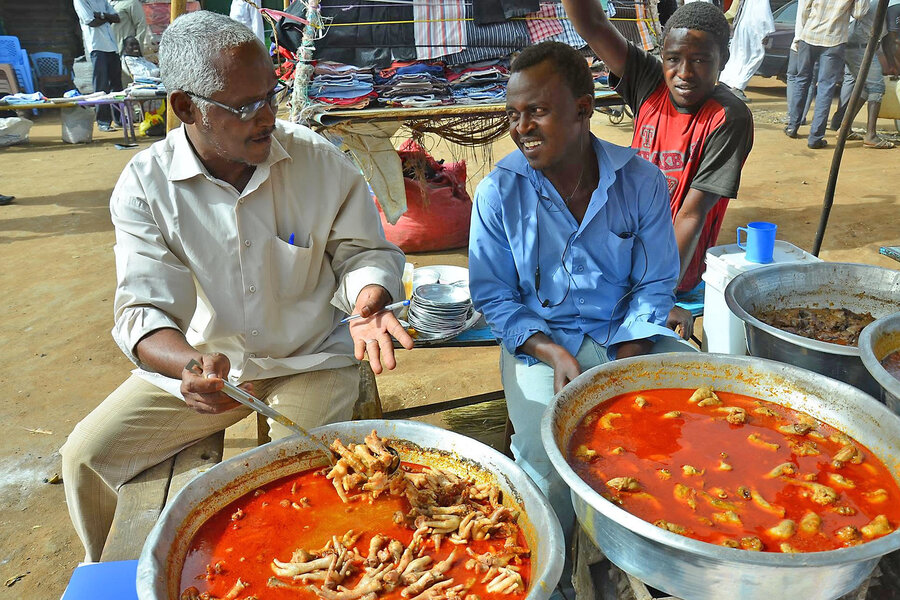
- Severe humanitarian pressure in Sudan, especially in Khartoum and Geissan, is very likely to persist through 30 September 2026. About 2,500 people reportedly fled Geissan, while a UN agency estimated that around 500 families were displaced. Residents in Khartoum continue to face widespread damage and power blackouts. Emergency response rooms, supported by more than 800 mutual aid groups, remain central to local crisis response. The different Geissan estimates are not directly additive and leave the precise scale of displacement uncertain. (Confidence: high · ASSESSED)
- I&W: UN or IOM reporting records additional displacement from Geissan or other Sudanese localities, or reports interruptions to emergency response room kitchens and clinics in Khartoum. (0-30 days)
- I&W: UN or IOM reporting records sustained returns and functioning emergency response room services without new displacement through 30 September. (0-30 days)
- The US proposal to extend the arms embargo across Sudan and penalise external support is unlikely to produce immediate reductions in SAF or RSF arms flows through 23 September 2026 because the UN Security Council is still discussing a draft. The US is pressing for tighter restrictions and has called for stronger embargo and sanctions measures, but the reported diplomatic activity does not establish implementation or battlefield effects. (Confidence: medium · ASSESSED)
- I&W: The UN Security Council fails to adopt a nationwide embargo resolution by 23 September 2026. (0-30 days)
- I&W: The UN Security Council adopts the resolution and subsequent reporting records an interruption in weapons deliveries to the SAF or RSF. (0-60 days)
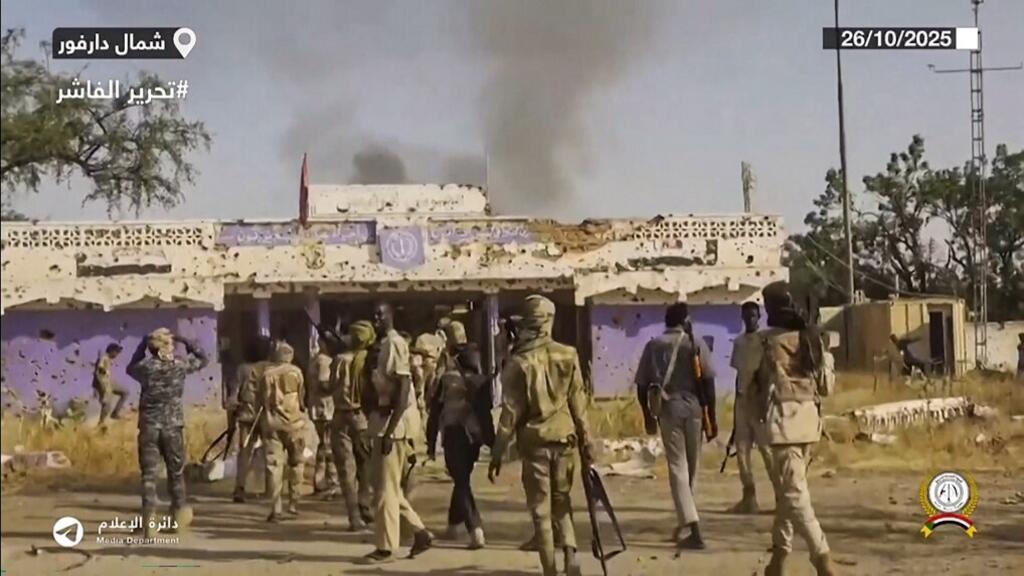
- The RSF likely retains a broad territorial advantage across Darfur, but current control of El Fasher remains unresolved. The RSF captured or claimed control of Geneina, Central Darfur, Nyala and Ed Daein during 2023, tightened its siege of El Fasher in May 2024, and attacked the Abu Shouk and Zamzam camps in April 2025. A separate low-confidence report states that the RSF captured El Fasher in October 2025. The judgement rests mainly on historical reporting and a disputed, low-confidence account of current control. (Confidence: low · ASSESSED)
- I&W: Independent current reporting places RSF security or administrative control in Nyala, Geneina, Ed Daein and Central Darfur while recording no SAF return to El Fasher. (1-3 months)
- I&W: Credible current reporting confirms SAF control of El Fasher or sustained SAF operations that displace the RSF from a major Darfur city. (0-30 days)
- NASA's 17 thermal detections in Darfur recorded on 27 and 28 August 2026 are very likely to remain insufficient to attribute attacks to the SAF or RSF. One detection was high confidence, but the VIIRS instrument records heat that can result from strikes, shelling, industrial fires or wildfires and does not identify the cause or actor. (Confidence: high · REPORTED)
- I&W: No independent geolocated imagery or ground reporting identifies a specific SAF or RSF action corresponding to the 17 detections. (0-14 days)
- I&W: An independent geolocated source identifies a specific detection as an SAF strike, an RSF strike or a non-conflict fire. (0-14 days)
- The reported 3 August 2026 SAF drone strike on the Customary Court in al-Zawiya Ghara, North Darfur, remains unconfirmed, and the reported death toll is contested between at least 35 and 37 people. NGO reporting states that the Sudanese Army targeted civilians attending local court hearings, while a statement from the RSF's self-declared government gives the higher figure. This judgement relies on thin and conflicting reporting. (Confidence: low · ASSESSED)
- I&W: Independent imagery, medical records or multiple local accounts confirm the strike, its location and a casualty figure. (0-30 days)
- I&W: Credible evidence shows that the site was not struck, that another actor was responsible or that the reported casualty figures were materially incorrect. (0-30 days)
- A lasting ceasefire or comprehensive political settlement is unlikely through 30 September 2026. General Abdel Fattah al-Burhan has announced a national dialogue, but the available reporting does not establish an agreed SAF-RSF negotiating process. The US call for a humanitarian truce and its statement that there is no military solution are policy positions rather than evidence of consent by the warring parties. Reporting that Ahmed Haroun's Islamic Movement supports an extended period of army rule further indicates competing political objectives. (Confidence: low · ASSESSED)
- I&W: The SAF and RSF publicly accept a named mediator, timetable and monitored cessation before 30 September. (0-30 days)
- I&W: General Abdel Fattah al-Burhan's dialogue produces a joint SAF-RSF communiqué with agreed political and security terms. (0-30 days)
Outlook & scenarios
Protracted conflict with contained spillover (65%)
Through September, the SAF and RSF sustain localised fighting in Blue Nile State and Darfur. Chad keeps forces on alert near eastern Tine after reported strikes in Ennedi-Est. Displacement from Geissan and pressure on Khartoum services continue, while the UN Security Council debate produces no immediate battlefield change.
Partial diplomatic containment (25%)
US pressure keeps the nationwide arms embargo and external-support measures before the UN Security Council. Chad and Sudan avoid further strikes across the border, and Chad lowers its alert level. Fighting between the SAF and RSF continues inside Sudan, but the cross-border crisis does not widen.
Regionalisation of the war (15%)
A second air or UAV strike reaches Chadian territory, followed by additional Chadian deployments near eastern Tine or a direct response against Sudanese-linked positions. The SAF, RSF, Chad and external supporters frame the incident in competing terms, reducing the prospect of a ceasefire and increasing displacement along the border.
Recommendations
- Maintain separate attribution tracks for the reported 22 August strikes in Chad. Compare Chadian, Sudanese, US and African Union statements with independent geolocation and imagery, and distinguish Ennedi-Est from eastern Tine.
- Prioritise monitoring of Chad's alert level, the presence of about 100 armoured vehicles near eastern Tine, and any further foreign-aircraft or UAV reports over Ennedi-Est during the next 14 days.
- Track displacement from Geissan using the separate individual and family estimates. Do not combine the figures without clarifying their dates, coverage and definitions.
- Use emergency response rooms, community kitchens and clinics in Khartoum as practical indicators of civilian coping capacity. Report interruptions to those services separately from broader displacement totals.
- Treat NASA VIIRS detections as indicators of heat only. Require independent geolocated imagery, local reporting or official evidence before attributing any Darfur detection to the SAF or RSF.
- Monitor the UN Security Council draft for four specific developments: adoption, geographic scope, coverage of UAV-related technology, and an implementation or enforcement mechanism. Separate diplomatic statements from evidence of reduced arms flows.
- Keep current control of El Fasher as an open analytic question. Do not use the low-confidence October 2025 RSF capture report as proof of present control without current corroboration.
- Assess the announced national dialogue against observable participation by both the SAF and RSF, a named mediator, a timetable and a monitored cessation. Treat the dialogue as political signalling until those features appear.
Confidence & uncertainty
Overall confidence is medium. Current reporting on the Geissan attack, the alleged strikes inside Chad, the UN Security Council debate and NASA's thermal detections is supported by a mix of official government, multilateral and major-media sources. Confidence is reduced by contested attribution of the Chad strikes, conflicting casualty figures for al-Zawiya Ghara, inconsistent displacement estimates for Geissan, and thin or stale reporting on present territorial control in El Fasher and wider Darfur.
Intelligence gaps
- [EEI 1.1 · PARTIAL] Observed concentrations and movement of armed units (size estimates, unit identifiers if visible) within X km of named towns/roads/airfields (e.g., El Fasher, Geneina, Nyala, Khartoum neighborhoods) including timestamps and direction of movement. Recommended collection: imagery/satellite
- [EEI 1.3 · PARTIAL] Reports or intercepts of orders, operational directives or public statements from RSF/SAF commanders indicating planned offensives, ceasefire acceptance/rejection, defensive postures or orders to withdraw from named locations. Recommended collection: signals/communications intercepts
- [EEI 1.4 · PARTIAL] Status of critical infrastructure and lines of communication: control or denial of named bridges, main highways (identify route numbers), airfields, fuel depots and telecommunication hubs and any reported sabotage/blockage incidents. Recommended collection: human intelligence/field reporting
- [EEI 2.2 · UNCOVERED] Access impediments to humanitarian assistance: reported attacks on, blockages of, or denial of passage for named humanitarian convoys (dates, GPS locations, responsible actor if known) and closure status of specific routes. Recommended collection: human intelligence/field reporting
- [EEI 2.3 · PARTIAL] Functional status of medical infrastructure in named locations: number of operational hospitals/clinics, reported shortages of key medicines/blood, and hospital casualty/occupancy figures for the last 72 hours. Recommended collection: medical/health cluster reporting
- [EEI 3.1 · UNCOVERED] Detection of flights, ships or overland convoys delivering military materiel or foreign personnel to named airfields, ports or border crossings (flight/IMO numbers, manifests if available, timestamps, route origin/destination). Recommended collection: air-traffic / maritime / border customs
- [EEI 3.2 · UNCOVERED] Imagery or on-the-ground confirmation of foreign military personnel or private military contractor bases/forward operating elements at specified coordinates or compounds, including vehicle/weapon types observed. Recommended collection: imagery/satellite
- [EEI 3.3 · PARTIAL] Financial and sanctions-relevant indicators: atypical large transfers, use of designated front companies, or shipments routed through third states linked to procurement of weapons or fuel for RSF or SAF (transaction dates, parties, amounts where obtainable). Recommended collection: financial intelligence
Cited sources
[1] Wikipedia · Rapid Support Forces (B) · sha256:926edb7e6457 [2] allafrica.com · Ethiopia: Sudanese Army Says It Downed Drone Crossing From Ethiopia, Third Such Incident in Recent Days (B) · sha256:eb2608732b0c [3] The Reporter Ethiopia · UN Security Council Weighs Sudan Arms Embargo | The Reporter Ethiopia (B) · sha256:a748e8b991d3 [4] thenationalnews.com · Sudan war risks spreading after army strike inside Chad, US envoy warns (A) · sha256:68de990b102a [5] bbc.co.uk · Sudan conflict: Two-year curfew lifted in Khartoum (A) · sha256:bc6bb97e32da [6] Al Jazeera · Chad accuses Sudan of air strike near shared border that killed 12 (A) · sha256:61ae30e662df [7] middleeasteye.net · Trump's Africa envoy condemns Chad strikes, 'external support' in Sudan war (A) · sha256:dad6e71e0885 [8] The Christian Science Monitor · In Sudan’s civil war, both sides target journalists (A) · sha256:3d53f24cf931 [9] The New Humanitarian · Rethinking Humanitarianism | Grassroots aid is here to disturb the system (B) · sha256:388447deb055 [10] Wikipedia · Darfur campaign (2023–present) (B) · sha256:67afcf9f0bd1 [11] Wikipedia · Darfur genocide (2023–present) (B) · sha256:6208f5cc4978 [12] NASA · NASA FIRMS thermal detections — Darfur (2d) (A) · sha256:a99017839a41 [13] AOL · Sudan army's drone attack on court building kills 35 in Darfur, NGO says (C) · sha256:b38d1925a525 [14] Al Jazeera · The RSF’s defeat will not end Sudan’s war but merely fragment it (A) · sha256:7499be878bac
Source content hashes were computed at collection time; the cited text is preserved unmodified for the life of this product.
TLP:CLEAR