TLP:CLEAR · Disclosure is not limited.
Sudan conflict: Darfur control remains unresolved
Time window: Last 7 days · Audience: General analyst · Type: Situation report · DTG: 2026-08-24 11:23Z · Overall confidence: LOW
BLUF
The Sudanese Armed Forces and Rapid Support Forces are very likely to remain in conflict through early September, but current territorial control in Darfur is unresolved because the available reporting is dated and contradictory. Humanitarian pressure is very likely to remain severe, while recent US and Sudanese signals on a flight ban and sanctions remain unconfirmed.
Executive summary
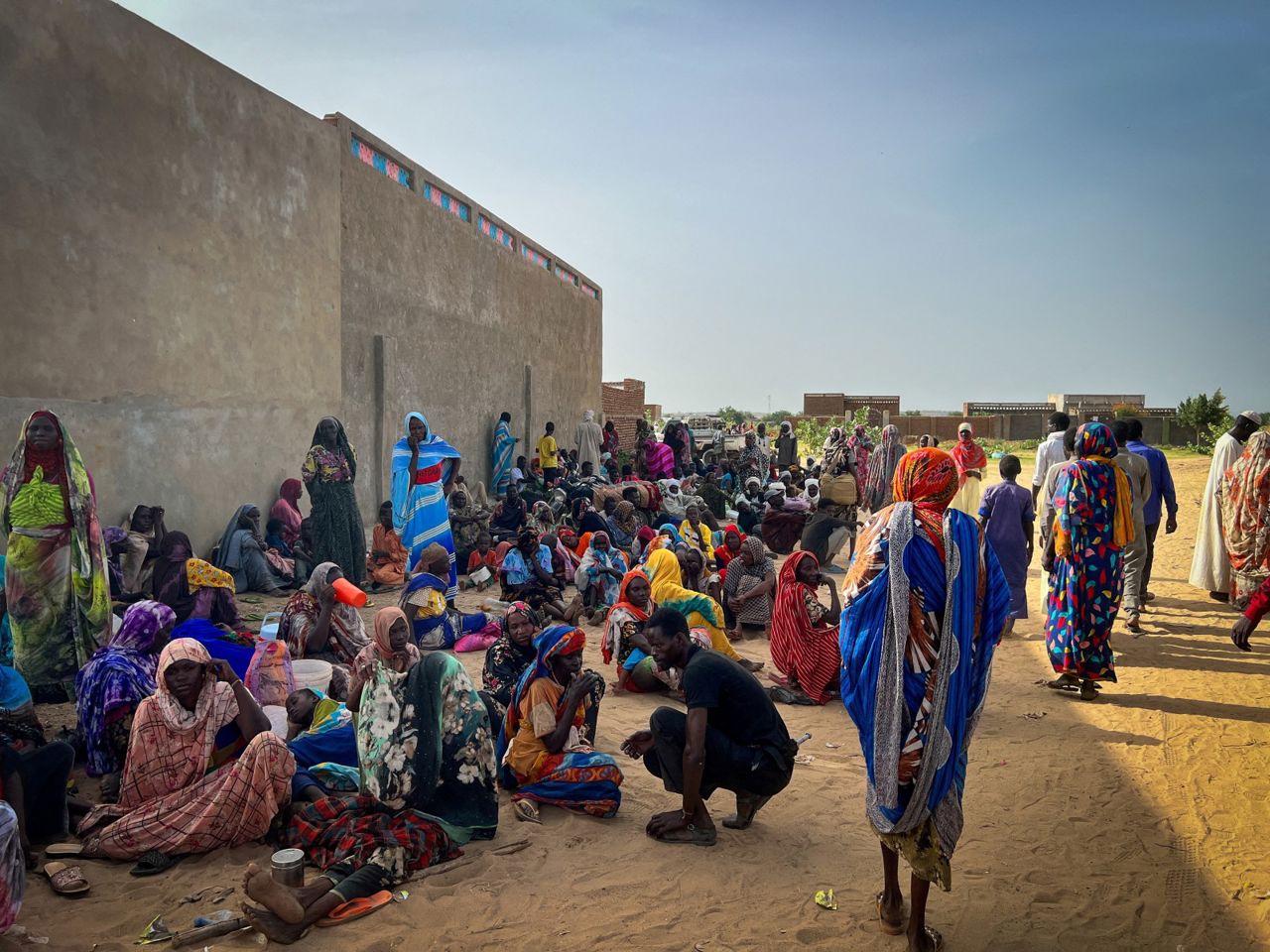
Dated reporting indicates that the RSF controls much of Darfur and captured El Fasher in October 2025, while the SAF retook Khartoum by March 2025. The current package does not independently verify the present front line. Humanitarian conditions remain severe, with reports of more than 14 million forcibly displaced people, nearly 25 million people facing severe food insecurity and nearly 33.7 million requiring assistance. NASA recorded three low-confidence thermal detections in Darfur over the two days ending 23 August, which do not establish attribution. Education Cannot Wait committed USD 22 million on 24 August for education support. Reporting on urgent US action concerning a flight ban over Sudan and Al-Burhan's discussion of sanctions remains thinly corroborated.
Change from previous assessment
Since the 23 August brief, no new independently corroborated battlefield development has raised or lowered the assessment of the SAF-RSF balance. This update adds the NASA thermal detections ending 23 August, the ECW USD 22 million education commitment on 24 August, and reporting on US flight-ban action and Al-Burhan's discussion of sanctions. The prior brief's specific RSF battlefield-gain and Chad-friction judgements are not carried forward as current developments because this run contains no fresh approved claim supporting them. Confidence remains low, while the assessment of persistent humanitarian pressure is retained.
Key judgments
- Very likely the SAF and RSF will remain in armed conflict through 7 September 2026. The current-status element rests chiefly on a low-confidence academic entry, supported by older major-media reporting on the conflict's start, so confidence is low and this judgement does not establish current territorial control. (Confidence: low · ASSESSED)
- I&W: Independent reporting, geolocated imagery or official statements document SAF-RSF fighting at El Fasher, Nyala, Ed Daein or Khartoum. (0-14 days)
- I&W: The SAF and RSF announce and observe a nationwide ceasefire covering their forces and named front lines. (0-14 days)
- Likely the RSF remains the stronger territorial actor across much of Darfur, but current control of El Fasher and the wider Darfur front is unresolved. Reporting places the RSF in control of most of Darfur by late 2023, records an extended siege and reported capture of El Fasher in 2025, and places the SAF in control of Khartoum by March 2025. The evidence is dated and includes conflicting timelines, so confidence is low. (Confidence: low · ASSESSED)
- I&W: Verifiable imagery or independent reporting confirms RSF administrative or military activity in El Fasher, Nyala and Ed Daein. (0-14 days)
- I&W: The SAF announces and independently verifies the recovery of a major Darfur centre, or the RSF announces a withdrawal from one. (0-30 days)
- Very likely severe humanitarian pressure will persist through 31 October 2026. Reporting identifies more than 14 million forcibly displaced people, nearly 25 million people facing severe food insecurity, nearly 33.7 million requiring humanitarian assistance and at least 8 million children out of school. These figures have different dates, definitions and source types and should not be added together, but they consistently indicate extreme and sustained needs. (Confidence: high · ASSESSED)
- I&W: New UN, NGO or major-media reporting records displacement above 14 million, severe food insecurity near 25 million or humanitarian needs near 33.7 million. (0-3 months)
- I&W: Reliable reporting records a sustained reduction in displacement, food insecurity and humanitarian caseloads across Sudan. (1-3 months)
- Very likely the three NASA FIRMS thermal detections recorded in Darfur over the two days ending 23 August will remain insufficient to attribute attacks to the SAF or RSF. NASA reported zero high-confidence detections, and the product identifies thermal anomalies rather than the responsible actor. Confidence is high for this limitation because the observation comes from an official NASA product. (Confidence: high · ASSESSED)
- I&W: NASA continues to label Darfur detections as thermal anomalies without high-confidence actor attribution. (0-14 days)
- I&W: Official or independently geolocated evidence links one of the detections to a named SAF or RSF attack. (0-14 days)
- Roughly even chance the reported urgent US action concerning a flight ban over Sudan will produce a formal, publicly announced measure by 23 September 2026. Al-Burhan is also reported to be discussing sanctions, but the available reporting does not establish that either a flight ban or new sanctions has been implemented. This judgement rests on a single online reporting stream and therefore has low confidence. (Confidence: low · ASSESSED)
- I&W: The US government issues a formal notice naming a flight ban or other Sudan airspace measure, or announces new sanctions linked to the conflict. (0-30 days)
- I&W: US authorities publicly state that no flight ban or new Sudan-related sanctions measure is in force by 23 September. (0-30 days)
- Likely Education Cannot Wait's USD 22 million multi-year commitment will support education recovery for displaced children, refugees and vulnerable host communities in Sudan, with Save the Children leading implementation. The commitment is a concrete humanitarian response, but the available reporting does not establish immediate restoration of schooling for the 8 million children reported to be out of school. Confidence is medium because the commitment is supported by NGO and major-media reporting, while implementation remains prospective. (Confidence: medium · ASSESSED)
- I&W: Education Cannot Wait or Save the Children confirms disbursement, operating locations and beneficiary numbers in Sudan. (1-3 months)
- I&W: Education Cannot Wait or Save the Children reports suspension or inability to reach intended displaced communities. (1-3 months)
Outlook & scenarios
Protracted SAF-RSF conflict and humanitarian strain (60%)
Likely through 23 September 2026, the SAF and RSF remain in armed conflict without a verified strategic territorial shift. The RSF retains reported positions across much of Darfur, the SAF retains its reported position in Khartoum, and displacement, food insecurity and school disruption continue.
Limited humanitarian expansion without military settlement (25%)
Unlikely but plausible, the ECW commitment expands education and psychosocial support through Save the Children and local partners while fighting continues. The response improves assistance for selected displaced children and host communities without producing a ceasefire or resolving territorial control.
Verified territorial reversal (10%)
Unlikely, the SAF or RSF secures a new major position in Darfur, producing independently verified changes around El Fasher, Nyala or Ed Daein. Such a shift would raise confidence that the reported front line has changed, but the available evidence does not currently indicate which side would gain.
High-impact Darfur atrocity shock (5%)
Very unlikely but high impact, a mass-casualty episode in El Fasher or Geneina produces a sharp increase in displacement and external pressure. The existing record of alleged RSF abuses against non-Arab communities, including the Masalit, indicates the severity of the potential outcome, but does not establish an imminent event.
Recommendations
- Maintain separate SAF and RSF territorial trackers for El Fasher, Nyala, Ed Daein, Geneina and Khartoum. Do not treat party claims or dated background reporting as proof of current control.
- Require two independent forms of corroboration before assessing a territorial shift, such as geolocated imagery paired with local reporting or an official statement paired with evidence of sustained presence.
- Track displacement, food insecurity, humanitarian caseload and school closures as separate indicators. Preserve the reported figures' dates and definitions rather than combining them into a single estimate.
- Review NASA FIRMS detections alongside geolocated imagery and incident reporting. Treat the three detections ending 23 August as indications of thermal activity, not as evidence of SAF or RSF attacks.
- Monitor formal US government notices for any Sudan flight-ban measure or new sanctions. Record the date, legal basis, named targets and stated enforcement mechanism before assessing implementation.
- Request implementation updates on the ECW USD 22 million programme, including disbursement, operating locations, access constraints and beneficiary numbers for displaced children and host communities.
- Prioritise protection reporting from El Fasher, Geneina and other Darfur locations, including documentation of abuses against non-Arab communities and support needs for male survivors of sexual violence.
Confidence & uncertainty
Overall confidence is low because current battlefield status relies heavily on dated reporting and a low-confidence academic entry, while the reports on urgent US flight-ban action and Al-Burhan's discussion of sanctions come from a thin online reporting stream. Humanitarian deterioration is better supported by NGO and major-media reporting, but the displacement, food insecurity and assistance figures use different dates and definitions. NASA's official thermal data is reliable for detecting anomalies, but it does not identify an attacking actor.
Intelligence gaps
- [EEI 1.1 · PARTIAL] Observed concentrations and movement of armed units (size estimates, unit identifiers if visible) within X km of named towns/roads/airfields (e.g., El Fasher, Geneina, Nyala, Khartoum neighborhoods) including timestamps and direction of movement. Recommended collection: imagery/satellite
- [EEI 1.2 · UNCOVERED] Changes in employment of heavy weapons and systems: documented use or emplacement of artillery, multiple-launch rocket systems, tanks, combat helicopters, and airstrikes at specific coordinates and times. Recommended collection: open-source/media
- [EEI 1.3 · PARTIAL] Reports or intercepts of orders, operational directives or public statements from RSF/SAF commanders indicating planned offensives, ceasefire acceptance/rejection, defensive postures or orders to withdraw from named locations. Recommended collection: signals/communications intercepts
- [EEI 1.4 · PARTIAL] Status of critical infrastructure and lines of communication: control or denial of named bridges, main highways (identify route numbers), airfields, fuel depots and telecommunication hubs and any reported sabotage/blockage incidents. Recommended collection: human intelligence/field reporting
- [EEI 2.1 · PARTIAL] Counts and locations of newly displaced persons arriving at formal sites, informal camps, border crossings or collective centers (daily/weekly arrivals, site coordinates), including demographics (women, children, elderly) where available. Recommended collection: humanitarian/UN OCHA reports
- [EEI 2.2 · UNCOVERED] Access impediments to humanitarian assistance: reported attacks on, blockages of, or denial of passage for named humanitarian convoys (dates, GPS locations, responsible actor if known) and closure status of specific routes. Recommended collection: human intelligence/field reporting
- [EEI 2.3 · UNCOVERED] Functional status of medical infrastructure in named locations: number of operational hospitals/clinics, reported shortages of key medicines/blood, and hospital casualty/occupancy figures for the last 72 hours. Recommended collection: medical/health cluster reporting
- [EEI 3.1 · UNCOVERED] Detection of flights, ships or overland convoys delivering military materiel or foreign personnel to named airfields, ports or border crossings (flight/IMO numbers, manifests if available, timestamps, route origin/destination). Recommended collection: air-traffic / maritime / border customs
- [EEI 3.2 · UNCOVERED] Imagery or on-the-ground confirmation of foreign military personnel or private military contractor bases/forward operating elements at specified coordinates or compounds, including vehicle/weapon types observed. Recommended collection: imagery/satellite
- [EEI 3.3 · PARTIAL] Financial and sanctions-relevant indicators: atypical large transfers, use of designated front companies, or shipments routed through third states linked to procurement of weapons or fuel for RSF or SAF (transaction dates, parties, amounts where obtainable). Recommended collection: financial intelligence
Cited sources
[1] Wikipedia · Sudanese Armed Forces (C) · sha256:915a4f946fef [2] Wikipedia · Rapid Support Forces (B) · sha256:926edb7e6457 [3] Wikipedia · Sudanese civil war (2023–present) (B) · sha256:2105e5f32f20 [4] Wikipedia · Darfur genocide (2023–present) (B) · sha256:7c4cba731f4f [5] Wikipedia · Darfur campaign (2023–present) (B) · sha256:2e420e74bf9d [6] devdiscourse.com · Fresh USD 22 million to sustain education for crisis-affected children in Sudan (C) · sha256:ac096977b366 [7] Tribune India · Fresh USD 22 million to sustain education for crisis-affected children in Sudan (B) · sha256:a16caec9e923 [8] NASA · NASA FIRMS thermal detections — Darfur (2d) (A) · sha256:587118cc7b0c [9] Sudan Online · حظر طيران فوق السودان؟ تحرك أمريكي عاجل والبرهان يتحدث عن عقوبات (B) · sha256:0dab77080aa3 [10] Atlantic Council · A path toward sustainable security in Colombia (B) · sha256:74a4b38235c3
Source content hashes were computed at collection time; the cited text is preserved unmodified for the life of this product.
TLP:CLEAR