TLP:CLEAR · Disclosure is not limited.
Sudan Conflict: Drone Escalation, Frontline Shifts and External Support
Time window: Last 7 days · Audience: General analyst · Type: Situation report · DTG: 2026-09-08 22:07Z · Overall confidence: HIGH
BLUF
Sudan's conflict is likely to remain highly active over the next 30 days, with long-range drone strikes, SAF and RSF ground operations, and worsening humanitarian conditions. SAF gains at Hamrat al-Wiz have not prevented RSF-SPLM-N advances towards Ed Damazin, while foreign support networks and diplomatic efforts to extend the arms embargo remain active but contested.
Executive summary
Reporting from 1 to 8 September indicates simultaneous military pressure in North Kordofan and Blue Nile, continued long-range drone use by both the SAF and RSF, and sustained civilian harm in Kordofan and Darfur. SAF and allied forces reportedly captured Hamrat al-Wiz on 6 September, while an RSF-SPLM-N alliance advanced towards Ed Damazin after seizing bases in Kurmuk and Geisan. The UN, WHO, ICRC and MSF report extensive displacement, damaged medical infrastructure, missing persons and declining health-service capacity. The UN and US are pressing to extend the Darfur arms embargo nationwide, but foreign-support allegations, the chemical-weapons reporting and the prospects for Security Council action remain disputed.
Change from previous assessment
Since the 7 September brief, the assessment adds a reported SAF and allied capture of Hamrat al-Wiz, a reported RSF-SPLM-N advance towards Ed Damazin and new reporting on Blue Nile displacement. The humanitarian judgment is reinforced by MSF reporting on health-system funding cuts, rising admissions and service closures. New leak-based chemical-weapons reporting provides additional detail but does not resolve the allegation, so confidence in that judgment is lowered from medium to low. The assessments on drone-related civilian harm, foreign support and pressure for a nationwide arms embargo remain broadly unchanged.
Key judgments
- SAF and allied forces have gained ground at Hamrat al-Wiz in North Kordofan, while the RSF-SPLM-N alliance has advanced towards Ed Damazin in Blue Nile after seizing bases in Kurmuk and Geisan. This indicates a likely widening of active fronts rather than a near-term reduction in fighting. (Confidence: medium · ASSESSED)
- I&W: Confirming: within 0-14 days, credible reporting records continued SAF control of Hamrat al-Wiz alongside new fighting or further displacement around Ed Damazin, Kurmuk or Geisan. (0-14 days)
- I&W: Breaking: within 0-14 days, credible reporting shows the RSF recapturing Hamrat al-Wiz, the supply corridor becoming unusable, and no further RSF-SPLM-N advance in Blue Nile. (0-14 days)
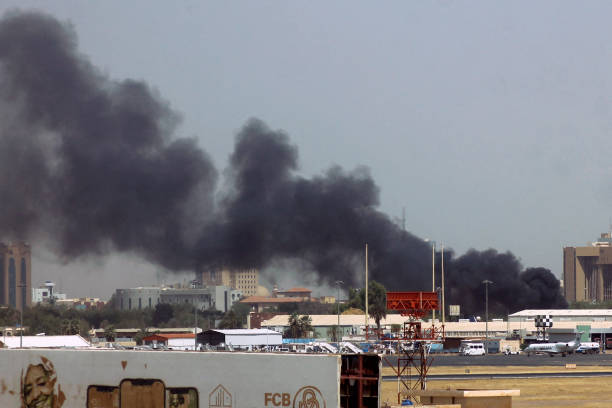
- Civilian harm from long-range drone operations is very likely to continue over the next 30 days, with likely further casualties and infrastructure damage in Kalogie, El Obeid, Ad-Da'ein, Blue Nile and West Darfur. The RSF and SAF have both used foreign-supplied or advanced drones beyond traditional front lines, with reported RSF strikes killing 114 people, including about 60 children, in Kalogie and SAF strikes killing at least 70 people in Ad-Da'ein. (Confidence: high · ASSESSED)
- I&W: Confirming: within 0-30 days, verified strikes or new civilian infrastructure damage are reported in El Obeid, Kalogie, Ad-Da'ein, Blue Nile or West Darfur. (0-30 days)
- I&W: Breaking: within 0-14 days, reliable reporting confirms a sustained halt in long-range drone operations by both the SAF and RSF, with no new civilian casualties or infrastructure damage in the named locations. (0-14 days)
- Foreign support is likely to remain available to the RSF over the next 1-3 months, while SAF access to foreign-supplied drone capabilities is also likely to continue. UN reporting identifies up to 2,000 former Colombian military contractors operating alongside RSF units in Darfur and Kordofan, supply networks using Chad, southeastern Libya and Bosaso, and foreign-supplied drones for both forces. The UN allegations concern individuals, entities and routes, not established UAE government direction, and the UAE denies providing military, logistical, financial or political support to the RSF. (Confidence: medium · ASSESSED)
- I&W: Confirming: within 1-3 months, credible reporting documents new personnel, drones, weapons or logistics entering RSF-held areas through Chad, southeastern Libya, Bosaso or other identified routes. (1-3 months)
- I&W: Breaking: within 1-3 months, reliable reporting documents sustained disruption of the identified transit networks and no replacement deliveries or foreign personnel reaching RSF units. (1-3 months)
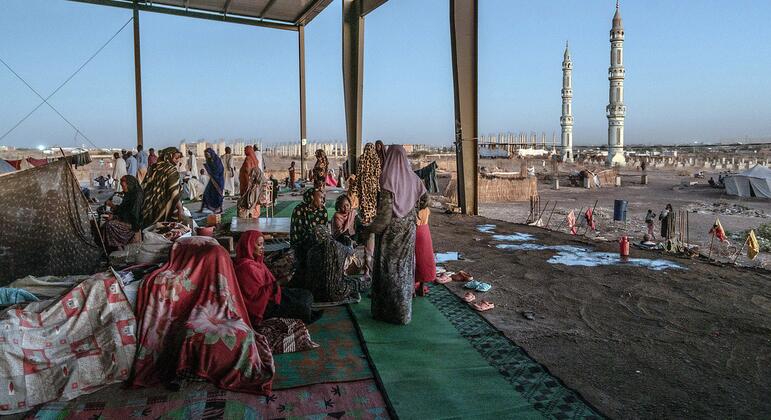
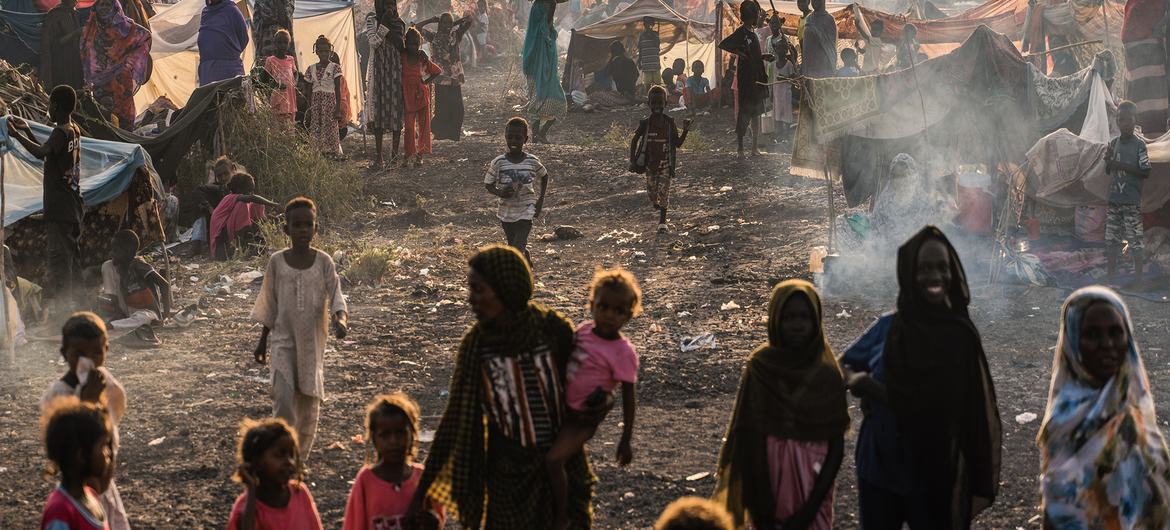
- Humanitarian and health conditions in Sudan are very likely to worsen over the next 30 days, particularly in central Darfur, South Kordofan, North Kordofan, Khartoum and displacement sites in Gedaref. Reporting records more than six million internally displaced people and another 4.5 million across borders, about 20 million people facing hunger, rising admissions in MSF-supported central Darfur facilities, the loss of funding to 45 healthcare centres, extensive damage to three key Khartoum hospitals and the closure of maternity and surgical wards at Tanedba camp. The exact displacement and needs totals vary by methodology, but the direction of deterioration is well corroborated. (Confidence: high · ASSESSED)
- I&W: Confirming: within 0-30 days, MSF reports further closures among the 45 central Darfur healthcare centres, continued admissions growth or further loss of services at Tanedba camp and the three Khartoum hospitals. (0-30 days)
- I&W: Breaking: within 0-30 days, funding is restored to the affected central Darfur centres and Tanedba's maternity and surgical wards reopen with reported service capacity recovering. (0-30 days)
- International pressure to restrict arms flows is very likely to intensify over the next 1-3 months, but adoption of a nationwide UN arms embargo is unlikely during that period. The US, UN Fact-Finding Mission, UK and Sudanese civil society groups have backed wider restrictions, while Sudan condemned the US proposal and Russia rejected it. The conflicting attributions of the nationwide-embargo appeal reduce confidence in the precise diplomatic sequence, not in the broader increase in pressure. (Confidence: medium · ASSESSED)
- I&W: Confirming: within 1-3 months, the US or another Security Council member tables a revised nationwide embargo text, schedules a vote or secures additional public endorsements for restrictions covering drones and their components. (1-3 months)
- I&W: Breaking: within 1-3 months, the US proposal is withdrawn or no revised text reaches formal Security Council consideration after continued opposition from Russia and Sudan. (1-3 months)
- There is a roughly even chance that the SAF developed chlorine munitions in 2024, but the available reporting is insufficient to assess whether it used them in attacks. The assessment rests on leak-based reporting about prototype designs, chlorine supplies, a reported test launch from Merowe Airport and a claimed stockpile, while Sudanese authorities deny producing, stockpiling or using chemical weapons. The account concerning chlorine allegedly taken from the Al-Manara water-treatment plant also directly conflicts with UNICEF's records, which contain no evidence of diversion or misuse. This judgment is therefore thin, contested and lower confidence than the broader conflict assessments. (Confidence: low · ASSESSED)
- I&W: Confirming: within 1-3 months, an independent investigation or official technical assessment links chlorine munitions, production sites or test activity to the SAF and establishes evidence of operational use. (1-3 months)
- I&W: Breaking: within 1-3 months, independently verified evidence shows no SAF chlorine programme or confirms that the Al-Manara chlorine was not diverted, materially strengthening the Sudanese and UNICEF accounts. (1-3 months)
Outlook & scenarios
Most likely: Attritional drone and ground offensives (60%)
The SAF and RSF continue ground operations while using long-range drones against contested towns and infrastructure. SAF retains the local advantage at Hamrat al-Wiz, the RSF continues pressure on El Obeid, and RSF-SPLM-N operations keep Blue Nile active. Civilian casualties and displacement rise without a decisive territorial outcome.
Diplomatic pressure without an embargo breakthrough (40%)
The US, UK, UN Fact-Finding Mission and civil society groups intensify calls to restrict arms flows and renew accountability mechanisms. Russia and Sudanese opposition to a nationwide embargo prevent rapid Security Council adoption, leaving existing networks and foreign-supplied capabilities largely intact.
Limited de-escalation opening (20%)
UN envoy Pekka Haavisto's talks generate a local pause or humanitarian access arrangement around selected areas. The arrangement does not produce a nationwide ceasefire, and SAF and RSF retain the ability to resume drone and ground operations.
Low-probability, high-impact wildcard: Regional or chemical escalation (10%)
A further cross-border incident involving Chad, or independently verified evidence of SAF chemical-weapons use, triggers new sanctions, sharper regional military alerting and accelerated international action. The conflict then places greater pressure on neighbouring states and humanitarian access routes.
Recommendations
- Maintain a 24-hour or daily watchlist for Kalogie, El Obeid, Ad-Da'ein, Hamrat al-Wiz, Ed Damazin, Kurmuk, Geisan and the West Darfur border area. Record strike location, weapon type, casualty figures, infrastructure damage and territorial control separately.
- Keep separate attribution tracks for SAF, RSF, RSF-SPLM-N forces, foreign contractors and alleged UAE-linked networks. Do not convert UN findings about individuals and entities into an assessment of UAE government direction without additional corroboration.
- Track the US embargo proposal, Russian and Sudanese positions, UK statements, UN Fact-Finding Mission mandate discussions and any Security Council scheduling activity. Record formal procedural steps separately from public calls for action.
- Prioritise humanitarian warning indicators at the 45 central Darfur healthcare centres, Tanedba camp, the three damaged Khartoum hospitals and MSF-supported facilities in central Darfur. Treat new admissions, ward closures, funding interruptions and missing-person registrations as early warning signals.
- Conduct a dedicated source review of the chemical-weapons reporting. Compare the leak-based allegations, US sanctions rationale, Sudanese denials and UNICEF's Al-Manara records, and keep programme development, stockpiling and battlefield use as separate analytic questions.
- Use a short daily assessment note to distinguish confirmed reporting from inference, especially where casualty totals, report dates, UAE attribution and the alleged chlorine programme remain contested.
Confidence & uncertainty
Overall confidence is high because the main judgments are corroborated by multiple UN and other multilateral reports, WHO, ICRC and MSF reporting, official government statements and major-media accounts. The broad trends are consistent across sources: continued SAF and RSF military activity, long-range drone use, civilian harm, foreign support networks and declining humanitarian capacity. Uncertainty remains over exact displacement totals, responsibility for alleged UAE-linked support, the timing and attribution of some diplomatic actions, and the existence and use of a SAF chemical-weapons programme.
Intelligence gaps
- [EEI 1.1 · UNCOVERED] Observed concentrations and movement of armed units (size estimates, unit identifiers if visible) within X km of named towns/roads/airfields (e.g., El Fasher, Geneina, Nyala, Khartoum neighborhoods) including timestamps and direction of movement. Recommended collection: imagery/satellite
- [EEI 1.2 · PARTIAL] Changes in employment of heavy weapons and systems: documented use or emplacement of artillery, multiple-launch rocket systems, tanks, combat helicopters, and airstrikes at specific coordinates and times. Recommended collection: open-source/media
- [EEI 1.3 · PARTIAL] Reports or intercepts of orders, operational directives or public statements from RSF/SAF commanders indicating planned offensives, ceasefire acceptance/rejection, defensive postures or orders to withdraw from named locations. Recommended collection: signals/communications intercepts
- [EEI 1.4 · PARTIAL] Status of critical infrastructure and lines of communication: control or denial of named bridges, main highways (identify route numbers), airfields, fuel depots and telecommunication hubs and any reported sabotage/blockage incidents. Recommended collection: human intelligence/field reporting
- [EEI 2.1 · PARTIAL] Counts and locations of newly displaced persons arriving at formal sites, informal camps, border crossings or collective centers (daily/weekly arrivals, site coordinates), including demographics (women, children, elderly) where available. Recommended collection: humanitarian/UN OCHA reports
- [EEI 2.2 · PARTIAL] Access impediments to humanitarian assistance: reported attacks on, blockages of, or denial of passage for named humanitarian convoys (dates, GPS locations, responsible actor if known) and closure status of specific routes. Recommended collection: human intelligence/field reporting
- [EEI 2.3 · PARTIAL] Functional status of medical infrastructure in named locations: number of operational hospitals/clinics, reported shortages of key medicines/blood, and hospital casualty/occupancy figures for the last 72 hours. Recommended collection: medical/health cluster reporting
- [EEI 3.1 · PARTIAL] Detection of flights, ships or overland convoys delivering military materiel or foreign personnel to named airfields, ports or border crossings (flight/IMO numbers, manifests if available, timestamps, route origin/destination). Recommended collection: air-traffic / maritime / border customs
- [EEI 3.2 · PARTIAL] Imagery or on-the-ground confirmation of foreign military personnel or private military contractor bases/forward operating elements at specified coordinates or compounds, including vehicle/weapon types observed. Recommended collection: imagery/satellite
- [EEI 3.3 · PARTIAL] Financial and sanctions-relevant indicators: atypical large transfers, use of designated front companies, or shipments routed through third states linked to procurement of weapons or fuel for RSF or SAF (transaction dates, parties, amounts where obtainable). Recommended collection: financial intelligence
Red cell review: CONCUR WITH COMMENT
TLP:CLEAR